Imagine waking up to find your primary source of news, your crypto trading group, and your connection to political activists all gone. For millions of people in emerging economies, this isn't a hypothetical-it's a Tuesday. In many parts of Asia, Africa, and Latin America, Telegram is a secure messaging platform and broadcasting tool that has become the default infrastructure for independent news when traditional media is silenced. Launched by Pavel Durov in 2013, it now serves over 900 million users, with a massive 65% of that base living in emerging markets. But as the platform's influence grows, so does the desire of governments to shut it down.
Why Governments Are Terrified of Telegram
It isn't just about chatting. The real power lies in Telegram's technical architecture. The platform uses MTProto 2.0 is a custom encryption protocol that enables secret chats with self-destruct timers and prevents messages from being stored on servers . When you combine this with the ability to broadcast to 200,000 subscribers in a single channel, you have a tool that is nearly impossible for a central authority to monitor in real-time.
For a government, this is a nightmare. In countries with strict "digital sovereignty" laws, the inability to peek into these conversations is seen as a security threat. This is why we've seen 31 countries implement bans since 2015. Governments argue they are fighting fraud or terrorism, but the timing often tells a different story. For example, Kenya triggered a temporary ban on June 25, 2025, right in the middle of nationwide protests. It's a digital curtain designed to stop the flow of information when the streets get too loud.
The Three Main Playbooks for Restrictions
Not every government handles Telegram the same way. Depending on their goals, they usually pick one of three strategies: the full blackout, the strategic pause, or the surgical strike.
| Strategy | Example Country | Primary Method | Main Goal |
|---|---|---|---|
| Full Ban | Vietnam | IP Address Blocking | Total Information Control |
| Temporary Restriction | Kenya / Thailand | DNS-level Blocking | Quelling Active Protests |
| Targeted/Fraud Focus | Nepal / Russia | Local Data Storage Requirements | Law Enforcement Access |
Vietnam's approach is a cautionary tale in "collateral damage." By blocking 19.3 million IP addresses to kill Telegram, they accidentally broke hundreds of other services. Because Telegram uses cloud infrastructure, the ban hit Amazon Web Services and Google Cloud Platform, meaning innocent businesses and even secure payment systems like Mastercard SecureCode suddenly stopped working. It shows that in the modern web, you can't just cut one wire without risking the whole grid.
The Economic Toll of Digital Silence
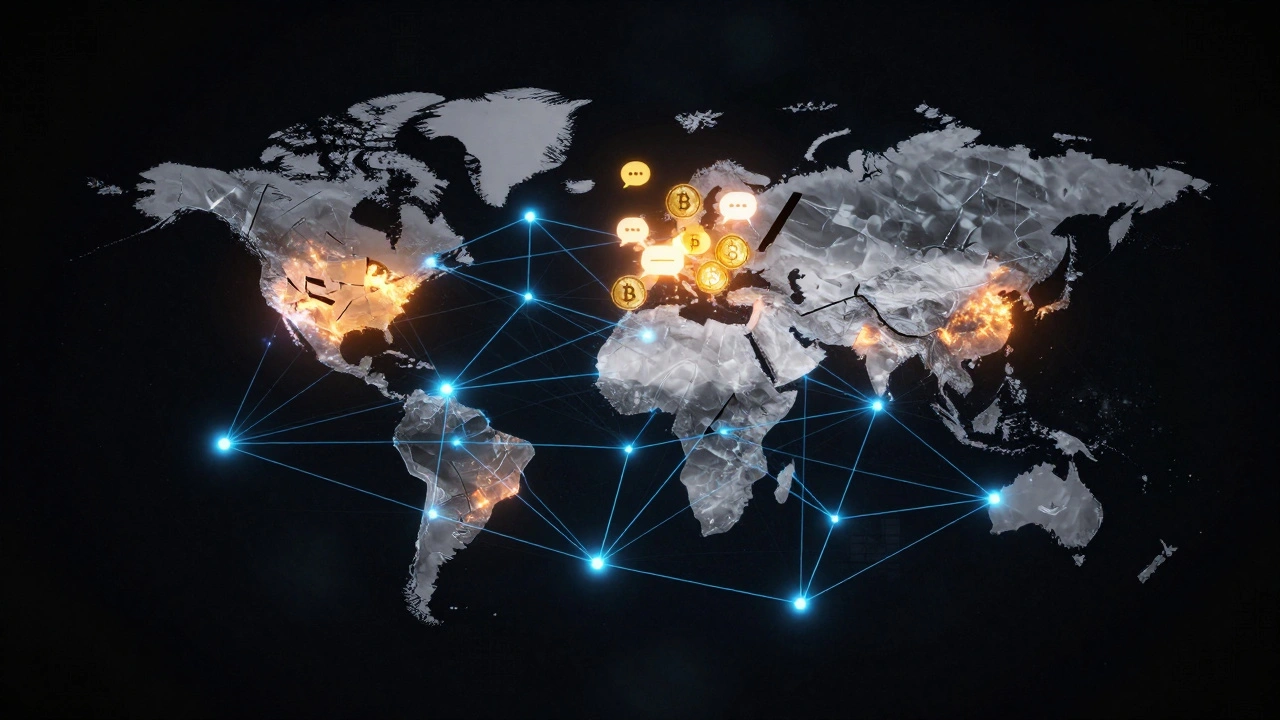
When a government pulls the plug on Telegram, they aren't just stopping political chat-they're crashing local markets. In Southeast Asia, Telegram is the heartbeat of the cryptocurrency scene. About 83% of crypto trading communities in the region live on the app. When Vietnam banned the platform in 2025, the impact was immediate: daily transaction volumes in Asian markets plummeted from $2.3 billion to $1.26 billion.
The State Bank of Vietnam reported a 22% decline in fintech transactions in the first week alone, costing the economy roughly $17.8 million every single day. This creates a weird tension: governments want to control the narrative, but they hate losing the money. This economic pressure is often why some countries, like Russia, eventually lift bans once the platform agrees to store user data locally.
The Cat-and-Mouse Game: How Users Fight Back
Bans are rarely the end of the story; they're just the start of a technical arms race. Most users in emerging markets don't just give up-they evolve. The most common weapon is the VPN (Virtual Private Network). Tools like Psiphon and Outline have become essential survival gear for the digital age. In Vietnam, 78% of users managed to get back online within 72 hours of the ban.
Then there are the MTProto proxies. These are specialized servers that disguise Telegram traffic as something else, making it harder for government firewalls to spot. On Twitter/X, hashtags like #TelegramKe became hubs for sharing tutorials on how to configure these proxies. However, this isn't a perfect solution. While it restores access, it kills performance. Users have reported latency jumping from a snappy 120ms to a sluggish 450ms, making the app feel like it's running on a 2005 dial-up connection.

Telegram's Pivot: Privacy vs. Compliance
Telegram used to be the "wild west" of messaging, but the company is changing. After CEO Pavel Durov's arrest in Paris in August 2024, the platform realized it couldn't just ignore the world's governments forever. They've moved toward a "hybrid model"-trying to keep encryption for users while cooperating more with law enforcement.
To do this, they launched the Cocoon AI network in mid-2025. This is a massive AI-driven moderation system powered by green energy in Sweden. It's designed to scan public channels for illegal content with staggering accuracy (99.2% according to AINvest). By doing this, Telegram is trying to prove it's not a haven for criminals, hoping that if they police the "public" spaces, governments will leave the "private" encrypted chats alone.
The Future of News in the Digital Divide
Are we heading toward a fragmented internet? It looks like it. We're seeing a trend where the internet is being split into "silos" based on jurisdiction. While Telegram is trying to balance the scales, many users are already moving toward even more decentralized options like Session or Element, which don't rely on a central company at all.
The real tragedy is the growing digital divide. While tech-savvy users can bypass bans using GitHub guides and proxy settings, the average person-the one who isn't a networking expert-gets left in the dark. Only 31% of non-technical users in banned regions managed to maintain access. This means censorship doesn't just block information; it filters it, leaving only the most technically privileged people with a window to the rest of the world.
Why is Telegram more popular than WhatsApp in emerging markets?
Telegram's channel feature allows for one-to-many broadcasting to hundreds of thousands of people, making it a news tool rather than just a chat app. Additionally, its architecture is optimized for low-bandwidth environments, requiring as little as 50KB/s to function, which is critical in regions with poor internet infrastructure.
Can governments actually stop Telegram completely?
It's very difficult. Because Telegram uses distributed data centers and cloud services like AWS and Google Cloud, blocking the app often means blocking huge chunks of the internet. Furthermore, tools like MTProto proxies and VPNs allow determined users to bypass most DNS and IP-level blocks.
Does Telegram actually share user data with governments?
Historically, Telegram has been very resistant. In 2024, they complied with only 32% of law enforcement requests, compared to WhatsApp's 85%. However, following the 2024 policy shift, they have started cooperating with agencies in 47 jurisdictions, though they still resist requests from countries like China and Iran.
What is the impact of Telegram bans on cryptocurrency?
The impact is severe. In Southeast Asia, Telegram hosts the vast majority of trading communities. Bans lead to immediate drops in transaction volumes (up to 45% in some cases) and drive users toward unverified, less secure platforms, which often increases the rate of fraud and scams.
What is Cocoon AI and how does it affect privacy?
Cocoon AI is Telegram's 2025 moderation network designed to scan public channel content for illegal material. While it targets public data to satisfy regulators, privacy advocates worry it's a stepping stone toward more invasive "client-side scanning" that could eventually compromise private encrypted chats.