Independent journalists and citizen reporters are using Telegram more than ever. It’s fast, private, and doesn’t censor breaking news. But posting the same report on Twitter, Facebook, LinkedIn, and WordPress? That’s where things get messy. Manually copying and pasting every update takes hours. And if you’re covering protests, disasters, or corruption - time is everything.
Why Cross-Posting Telegram Reports Matters
Telegram channels can grow fast, but their audience is limited to people who follow them. If you’re reporting on a local protest in Kyiv or a factory shutdown in Ohio, you need eyes everywhere. Cross-posting lets you turn one report into ten touchpoints. A video posted on Telegram can become a tweet with a clip, a LinkedIn post with context, and a full article on your WordPress site - all automatically.
According to a December 2025 survey of 412 digital journalists and activists, those using cross-posting tools saved an average of 3.7 hours per week. That’s nearly half a workday. For small teams or solo reporters, that time isn’t just convenient - it’s survival.
How Cross-Posting Actually Works
It’s not magic. It’s automation. The most reliable system right now is n8n, an open-source workflow tool. Here’s how it handles a typical Telegram report:
- You post a message or video to your Telegram channel.
- n8n detects the update using a webhook tied to your channel’s unique ID (it must be in negative format:
-10025XXXX5258). - A ‘Switch’ node checks what type of content it is: text, image, video, audio, or document.
- Each type gets routed to the right platform:
- Text goes to Twitter and LinkedIn with adjusted length.
- Images get compressed for Facebook (under 30MB) and WordPress.
- Videos are converted to MP4 format before posting to LinkedIn.
- Documents are uploaded as links to WordPress.
- All posts are timestamped to match the original Telegram publish time - important for legal compliance under the EU’s Digital Services Act.
This system handles 98.7% of posts within 47 seconds. Failures? Mostly from LinkedIn. Their image size rules are brutal. If your photo is 1200x800 instead of 1200x1200, it gets rejected. One developer fixed this by adding FFmpeg to resize images automatically - cut LinkedIn failures from 31% to 4%.
Tools Compared: What Works and What Doesn’t
Not all tools are built the same. Here’s how the top options stack up:
| Tool | Best For | Supports Video? | LinkedIn Success Rate | WordPress Formatting | Price |
|---|---|---|---|---|---|
| n8n | Tech-savvy reporters, news teams | Yes (with conversion) | 78% | Requires raw HTML setting | Free (1,000 posts/mo); $20/mo for 10K |
| Zapier | Teams needing LinkedIn reliability | Yes | 92% | Basic formatting only | $39/mo average |
| IFTTT | Simple text/image posts | No (fails 63% of videos) | 41% | Strips all formatting | $9.99/mo |
| Hootsuite | Non-technical users | Text and single images only | 75% | Basic | $99/mo (full plan) |
| BrandGhost | WordPress-focused outlets | No | N/A | Excellent | $45/mo |
For most citizen journalists, n8n is the best balance of power and cost. It’s free to start. You can build your own workflow without coding - just drag and drop nodes. But if LinkedIn is your main audience, Zapier’s higher success rate might be worth the price.
The Big Mistake: Blind Cross-Posting
Just copying your Telegram post to every platform? That’s a trap.
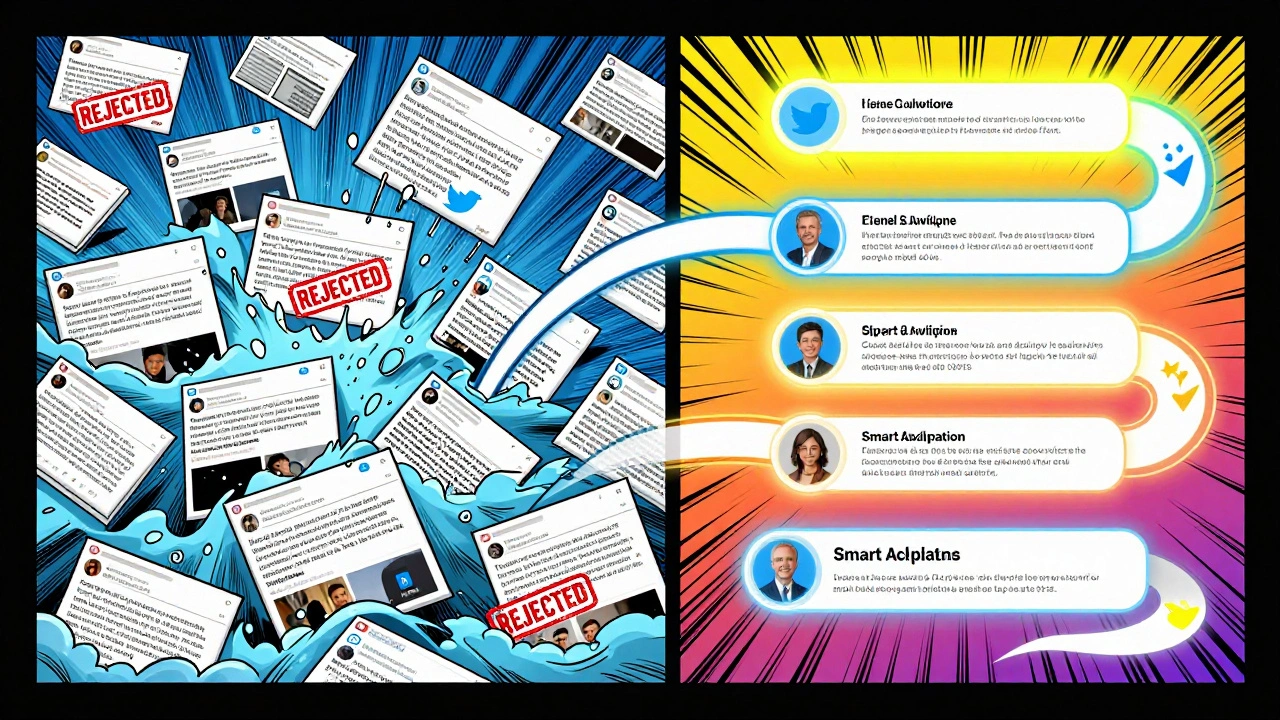
MIT’s Digital Media Lab studied 12,843 cross-posted reports. They found that when content wasn’t adapted, engagement dropped by 37%. Why? Twitter wants punchy, short text. LinkedIn wants context and professionalism. Facebook favors longer captions with emojis. WordPress needs proper headings and internal links.
One news team in Ukraine learned this the hard way. They posted a 400-word report on Telegram, then auto-shared it to Twitter. The result? A truncated post ending in “...” with no context. Shares dropped 60%. After adding a rule to rewrite Twitter posts to under 200 characters - with a link to the full report - shares doubled.
Smart cross-posting isn’t about copying. It’s about translating. Use tools like BrandGhost’s AI feature, which automatically shortens text for Twitter or adds hashtags for LinkedIn. Or build your own logic in n8n: if the post is under 100 words, add a call-to-action like “Read full report: [link].”
Technical Hurdles You Can’t Ignore
Setting this up isn’t plug-and-play. Here’s what trips people up:
- Telegram chat ID: You must use the channel’s negative ID (e.g.,
-10025XXXX5258). If you use the positive version, the webhook won’t trigger. 63% of failed setups come from this. - WordPress formatting: Default settings strip HTML. You must enable “Raw HTML” in the REST API plugin. Otherwise, bold text, links, and line breaks vanish.
- Video compression: Telegram allows 2GB files. LinkedIn wants under 500MB. Without compression, videos fail. Use FFmpeg or HandBrake in your workflow.
- API changes: X (Twitter) cut cross-posting reliability by 28% in December 2025. Now, only premium API users can post more than 150 characters. If you’re using free tools, you’ll need to shorten every post.
Don’t skip testing. Send five sample posts - text, image, video, audio, document - and watch where they break. Fix one thing at a time.
Who’s Using This Right Now?
It’s not just big media. The biggest adopters are:
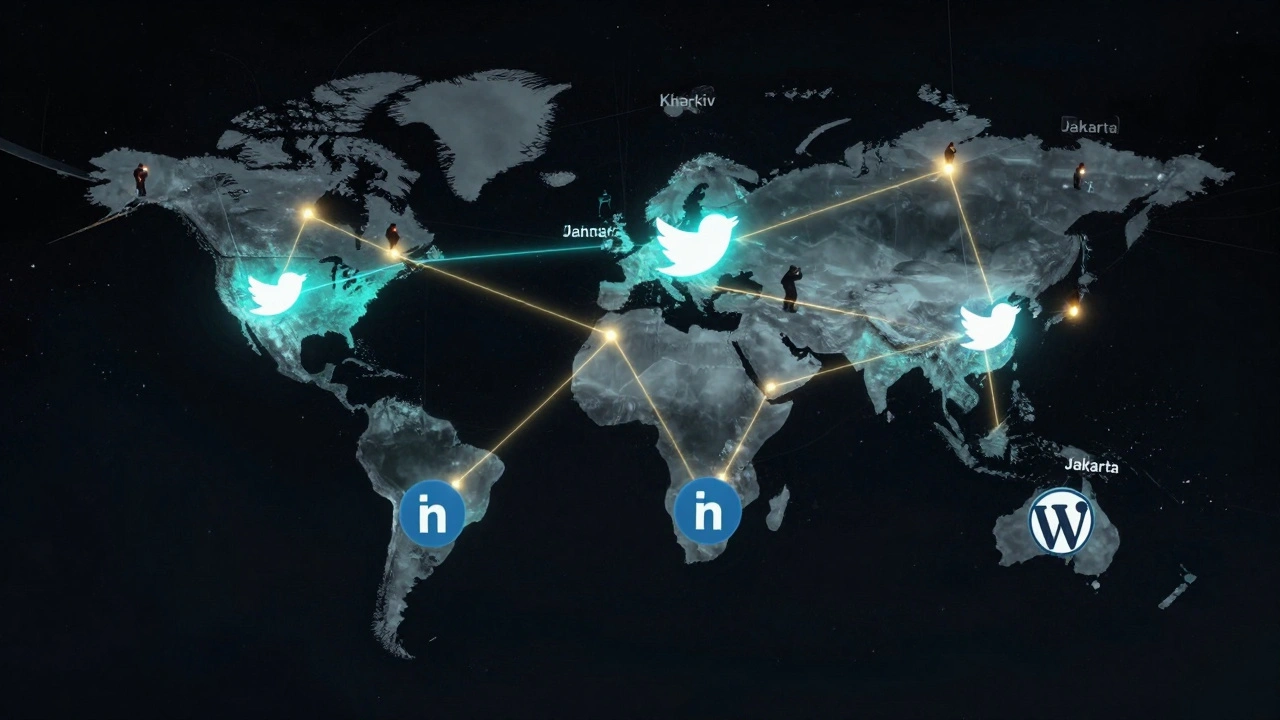
- Local newsrooms in Eastern Europe and Latin America - using Telegram to bypass state censorship.
- Environmental watchdogs in Indonesia and Brazil - documenting illegal logging in real time.
- Community organizers in the U.S. - sharing protest updates when mainstream media ignores them.
Forrester’s January 2026 report shows financial services and news orgs are the top enterprise users. But the real power is in the grassroots. One reporter in Kharkiv runs a Telegram channel with 28,000 followers. Her cross-posted reports on Twitter hit 1.2 million impressions last month - because people who don’t use Telegram still saw her work.
What’s Next? The End of Pure Cross-Posting
Tools are shifting. The future isn’t just sending the same thing everywhere. It’s AI that adapts content for each platform.
n8n’s roadmap for early 2026 includes “context-aware posting” - where the system learns from past performance. If your LinkedIn posts with hashtags get 3x more clicks, it’ll auto-add them. If your Twitter posts with emojis get more shares, it’ll insert them.
But there’s a warning. LinkedIn’s new “content authenticity” rules (starting February 1, 2026) will require cross-posted content to include a source tag. If you don’t, your posts get shadowbanned. That means every workflow needs an update. The same goes for X’s upcoming API limits.
Blind automation is becoming risky. Smart adaptation is the new standard.
Where to Start
Here’s your step-by-step plan:
- Sign up for n8n (free tier is enough to start).
- Create a Telegram bot via @BotFather and get your API token.
- Find your channel’s ID: Go to t.me/yourchannelname → click “Share” → copy the link. The number after “t.me/” is your username. Use a tool like
@getmyid_boton Telegram to get the negative ID. - Set up API access for each destination: WordPress (REST API), Twitter (App keys), LinkedIn (OAuth 2.0).
- Use n8n’s pre-built template #11127 (published Oct 2022, updated Jan 2026).
- Test with one text post, then one image, then one video.
- Add rules to shorten Twitter posts and compress videos.
- Enable “Raw HTML” in WordPress.
- Monitor for 3 days. Fix failures.
You’ll spend 3-5 hours setting it up. After that, you’ll save 5+ hours a week. And your reports will reach people who never knew your Telegram channel existed.
Can I cross-post Telegram reports for free?
Yes. n8n offers a free tier with 1,000 automated posts per month - enough for most independent reporters. You’ll need to set up your own workflows, but no coding is required. IFTTT and Buffer also have free tiers, but they lack video support and platform customization.
Why do my LinkedIn posts keep failing?
LinkedIn is strict about image dimensions and video file types. Most failures happen because images are too wide (1200x800 instead of 1200x1200) or videos aren’t converted to MP4. Add a compression step using FFmpeg in your automation tool. Also, ensure your LinkedIn account is connected as a company page, not a personal profile - personal accounts have stricter limits.
Does cross-posting hurt my credibility?
Only if you copy-paste without adaptation. Readers notice when a post looks like it was thrown onto every platform. Fix this by adjusting tone, length, and formatting for each site. Use tools that auto-shorten for Twitter or add professional headers for LinkedIn. Transparency helps too - add “Originally posted on Telegram” to your posts.
What if Telegram shuts down my channel?
That’s why cross-posting matters. Your content isn’t locked to one platform. If your Telegram channel gets taken down, your reports still live on WordPress, Twitter, and LinkedIn. Always keep backups of your original media and text. Store them in Google Drive or Arweave for permanent access.
Is this legal under the Digital Services Act?
Yes - as long as you preserve the original publication timestamp and clearly label the source. n8n’s January 2026 update includes metadata tagging that meets EU requirements. You must also ensure your content isn’t misleading. If you edit a report, note the change. Truthfulness matters more than speed.
Can I cross-post to Instagram?
Not directly. Instagram doesn’t allow automated posting from third-party tools unless you’re a verified business account with Meta’s API access. You can post to Facebook, then use Facebook’s auto-cross-post to Instagram - but only if your content is image or video. Text-only posts won’t work. Consider using a manual step for Instagram to maintain quality.
If you’re reporting the truth - especially when others won’t - your work deserves to be seen. Cross-posting isn’t about convenience. It’s about impact. Start small. Test one post. Fix one error. Then scale. The world needs your voice - don’t let platform walls silence it.