Imagine you have proof of serious corruption or danger to public safety. Your heart is racing. You open your phone, ready to expose the truth. But before you hit send, consider this: posting that evidence directly to a Telegram channel might not protect you-it could end your career or land you in jail.
Many people assume that because Telegram is a messaging app known for privacy features, it is a safe harbor for whistleblowers. The reality is much more complex. While Telegram offers tools like secret chats, its default settings store data on cloud servers. This means that unless you take specific, advanced steps, your identity and messages may be accessible to authorities or malicious actors. Protecting yourself requires blending technical know-how with strict legal strategy.
The Technical Reality of Telegram Encryption
To understand the risk, you need to look under the hood of how Telegram works. Unlike some other apps that encrypt everything by default, Telegram uses two different modes. Most users are unaware of the difference between them until it is too late.
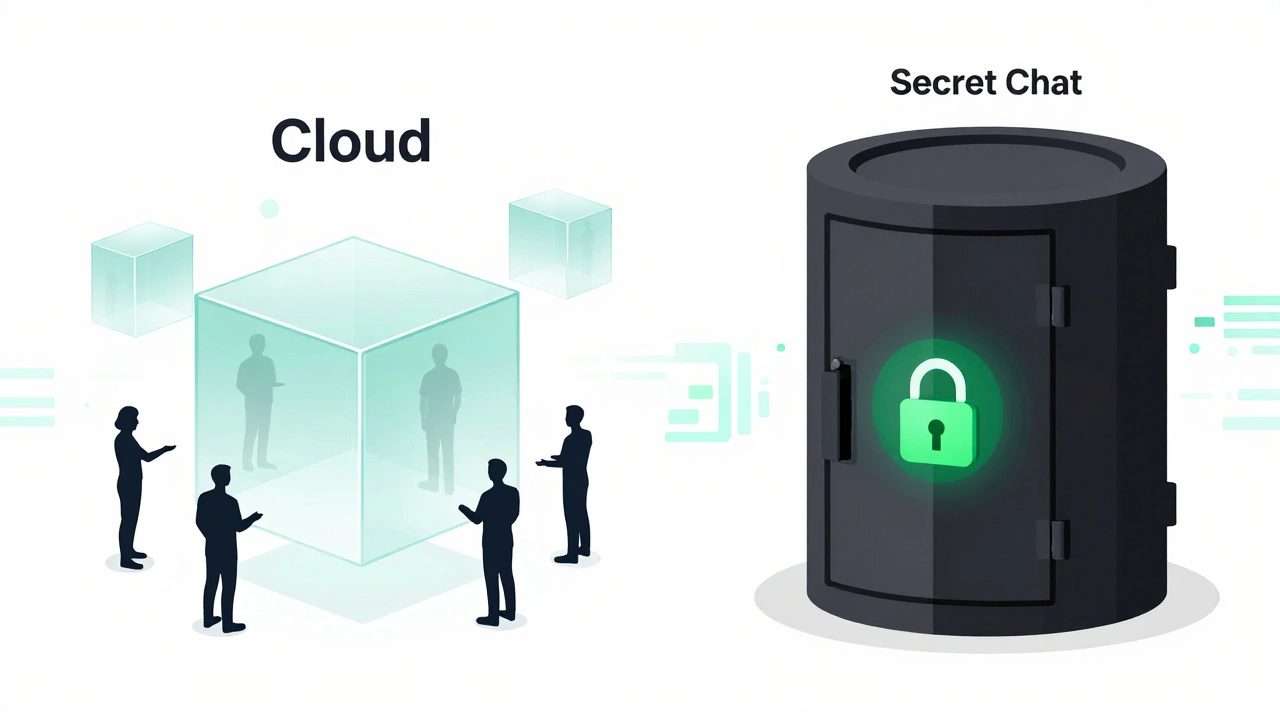
By default, Telegram uses Cloud Chats which are encrypted between your device and Telegram's servers but stored there in a way that allows access by the company and potentially state actors under legal compulsion. These chats sync across all your devices, which is convenient for casual use but risky for sensitive disclosures. If an employer or government agency subpoenas Telegram, they can request these records.
For higher security, Telegram offers Secret Chats which implement end-to-end encryption using device-specific keys and do not sync to the cloud. Only Secret Chats provide true end-to-end encryption. However, even here, metadata-such as who you talked to and when-can still leak if you are not careful. Security researchers consistently note that relying on Telegram’s proprietary MTProto protocol without understanding its limitations exposes users to greater risk than using dedicated whistleblower platforms.
Legal Protections vs. Public Disclosure
Here is where technology meets the law. In the United States, laws like the Whistleblower Protection Act of 1989 and the Whistleblower Protection Enhancement Act of 2012 protect federal employees who report wrongdoing to authorized recipients such as inspectors general, the Office of Special Counsel, or members of Congress. These statutes prohibit retaliation like demotion or suspension.
However, these protections usually apply when you follow official channels. Posting evidence directly to a public Telegram group often bypasses these safeguards. In many jurisdictions, including parts of Europe and Asia, disclosing information publicly without first exhausting internal or regulatory channels can void your legal protection. It may even violate national security or secrecy laws.
The International Labour Organization’s 2025 Working Paper 135 highlights that while global trends favor stronger whistleblower rights, gaps remain regarding digital disclosures. A disclosure made via a cross-border platform like Telegram triggers overlapping legal regimes. You might be protected in one country but prosecuted in another. Always consult a lawyer before making any public post.
Ethical Frameworks for Disclosing Wrongdoing
Beyond legality, there is ethics. Ethical frameworks, such as those analyzed by Harvard’s Kennedy School, suggest that whistleblowing involves balancing duties of loyalty against duties to prevent harm. For a disclosure to be ethically legitimate, it generally must meet three criteria:
- Seriousness: The wrongdoing must pose a significant threat to public health, safety, or justice.
- Motive: The primary goal should be to stop the harm, not personal gain or revenge.
- Proportionality: The level of exposure should match the severity of the issue.
Using Telegram as a broadcast tool often fails the proportionality test if less invasive methods were available. Best practices from the US Whistleblower Protection Advisory Committee emphasize confidentiality and secure reporting tools. When you dump sensitive files onto a public channel, you increase the risk of collateral damage to innocent parties and reduce the likelihood of a constructive investigation.
Operational Security (OpSec) Best Practices
If you must use Telegram to make initial contact with journalists or NGOs, you need rigorous operational security. Here is a checklist based on guidance from organizations like the WHISPeR program at ExposeFacts:
- Use Secret Chats Only: Never send sensitive info via default Cloud Chats. Ensure the conversation is marked as a "Secret Chat" (indicated by a lock icon).
- Disable Contact Syncing: Go to Settings > Privacy and Security > Data Settings and turn off "Sync Contacts." This prevents Telegram from uploading your address book to its servers.
- Enable Two-Factor Authentication: Set a strong cloud password in Settings > Privacy and Security > Two-Step Verification. This adds a layer of defense if your SIM card is compromised.
- Minimize Metadata: Do not link your account to social media profiles. Use a pseudonym if possible, though remember that phone number registration is mandatory in many countries.
- Avoid Group Chats: Group chats are never end-to-end encrypted in Telegram. They are cloud-based and visible to admins and potentially Telegram itself.
Even with these steps, Telegram leaves a trail. SIM card registration ties your account to your real-world identity in many nations. For high-risk cases, experts recommend migrating quickly to more robust tools like Signal which enables end-to-end encryption by default for all conversations or Tor-enabled SecureDrop installations used by major news outlets.
The Role of Civil Society Organizations
You do not have to navigate this alone. Several non-profit organizations specialize in helping whistleblowers. They offer legal aid, security training, and media connections. Instead of going public immediately, reach out to these groups first. Many accept initial contacts via encrypted channels but will guide you toward safer, legally recognized pathways.
| Organization | Primary Focus | Services Offered |
|---|---|---|
| Whistleblower Aid | Public-interest whistleblowers | Pro bono legal, advocacy, communications, and security support |
| Government Accountability Project | Corporate and government accountability | Legal representation and promotion of accountability |
| National Whistleblower Center | Education and legal referral | Help finding attorneys, advocating for stronger laws |
| The Signals Network | Corporate and governmental wrongdoing | Legal support, investigative collaboration, policy advocacy |
| WHISPeR (ExposeFacts) | Source protection | Combines legal support with modern encryption technology |
These organizations understand the interplay between laws like the EU Whistleblower Directive-which mandates internal reporting channels for companies with 50+ employees-and the practical realities of digital communication. They can help you determine if your disclosure qualifies for protection under statutes like the US Whistleblower Protection Act or international frameworks.

Practical Workflow for Safe Disclosure
Do not improvise. Follow a structured workflow to minimize risk:
- Assess the Evidence: Gather clear, documented proof of wrongdoing. Ensure it is not classified information restricted by law.
- Consult Legal Counsel: Before sending anything, speak to a lawyer specializing in whistleblower law. Determine if you must use internal channels first.
- Initial Contact: If reaching out to an NGO or journalist, use Telegram Secret Chats for the first message. Keep it brief. Do not share files yet.
- Migrate Channels: Move the conversation to a more secure platform recommended by the recipient, such as Signal, PGP-encrypted email, or a SecureDrop portal.
- Transfer Evidence: Send documents only through the secured, verified channel. Verify the recipient’s key fingerprint to prevent man-in-the-middle attacks.
- Monitor for Retaliation: Document any adverse actions at work. Report them to the appropriate oversight body, such as the Office of Special Counsel in the US.
This approach respects both ethical standards and legal requirements. It ensures that your disclosure has the best chance of resulting in meaningful change rather than personal ruin.
International and Sector-Specific Nuances
Legal protections vary wildly by sector and location. In the US health sector, for example, the HHS Inspector General protects employees reporting waste, fraud, or abuse. Military medical officers also have protections under the Military Whistleblower Protection Act. However, in some countries, leaking information-even for the public good-remains a criminal offense.
The ILO’s analysis shows that while many nations have adopted whistleblower laws since 2010, few explicitly cover disclosures made via social media or messaging apps. Some laws, like India’s Whistle Blowers Protection Act, impose severe penalties-including up to three years in prison-for officials who reveal a whistleblower’s identity. This underscores the critical importance of anonymity.
If you are working in a multinational corporation or dealing with cross-border issues, the jurisdictional complexity increases. A message sent from one country to a journalist in another may fall under conflicting laws. This is why early engagement with specialized NGOs is crucial. They can navigate these extraterritorial challenges and advise on the safest route forward.
Is Telegram safe for whistleblowers?
Telegram is not inherently safe for whistleblowers. Its default Cloud Chats are not end-to-end encrypted and are stored on servers accessible to the company and potentially state actors. Only Secret Chats provide end-to-end encryption. Even then, metadata leaks and SIM registration risks remain. Experts recommend using Telegram only for initial contact, then moving to more secure tools like Signal or SecureDrop.
What is the difference between Cloud Chats and Secret Chats?
Cloud Chats are encrypted between your device and Telegram's servers but are stored on those servers, allowing multi-device sync and potential access by authorities. Secret Chats use end-to-end encryption, meaning only the sender and receiver can read the messages. They do not sync across devices and leave no trace on Telegram's servers, offering significantly higher security.
Can I be fired for blowing the whistle on Telegram?
Yes, you can face retaliation, including termination, if your disclosure does not follow legally protected channels. Laws like the US Whistleblower Protection Act protect disclosures made to authorized bodies like inspectors general. Posting publicly on Telegram may bypass these protections, leaving you vulnerable to employment retaliation and potential legal action for breach of confidentiality or national security violations.
Which organizations help whistleblowers?
Several organizations provide support, including Whistleblower Aid, the Government Accountability Project, the National Whistleblower Center, The Signals Network, and the WHISPeR program at ExposeFacts. These groups offer legal advice, security training, and media connections. They often assist in navigating the complex legal landscape and ensuring disclosures are made safely and effectively.
How do I ensure my identity remains anonymous?
To maintain anonymity, use Telegram Secret Chats, disable contact syncing, enable two-factor authentication, and avoid linking social media accounts. Use a pseudonym if possible. However, since Telegram requires a phone number, consider using a prepaid SIM not linked to your identity. For maximum security, migrate to platforms like Signal or Tor-based SecureDrop systems recommended by professional NGOs.