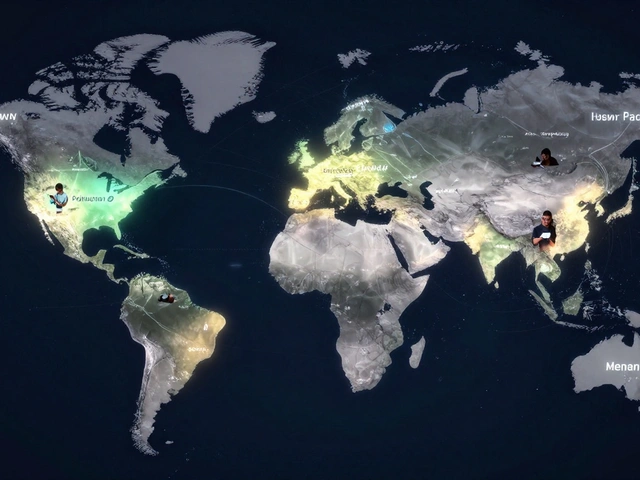
Most newsrooms treat Telegram like just another social media channel. They count subscribers, check view numbers, and call it a day. But that’s like judging a car by how many people look at it from the street - you’re missing the engine. Telegram isn’t Instagram or Twitter. It’s a private, fast-moving news pipeline where content spreads through forwards, not likes. If you’re using Facebook KPIs to measure your Telegram newsroom, you’re flying blind.
Why Telegram Needs Its Own KPIs
Telegram’s architecture is built for distribution, not distraction. Unlike platforms that bury content behind algorithms, Telegram gives you direct access to your audience. Every message you send lands in someone’s inbox - no guessing if it got seen. But that also means your metrics have to reflect real behavior, not vanity numbers. A channel with 50,000 subscribers might only get 8,000 views per post. That sounds bad - until you realize that on Instagram, 8,000 views from 50,000 followers would be a win. On Telegram, that’s average. Top news channels regularly see 15-35% of subscribers open every message. That’s because people subscribe to Telegram channels to get news, not scroll past it. The real power? Forwards. When someone shares your post to a group or another channel, it’s a vote of confidence. A single forward can reach hundreds or thousands of new people. That’s why engagement rate on Telegram isn’t about likes - it’s about reactions, replies, and especially forwards. Newsrooms that track forward chains see 3-5x more organic reach than those who only track views.The Four Core KPIs You Need to Track
Forget the noise. Focus on these four categories of KPIs - they’re the only ones that tell you if your newsroom is working.1. Engagement Depth
This isn’t just how many people reacted. It’s how they reacted. The formula is simple:Engagement Rate = (Reactions + Replies + Forwards) / Total Subscribers × 100
Top performers hit 8-12%. If you’re under 5%, your content isn’t resonating. Don’t just count emoji reactions - look at which ones. A fire emoji means urgency. A thumbs-up means approval. A question mark means confusion. Use that data to adjust tone, timing, and topic.2. Growth Quality
Subscribers matter, but only if they stick around. Track net subscriber growth rate:Weekly Growth Rate = (New Subscribers - Unsubscribes) / Total Subscribers × 100
Healthy channels grow 2-5% per week. Anything higher than 5% might mean you’re running a bot campaign. Anything below 1% means people are leaving. Churn above 5% is a red flag. Check your last 10 posts. Did something change? Was there a drop in forwards? A spike in unsubscribes after a political story? That’s your clue.3. Conversion Rate
What’s the point of a newsroom if no one takes action? Whether it’s signing up for a newsletter, donating, or buying a premium subscription - you need to track it.Click-Through Rate (CTR) = Clicks on Link / Total Views × 100
Telegram doesn’t track clicks natively. So you have to use UTM parameters. Add ?utm_source=telegram&utm_medium=newsletter to every link. Then check Google Analytics 4. Top newsrooms get 1.5-3.5% CTR. The Financial Times hit 27% on a premium trial offer - not because they had more subscribers, but because they tested CTA text and timing. Their best-performing post went out at 10:45 AM GMT, when their European readers were awake and checking news.4. Audience Vitality (DAU/MAU)
This is the secret weapon. Daily Active Users divided by Monthly Active Users tells you how often your audience returns.DAU/MAU Ratio = Daily Unique Viewers / Monthly Unique Viewers
If 40% of your subscribers open your channel every day, you’ve got a loyal community. Enreach.ai found that newsrooms with a DAU/MAU above 40% retain 65% more subscribers after 90 days. Compare that to Twitter, where the same metric barely correlates with retention. On Telegram, daily engagement = survival.Tools You Actually Need
Telegram’s built-in analytics are basic: total views, new followers, total interactions. That’s it. You need more.- TGStat ($19/month): Tracks unique viewers, forwards by channel, and audience demographics. Best for seeing who shares your content.
- CRMchat ($25+/month): Gives daily performance summaries, tracks reply times, and integrates with Google Analytics. Loved by newsrooms for its clarity.
- Telemetr ($29/month): Good for long-term trend analysis, but lacks newsroom-specific insights.

What Not to Measure
Stop wasting time on these:- Total views - Telegram counts multiple views from the same person. One person refreshing 10 times = 10 views. That inflates numbers by 18-22%.
- Subscriber count alone - A channel with 100,000 subscribers and 2% engagement is dead weight. A channel with 10,000 and 10% engagement is a goldmine.
- Like-to-comment ratio - Telegram doesn’t work like Instagram. Comments are rare. Forwards are king.
How to Set Up Your KPI System
Follow this 5-step process:- Connect your channel to TGStat or CRMchat. It takes 24 hours for data to populate.
- Tag every link with UTM parameters. Use a consistent format:
?utm_source=telegram&utm_medium=post&utm_campaign=breaking - Define your goals - Are you growing? Driving donations? Building trust? Pick 3 KPIs that match.
- Train your team - Journalists need 18-20 hours of training to interpret forward chains and DAU/MAU. Don’t assume they know.
- Review weekly - Hold a 30-minute meeting every Monday. Show top 3 posts, worst 3 posts, and what changed. Newsrooms that do this optimize 31% faster.

Real Results From Real Newsrooms
The Guardian’s Spanish edition had flat growth for months. Then they started tracking forwards by region. They found Latin American audiences shared political stories 2.3x more than Europeans. They started timing those posts for 7 PM Mexico City time. Weekly growth jumped from 1.2% to 4.7%. The Financial Times didn’t just track clicks - they A/B tested CTA buttons. “Subscribe now” got 12% CTR. “Start your free trial” got 27%. They changed the wording and timing. Revenue from Telegram grew 40% in six months. Meanwhile, a major business news channel quit Telegram after eight months. Why? They couldn’t track where their traffic went. They didn’t use UTM tags. They assumed their links were working. They were wrong.What’s Coming Next
Telegram isn’t standing still. In September 2024, they’re launching verified view metrics - filtering out bot traffic. That’s huge. Right now, 15-20% of views on some channels come from bots. Soon, you’ll know what’s real. Also, Telegram’s new Revenue Program lets you track paid subscriptions directly in analytics. No more guessing if people are paying because of your channel. And WordPress just released a beta plugin called Telegram Analytics Pro. It auto-tags your CMS content with performance data. No more manual copy-pasting.Final Rule: Measure What Moves the Needle
Your goal isn’t to have the biggest Telegram channel. It’s to have the most engaged, loyal, and actionable audience. That means:- Track forwards, not just views.
- Measure daily activity, not just total followers.
- Link everything to outcomes - clicks, signups, donations.
- Use tools that show you who is sharing, not just how many.
What’s the best KPI for measuring Telegram newsroom success?
The best KPI depends on your goal. For audience loyalty, use DAU/MAU ratio - above 40% means your readers come back daily. For content impact, track forward rate - it shows how far your news spreads. For revenue, use CTR on tracked links. No single metric tells the whole story, but DAU/MAU is the strongest predictor of long-term survival.
Can I use Instagram or Twitter KPIs for Telegram?
No. Instagram measures likes and comments. Twitter tracks retweets and quote tweets. Telegram’s core metric is forwards - shares to private groups and channels. These aren’t the same thing. A post with 100 likes on Instagram might get 5 forwards on Telegram - but those 5 forwards could reach 5,000 people. Using the wrong metrics leads to bad decisions.
Why is my Telegram view count so high but engagement low?
Telegram counts every time someone opens your message - even if they open it 5 times. That inflates views. Use a tool like TGStat to see unique viewers instead. If unique views are low but total views are high, your content isn’t resonating. People are opening it out of habit, not interest.
How often should I post on Telegram for best results?
There’s no magic number. Top newsrooms post 1-3 times per day, but only if they have breaking news or high-value updates. Posting just to post kills engagement. Focus on quality and timing. The best posts go out when your audience is active - usually mornings in their time zone. Test it. Track which times get the most forwards.
Do I need to pay for analytics tools?
You don’t need to pay, but you’ll miss critical insights. Telegram’s free dashboard doesn’t show unique views, forward destinations, or audience demographics. For a newsroom, that’s like running a hospital without a thermometer. TGStat at $19/month gives you 80% of what you need. The cost is low compared to the risk of misjudging your audience.
What’s the biggest mistake newsrooms make with Telegram?
They treat it like a broadcast channel instead of a community. The most successful newsrooms respond to comments, ask questions, and follow up on forwards. If your team doesn’t engage back, your audience stops sharing. Engagement isn’t just metrics - it’s conversation.