Most people think of Telegram as just another messaging app - like WhatsApp or Signal. But for millions of conservative Americans, it’s become their primary news source. Not because it’s flashy or easy to use, but because it doesn’t censor them.
Here’s the reality: only 2% of U.S. adults regularly get news from Telegram. But among those who do, two-thirds identify as Republican or lean Republican. That’s not a coincidence. It’s a deliberate migration. And it’s happening because mainstream platforms have changed - and Telegram hasn’t.
Telegram Doesn’t Remove Posts
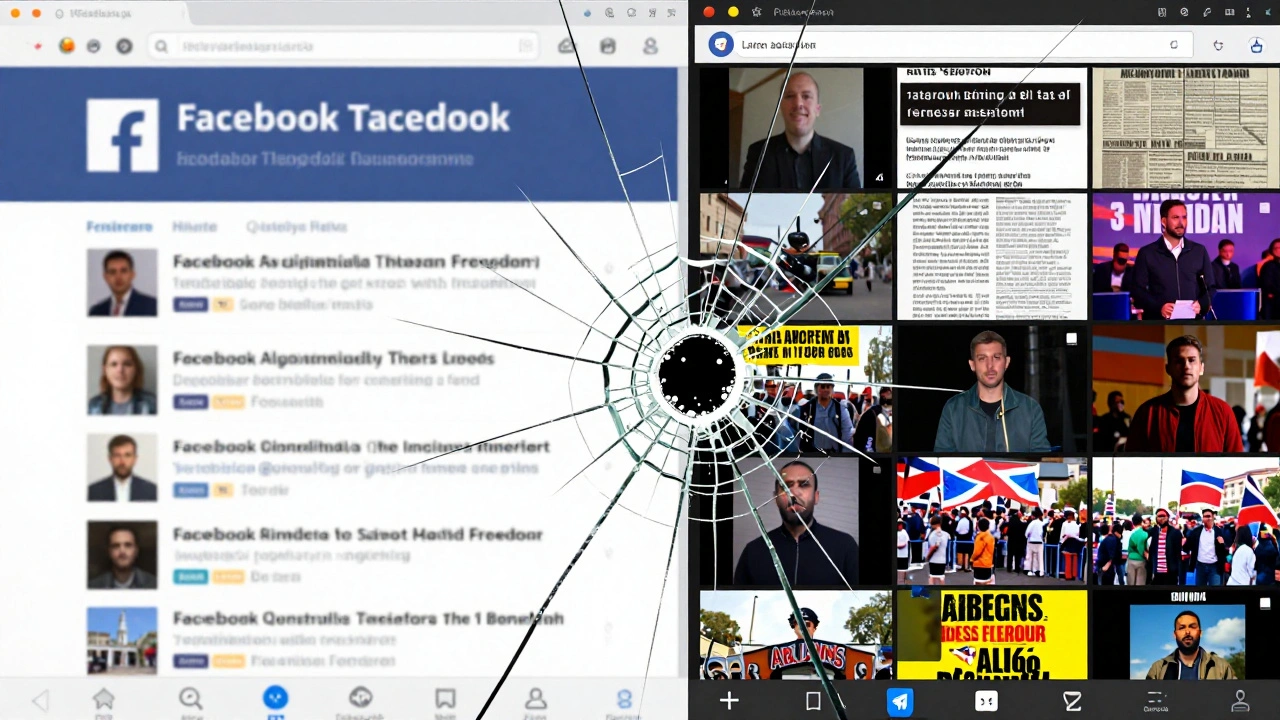
Facebook deleted 22.5 million pieces of hate speech content in the first quarter of 2022. Twitter suspended 11 million accounts in 2021 for policy violations. Telegram? In the same period, it complied with fewer than 6,000 government requests for user data. By early 2025, that number rose to just over 22,000 - still a tiny fraction compared to other platforms. And even then, most requests didn’t lead to content removal.
That’s the core appeal. Conservative users aren’t looking for more likes or better algorithms. They’re looking for unfiltered access. On Telegram, a post about election fraud, gun rights, or transgender healthcare stays up - no matter how controversial. There’s no shadowban. No algorithm that hides your message because it “violates community standards.”
Marshall Kosloff from the Foundation for American Innovation put it bluntly: “Telegram is anti-moderation - that makes it right-wing coded.” That’s not an accident. It’s the design.
Channels, Not Feeds
Unlike Facebook or Twitter, where your news is pushed to you by an algorithm that favors outrage, Telegram gives you control. You subscribe to channels. You choose who to follow. No AI decides what you see. No engagement hooks. No curated timelines.
Some of the biggest Telegram news channels have over 43 million subscribers. These aren’t influencers. They’re news outlets, activists, and citizen journalists who post raw video, documents, and live updates - the kind of content mainstream outlets often edit, delay, or bury. One channel might share a 20-minute clip of a town hall where a local official is questioned about school policies. Another might post scanned copies of school board meeting minutes. There’s no filter. No spin.
According to Pew Research, 85% of Telegram users follow at least one news channel. On Facebook, that number is 53%. The difference isn’t just size - it’s intent. People on Telegram aren’t scrolling for entertainment. They’re hunting for information they believe isn’t available elsewhere.
What They’re Reading
Content analysis of 200 major conservative Telegram channels in 2022 showed clear patterns:
- 57% focused on guns and gun rights
- 48% covered LGBTQ issues
- 42% discussed vaccines
- 42% talked about abortion
These aren’t random topics. They’re flashpoints where conservative audiences feel silenced elsewhere. On YouTube, videos questioning vaccine mandates get demonetized. On Twitter, threads about gender identity policies get flagged. On TikTok, clips of school board meetings are removed for “misinformation.”
Telegram doesn’t care. And that’s why it’s become the go-to hub for these conversations. Users don’t just consume news - they feel heard. One top comment on the r/Conservative subreddit summed it up: “On Telegram, I get the full context of stories without mainstream media framing.”
The Cost of Freedom
But there’s a trade-off. Telegram’s lack of moderation means it’s also a breeding ground for misinformation. A November 2025 survey by the Foundation for American Innovation found that 63% of conservative Telegram users had encountered false claims about election fraud. Another 47% saw fabricated stories about government surveillance or “deep state” plots.
Here’s the twist: 82% of those users said they could tell what was real and what wasn’t. That’s not arrogance. It’s experience. They’ve learned to cross-check sources, look for document timestamps, and verify video metadata. Many rely on third-party guides like “The Telegram Patriot’s Handbook,” downloaded over 147,000 times by December 2025.
Still, experts warn this environment is vulnerable. Cornell University researchers confirmed that news shared on platforms with more conservative user bases tends to be lower in quality by traditional journalistic standards. And foreign actors know it. U.S. intelligence reports show Russian and Chinese state-backed accounts have used Telegram to amplify divisive content - especially around elections and race.
Why Not Parler or Truth Social?
There are other conservative platforms. Parler. Truth Social. Gab. But most of them got crushed by app store bans. Parler was removed from Apple’s App Store in January 2021. Its iOS downloads dropped 97% overnight.
Telegram? Its iOS downloads jumped 180% during the same period. Why? Because it never got banned. It’s built on open protocols. It works on any device. You can download it from the website. You don’t need Apple or Google’s permission. That’s a huge advantage.
Plus, Telegram lets channel admins earn money. Over 70% of active news channels on Telegram generate revenue through ads or sponsorships. That means conservative media outlets can build sustainable operations without relying on ad networks that might pull their ads for “controversial” content.
Who’s Using It
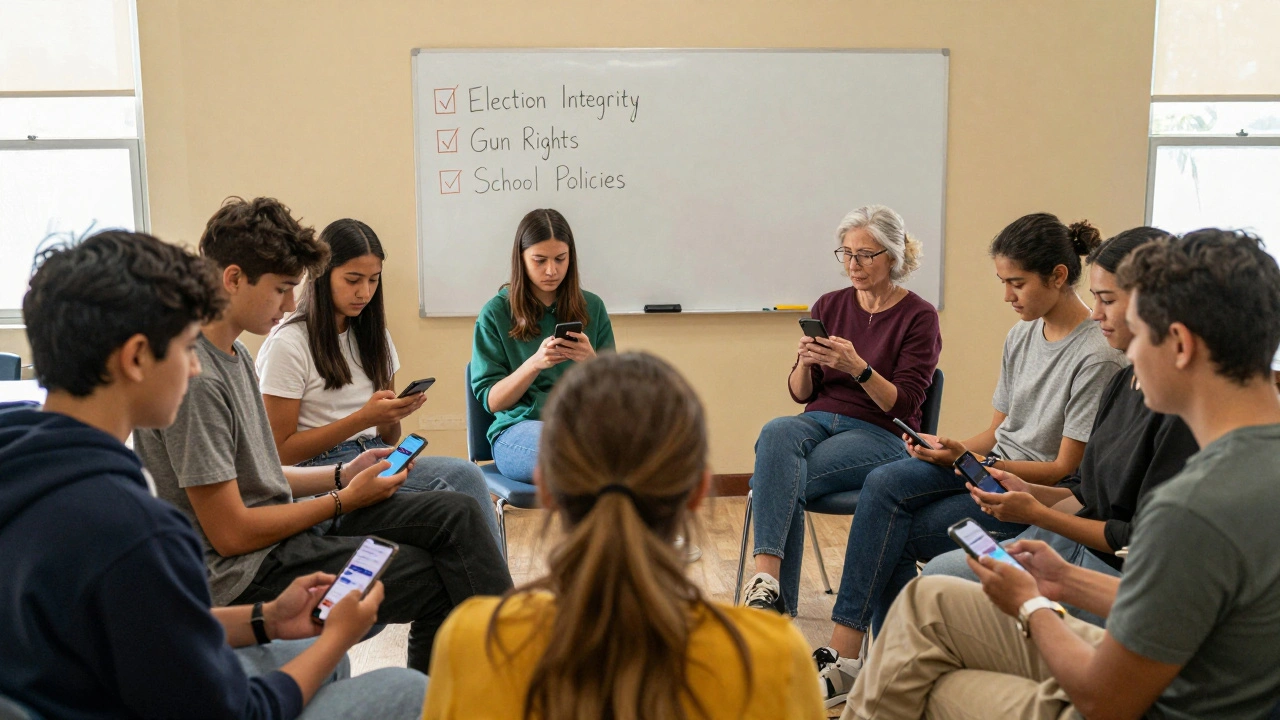
Telegram’s user base isn’t just older conservatives. The biggest growth is among young right-leaning users. In 2025, 15% of U.S. conservatives under 25 got their news from Telegram - up from just 5% in 2021. That’s the future.
The average user is male (59.4%), aged 25-34. But it’s not just tech-savvy millennials. Grandparents are joining too. The setup is simple: download the app, search for a channel name, tap “Join.” Done. No complex settings. No confusing algorithms. It takes 15 to 20 minutes to set up a full news feed.
And they’re not leaving. Pew Research projected that by 2026, 52% of conservative Telegram users would “definitely not” return to mainstream platforms - even if those platforms changed their moderation rules.
The Bigger Picture
This isn’t just about technology. It’s about trust. Conservative audiences don’t trust the media. They don’t trust the tech giants. And they don’t believe their views are welcome on platforms that used to be their home.
Telegram didn’t win because it’s better. It won because it’s neutral. It doesn’t pretend to be a public square. It’s a bulletin board. And for millions, that’s exactly what they needed.
As Dr. Alice Marwick from Cornell put it: “News shared on platforms with more conservative user bases is, on average, lower in quality.” But quality isn’t the only metric. Accuracy matters. So does access. And for now, Telegram gives both - even if it comes with risks.
The question isn’t whether Telegram will keep growing. It already is. The real question is: what happens when the next election comes - and half the country gets its news from a platform that refuses to decide what’s true?