Why You Need a Moderation Bot for Your Telegram Group
If you run a Telegram group with more than a few hundred members, you already know the chaos. Spam links flood in every minute. Trolls drop hate speech between memes. New users flood in and post the same question 50 times. Manual moderation becomes impossible-especially if you’re juggling a job, family, or other projects.
That’s where moderation bots come in. These aren’t fancy AI robots from sci-fi movies. They’re simple, automated programs that act like tireless volunteers who never sleep, never get tired, and never miss a message. They delete spam, ban repeat offenders, verify new members, and even welcome newcomers with a friendly message. In fact, 73% of Telegram groups with over 1,000 members now use at least one bot, according to Botpress (2024).
Telegram’s user base hit 800 million monthly active users in mid-2024. That means your group isn’t just a small chat-it’s part of a massive, fast-moving network. Without automation, your group will either drown in noise or become a toxic mess. A good bot doesn’t replace human moderators. It frees them up to handle real issues, not copy-paste replies.
What Moderation Bots Actually Do
Not all bots are the same. Some are basic filters. Others use machine learning. Here’s what the most effective ones can do right now:
- Block spam links-They scan every message for http, https, or www links and delete them instantly. This stops phishing scams and malware sharing.
- Remove duplicate messages-If someone posts the same thing 10 times, the bot catches it. It checks both text and media files using unique IDs, so reposted memes or videos get nuked.
- Filter hate speech-Advanced bots like the one built by Osagie Anolu use AI to detect slurs and toxic language with 99.9% accuracy and zero false positives in real-world tests.
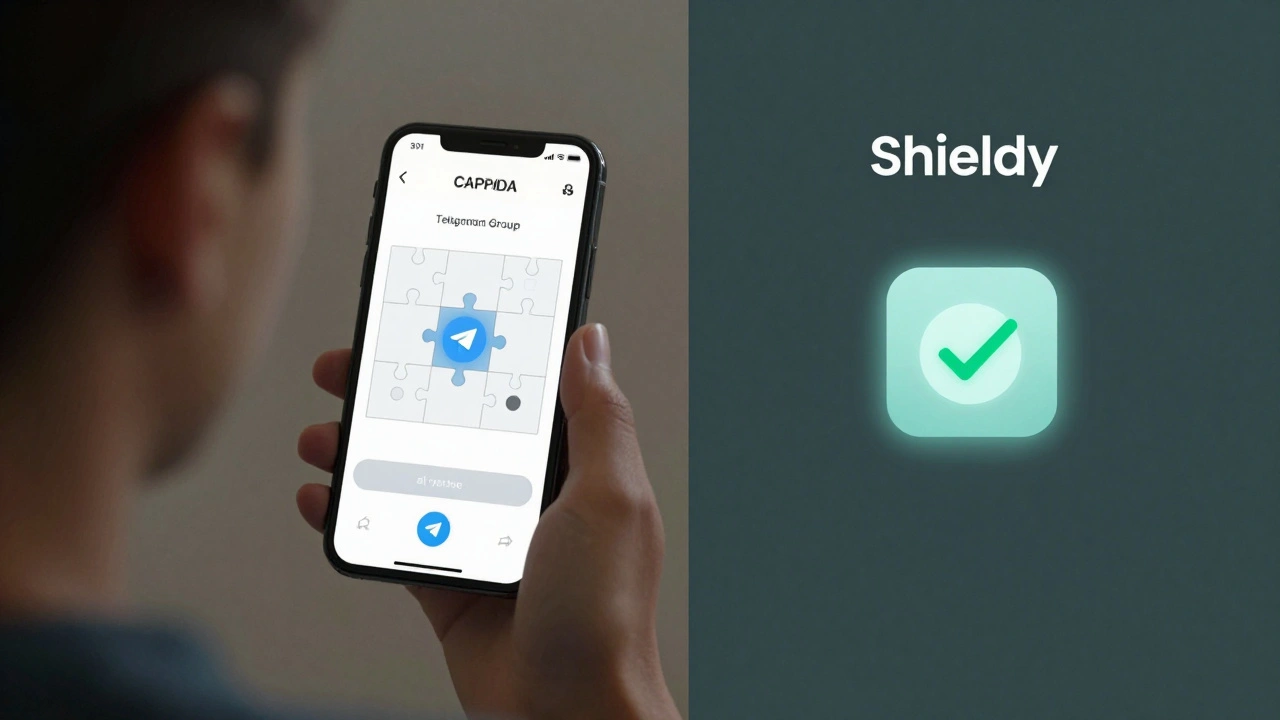
- Verify new members-Bots like Shieldy make newcomers solve a simple CAPTCHA or wait 30 seconds before they can send messages. This stops bot armies from flooding your group.
- Enforce rules automatically-Two warnings? Auto-ban. Posting banned keywords? Message deleted. User tries to send a link with a hidden button? Gone.
- Log everything-Good bots keep a record of who did what, when, and why. This helps you review behavior patterns or explain bans to users.
Some bots even handle welcome messages, daily announcements, or trivia games. But the core job? Clean up the noise so real conversation can happen.
Top Moderation Bots in 2026
There are dozens of bots out there. Here are the three most reliable types, based on real user feedback and technical performance:
Shieldy - Best for Anti-Spam and New Member Control
Shieldy is the go-to for groups that get flooded with fake accounts. It doesn’t just delete spam-it stops it before it starts. When someone joins, Shieldy blocks them from sending messages until they complete a simple verification step. That could be clicking a button, solving a basic puzzle, or waiting a short time. It’s not foolproof, but it cuts spam by 80% in most cases. It’s free, easy to set up, and used by over 15,000 groups.
Combot - Best for AI-Powered Moderation
If your group deals with sensitive topics-politics, religion, mental health-Combot is your best bet. It uses machine learning to analyze message context, not just keywords. Instead of just blocking the word “hate,” it understands if someone’s saying “I hate this movie” versus “I hate people like you.” It scores messages on a toxicity scale and only acts when the score hits a threshold you set. One community reported a 30% drop in moderation workload after switching to Combot.
Telegram-Moderator-Bot (Open Source) - Best for Custom Control
This is the bot developers use when they want full control. It’s free, open-source, and runs on GitHub. You can tweak every rule: ban after two warnings, auto-delete messages with more than three links, ignore messages from admins, log every action. It’s not plug-and-play. You need to know how to install it on a server. But if you’re tech-savvy or have a dev on your team, this gives you the most power. It’s also the only one that lets you set custom commands like /warn @user or /ban @user.
What Not to Do: Common Mistakes
Even the best bot can backfire if you set it up wrong. Here are the top three mistakes people make:
Mistake 1: Giving the Bot Too Many Permissions
Telegram lets you give bots admin rights. Don’t. Not unless you absolutely need to. Bots with “Ban Users” or “Add Admins” permissions are security risks. In Q3 2024, 17% of compromised Telegram groups were hacked through overpowered bots. A bot should only have these permissions:
- Delete messages
- Pin messages
- Invite links
- Change group info
That’s it. No ban rights. No admin rights. If you need to ban someone, do it manually-or use a bot command like /ban @username that only you or trusted mods can trigger.
Mistake 2: Setting Rules Too Strict
One group banned users for saying “I’m tired” because the bot flagged “tired” as a slur. That’s a false positive. AI bots aren’t perfect. If your bot deletes too many legitimate messages, people will leave. Start with loose filters. Test for a week. Watch the logs. Adjust slowly. Better to let a few bad posts slip through than scare off your entire community.
Mistake 3: Ignoring the Rate Limits
Telegram limits bots to 30 messages per second. If your bot tries to delete 50 spam messages in a burst, it’ll get blocked. That’s why good bots use a “rate limiter.” The bot waits a few milliseconds between actions so it doesn’t trigger Telegram’s limits. If you’re building your own bot, this is non-negotiable. Open-source tools like rateLimiter in Node.js handle this automatically.
How to Set Up a Bot (Simple Guide)
Setting up a bot doesn’t require coding. Here’s how to do it in five minutes:
- Open Telegram and search for @BotFather.
- Type
/newbotand follow the prompts. Pick a name and username (e.g., MyGroupModeratorBot). - Copy the API token it gives you.
- Go to your group, add the bot as an admin.
- Give it only the permissions it needs: delete messages, pin messages.
- Visit the bot’s official website (e.g., shieldy.app or combot.org) and paste your token to connect it.
- Follow the setup wizard to enable filters: spam links, duplicates, verification.
That’s it. Most bots are ready to go in under 10 minutes. No server, no code, no cost.

When to Build Your Own Bot
Most groups don’t need to build their own. But if you run a business, a large community, or need custom rules, it’s worth considering. Here’s what you’ll need:
- A server (a $5/month VPS from DigitalOcean or Linode works for basic bots)
- Basic programming knowledge (Python or Node.js)
- Access to Telegram’s Bot API
- Time: 40-60 hours for a basic bot, another 20-30 for AI features
Companies like MobileProxy.Space offer custom bot builds starting at $2,500. If you’re a business with a large Telegram presence, that’s a small investment compared to lost engagement or brand damage from unchecked spam.
The Future of Moderation Bots
Telegram is investing $500 million over the next three years into bot infrastructure. That means better tools are coming. By 2026, expect:
- Context-aware AI-Bots that understand sarcasm, cultural references, and intent, not just keywords.
- Multi-language support-No more English-only filters. Bots that detect hate speech in Spanish, Arabic, Russian, and more.
- Integration with Business Mode-Telegram’s business tools now let bots handle payments, tickets, and customer service. Moderation bots will soon double as support agents.
- Regulatory compliance-Bots will auto-flag content for legal review in the EU and US under new digital laws.
The goal isn’t to replace humans. It’s to make moderation scalable. A bot handles the 90% of low-effort cleanup. That leaves you to handle the hard stuff: mediating conflicts, rewarding good members, and building real community.
Final Thoughts
Telegram groups are powerful. They can become hubs for learning, support, and connection. But without moderation, they turn into digital dumpsters. A good bot isn’t a luxury-it’s a necessity. Start simple. Use Shieldy or Combot. Watch how it performs. Adjust. Then scale. The right bot won’t just clean up your group. It’ll protect your time, your reputation, and your community.