Telegram isn’t just another messaging app. With over 800 million active users and more than 2 million public channels, it’s become one of the most powerful tools for spreading falsehoods - faster and farther than almost any other platform. Unlike Facebook or Twitter, Telegram doesn’t algorithmically rank posts. It doesn’t flag content for being misleading. And it doesn’t limit how many times a message can be forwarded. That means if a lie is posted in a public channel with 500,000 subscribers, it can reach half a million people in seconds - with zero checks.
Here’s the problem: once a falsehood spreads on Telegram, it’s nearly impossible to contain. Research shows that false information on Telegram reaches 35% of its total potential reach within just six hours. Compare that to Twitter, where it takes longer for misinformation to peak. On Telegram, the damage is done before anyone even has a chance to react.
Why Telegram Is a Perfect Storm for Lies
Telegram’s design makes it ideal for amplifying falsehoods - not because it’s evil, but because it was built to be private and free. That’s great for activists and journalists in repressive regimes. But it’s also perfect for bad actors.
Public channels can have unlimited subscribers. There’s no cap on forwards. Administrators can remain anonymous. And because secret chats are end-to-end encrypted, even Telegram itself can’t see what’s being shared in private groups - which, according to RSIS, account for 63% of all misinformation coordination.
But here’s the twist: the biggest problem isn’t the private groups. It’s the public channels. That’s where lies go viral. And the worst offenders? Just a tiny fraction of them. Researchers found that only 5.7% of Telegram channels act as “cross-community hubs” - channels that connect isolated groups. Yet these few hubs are responsible for 72.3% of all misinformation spreading across the network.
These hubs don’t just post lies. They post them smartly. They use local languages (4.1 times more engagement than English content), include emotionally charged images, and repeat the same false narrative across multiple channels within minutes. One study documented a pro-Russian campaign that pushed the same false story across 17 channels in just 15 minutes - creating the illusion that it was everywhere, and therefore, true.
How Falsehoods Get Believed
People don’t share lies because they’re stupid. They share them because they’re convincing.
False content on Telegram uses psychological tricks that work every time. It frames events as crises - “This vaccine will kill your child” - 8.3 times more often than legitimate channels. It uses clickbait headlines and manipulated images that trigger fear or outrage. According to Frontiers in Communication research, these tactics increase sharing by 63.2%.
And because Telegram shows exact view counts and subscriber numbers, users assume a channel with 200,000 followers must be trustworthy. A 2023 ICCT survey found that 54.6% of users believed the misinformation they saw on Telegram was “plausibly true” simply because it was presented in a polished, high-subscriber channel.
Worse, most people never fact-check. In the same survey, 89.4% of users admitted they rarely or never verify messages they get from friends or public channels. Why? Because the platform feels personal. It feels safe. It feels like family.
What Actually Works to Stop the Spread
So what can be done? The short answer: you can’t stop every lie. But you can stop the biggest ones.
Researchers from arXiv identified a powerful insight: if you target just 12.3% of the most influential channels, you can disrupt 85% of all misinformation flows. That’s not about deleting posts. That’s about cutting off the arteries of the network.
Here’s how:
- Identify the hubs. Look for channels that share content across unrelated groups - political, health, conspiracy, religious. These are the bridges. They often have high view counts, frequent posting, and heavy use of multimedia.
- Profile their patterns. Use tools like latent profile analysis (LPA) to detect channels that repeatedly use crisis framing, emotional manipulation, or repetitive messaging. Studies show this method identifies harmful channels with 92.7% accuracy.
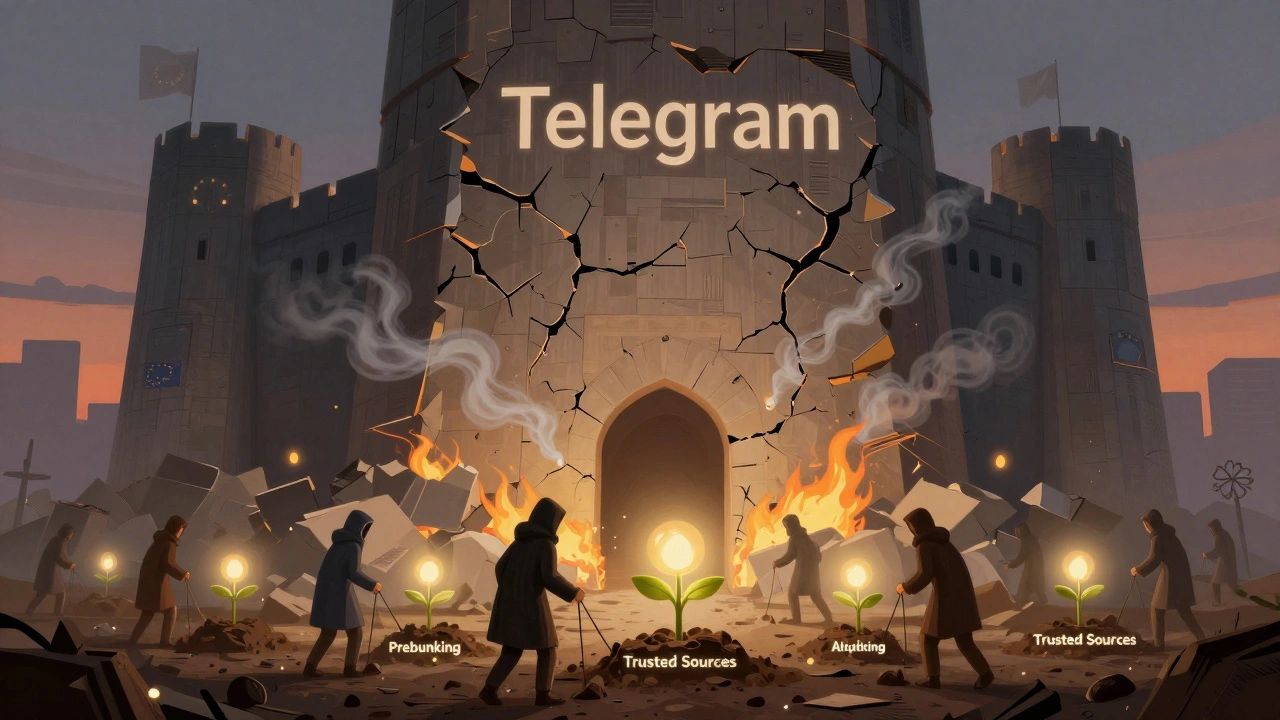
- Amplify trusted counter-narratives. The best defense is a better story. Channels like @FactCheckEU (with 148,000 subscribers) have proven that rapid, clear debunking works. Users who see corrections are 73.2% more likely to change their minds.
- Use prebunking. Don’t wait for the lie to spread. Release accurate, simple explanations before the falsehood hits. AI models trained on Telegram’s patterns can now predict and prebunk misinformation with 84.3% accuracy - and that’s only going to get better.
Some tools are already helping. CheckMate, a browser extension launched in June 2024, has been downloaded over 187,000 times. It flags suspicious links and compares messages to verified fact-checks - but only on public channels. It can’t touch private groups. Still, it’s a start.
Why Telegram Won’t Fix It Themselves
Telegram’s CEO, Pavel Durov, has said the platform shouldn’t act as “judge, jury, and executioner.” That’s a principled stance - until you realize that refusing to act is itself a choice. And it’s one that’s now being forced by law.
In February 2024, the European Union labeled Telegram a Very Large Online Platform (VLOP) under the Digital Services Act. That means they must now submit quarterly transparency reports and implement a “trusted flagger” system by Q3 2025. That’s a big deal. It’s the first time Telegram will be legally required to cooperate with fact-checkers.
Other governments are stepping up too. Singapore launched a S$20 million initiative to build AI tools that detect deepfakes - and Telegram is a primary target. By 2025, we’ll see more automated systems that flag high-risk content before it spreads.
But here’s the catch: Telegram still blocks third-party monitoring tools. Their API changes 27 times a year, making it hard for researchers to keep up. Tools that worked last month may break this week. That’s intentional. It’s not negligence. It’s resistance.
What You Can Do Right Now
You don’t need to be a tech expert to make a difference. Here’s what works:
- Don’t share unverified content. Even if it comes from a friend. If it’s shocking, emotional, or urgent - pause. Ask: “Where did this come from?”
- Follow verified fact-checkers. Subscribe to channels like @FactCheckEU, @Snopes, or regional debunking groups. Turn on notifications so you get corrections fast.
- Report suspicious channels. Use Telegram’s built-in reporting tool. If enough people report a channel, it gets flagged for review.
- Teach others. Show friends how to spot manipulation tactics: fake logos, mismatched dates, poor grammar in “official” messages.
And if you’re part of a community group, NGO, or local organization? Start your own fact-checking channel. Don’t wait for Telegram to fix this. Build the counter-narrative yourself.
The Bigger Picture
This isn’t just about Telegram. It’s about how we trust information in a world where anyone can broadcast to millions. The same tools that help us organize protests also help spread lies. The same encryption that protects dissidents also hides criminals.
The solution isn’t to shut Telegram down. It’s to make it harder for lies to win. That means better tools, smarter users, and more accountability - not censorship.
By 2026, AI systems may be able to predict and block 89% of known falsehoods before they spread. But they’ll only work if people use them. If fact-checkers have access. If governments enforce rules. And if users stop treating every forwarded message like gospel.
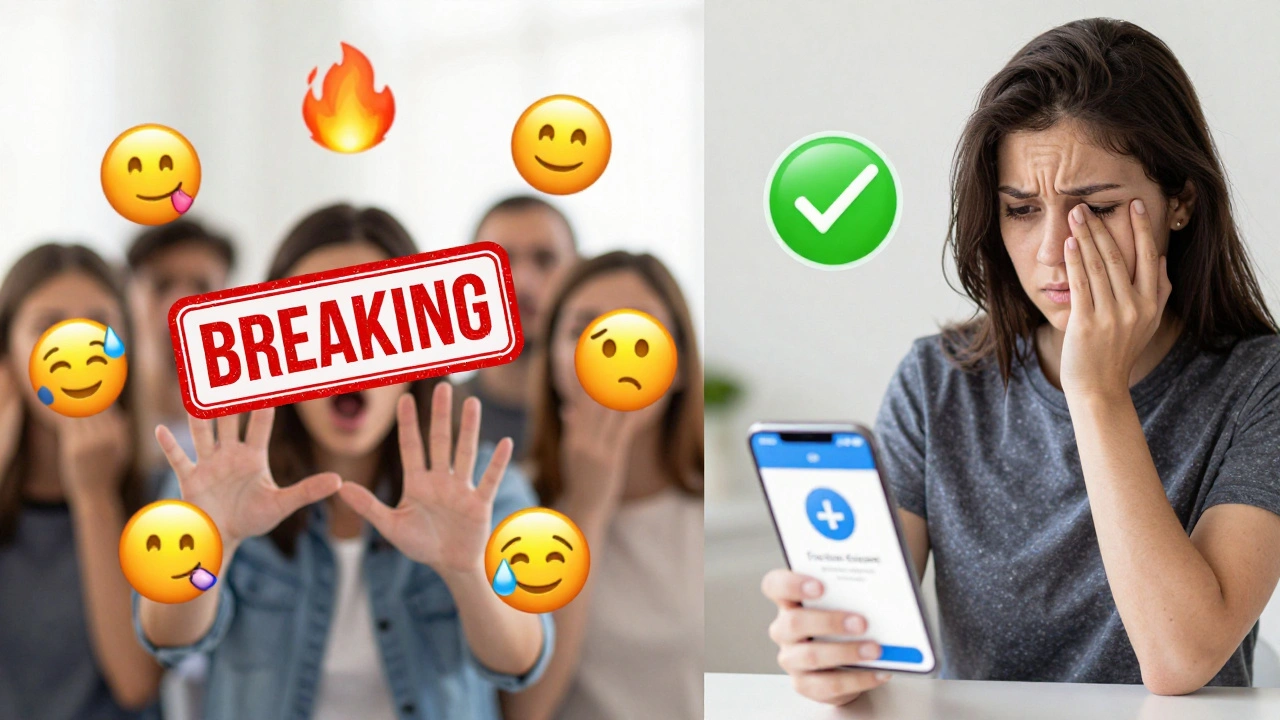
The next time you see a post that says “BREAKING: They’re lying about this!” - ask yourself: Who benefits if I believe this? And who’s behind it?
Truth doesn’t need to go viral. It just needs to be heard.
Can Telegram be trusted to stop misinformation on its own?
No. Telegram has consistently resisted content moderation, citing free speech and privacy. While it introduced a "suspected bot" warning in December 2024, this only affects a small fraction of high-traffic channels. Legal pressure from the EU’s Digital Services Act is forcing change, but Telegram still blocks third-party fact-checking tools and doesn’t scan private groups. Real progress requires external oversight, not platform goodwill.
Why are private groups on Telegram harder to monitor than public channels?
Private groups on Telegram use end-to-end encryption, meaning even Telegram’s servers can’t read the messages. This protects user privacy but also hides coordination among bad actors. Research shows 63% of misinformation planning happens in these encrypted spaces. Unlike public channels, where you can see subscriber counts and message views, private groups operate in the dark - making detection nearly impossible without insider access.
What’s the most effective way to combat misinformation on Telegram?
The most effective strategy targets the top 12.3% of channels that act as cross-community hubs - these few channels spread 85% of all misinformation. Combining AI-powered content profiling with rapid fact-checking by trusted sources like @FactCheckEU has proven successful. Prebunking - releasing accurate information before a lie spreads - is also highly effective, with AI models achieving up to 84.3% accuracy in predicting false narratives.
Do fact-checking tools like CheckMate work on Telegram?
Yes - but only on public channels. CheckMate, a browser extension with over 187,000 downloads, compares messages to verified fact-checks and flags suspicious links. However, Telegram’s API restrictions prevent it from scanning private groups or encrypted chats. It’s a useful tool for public content, but it’s not a complete solution. Its effectiveness is limited by Telegram’s frequent API changes, which require constant updates.
How do AI tools detect falsehoods on Telegram?
AI tools analyze patterns in language, media use, and sharing behavior. They look for crisis framing, emotional manipulation, repetitive messaging, and image-text mismatches - all common in false content. Models are trained on datasets of over 900,000 messages from 1,748 public channels. These systems can now identify harmful channels with 92.7% accuracy and predict new falsehoods before they spread, especially when combined with real-time message extraction and multilingual analysis.
Is Telegram growing faster than other platforms in terms of misinformation?
Yes. Telegram’s user base grew 32.7% year-over-year to 800 million in Q4 2024, and misinformation-related channels are growing at 41.2% annually - faster than any major platform. Its lack of algorithmic filtering, unlimited forwards, and anonymous administration make it uniquely attractive to bad actors. AI-generated deepfakes on Telegram increased by 287% in Q3 2024 alone, making detection harder than ever.