Why Telegram Became the Default Tool for Field Reporting
When a stringer in eastern Ukraine needs to send photos of troop movements before dawn, or a reporter in Sudan has to relay eyewitness accounts during an internet blackout, they don’t reach for email or WhatsApp. They open Telegram. It’s fast, works on old phones, and survives when networks collapse. By 2025, 68% of major news organizations rely on Telegram to coordinate with stringers and regional bureaus - not because it’s secure, but because nothing else works as well under pressure.
Telegram’s edge isn’t encryption. It’s capacity. A single channel can handle 200,000 members. File uploads go up to 2GB - ten times what Signal allows. Messages sync across every device: phone, tablet, laptop. That’s critical when a stringer switches phones after a raid, or a bureau chief needs to monitor updates from five different cities at once.
The Hidden Risks No One Talks About
But here’s the problem: most people don’t realize Telegram isn’t encrypted by default. Only Secret Chats are end-to-end encrypted, and even then, they don’t sync across devices. The vast majority of messages - the ones used for daily coordination - live on Telegram’s servers. That means if someone gains access to those servers, they can read your messages.
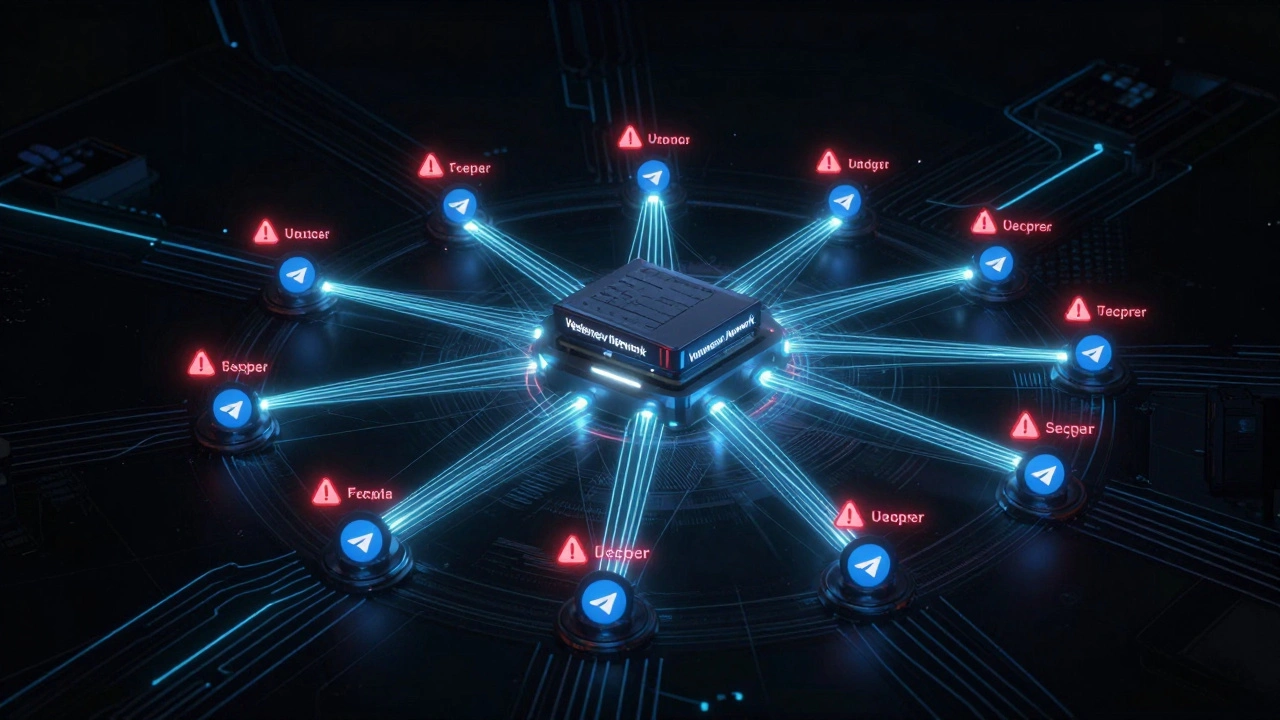
And they might already have. Telegram’s infrastructure is managed by Vladimir Vedeneev, whose companies have ties to Russian intelligence. A 2024 OCCRP investigation found that the same network operators who once served Russia’s FSB still control over 10,000 IP addresses used by Telegram. Even encrypted messages carry a hidden identifier - an auth_key_id - that lets investigators track which device sent what, even if they can’t read the content.
That’s not theoretical. In 2024, Telegram handed over data on 2,253 users to U.S. authorities. Germany made 945 requests. Spain made 213. Compare that to Signal, which responded to only 0.02% of U.S. requests the same year. Telegram doesn’t hide data because it can’t - it stores too much of it.
How Real Newsrooms Are Using It (And Where They’re Failing)
Al Jazeera used Telegram to coordinate 347 stringers during the 2023 Gaza conflict. BBC reporters in Belarus relied on it during election protests. Voice of America saw a 40% drop in coordination failures after switching to Telegram in Afghanistan.
But behind the success stories are dangerous habits. A 2025 Knight Foundation audit found only 18% of newsrooms consistently used Secret Chats for sensitive talks. Most used regular chats - the kind that can be subpoenaed, hacked, or leaked. A leaked New York Times memo from 2024 warned staff: “Avoid discussing source identities or operational details via Telegram.” That memo came after Russian operatives tracked a Moscow stringer by linking their IP address to a Telegram login.
Even when people know the risks, they keep using it. A Reddit poll of 142 BBC stringers showed 87% trusted Telegram during network outages, but 63% admitted they were scared of being tracked.
What You Must Do to Stay Safe
Using Telegram isn’t about avoiding it. It’s about using it right. Here’s what works:
- Use Secret Chats for sensitive info only - source names, locations, planned movements. These chats don’t sync. They vanish if you log out. They’re the only safe way to talk privately on Telegram.
- Never use the same phone for work and personal life - Burner phones are non-negotiable. A stringer in Syria used a $30 Android phone bought with cash. No Google account. No SIM card linked to their real name. That phone only ran Telegram.
- Turn off cloud backups - If your phone gets stolen or seized, your Telegram messages could be recovered from iCloud or Google Drive. Disable automatic backups in settings.
- Use two-factor authentication - Even if someone gets your phone number, they can’t log in without your password. Set it up now.
- Forward official messages to your agency’s secure system - USAID and the U.S. National Archives require federal employees to save Telegram messages within 20 days. Most do it by taking screenshots or exporting chats. It’s clunky, but it’s the law.
What the Rules Say - And What They Don’t
Government agencies have clear policies. USAID’s Automated Directives System (ADS) from October 2024 says Telegram is allowed only if:
- Partners refuse to use other platforms
- There’s an immediate threat to safety
- Coordination is significantly improved
And there’s one absolute rule: Never send NOFORN (Not Releasable to Foreign Nationals) information over Telegram. That includes classified data, source identities, or internal strategy.
The U.S. State Department’s Binding Operational Directive 25-01, issued in March 2025, bans Telegram for classified work - but allows it for unclassified coordination if you follow security steps. The EU’s DORA law, effective January 2025, forces financial institutions to audit Telegram like any other third-party tool - meaning you can’t just use it because it’s convenient.
Alternatives Are Emerging - But They’re Not Perfect
Some newsrooms are leaving Telegram. The Guardian migrated 60% of its stringer coordination to Session and Element - apps built on decentralized networks with no central server to hack. But these apps are slower. They don’t support 2GB files. They’re harder for older stringers to use.
Signal is the gold standard for encryption - but its 1,024-member group limit makes it useless for large networks. WhatsApp? It’s encrypted, but owned by Meta, and banned in many countries. Some bureaus now use a hybrid: Telegram for bulk updates, Signal for private check-ins.
Telegram’s new “Enterprise Coordination Mode,” announced in January 2025, promises mandatory end-to-end encryption and audit logs. But experts like Bruce Schneier say the core architecture hasn’t changed. The auth_key_id flaw? Still there. The server access? Still controlled by Vedeneev’s network.
Training Is the Only Real Defense
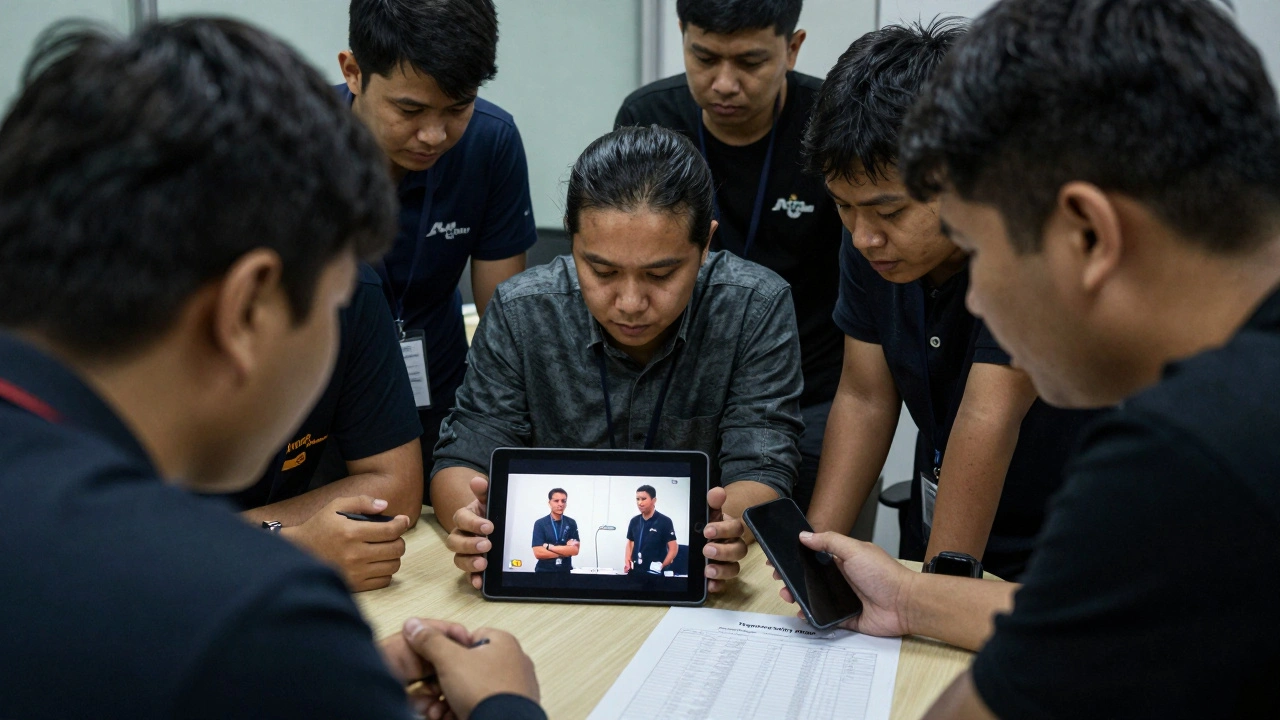
Most stringers aren’t tech experts. They’re locals with smartphones and courage. That’s why the Associated Press created a 12-hour certification program in 2024. It taught stringers how to set up Secret Chats, use burner phones, and recognize phishing attempts. Result? A 72% drop in security incidents.
Training doesn’t have to be long. A 30-minute video, a printed checklist, and a live Q&A with a security officer can make the difference between a report that gets published - and a stringer who disappears.
The Bottom Line: Use It, But Don’t Trust It
Telegram is the best tool we have for coordinating in broken systems. It’s the only app that works when the lights go out, the internet dies, and the police are hunting you. But it’s not secure. It’s survivable.
If you’re managing a network of stringers, your job isn’t to find a perfect app. It’s to build a system that works despite the flaws. Use Telegram for speed and reach. Use Secret Chats for secrets. Use burner phones for safety. Save every message. Train everyone. And always, always have a backup plan.
Because in journalism, the goal isn’t just to report the truth. It’s to make sure the people who bring you the truth stay alive to tell it tomorrow.