Telegram news channels are booming. Millions subscribe to daily updates on politics, finance, sports, and breaking news. But here’s the quiet crisis no one talks about: content fatigue. Subscribers aren’t leaving because the news is bad. They’re leaving because it’s too much - too fast, too repetitive, too endless.
Think about your own feed. You open Telegram, scroll through ten messages from your favorite news channel, and half of them are just rephrased headlines from yesterday. You’ve seen the same video clip three times this week. The tone is urgent every time. No breaks. No context. Just noise. That’s not engagement - that’s exhaustion.
What Content Fatigue Actually Looks Like
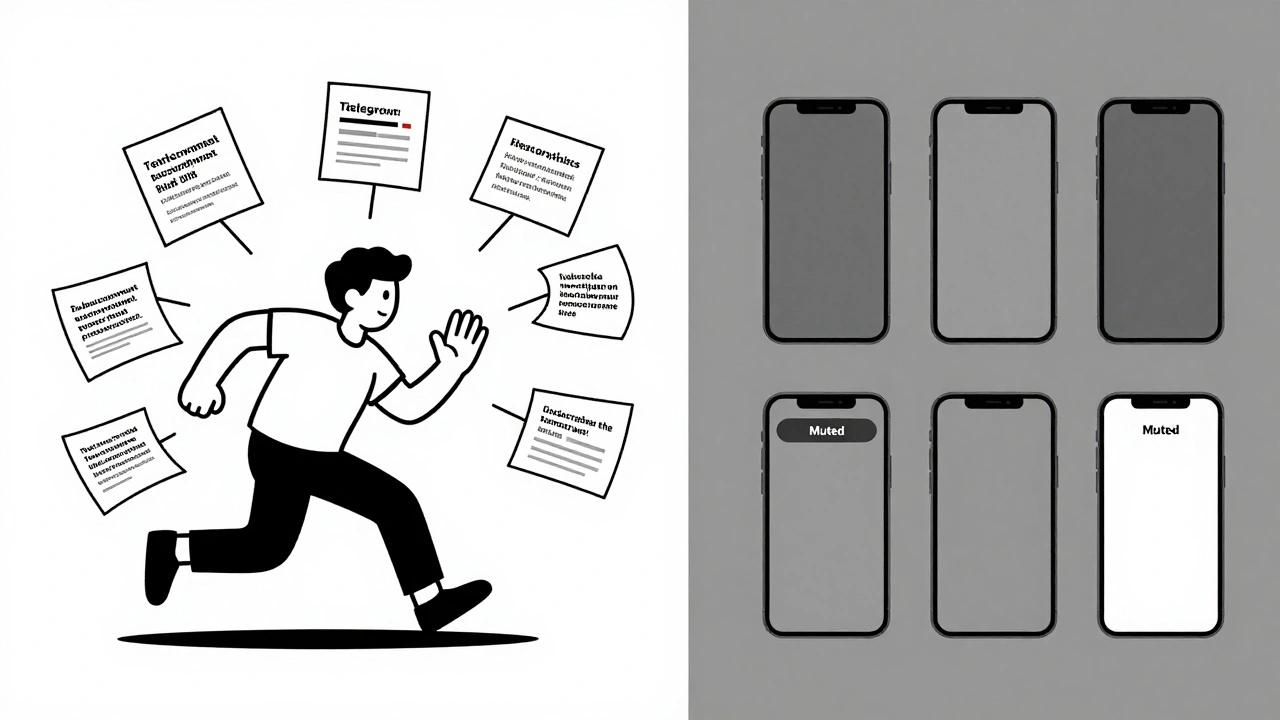
Content fatigue isn’t about being bored. It’s about mental resistance. When someone stops opening your messages, even if they’re still subscribed, that’s fatigue. When they mute your channel after three days of nonstop updates, that’s fatigue. When they delete the app because "I just can’t take it anymore," that’s fatigue.
Unlike social media, where you scroll past content, Telegram is a push platform. Every message lands like a notification. There’s no algorithm to filter out the low-value stuff. If you send five posts a day, your subscribers see all five. And if every one feels like a demand for attention, they’ll shut it off.
Real-world example: A Telegram news channel in Ukraine saw its daily opens drop 42% in six weeks - not because of political events slowing down, but because they were sending 7-10 posts per day, mostly rehashing the same stories with slight wording changes. Subscribers didn’t unsubscribe. They muted. And muted users don’t show up in analytics.
Signs Your Subscribers Are Fatigued
You can’t see fatigue in open rates alone. You need to look at patterns. Here are the real indicators:
- Drop in link clicks - People still open your messages, but they stop clicking links. They’re reading headlines, then closing.
- Increased muting - Telegram doesn’t show mute stats, but if your reply rate drops sharply while subscriber count stays flat, muting is likely rising.
- Lower response rates - If you ask a question, run a poll, or invite feedback, and fewer people respond than before, they’ve checked out.
- Delayed opens - Messages opened hours later, or not at all, suggest the content isn’t urgent anymore. It’s just background noise.
- Unsubscribes clustered after spikes - If you had a big news event and sent 20 posts in 24 hours, and lost 15% of subscribers in the next 48 hours, you triggered fatigue.
One news channel in Poland tracked this by analyzing timestamps. They noticed that on days they sent more than four posts, the average time between message send and first open jumped from 11 minutes to 47 minutes. That’s not interest - that’s hesitation.
Why Telegram Is Especially Prone to This
Telegram’s design makes fatigue worse. Unlike Twitter or Facebook, there’s no feed. No chronological sorting. No "suggested" content. It’s a straight line: you send, they receive. No escape.
Also, Telegram news channels often run like press rooms. Editors treat subscribers like a wire service - get the story out fast, then move to the next. But people aren’t journalists. They’re tired humans trying to keep up with a world that never stops yelling.
Compare this to a good newspaper. You get one edition a day. Maybe a special update for breaking news. There’s space to breathe. Telegram channels rarely give that.
How to Measure It (Without Fancy Tools)
You don’t need AI or expensive dashboards. Start with what Telegram gives you:
- Track open times daily - Use Telegram’s built-in analytics (available for channels with 1000+ subscribers). Look for shifts in when people open messages. If opens are happening later in the day, or not at all, fatigue is growing.
- Count replies and poll votes - If you used to get 300 replies to a poll and now get 80, that’s a red flag.
- Monitor mute signals - If you notice a pattern where users who engaged heavily last month are now silent, even if they’re still subscribed, they’re likely muted.
- Run a simple survey - Send one message: "We’re trying to improve. Do you feel overwhelmed by our posts? Reply YES or NO." Don’t overthink it. The answer will tell you more than any metric.
One media outlet in Serbia did this. They sent the survey after a 30% drop in engagement. 68% said YES. They cut their daily posts from 8 to 3. Within two weeks, replies and link clicks went up 51%.
Fixing It: Less Is More
The cure isn’t better content. It’s less content.
Try this:
- Cap daily posts - No more than 3-4 per day. Even 2 on slow days is fine. Quality over volume.
- Introduce "no news" days - Pick one day a week with no updates. Let people catch their breath. You’ll be surprised how much they appreciate it.
- Group similar stories - Instead of five separate posts about the same economic report, make one deep dive. Add context. Explain why it matters.
- Change the tone - Stop sounding like a breaking news alert every time. Use calm, clear language. Sometimes, a simple "Here’s what happened today" works better than "BREAKING: NEW DEVELOPMENT."
- Let subscribers choose - Offer topic-based sub-channels. "Politics Only," "Tech Only," "Weekly Recap." People can opt in to what they care about, not get blasted with everything.
A channel in Canada tried this. They went from 10 posts/day to 3, added a weekly summary, and let users choose topics. Subscribers grew by 18% in three months - not because they sent more, but because they sent better.

What Happens When You Ignore It
Ignoring content fatigue doesn’t make it go away. It makes it worse.
Subscribers don’t leave with a bang. They leave with silence. Muted. Unopened. Forgotten. And once someone mutes your channel, they rarely unmute it. The trust is broken.
And here’s the cruel part: your analytics will still look fine. Subscribers stay. Views stay. You think you’re doing well. But engagement is hollow. You’re not building loyalty. You’re just broadcasting into a void.
One channel in Brazil lost 40% of its active audience over six months. Their manager kept saying, "We’re growing!" But growth was just new people replacing those who quietly vanished. The channel now sends 12 posts a day. No one replies. No one clicks. It’s a ghost.
The Real Metric That Matters
You want to know if your content is working? Don’t look at subscriber count. Look at how often people choose to engage.
If they reply, click, share, or ask for more - you’re winning. If they just open and close? You’re losing.
Content fatigue isn’t about quantity. It’s about respect. People don’t mind being informed. They mind being bombarded. Give them space. Give them clarity. Give them a reason to stay - not because they have to, but because they want to.