Telegram is one of the most powerful tools for breaking news - but it’s also one of the riskiest. A single unverified message can spread like wildfire, mislead thousands, and even trigger real-world consequences. As a news editor on Telegram, you’re not just sharing updates; you’re shaping public understanding. That’s why cross-verification isn’t optional - it’s your first line of defense against misinformation.
Why Telegram Needs Extra Verification Layers
Telegram’s verification system changed in early 2025. The old blue checkmark? Gone. It was too easy to fake. Cybercriminals used it to impersonate banks, government agencies, and news outlets. Now, Telegram uses a decentralized system: only official channels get a checkmark, and only if they’re verified on at least two major platforms like Twitter, Instagram, YouTube, or Wikipedia. But here’s the problem - most breaking news doesn’t come from official channels. It comes from anonymous sources, citizen journalists, or leaked documents in private groups. That’s where your job begins.Just because a channel has a checkmark doesn’t mean the content inside it is accurate. A verified channel can still share unverified rumors. You need to treat every piece of information like a crime scene - don’t trust the label, dig into the evidence.
Technique 1: Source Chain Mapping
Start with the original source. If someone shares a video of a protest, ask: Where did this come from? Who posted it first? Use Telegram’s advanced search filters. Type in keywords like the location, date, or event name. Then sort by date. Look for the earliest post - that’s your anchor point.Once you find it, trace the chain. Did the video appear in a public channel first? Then get reposted in 12 private groups? Check the original uploader’s history. Do they post regularly? Are they known for accuracy? Or do they only share sensational content? Cross-reference their past posts. If they’ve shared false claims before, treat everything they post with extreme caution.
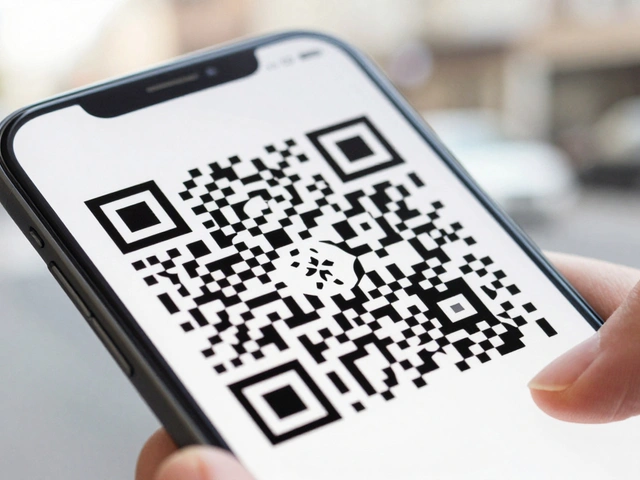
Pro tip: Use the QR code scanner in Telegram to verify the exact channel you’re viewing. Scanning a QR code from a trusted source (like a newsroom’s official website) ensures you’re not looking at a clone account.
Technique 2: Metadata Deep Dive
A photo or video can look real - but it might be edited, taken from an old event, or staged. Download the file. Use free tools like ExifTool or online metadata viewers to check:- When the file was created (not just uploaded)
- Device model and location data (if available)
- Whether it’s been edited (signs of cloning, cropping, or AI manipulation)
For example, a video claiming to show a bombing in Kyiv in February 2026 had a timestamp of October 2024. The uploader claimed it was “recent footage.” Metadata proved it was recycled. That’s how you stop false narratives before they spread.
Technique 3: Third-Party Verification Cross-Check
Telegram’s new verification system lets trusted organizations - like universities, regulators, or professional associations - stamp accounts with custom icons. If a channel says it’s verified by the “International Journalists Association,” click the icon. You’ll see a pop-up explaining exactly who verified it and under what rules.But here’s the key: don’t stop there. Go to the verifying organization’s official website. Look for their list of verified Telegram channels. Does yours appear? If not, it’s a fake. Fake verifiers are common. They use logos that look real - but the real ones are always listed publicly.
Also, check Wikipedia. If a Telegram channel claims to represent a major organization, search for that organization’s Wikipedia page. Does it link to the Telegram channel? If yes, it’s likely legitimate. If no - and the channel says it’s “official” - it’s probably not.

Technique 4: Reverse Image and Video Search
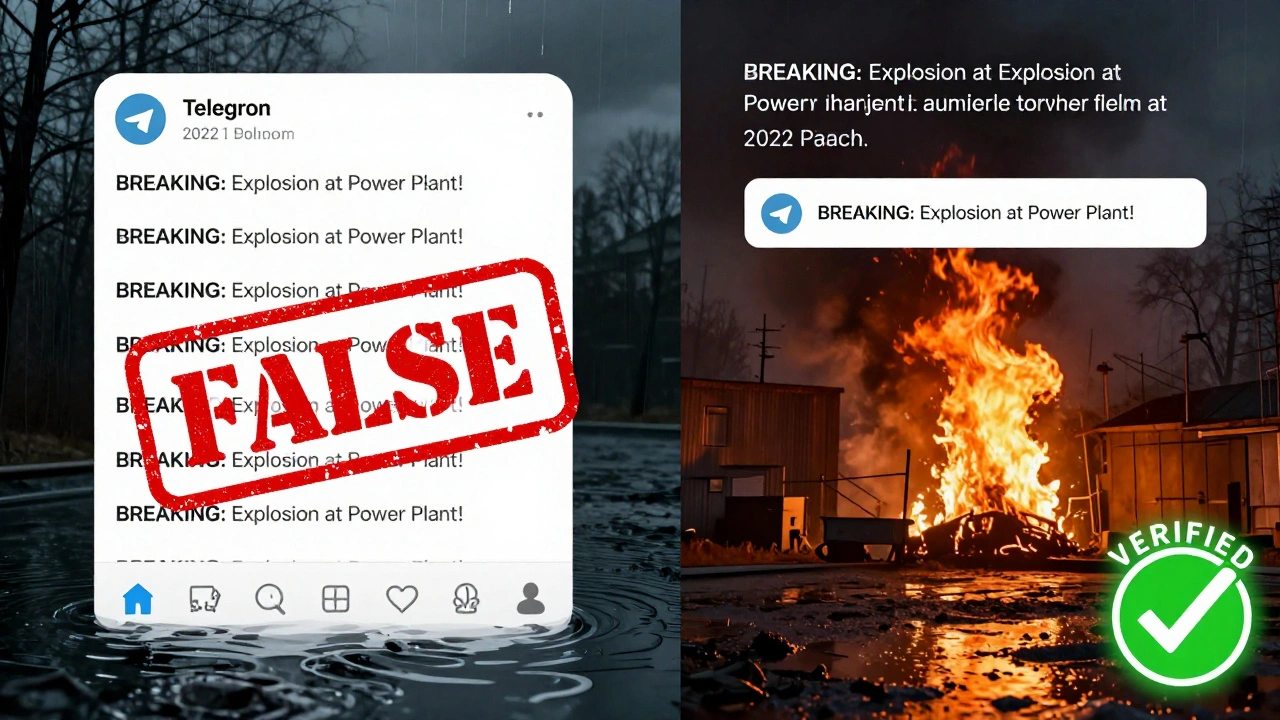
You don’t need expensive software. Use Google Images, Yandex, or TinEye. Upload the image or screenshot from Telegram. If it shows up on a news site from 2023, or on a stock photo library, you’ve found your answer.One editor in Ukraine used this technique during a power outage report. A video showed flames at a substation. Reverse search revealed the same footage had been used in a 2022 fire in Poland. The uploader had changed the background and added fake timestamps. That video was never shared again.
Technique 5: Human Source Corroboration
No tool beats a trusted human source. Build a network. Find at least three independent sources who can confirm the same claim. They don’t have to be on Telegram. They can be:- A local journalist with a verified phone number
- A government spokesperson on a public call
- A community leader in a different region
Ask them: “Can you confirm this independently?” Don’t accept “I heard it too.” Push for proof - a photo, a document, a location. If all three say yes, and they’re not connected to each other, you’ve got strong evidence.
Always record the date, time, and name of the person you spoke with. Even if they’re anonymous, note their role: “Source A: Emergency responder, Lviv.” This builds accountability.
Technique 6: Timeline Consistency Check
Misinformation often breaks logic. A report says a bridge collapsed at 3:15 p.m. But weather data shows heavy fog rolled in at 2:45 p.m. - and visibility was under 50 meters. If a drone video shows clear skies, something’s off.Use free tools like:
- Weather archives (e.g., NOAA or local meteorological services)
- Sunrise/sunset calculators
- Flight tracking for drones or aircraft
- Public transit schedules
One news team in Serbia caught a fake protest video because the video showed people holding signs in English - but the protest was in a town where no one speaks English. The signs were digitally added. The timeline didn’t match the event’s actual start time. Cross-checking time, location, and language exposed the fraud.
Technique 7: Bot and Automation Detection
Telegram bots can flood channels with false claims. They repost the same message every 15 minutes. They use identical language. They never answer questions.Look for:
- Identical posts across 10+ channels
- Posts with no images, just text - and the same text every time
- Channels that only post during off-hours (2 a.m. to 5 a.m.)
- Accounts with no profile picture or bio
Use Telegram’s search filters to find all messages from a specific sender in the last 24 hours. If the same 3 sentences appear 50 times - it’s a bot. Don’t share it. Report it.
What Not to Do
- Don’t trust a channel just because it has a blue checkmark - that’s gone.
- Don’t assume a verified organization’s channel is always accurate - they can still make mistakes.
- Don’t share anything without at least two independent sources.
- Don’t rely on comments or likes as proof - they’re easily manipulated.
Building a Verification Routine
Here’s a simple daily checklist every Telegram news editor should follow:- Before sharing: Identify the original source.
- Check metadata on images and videos.
- Run reverse image search.
- Verify third-party verification icons by visiting the official site of the verifier.
- Corroborate with at least two independent human sources.
- Check timeline consistency with public data (weather, events, transit).
- Scan for bot patterns - identical posts, no media, low activity hours.
Keep a log. Record every claim you verify - and every one you reject. Over time, you’ll build a personal database of reliable sources and red flags. That’s your edge.
Final Thought: Trust Is Earned, Not Given
Your audience doesn’t care how fast you post. They care if you’re right. One mistake can destroy your credibility. But if you consistently get it right - even if you’re slower than others - you become the go-to source. That’s the real power of cross-verification.Can I trust a Telegram channel just because it has a verification badge?
No. Telegram’s current verification system only confirms that the channel is officially linked to a verified entity on other platforms like Twitter or Wikipedia. It does not verify the accuracy of the content posted. A verified channel can still share rumors, outdated footage, or manipulated media. Always cross-check claims using multiple independent sources.
What should I do if I find a fake Telegram channel impersonating a news outlet?
Report it immediately using Telegram’s built-in reporting tool. Then notify the real outlet - most have a public email or contact form for security issues. If the fake channel is using a logo or name very similar to a legitimate one, also alert Telegram’s @verifybot with evidence. Don’t share the fake channel’s content, even to warn others - that spreads it further. Instead, post a clear correction on your own verified channel with links to the real source.
How do I verify the authenticity of a video shared in a Telegram group?
First, download the video file. Use free tools like ExifTool or online metadata viewers to check the creation date, device, and location. Then run a reverse image/video search using Google Images or Yandex. Look for the original source - it may be from a different event or year. Finally, check if the video matches known facts: weather conditions, lighting, clothing styles, or background landmarks. If even one detail contradicts reality, treat it as unverified.
Are there free tools to help with Telegram fact-checking?
Yes. For metadata: ExifTool (desktop) or online tools like metapicz.com. For reverse image search: Google Images, Yandex Images, TinEye. For timeline checks: timeanddate.com (for sun position), NOAA (weather archives), and flightaware.com (for drone or aircraft activity). For bot detection: use Telegram’s search filters to find repeated messages across channels. No paid software is needed - just discipline.
How many sources should I verify before sharing a claim on Telegram?
At least two independent sources. One should be a digital source (like a verified news outlet or public record), and the other should be a human source (like a local journalist, official, or eyewitness). If both agree and neither is connected to the original claim, the risk of error drops significantly. Never rely on just one source - even if it’s official.