Telegram isn’t just another messaging app. For news organizations, fact-checkers, and journalists, it’s become the go-to platform for breaking stories, especially in regions with tight media controls. But here’s the problem: Telegram doesn’t give you direct access to where your readers are or what devices they’re using. Unlike Facebook or Twitter, there’s no built-in dashboard showing you that 60% of your audience is in Kyiv on Android phones. You have to dig deeper - and use the right tools.
Why Telegram Analytics Is Different
Most social platforms track users by IP, cookies, and device IDs. They log every click, scroll, and tap. Telegram? It doesn’t. The platform was built for privacy. No algorithms. No ads. No user profiles. That’s great for security, but terrible for analytics. If you’re running a news channel on Telegram and want to know if your audience is mostly in Brazil or Belarus, or if they’re reading on phones or laptops, you’re working blind - unless you use third-party tools.That’s where geographic and device analytics come in. These aren’t official Telegram metrics. They’re educated guesses based on patterns: language, time zones, message formatting, channel links, and even image metadata. The goal? To reconstruct audience behavior without violating Telegram’s privacy rules.
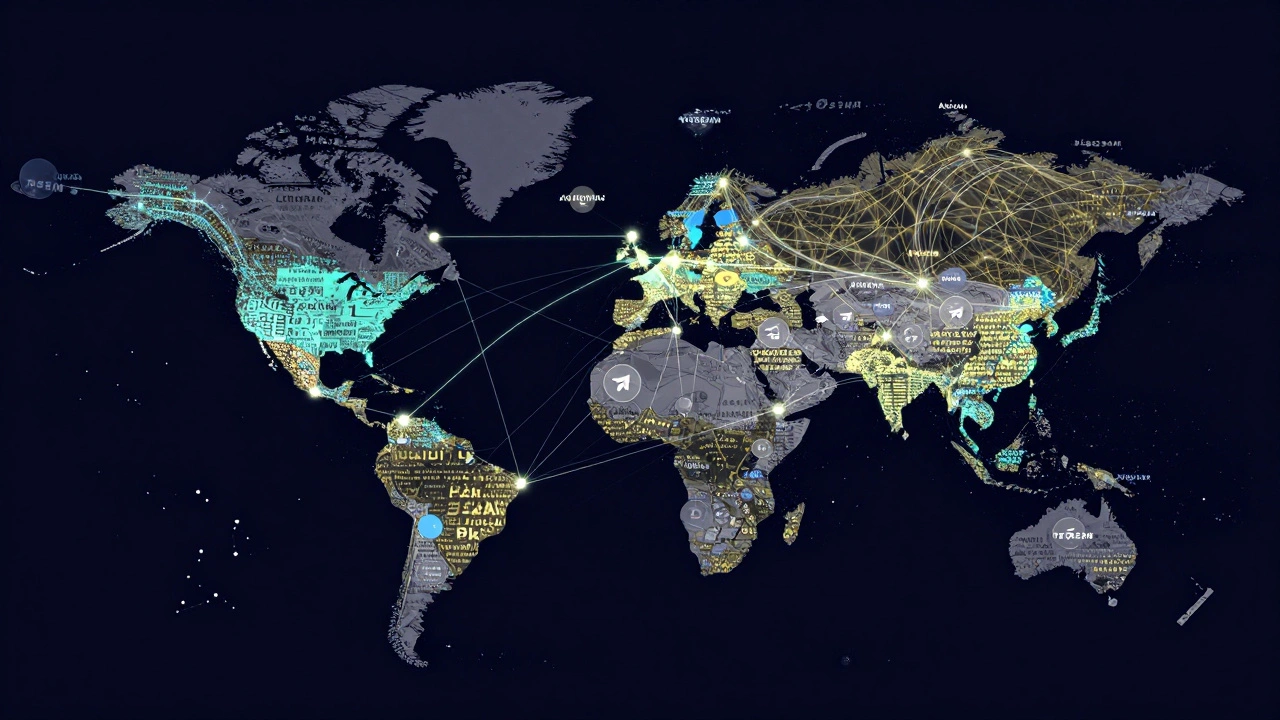
How Geographic Analytics Works on Telegram
You can’t see a user’s location directly. But you can see where their messages come from - indirectly.Tools like Telepathy, TGStat, and Brand24 analyze three key signals:
- Language: If most of your channel’s comments are in Ukrainian or Russian, your audience is likely concentrated in Eastern Europe.
- Time zones: If your posts get peak engagement between 3-5 AM UTC, your readers are probably in Southeast Asia. If engagement spikes at 7-9 PM UTC, you’re likely reaching Western Europe or North Africa.
- Channel linking: When users share your news channel in local groups or forums, those groups often have regional identifiers. Tools track these connections to map influence.
For example, during the 2024 European elections, a major news outlet used TeleMe to notice a sudden spike in engagement from Warsaw and Prague. They adjusted their coverage focus, added local context, and saw a 37% increase in engagement in those regions within 48 hours.
Accuracy varies. Country-level tracking is 85-90% reliable. City-level? Around 60-70%. That’s because Telegram doesn’t give you GPS data. But if you combine language, timing, and shared links, you can get close enough to make smart decisions.
Device Analytics: The Missing Piece
This is where things get tricky. Telegram doesn’t report whether a user is on iOS, Android, Windows, or macOS. So tools have to guess.They look at:
- Message formatting: Mobile users tend to send shorter, less formatted messages. Desktop users often paste longer text, use bold/italic, or include links with proper HTML.
- File types: Android users are more likely to send photos from the camera roll. iOS users might send HEIC files. Desktop users upload PDFs or DOCX files more often.
- Message length and frequency: Studies show mobile users send more frequent, shorter messages. Desktop users post longer updates, often during work hours.
These patterns give tools like TGStat and Combot an 75-80% accuracy rate in estimating device usage - but it’s still an estimate. You won’t know if someone is on an iPhone 15 or a Samsung Galaxy S24. You won’t know screen size or OS version. And you can’t track changes over time.
One media company assumed their Telegram audience mirrored their Twitter audience - mostly mobile. They optimized all their content for small screens. Later, they found out 40% of their Telegram readers were on desktops. Their headlines were too short. Their images didn’t load well on larger screens. Engagement dropped 22%.
Top Tools for Tracking Telegram Audiences
Not all tools are equal. Here’s what’s working in 2025:| Tool | Geographic Accuracy | Device Estimation | Price (Monthly) | Best For |
|---|---|---|---|---|
| Telepathy | 90% (country), 78% (city) | 75% (inferred) | $399 | Investigative journalism, OSINT |
| TGStat | 85% (country) | 70% (inferred) | $99 (premium) | Newsrooms, channel managers |
| Brand24 | 87% (country), 75% (city) | 76% (inferred) | $299 | Enterprise media, PR teams |
| TeleMe | 88% (country) | 72% (inferred) | $199 | Real-time regional tracking |
| OSAVUL | 86% (country) | 68% (inferred) | $499 | Government, intelligence units |
Telepathy leads in geographic precision, especially for conflict zones. TGStat is the most popular for general use - it’s affordable and has a huge database of 2.5 million indexed channels. Brand24 offers the best AI-powered city-level clustering. But if you need to track real-time shifts during breaking news, TeleMe is unmatched.
What You Can’t Do (And Why)
There are hard limits. Telegram’s API doesn’t expose device IDs, IP addresses, or precise location data. No tool can bypass that. Even if you pay $1,000 a month, you won’t get exact device stats.Here’s what’s impossible right now:
- Knowing if a user is on iOS 18 or Android 14
- Tracking whether someone switched from phone to desktop mid-week
- Seeing exact GPS coordinates of a sender
- Measuring screen size or resolution
Any tool claiming to do this is either lying or using unethical methods. Stick to platforms that are transparent about their methods. GIJN and Knight Center both warn against tools that promise “real-time location tracking” - they’re either scams or violate Telegram’s terms.
How to Use This Data Effectively
Don’t just collect numbers. Turn them into action.- Adjust content timing: If your audience is mostly in Latin America, schedule posts for 8-10 AM local time (which is 1-3 PM UTC).
- Translate headlines: If 30% of your engagement comes from Arabic-speaking regions, consider adding Arabic translations to key posts.
- Optimize media: If device data suggests most users are on mobile, keep images under 2MB and avoid long paragraphs.
- Target regions during crises: During protests or natural disasters, monitor which cities show spikes in activity. That’s where your coverage should focus.
A newsroom in Ukraine used TGStat to notice a surge in Telegram activity from Mariupol during the winter of 2024. They didn’t have reporters on the ground, but they started sharing verified user-submitted photos and audio clips from that area - and their channel grew by 140% in two weeks.
Common Mistakes to Avoid
Most people fail because they treat Telegram like Twitter or Facebook.- Mistake: Assuming your audience demographics match your other platforms.
- Fix: Always validate. Telegram users are often older, more tech-savvy, and more likely to be in regions with restricted media.
- Mistake: Relying on one tool.
- Fix: Cross-check data. Use Telepathy for geographic depth, TGStat for volume, and manual checks for context.
- Mistake: Ignoring false positives.
- Fix: If a tool says 500 users are in Turkey, but your content is in Ukrainian, double-check. It might be diaspora communities - not locals.
The Future of Telegram Audience Analytics
The market for Telegram analytics is growing fast - $285 million in 2025, projected to hit $410 million by 2027. But growth isn’t even.Geographic analytics is booming. Tools are getting smarter with AI clustering, time-zone pattern recognition, and regional dialect detection. In late 2025, Brand24 improved city-level accuracy from 65% to 78% just by analyzing when messages are sent.
Device analytics? Not so much. No major tool has announced a breakthrough. Why? Because Telegram won’t let them. Until Telegram changes its API - and there’s no sign they will - device tracking will remain guesswork.
The real winners will be those who focus on geography, language, and timing. The ones who treat Telegram not as a social network, but as a decentralized news wire.
Getting Started
If you’re new to this:- Start with TGStat’s free plan. It shows subscriber counts and daily views by region.
- Set up keyword alerts for your city or topic. See where mentions spike.
- Compare engagement times across days. Look for patterns.
- Join r/TelegramAnalytics on Reddit. Ask questions. Learn from others.
- After a month, if you need more depth, upgrade to Telepathy or Brand24.
You don’t need a big budget. You just need to understand the limits - and work within them.