For millions of immigrants living abroad, staying connected to home isn’t just about video calls or holiday visits. It’s about knowing what’s happening in real time-when protests break out, when new immigration rules drop, or when a family member needs help. And for many, that lifeline isn’t on Facebook, WhatsApp, or Twitter. It’s on Telegram.
By January 2026, Telegram had 950 million monthly users. About 35% of those daily active users-roughly 280 million people-are part of diaspora communities. These aren’t random groups. They’re organized, high-traffic news networks run by immigrants, for immigrants. From Mexico City to Kyiv to Delhi, people are using Telegram to share updates that traditional media won’t, or can’t, deliver.
Why Telegram, Not WhatsApp?
WhatsApp is everywhere. Eighty-three percent of diaspora communities use it. But here’s the problem: WhatsApp limits groups to 1,024 people. That’s fine for family chats. Not fine when you’re trying to reach 50,000 people in your hometown with emergency alerts about visa changes or election violence.
Telegram doesn’t have that limit. Public channels can broadcast to unlimited subscribers. One channel for the Nigerian diaspora in the U.S. has over 420,000 followers. Another for the Ukrainian community in Poland hits 280,000. These aren’t private chats. They’re newsrooms-run by volunteers, students, journalists, and activists who translate reports, verify photos, and post live updates from the ground.
And unlike WeChat, which censors political content critical of the Chinese government, Telegram lets users share what they need to-until governments pressure it to remove something. That happened in 2017 when Telegram shut down AmadNews, a channel with 700,000 followers in Iran. But since then, it’s kept most channels running, even under pressure from Russia, Turkey, and India.
What Kind of News Flows Through These Networks?
It’s not just politics. It’s survival.
A 2025 study by the Media Engagement Institute found that 73% of diaspora users rely on Telegram for information they can’t get anywhere else:
- 68% get updates on immigration policies-like when the U.S. changes asylum rules or Canada pauses work permits.
- 52% receive emergency alerts from home-earthquakes, floods, or military crackdowns.
- 81% use it to find community resources: free legal aid, language classes, housing help, or job leads.
During the 2024 Mexican elections, Telegram channels shared real-time reports of voter intimidation, polling station closures, and ballot tampering-information ignored by mainstream outlets. In Sri Lanka, during the 2022 economic collapse, diaspora groups shared how to send remittances safely when banks froze accounts. In Brazil, during the 2026 presidential race, Telegram became the main source for verifying claims about voter suppression.
These networks aren’t just sharing news. They’re filling gaps left by failing institutions.
The Dark Side: Misinformation Spreads Fast Too
But here’s the catch: when information flows this freely, lies flow too.
64% of diaspora users on Telegram report encountering misinformation. The most common types?
- Political disinformation (47%)-false claims about elections, coups, or foreign interference.
- Health misinformation (32%)-fake cures, vaccine myths, or false reports of disease outbreaks.
- Scams (21%)-fake immigration consultants, fake job offers, fake donation drives.
One Brazilian user posted on Reddit in January 2026: “My family WhatsApp group shares so much misinformation from Telegram that I’ve had to mute it for 12 hours a day during election season.”
Why does this happen? Trust. People believe messages from “someone like me.” A post from a neighbor in São Paulo feels more real than a headline from Reuters. And because Telegram doesn’t fact-check public channels by default, false claims spread faster than corrections.
Harvard’s 2023 Misinformation Review found that during the 2020 U.S. election, daily messages in Latinx Telegram groups spiked from 8,300 to 27,500-half of them unverified rumors.
How Communities Are Fighting Back
People aren’t just passive receivers. They’re building defenses.
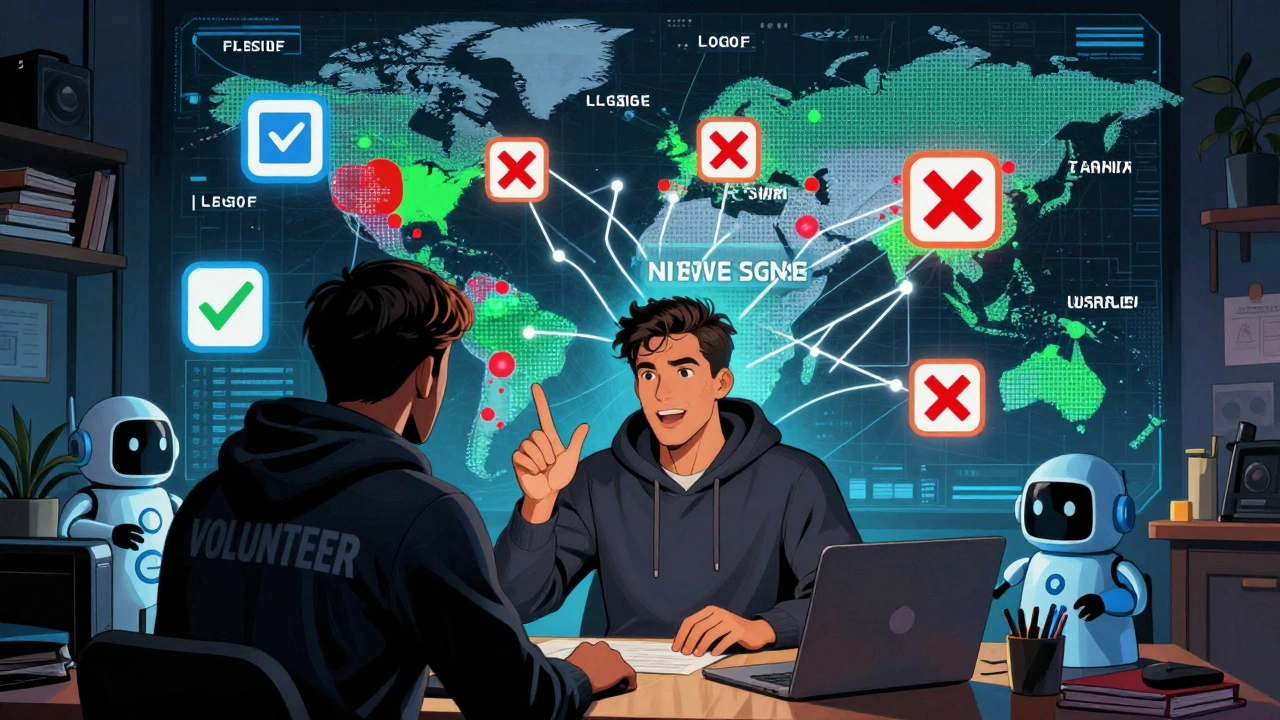
Community organizations have started training programs. Digital literacy workshops-usually led by young volunteers-teach older members how to spot fake accounts, check timestamps, and verify sources. These workshops reduce misinformation sharing by 73%, according to a study of 350 participants.
Here’s what’s working:
- Verified channel lists: 63% of diaspora groups now publish official channel directories, so people don’t accidentally join fake ones.
- Message verification protocols: 57% require critical info (like visa changes or emergency alerts) to be confirmed by at least two trusted sources before being shared.
- Digital ambassadors: 48% of organizations appoint trusted members to monitor channels daily and flag false content.
Some groups even use bots to auto-flag posts with keywords like “emergency visa” or “new law” and send them to moderators for review before reposting.
Telegram’s Role-and Its Limits
Telegram itself isn’t neutral. It’s a platform with business interests, legal pressures, and inconsistent rules.
It banned white nationalist groups in 2023 but kept channels up that spread anti-immigrant rhetoric targeting Latinx and Muslim communities. It complied with Iran’s request to shut down a major news channel in 2017 but resisted similar pressure from India in 2024. It doesn’t enable end-to-end encryption by default-only in “Secret Chats,” which most users never turn on.
That’s why experts like Dr. Joan Donovan warn that diaspora networks are “testing grounds” for misinformation that later spreads to mainstream platforms. And Nobel laureate Dr. Maria Ressa says Telegram has become the “digital town square”-but without guards at the door.
Still, for many, there’s no alternative. In Iran, 89% of the diaspora uses Telegram. In Ukraine, it’s 86%. In Ethiopia, it’s 82%. These aren’t choices. They’re necessities.

What’s Changing in 2026?
Telegram just launched a new feature called “Community Connect,” rolled out in January 2026. It lets verified diaspora organizations mark their channels as official, adds warning labels on unverified claims, and partners with fact-checkers in 12 countries to respond to misinformation in under 12 hours-down from 72.
So far, 78 organizations representing 15 million users have signed up. It’s not perfect. But it’s a step.
Meanwhile, traditional media is catching on. Sixty-eight percent of diaspora-focused news outlets now publish content designed specifically for Telegram-short videos, voice notes, image carousels. Reuters, Al Jazeera, and BBC Mundo are testing Telegram-only feeds.
Looking ahead, analysts predict three big shifts:
- Smaller, more secure channels will replace massive public ones-up to 35% fewer large channels by 2027.
- More governments will demand censorship-China already asked Telegram to block content critical of its policies. Telegram partially complied by geo-blocking it inside China but left it up elsewhere.
- Regulators in the EU and Canada are pushing for “diaspora-specific moderation rules,” which could force Telegram to hire native-language moderators for every major community.
What This Means for You
If you’re part of a diaspora community:
- Don’t assume every channel is real. Check official directories.
- Don’t share urgent news without verifying it with at least two sources.
- Teach older family members how to spot fake posts. A 10-minute chat can save someone from a scam.
- Support community-led fact-checking efforts. They’re the real heroes here.
If you’re not part of a diaspora but work with immigrant communities-whether as a social worker, journalist, or policymaker-understand this: Telegram isn’t just an app. It’s the primary news network for millions. Ignoring it means ignoring reality.
The future of global communication isn’t in corporate newsrooms. It’s in these grassroots networks-messy, imperfect, powerful, and alive.
Why do diaspora communities prefer Telegram over WhatsApp?
Telegram allows public channels with unlimited subscribers, while WhatsApp limits groups to 1,024 people. This makes Telegram far more effective for broadcasting news to large immigrant communities. Telegram also supports faster content sharing, cross-platform sync, and doesn’t censor political content like WeChat does.
Is Telegram safe for sharing sensitive information?
Regular Telegram chats are not end-to-end encrypted by default-only "Secret Chats" are. That means messages can be accessed by Telegram if governments request them, as happened in Iran in 2017. For sensitive information, users should always use Secret Chats and avoid sharing personal data on public channels.
How do I know if a Telegram channel is real or fake?
Look for official verification lists published by trusted diaspora organizations. Check the channel’s history-real ones usually have consistent posting over months or years. Avoid channels with poor grammar, urgent calls to donate, or claims that sound too extreme. Many communities now use "verified channel" badges introduced in Telegram’s January 2026 Community Connect update.
What kind of misinformation is most common in diaspora Telegram groups?
Political disinformation (47%)-like false election results or fake government announcements-is the most common. Health misinformation (32%) follows, including fake cures or false disease outbreaks. Scams (21%) like fake visa services or donation fraud are also widespread, especially targeting older users who may not know how to verify sources.
Are there tools to help fight misinformation in these networks?
Yes. Organizations like TruthNexus use native speakers to monitor and verify content, with 92% accuracy. Many diaspora groups now use "message verification protocols," requiring two trusted sources before sharing critical info. Telegram’s new Community Connect feature, launched in January 2026, also flags unverified posts and partners with fact-checkers to respond in under 12 hours.
What’s the future of Telegram for diaspora communities?
Telegram is moving toward smaller, more secure channels as users become wary of large public feeds. Traditional media outlets are creating Telegram-native content, and governments are pressuring the platform to moderate content. Regulation is increasing-especially in the EU-but for now, Telegram remains the most reliable tool for cross-border communication, despite its flaws.