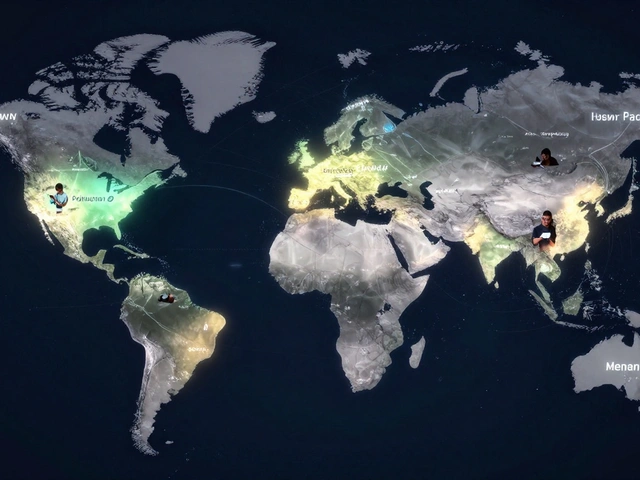
When the lights went out in Kyiv in 2022, mainstream news feeds slowed down. But on Telegram, a cloud-based messaging platform founded by Pavel Durov in 2013 that now serves over 900 million users, the story was moving faster than ever. For investigative journalists, this wasn't just a shift in where stories were posted; it was a fundamental change in how truth is found, verified, and shared. Today, in 2026, Telegram has become the backbone of real-time reporting on global conflicts, disinformation campaigns, and illicit activities.
You might wonder why a messaging app became a newsroom. The answer lies in what other platforms took away. As Facebook, X (formerly Twitter), and Instagram tightened their algorithms and stripped metadata to protect user privacy or comply with regulations, they accidentally locked journalists out of crucial data. Telegram left the door open. It preserves the raw files, the hidden connections, and the unfiltered voices that reporters need to do their jobs. This article breaks down exactly how you can leverage this platform for deeper, more accurate reporting, while navigating the ethical minefields that come with it.
Why Telegram Outperforms Traditional Social Media for Investigations
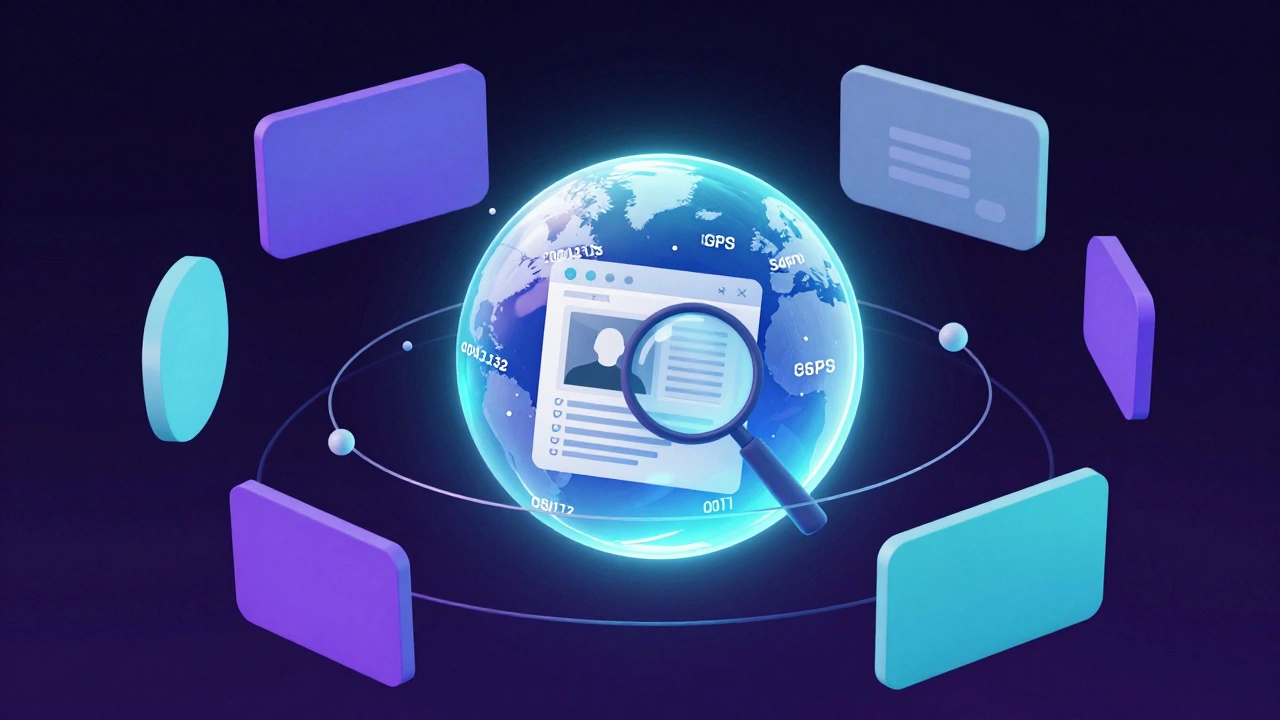
The core advantage of Telegram isn't just its size; it's its technical architecture. When you download an image from Instagram, the platform compresses it and strips away most of the original metadata-data like camera model, GPS coordinates, and timestamps. That information is often vital for verifying if a photo actually came from the location a source claims. Telegram, however, allows you to send "Original" files. These files retain their full metadata. For an investigator, this means you can use tools like ExifTool to pull exact location data directly from a file without needing complex reverse-engineering techniques.
Furthermore, Telegram lacks the algorithmic filtering that dominates other social networks. On X or TikTok, your feed is curated by an AI designed to keep you engaged, not necessarily informed. If a video contains sensitive content related to a conflict zone, it might be shadow-banned or removed entirely before you even see it. Telegram operates on a broadcast model. Channels push content directly to subscribers regardless of engagement metrics. This ensures that critical footage, such as evidence of war crimes or environmental disasters, remains accessible for archival purposes rather than being buried by an algorithm or deleted due to automated moderation policies.
This structural openness also enables network mapping. Unlike closed messaging apps where contacts are private, Telegram channels are public directories. Investigators can map connections between different channels, identifying how narratives spread across political groups, military units, or criminal organizations. This capability transforms Telegram from a simple communication tool into a powerful intelligence gathering system.
Key Features for Journalists and Researchers
To effectively use Telegram for investigative work, you need to understand specific features that set it apart. Here are the critical tools at your disposal:
- Metadata Preservation: Always request sources to send media as "Files" rather than "Photos" or "Videos." This ensures EXIF data remains intact for verification.
- Search Functionality: Telegram’s global search allows you to find posts within specific channels by keyword, date, or media type. This is invaluable for tracking the evolution of a story over time.
- Broadcast Channels: With theoretically unlimited subscriber counts, channels act as one-to-many distribution hubs. This allows eyewitnesses to reach global audiences instantly, bypassing traditional gatekeepers.
- Secret Chats: While not used for public broadcasting, end-to-end encrypted secret chats provide a secure channel for initial source contact, protecting identities before moving to safer, documented communication methods.
- Bots and APIs: Third-party bots can automate data collection, archiving, and monitoring of large-scale channel activity, saving hours of manual labor.
Organizations like the Centre for Information Resilience (CIR) and Geoconfirmed rely heavily on these features. They use Telegram as a primary source for geolocation verification and conflict documentation, proving that the platform is not just for casual chat but for rigorous, professional-grade investigation.
Real-World Applications: From Ukraine to Gaza
The true test of any investigative tool is its performance under pressure. During Russia’s invasion of Ukraine starting in 2022, Telegram became the de facto news wire for much of the world. Reporters found themselves relying on local Ukrainian channels for breaking updates that predated official government statements. Freelance reporter Jane Lytvynenko, who specializes in visual investigations of Russian military actions, noted that her workflow shifted dramatically. She began using Telegram not just to find leads, but to verify them against multiple independent sources in real-time.
Similarly, during the 2023-2025 Israel-Hamas conflict, academic analysis published in *Ethical Dilemmas Covering the 2023-2025 Israel-Hamas War* highlighted Telegram’s unprecedented growth. It served as the primary platform for alternative news channels and eyewitness documentation when mainstream media access was restricted. The hybrid structure of Telegram-combining broadcast channels with peer-to-peer messaging-allowed for a unique blend of anonymity and mass reach. Citizens could document atrocities anonymously, while journalists could aggregate and verify that data publicly.
However, this power comes with complexity. Research by Skarzauskiene et al. (2025) showed that studying information accuracy on Telegram requires new methodologies. The lack of algorithmic filtration means misinformation spreads just as quickly as truth. Investigators must therefore develop robust verification protocols to distinguish between genuine eyewitness accounts and state-sponsored disinformation.
Tracking Disinformation and State Narratives
One of the most significant impacts of Telegram on journalism is its role in exposing state-level information operations. In January 2025, the Community of Democracies released a pilot study analyzing messages from Russian Federation embassies worldwide. They discovered that Russia maintains approximately 130 active diplomatic channels on Telegram. The British embassy of the Russian Federation, for instance, fully integrated the platform into its public diplomacy strategy starting in 2022.
For journalists, this transparency is a double-edged sword. On one hand, it provides direct access to primary sources of propaganda, allowing reporters to analyze narrative shifts and identify coordinated disinformation campaigns. On the other hand, it requires careful contextualization. Simply reposting a claim from a state-backed channel without verification can inadvertently amplify false narratives. Effective investigative journalism on Telegram involves not just collecting data, but tracing its origin, intent, and spread.
| Feature | Telegram | X (Twitter) | Instagram/Facebook |
|---|---|---|---|
| Metadata Retention | High (when sent as File) | Low (stripped) | Very Low (heavily compressed) |
| Content Moderation | Minimal/Reactive | Moderate/Algorithmic | Strict/Automated |
| Channel Size Limit | Unlimited | N/A (Followers) | N/A (Followers) |
| Anonymity Level | High | Medium | Low |
| Data Accessibility | Open API/Public Search | Restricted API | Closed Ecosystem |
Ethical Challenges and Verification Protocols
The very features that make Telegram powerful for journalism also create significant ethical risks. The speed of dissemination often outpaces verification. Academic research from 2025 analyzing Telegram channels during the Israel-Hamas conflict revealed a stark divide. Some channels upheld strict journalistic norms, including fact-checking and source protection. Others prioritized immediacy, publishing unverified rumors, privacy breaches, and sensationalist content.
As a journalist, you must navigate this tension. The urge to break a story quickly can lead to amplifying harm. To mitigate this, adopt a rigorous verification protocol:
- Cross-Reference Sources: Never rely on a single Telegram channel. Corroborate claims with at least two independent sources, preferably from different geographic locations or affiliations.
- Geolocation and Chronolocation: Use tools like Google Earth, SunCalc, and ExifTool to verify where and when media was captured. Look for shadows, weather conditions, and distinctive landmarks.
- Reverse Image Search: Use TinEye or Google Lens to ensure images haven’t been recycled from previous events.
- Protect Source Identity: Be cautious about sharing screenshots that reveal usernames or profile pictures unless explicit consent is given. Anonymity is a key feature of Telegram; violating it can endanger vulnerable sources.
- Contextualize Content: Provide background information to prevent misinterpretation. Avoid sensational headlines that exploit emotional triggers without factual basis.
Managers and publishers must also foster a culture of accountability. Encourage corrections and transparency about sourcing. Remember that content disseminated on Telegram often achieves wider visibility than equivalent content on other platforms, making errors more damaging.
Building Your Telegram Investigation Workflow
Integrating Telegram into your investigative workflow requires practice. Competent researchers typically need two to four weeks of intensive training to become proficient in routine tasks. Start by identifying key channels relevant to your beat. Follow diverse perspectives, including opposition voices, official statements, and neutral observers. Use third-party tools to archive content, as Telegram does not offer robust native search history for deleted posts.
Collaborate with organizations like CIR or Geoconfirmed to stay updated on best practices. Attend workshops, such as those offered by the Knight Center for Journalism, to learn advanced digital investigative techniques. As traditional media outlets reduce international correspondent infrastructure, your ability to leverage distributed reporting networks on Telegram will become increasingly valuable.
Looking ahead, Telegram’s impact on investigative journalism will likely intensify. Its resistance to regulatory pressures and algorithmic mediation maintains its competitive edge. However, be aware of long-term risks. Increasing awareness of Telegram’s use for illicit activities may eventually trigger governmental intervention, potentially restricting access. Stay adaptable, diversify your sources, and always prioritize ethical rigor in your reporting.
Is Telegram safe for whistleblowers?
Telegram offers high levels of anonymity and encryption through Secret Chats, making it relatively safe for initial contact. However, standard cloud chats are not end-to-end encrypted by default. Whistleblowers should use Secret Chats for sensitive communications and avoid sharing identifiable metadata in public channels.
How do I verify a video from a Telegram channel?
Start by extracting metadata using ExifTool if the video was sent as a file. Then, perform reverse video searches using tools like Yandex Images or Google Lens. Cross-reference timestamps with weather data and satellite imagery to confirm the location and time of recording.
Can Telegram channels be censored?
While Telegram generally resists censorship, governments can block access to the platform entirely in some regions. Additionally, Telegram administrators can ban channels for violating terms of service, though this is less common than on other social media platforms.
What are the biggest risks of using Telegram for journalism?
The primary risks include spreading unverified misinformation, violating source privacy, and falling victim to manipulated media. Journalists must implement strict verification protocols and ethical guidelines to mitigate these dangers.
How long does it take to master Telegram investigations?
Basic proficiency in searching, archiving, and verifying content typically takes two to four weeks of intensive practice. Mastery of advanced techniques, such as network mapping and deep metadata analysis, requires significantly longer training and ongoing experience.