Telegram used to brag that it never handed over user data to any government. For years, the platform told users their messages were completely safe-no backdoors, no logs, no exceptions. That story changed in September 2024, right after founder Pavel Durov was arrested in Paris. Suddenly, Telegram started publishing transparency reports-official numbers showing exactly how often it gave up user information to law enforcement. And the numbers are shocking.
Before 2024, Telegram claimed it had never complied with a single government request for user data. Now, it’s admitting to handing over phone numbers and IP addresses to authorities in dozens of countries. In the last three months of 2024 alone, the U.S. government made 900 requests affecting over 2,200 users. That’s up from just 14 requests for the entire year before. By early 2025, global requests had already hit 5,000-and counting.
What’s in a Telegram Transparency Report?
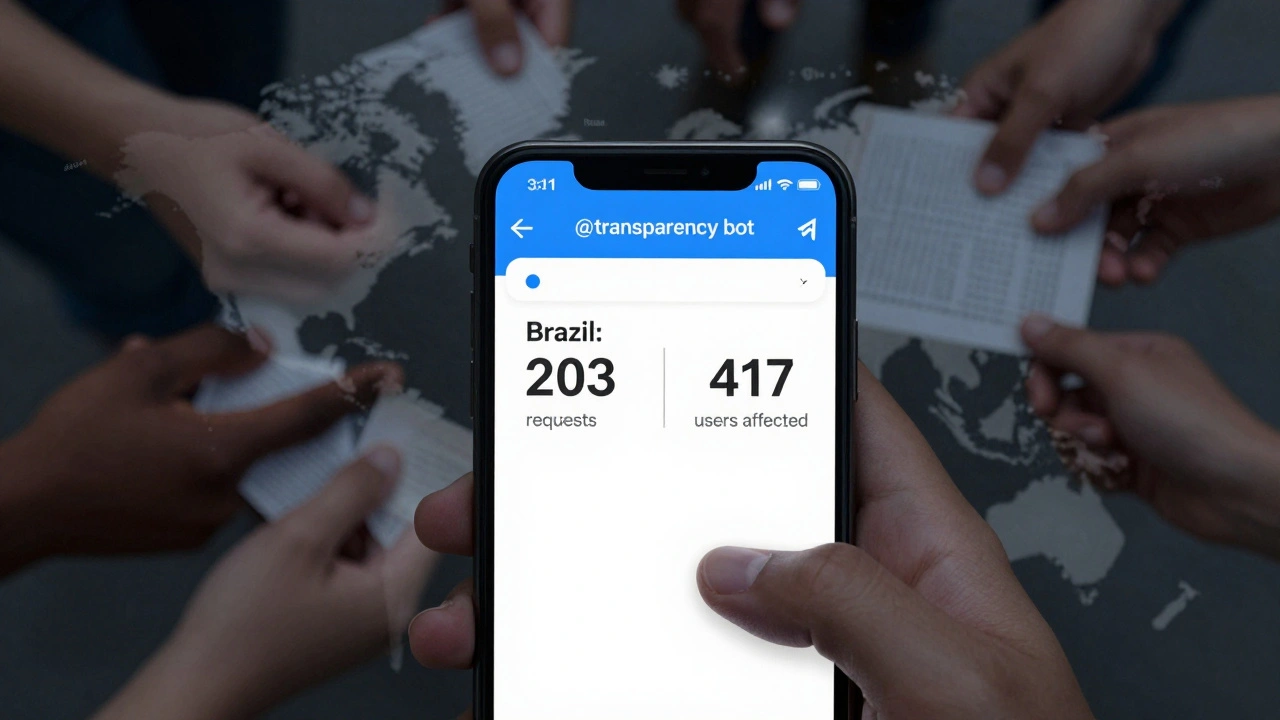
Telegram’s transparency reports aren’t mystery boxes. They’re generated by an official bot: @transparency on Telegram. Type in the command, and it shows you how many times your country’s authorities asked for user data, and how many users were affected. Simple. Clean. But here’s the catch: the bot only shows data for the country where your Telegram account is registered. If you’re in Brazil, you see Brazil’s numbers. If you’re in India, you see India’s. You can’t get a global view unless you’re logging in from multiple countries-or unless you crowdsource the data.
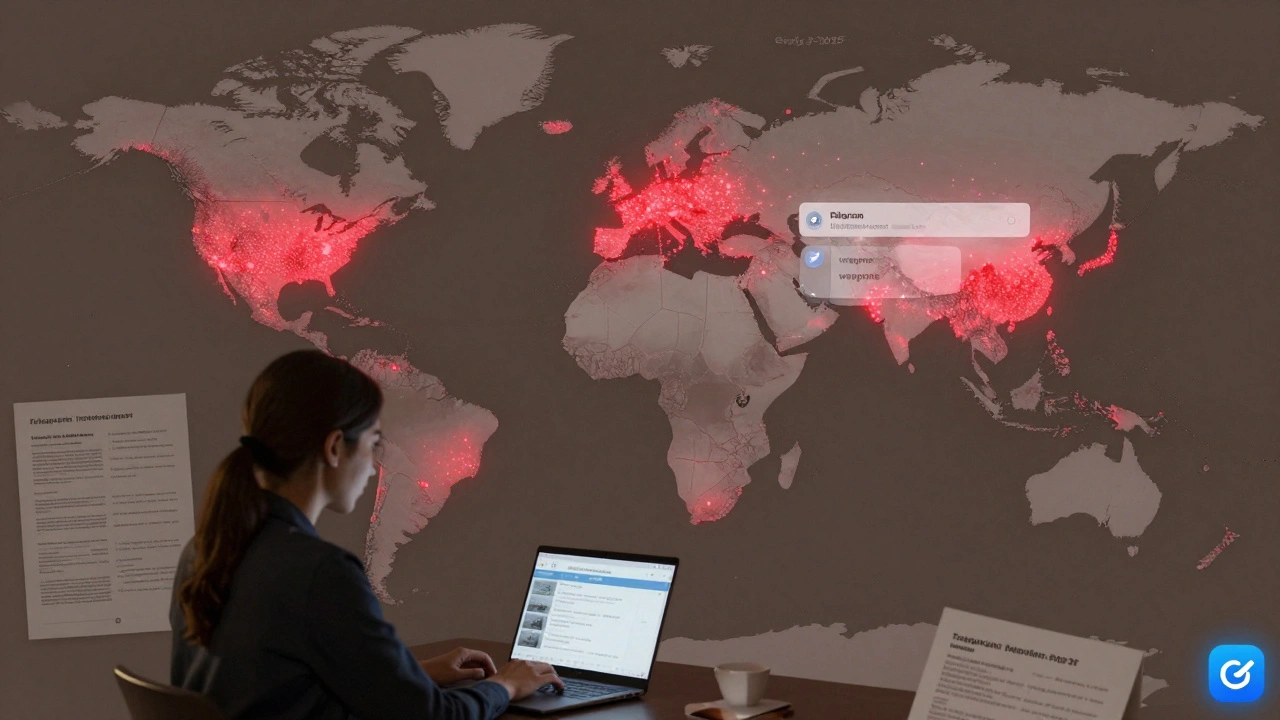
That’s exactly what Meduza and Human Rights Watch did. They asked readers to send in their own transparency reports. Over 1,000 people responded. The result? A database covering 80+ countries. India tops the list with nearly 7,000 requests affecting over 15,000 users. France? 220 requests. Brazil? 203. Belgium? 58. And the U.S.? A massive spike from 14 requests in 2023 to 900 in late 2024.
Why the Sudden Change?
The shift didn’t happen by accident. Telegram updated its privacy policy in September 2024. Section 8.3 now says: if a court order proves a user is involved in criminal activity that violates Telegram’s Terms of Service, the company will analyze the request-and if it’s valid, hand over the user’s phone number and IP address.
Why? Because Telegram’s own features were being abused. The Telegram Search tool, meant to help users find public channels, became a marketplace for illegal goods. Drugs. Weapons. Stolen data. Durov admitted it. So Telegram created a team of AI moderators to scan search terms and shut down illegal activity. They also launched @SearchReport, a bot where users could flag abusive searches.
The transparency reports? They’re part of the same strategy. By showing they’re cooperating with courts, Telegram hopes to avoid being blocked outright in countries like India, Brazil, or France. It’s damage control. But it also means the platform is no longer the unbreakable privacy fortress it once claimed to be.
What Should News Outlets Publish?
If you’re a journalist, you have a real story here. But you need to handle it right.
- Don’t treat the numbers as fact. These are Telegram’s claims. They’re not independently verified. The platform could be underreporting. Or overreporting. Or cherry-picking which requests to include.
- Focus on your country. If you’re in the U.S., highlight the 900 requests. Why now? Did law enforcement change tactics? Did courts start issuing more subpoenas? Did Telegram lower its threshold for compliance?
- Look at outliers. India has nearly 7,000 requests. Why so high? Is it because of large user numbers? Or because authorities are aggressively targeting dissent? Brazil’s 203 requests? Are those mostly about drug trafficking? Or political protests?
- Explain the geographic blind spot. The @transparency bot doesn’t show data from authoritarian regimes. China, Russia, Saudi Arabia? Not on the list. That doesn’t mean they’re not making requests. It means Telegram likely refuses to publish them-or they’re not allowed to. That silence is a story too.
The Credibility Problem
Telegram’s history makes people skeptical. For five years, they swore they’d never hand over data. Then, suddenly, they did. And not just a little. A lot. That raises questions: Did they lie before? Are they lying now? Or are they just being more honest after being forced to?
Privacy advocates point out something else: Telegram works with third-party services-bot hosting, TON cryptocurrency infrastructure, business tools-that have ties to surveillance systems. If Telegram’s data is being routed through companies that cooperate with authoritarian governments, are the transparency reports even meaningful? Or are they just a PR shield?
And what about the requests that don’t make the report? Telegram says it only discloses data after a "legal analysis." What does that mean? Are they filtering out weak requests? Or are they ignoring requests from countries they don’t want to upset? Without external oversight, we don’t know.
How to Report This Responsibly
Here’s how to build trust with your audience:
- Use crowdsourcing. Ask your readers: "Did you get a transparency report from Telegram? Send it in." You’ll get raw data from real users. It’s not perfect-but it’s more real than Telegram’s official numbers.
- Compare with other platforms. How does Telegram’s 900 U.S. requests stack up against WhatsApp or Signal? Signal says it has never handed over data. WhatsApp says it complies with lawful orders but doesn’t publish numbers. That contrast matters.
- Interview experts. Talk to civil liberties groups, security researchers, journalists who rely on Telegram for source protection. What does this mean for their work?
- Track the trend. This isn’t static. The numbers are climbing. In January 2025, global requests hit 5,000+. That’s a 300% increase in three months. That’s not a blip. That’s a new normal.
Why This Matters to Journalists
If you’re reporting on politics, corruption, or human rights, you’ve probably used Telegram. You trusted it because it promised anonymity. Now, that trust is broken. A source you thought was safe might now be exposed. A message you thought was private might have been logged. A phone number you shared might have been passed to a government.
That’s not just a tech story. It’s a press freedom story. The Freedom of the Press Foundation called this trend "skyrocketing compliance." And they’re right. When a platform that once refused to cooperate suddenly starts handing over data, it changes everything for reporters, activists, and whistleblowers.
What’s Next?
Telegram’s transparency reports aren’t going away. They’re getting more detailed. More frequent. And more global. The next step? Independent audits. Legal challenges. Maybe even regulation.
For now, the ball is in the media’s court. You have the data. You have the context. You have the responsibility. Don’t just report the numbers. Ask why they’re rising. Who’s being targeted. And what this means for the future of private communication.
Are Telegram transparency reports verified by third parties?
No. The transparency reports are generated solely by Telegram and have not been independently audited. While organizations like Meduza and Human Rights Watch have crowdsourced data from users to build broader databases, the original numbers come directly from Telegram’s bot. Journalists should always present these figures as Telegram’s claims, not confirmed facts.
Why don’t transparency reports include data from authoritarian countries?
Telegram’s transparency bot only shows data for countries where the user’s account is registered. Authoritarian regimes like China, Russia, and Iran are not listed, which could mean either Telegram refuses to comply with their requests-or the platform avoids publishing data from those jurisdictions to avoid being banned. The absence of data from these countries raises serious questions about whether the reports are complete or politically selective.
Can Telegram still be trusted for secure communications?
If you’re relying on Telegram for high-risk communications-like sharing sensitive sources or organizing protests-you can no longer assume your data is safe. The platform now admits it can and will hand over phone numbers and IP addresses when legally required. For low-risk use, it may still be fine. But for journalists, activists, or dissidents, alternatives like Signal (which has zero data retention) are far more secure.
What kind of crimes trigger Telegram to hand over user data?
Telegram’s policy states it will comply with court orders involving criminal activity that violates its Terms of Service. This includes drug trafficking, fraud, child exploitation, and the sale of illegal goods via Telegram Search. However, the company has not published detailed breakdowns of which crimes triggered the most requests. Investigations into this are ongoing, but no official categorization exists yet.
Is the spike in U.S. requests a sign of increased surveillance?
The jump from 14 requests in early 2024 to 900 by December suggests either a major shift in law enforcement strategy, a change in legal standards, or a change in Telegram’s willingness to comply. It’s likely all three. U.S. agencies may have become more aggressive in targeting encrypted platforms, while Telegram, under legal pressure after Durov’s arrest, lowered its threshold for compliance. This trend should be investigated as a potential expansion of digital surveillance.