By 2025, over 1.2 billion people in emerging markets have come online for the first time-most of them through smartphones, and most of them using Telegram as their primary source of news. In Nigeria, Indonesia, and parts of Latin America, Telegram channels now reach more people than traditional TV or radio. But here’s the problem: most of these new users don’t know how to tell real news from fake. They don’t know who’s behind the messages they receive. They don’t know how to check if a video was taken yesterday-or five years ago. And that’s where news literacy becomes urgent.
Why Telegram? Because It’s Already There
Telegram isn’t the platform people chose because it’s the best for news. It’s the one they ended up with because it works. No ads. No algorithm pushing outrage. End-to-end encryption. Channels that let anyone broadcast to thousands. In countries where internet access is spotty and data is expensive, Telegram’s lightweight design and offline caching make it the default. It’s not just popular-it’s essential.
In India, a single Telegram channel called "Daily Facts India" reached 8 million users in 2024 by posting short, text-based updates in 12 regional languages. In Kenya, youth groups use Telegram to share verified reports from local journalists during elections. In Brazil, fact-checking bots automatically reply to forwarded messages with links to verified sources. These aren’t government programs. They’re grassroots efforts-built by teachers, journalists, and volunteers who saw a gap and filled it with what people already use.
What News Literacy Actually Means on the Ground
News literacy isn’t about memorizing the five pillars of journalism. It’s about asking three simple questions when you see something:
- Who sent this? (Is it a known outlet, or a random account with no profile picture?)
- When was this made? (Does that "breaking news" video have a watermark from 2020?)
- Can I find this elsewhere? (If no major news site mentions it, it’s probably not real.)
These aren’t academic concepts. They’re survival skills in places where misinformation leads to violence. In 2023, a false rumor spread on Telegram in rural Uganda that vaccines caused infertility. Dozens of people refused life-saving shots. In Pakistan, a doctored video of a politician "admitting to fraud" went viral and sparked riots. The video was from a 2018 protest. No one checked the date.
People don’t need a university course. They need quick, clear, repeatable tools. And Telegram is the perfect place to deliver them.
How Real Programs Are Using Telegram to Teach Literacy
There’s no single global campaign. But dozens of small, local efforts are working-and they’re working because they’re built for the platform, not forced onto it.
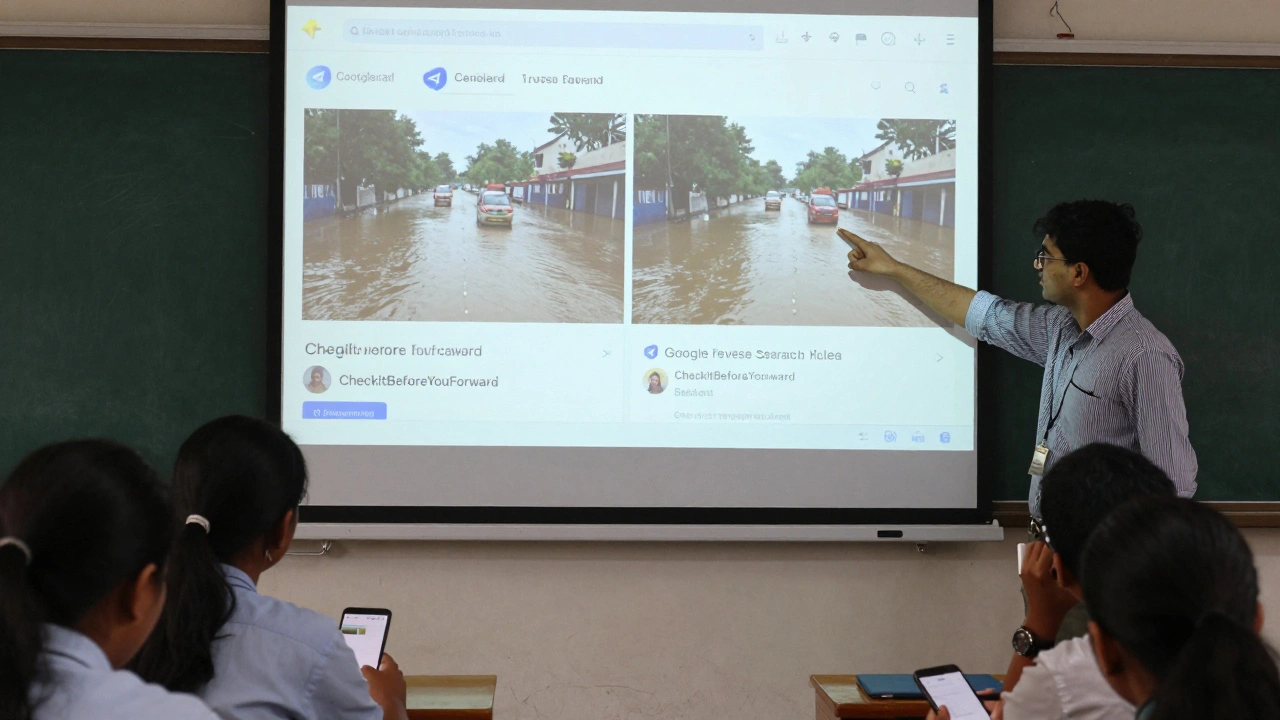
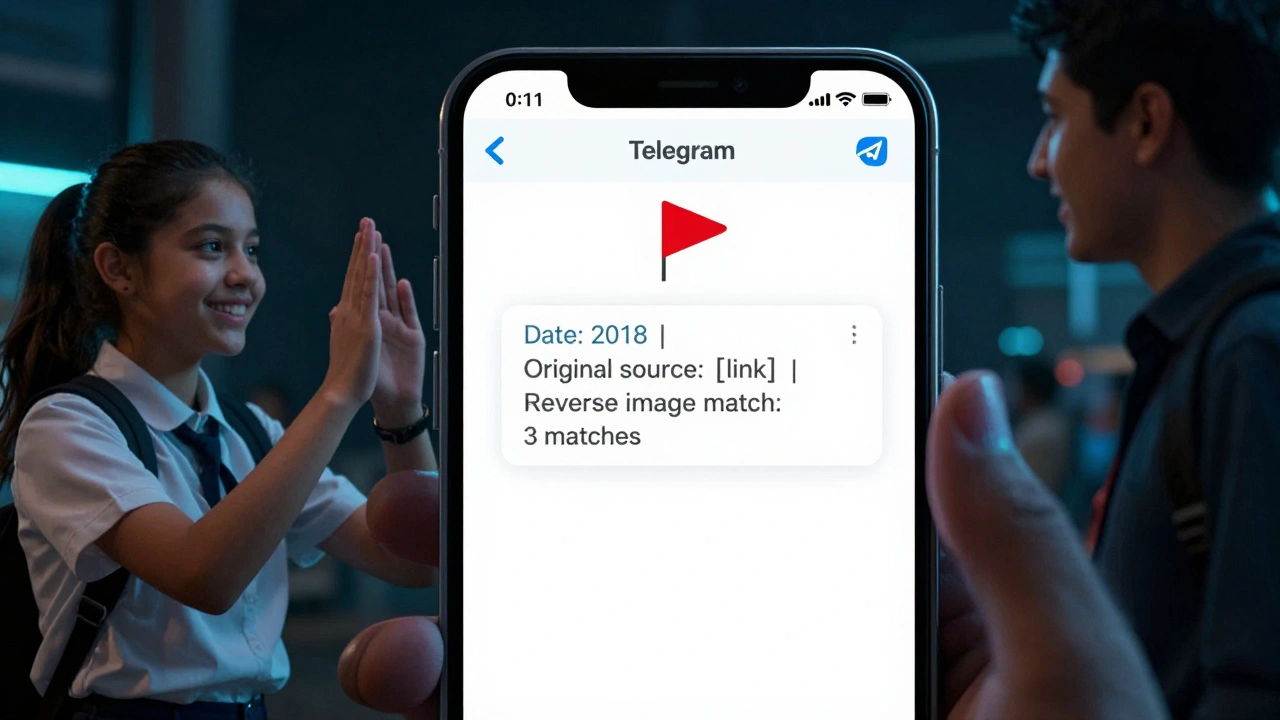
In Bangladesh, the nonprofit Media Matters runs a Telegram channel called "CheckItBeforeYouForward." Every morning at 8 a.m., they send one short message: a viral rumor, a photo, or a video-and then break it down in 30 seconds. "This image was from a flood in 2021," they write. "Here’s the original article. Here’s how to reverse-search it on Google." They use screenshots, not long essays. They use local dialects, not English. They don’t say "this is fake." They say, "Here’s where this came from. You decide."
In Mexico, high school students trained by local journalists run a Telegram bot called "VerdadBot." Users forward suspicious messages to the bot. It replies with: a date check, a reverse image search result, and a link to a local fact-checking site. No login. No app download. Just reply and learn.
In Nigeria, a group of radio DJs started a Telegram group called "VoiceCheck." Listeners call in with rumors they heard. The DJs play the audio, then call a reporter to verify it live. The call gets recorded and shared on Telegram. It’s not perfect-but it’s trusted because it’s local, human, and slow. No bots. No AI. Just people asking, "Is this true?"
Why Telegram Works Better Than Facebook or WhatsApp for This
Facebook pushes content to keep you scrolling. WhatsApp encrypts messages but hides who sent them first. Telegram? It lets you see the channel name, the date, and the message history. You can search past messages. You can mute spam. You can subscribe without sharing your phone number.
And here’s the biggest advantage: Telegram channels can be public or private, but they’re not algorithm-driven. If a fact-checking channel has 10,000 subscribers, you see every post. No one’s hiding it. No one’s burying it because it’s "not engaging enough." That’s rare.
Also, Telegram supports long-form text, images, audio, and documents-all in one place. A single post can include: a video, a link to a news article, a screenshot of the original source, and a 30-second voice note explaining how to verify it. That’s a whole lesson in one message.
The Real Challenge: Scale Without Dilution
These programs work. But they’re small. Most run on volunteer time and donated data. They don’t have budgets. They don’t have tech teams. And as Telegram grows, so does the noise.
There are now over 500,000 news-related Telegram channels. Most are unverified. Some are state-run. Some are profit-driven. Some are just people with strong opinions.
The biggest risk? Teaching people to be skeptical-but not giving them tools to be accurate. If you tell someone "don’t trust everything," but don’t show them how to find truth, you just create confusion.
The best programs avoid this by focusing on one thing: source transparency. They don’t tell users what to believe. They show them how to trace the origin of information. They teach reverse image search. They show how to read a timestamp. They explain how to check a domain name. They don’t use jargon. They use screenshots. They use local examples. They use repetition.
What Success Looks Like
Success isn’t millions of followers. Success is a 17-year-old in Lagos who sees a video of a "government raid" and pauses before forwarding it. She opens Telegram’s search bar. Types in the building’s name. Finds a news article from last week. Notices the date is wrong. Closes the message. Tells her cousin: "This isn’t new. Don’t share it."
That’s the moment news literacy becomes real. Not in a classroom. Not in a webinar. In a private chat. On a phone with a cracked screen. In a language no global platform supports.
That’s why Telegram matters. Not because it’s perfect. But because it’s the one platform where people are already going-and where, with the right tools, they can start learning how to think.
What Comes Next
There’s no global blueprint. But here’s what’s working:
- Start small. One channel. One language. One type of misinformation.
- Use voice notes and screenshots. Not long articles.
- Teach how to search-not what to believe.
- Partner with local journalists, teachers, and community leaders.
- Make it easy. No sign-ups. No apps. Just forward and learn.
And most importantly: don’t try to fix everything. Fix one thing. Then fix the next. News literacy isn’t a campaign. It’s a habit. And habits grow slowly-in the right places, with the right tools.
Telegram won’t save democracy. But if millions of new internet users learn to pause before sharing, it might just help them keep it.
Can Telegram really help fight misinformation in developing countries?
Yes-because it’s already the platform millions use. Unlike Facebook or WhatsApp, Telegram lets users see who sent a message, when it was posted, and search past content. This transparency makes it ideal for fact-checking. Grassroots groups in Nigeria, Bangladesh, and Mexico are already using Telegram channels and bots to teach people how to verify news. The key is simplicity: short messages, local language, and tools like reverse image search, not lectures.
What’s the biggest mistake in Telegram-based news literacy efforts?
Trying to do too much too fast. Many programs fail by creating long guides or using complex jargon. People don’t need to know the difference between "disinformation" and "misinformation." They need to know: "Is this real? Where did it come from? Can I find it elsewhere?" The most successful efforts focus on one skill at a time-like checking dates on videos-and repeat it daily.
Do I need to download a special app to use these Telegram fact-checking tools?
No. All the tools work within the Telegram app people already have. You don’t need to sign up for anything. Just join a public channel or send a message to a bot. Some channels even reply automatically when you forward a suspicious message. Everything happens inside the app you use to talk to friends.
Why not use WhatsApp instead of Telegram for this?
WhatsApp hides the original sender of forwarded messages and doesn’t let you search past content easily. It’s designed for private chats, not public learning. Telegram allows public channels, searchable archives, and clear timestamps-all critical for teaching news literacy. You can’t easily trace where a rumor started on WhatsApp. On Telegram, you can.
How can someone start a news literacy Telegram channel in their community?
Start by collecting 5 common rumors you hear locally. For each, find the real source, the original date, and a simple way to verify it-like a reverse image search or a trusted local news site. Create a Telegram channel. Post one example every day. Use voice notes and screenshots. Don’t write essays. Don’t use English if your community speaks another language. Keep it short. Keep it real. Let people ask questions. Slowly, they’ll learn to check before they share.
Latest Posts