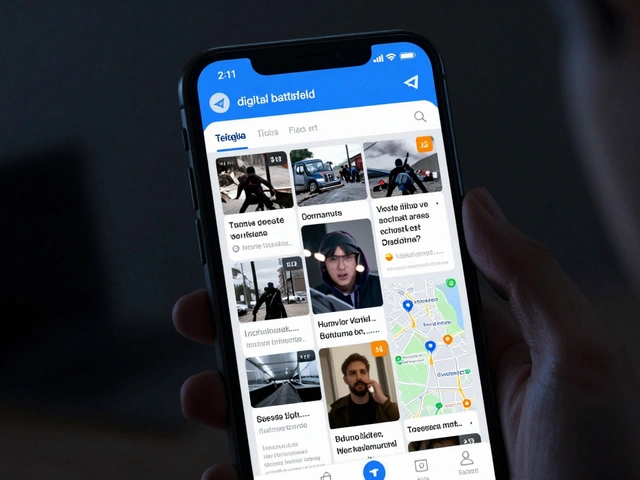
Imagine opening your phone during a breaking crisis. On one screen, you see an official government statement. On another, a citizen journalist’s shaky video from the front line. On a third, a foreign broadcaster’s analysis that contradicts both. This isn’t a sci-fi scenario; it is the daily reality for millions of users navigating Telegram news channels, which are broadcast feeds on the messaging platform Telegram used by professional outlets, activists, and state media to distribute news with minimal moderation. Unlike traditional social media platforms that use algorithms to curate your feed based on what keeps you scrolling, Telegram offers a raw, unfiltered stream of voices. This structure creates a unique environment where diverse perspectives don't just coexist-they compete directly for your attention.
The core question isn't whether Telegram hosts different views, but how these views interact. Do they blend into a single narrative, or do they remain distinct? Recent research suggests the latter. By understanding the mechanics of this ecosystem, we can better navigate the complex information landscape of 2026.
The Architecture of Broadcast Pluralism
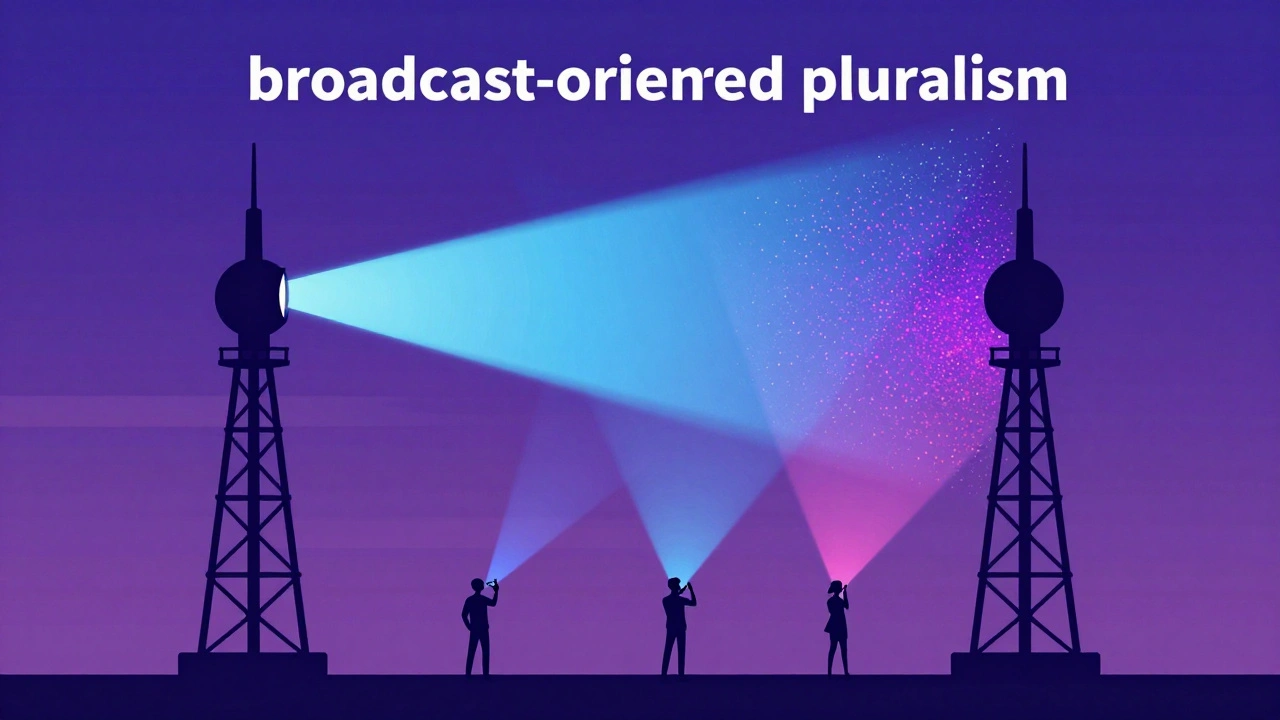
To understand why Telegram feels so different from Twitter or Facebook, you have to look at its design. Telegram channels are asymmetric broadcast spaces. One or a few administrators push content to unlimited followers. Followers cannot post directly in the channel but can forward messages or comment in linked discussion groups. This setup prioritizes speed and reach over deliberation.
This design fosters what experts call broadcast-oriented pluralism. It doesn't encourage debate in the comments section like a newspaper might. Instead, it allows multiple, often conflicting, narratives to exist side-by-side. You subscribe to Channel A for one perspective and Channel B for another. The platform itself doesn't judge which is "right"; it simply delivers the message. This lack of central curation means that mainstream global outlets, partisan activists, and citizen journalists all operate on the same technical level.
| Feature | Telegram Channels | Traditional Social Media (e.g., X, Facebook) |
|---|---|---|
| Content Curation | User-selected subscriptions (chronological) | Algorithm-driven feeds (engagement-based) |
| Moderation Level | Minimal default moderation | Active community standards enforcement |
| Interaction Model | Asymmetric broadcast (one-to-many) | Symmetric interaction (comments, replies) |
| Primary Use Case | Rapid dissemination, bypassing censorship | Social networking, viral engagement |
Case Study: Independent Narratives in Venezuela
A common fear about digital media is that everyone ends up saying the same thing, creating an echo chamber. However, a 2026 longitudinal analysis of nine international news outlets covering Venezuela challenges this assumption. Researchers analyzed 2,038 messages posted between 2017 and early 2026. They looked for "coordinated near-duplicate content"-messages that were posted at the same time and had nearly identical text.
The results were striking. There were very few such duplicates. Even during intense news spikes, such as the political unrest in January 2026, increased posting volume did not lead to systematic copy-pasting across channels. Instead, the study found "limited but non-trivial diversity." For example, France24’s coverage clustered tightly around specific themes (low narrative entropy), while RT’s channel spanned a much broader range of topics (high narrative entropy). This proves that even when covering the same event, major outlets maintain editorial independence on Telegram. They are reacting to the same timeline, but telling different stories.
Bypassing Censorship: The Iranian Example
In countries with strict internet controls, Telegram’s role shifts from mere diversity to essential access. In Iran, domestic media is tightly controlled by the state. Here, Telegram channels operated by foreign broadcasters like BBC Persian, VOA Farsi, Radio Farda, and Iran International act as "portable alternative media."
A study of these four channels revealed that politics dominated their content, making up 50.2% of all coded news stories. Crucially, these channels highlighted issues often ignored by domestic TV, such as conditions at Evin Prison, which was mentioned 755 times across the dataset. This wasn't just top-down broadcasting. Channels like VOA Farsi actively encouraged participatory reporting, asking followers to submit videos of protests or information about detained relatives. This blended professional journalism with bottom-up citizen sourcing, creating a hybrid model that wouldn't be possible on tightly regulated state television.
The Coexistence of Professional News and Misinformation
You can't talk about Telegram without addressing misinformation. The platform's lax moderation is a double-edged sword. It allows free speech, but it also lets false information spread quickly. A 2022 study on political information ecosystems tried to quantify this balance.
Researchers classified sources into "professional" (established news outlets) and "misleading" (sources known for spreading misinformation). They found that professional news sources appeared in approximately three times as many Telegram channels as misleading sources. Structurally, mainstream media still dominates the network. However, visibility within specific communities tells a different story. In certain political sub-communities, links from far-right activists received more than twice the number of views compared to links from popular mainstream tabloids like the Daily Mail.
This highlights a key insight: trusted professional news may dominate the overall landscape, but fringe actors can achieve massive per-link visibility in niche networks. Extreme political activists use Telegram primarily as a broadcasting medium to reinforce existing beliefs rather than to recruit new members. This creates pockets of highly influential, polarizing content that coexist with the broader professional ecosystem.
War-Time Information: The Ukraine-Russia Conflict
The full-scale invasion of Ukraine in February 2022 turned Telegram into a primary battlefield for information. With traditional TV lagging behind events, audiences turned to Telegram for real-time updates. The platform became a conduit for pro-Kremlin military bloggers, Ukrainian government channels, local mayors, and ordinary citizens.
This environment was "complex and diverse." Non-institutional news channels often rivaled traditional TV in perceived immediacy. Users would subscribe to opposing sides simultaneously-a Ukrainian official channel and a Russian military blogger-to triangulate the truth. While this allowed for the rapid spread of life-saving alerts like air-raid warnings, it also facilitated the circulation of unverified battlefield claims. The diversity here was not just ideological; it was operational, mixing verified official data with raw, unvetted eyewitness accounts.
Navigating the Ecosystem: Practical Tips for Users
Given this mix of high-quality journalism, alternative perspectives, and potential misinformation, how should you consume news on Telegram? The platform places the burden of verification largely on the user. Here are some practical steps:
- Diversify Your Subscriptions: Don't rely on a single source. Subscribe to channels with different editorial stances to get a fuller picture.
- Cross-Check Breaking News: If a non-institutional channel reports a major event, wait for confirmation from established outlets before accepting it as fact.
- Watch for Source Transparency: Be cautious with anonymous channels. Check if the admins identify themselves or link to verifiable external websites.
- Understand the Bias: Recognize that foreign state-sponsored channels (like BBC Persian or RT) have their own agendas. They offer alternatives to domestic censorship but are not neutral arbiters.
The Future of Telegram News
As of 2026, Telegram remains a durable component of the global news distribution strategy. It is not a short-lived trend. Its ability to enable viewpoint diversity across outlets, ideologies, and countries persists because it maintains its current design choices. The challenge for journalists and regulators is to craft responses that preserve the platform’s capacity to carry marginalized voices while mitigating harms from misinformation. For now, Telegram stands as a paradigmatic example of how messaging apps can create a highly plural, albeit unevenly reliable, information supply.
Is Telegram safe for consuming news?
Telegram is technically secure with strong privacy features, but information safety depends on the source. Because the platform has minimal moderation, it hosts both professional journalism and misinformation. Users must verify sources independently.
Do news outlets copy each other on Telegram?
Research shows that major outlets rarely copy-paste content. Even when covering the same events simultaneously, they maintain distinct narratives and editorial independence, contributing to a diverse information ecosystem.
Why is Telegram popular in countries with censorship?
Telegram allows foreign broadcasters and citizen journalists to bypass national firewalls. It serves as "portable alternative media," providing access to uncensored political and human rights content that is restricted on domestic TV and radio.
How does misinformation spread on Telegram?
Misinformation spreads through niche communities where fringe actors can achieve high visibility. While professional news dominates the overall network, specific groups may share misleading content at higher rates, creating polarized information bubbles.
Can I trust anonymous Telegram news channels?
Anonymous channels require extra caution. While they may provide valuable eyewitness accounts, especially in conflict zones, they lack transparency. Always cross-check their claims with established, identifiable news organizations.