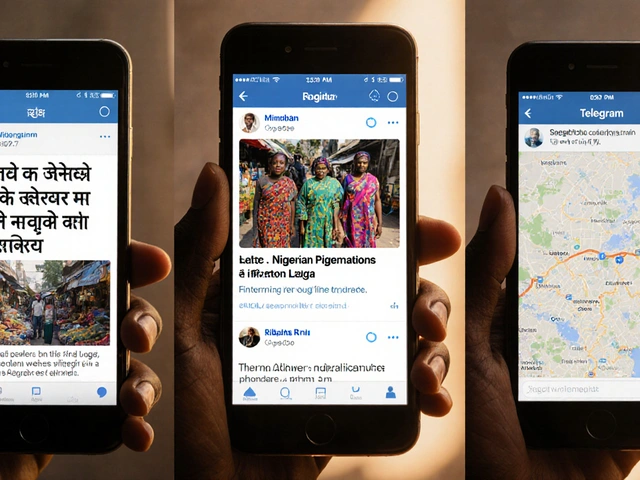
The core problem with traditional reach is that it has become mediated. Whether it's a Facebook feed or an Instagram algorithm, the publisher no longer decides who sees their content. Telegram flips this script. When a publisher posts to a channel, every single subscriber receives a notification. There is no algorithmic filtering. This guarantee of visibility is a game-changer for news reach, turning a passive following into an active, reachable audience.
Moving Beyond the Basic Push Alert
Most of us are used to the standard push notification: a short, punchy headline that pops up on our lock screen, urging us to click a link. While these are great for breaking news, they lack soul. They are designed for speed, not depth. Telegram notifications allow for something entirely different. Because the platform supports longer-form text, emojis, and a conversational tone, editors can craft messages that sit comfortably between a quick alert and a full-blown newsletter.
Take the example of Bloomberg News. Their digital strategy shifted toward messaging apps because they noticed readers were already using "dark social"-private groups and direct messages-to share news. Instead of fighting this trend, they leaned into it. By sending daily messages that provide editorial context and a human voice, they transformed a technical notification into a relationship-building tool. It's the difference between receiving a generic alert that says "Market Crashes" and a message from an editor explaining *why* the market is crashing and what it means for your portfolio.
| Feature | Traditional Push Alerts | Email Newsletters | Telegram Notifications |
|---|---|---|---|
| Delivery | Immediate/Automated | Scheduled/Batch | Instant/Chronological |
| Tone | Urgent/Brief | Formal/Structured | Conversational/Intimate |
| Visibility | High (but fleeting) | Variable (Inbox noise) | Guaranteed (No algorithm) |
| Context | Minimal | High | Medium to High |
The Architecture of Engagement
The technical setup of Telegram Channels is a key driver of this shift. Unlike a group chat, a channel is a one-way broadcast tool. This allows publishers to maintain control over the narrative while still feeling accessible. Furthermore, the platform's support for multimedia-podcasts, audiobooks, and images-means a journalist can pivot from a text update to a voice note in seconds, keeping the audience engaged through variety.
One particularly powerful feature is segmentation. While a standard app push usually goes to everyone, Telegram allows publishers to create specific subgroups. For instance, a news organization might have a general channel for global news but a separate, private group for deep-dives into Middle East politics. This means users only get the notifications they actually care about, which drastically reduces "notification fatigue" and keeps opt-out rates low.
However, this architecture comes with a specific challenge: the Instant View feature. While it lets users read stories without leaving the app, it can inadvertently help readers bypass paywalls. For publishers relying on subscriptions, this creates a tension between maximizing reach and protecting revenue. It forces a strategic decision: do you prioritize the widest possible distribution or the security of your paid content?
The Metrics of Success: Traffic vs. Loyalty
If you look at raw traffic numbers, traditional push notifications often seem disappointing. An Associated Press study once indicated that push alerts drive only single-digit percentages of total traffic. But looking only at clicks is a mistake. The real value is in retention and lifetime value. Data shows that users who opt into notifications are significantly more likely to stay with a brand over 90 days and generate far more advertising revenue than those who don't.
Telegram takes this a step further by fostering loyalty. Because the communication feels like a one-on-one interaction, the bond between the reader and the publication strengthens. This is the "groundwork" for a subscription model. While it is notoriously difficult to track exactly how many people move from a Telegram channel to a paid subscription, the qualitative feedback is clear: the engagement is deeper and more thoughtful. People aren't just clicking; they are following a voice they trust.
The Dark Side of Direct Reach
It's not all sunshine and high engagement, though. The same lack of algorithms that helps legitimate publishers also helps bad actors. Research from the Oxford Internet Institute has highlighted a troubling trend: junk news sources often receive a massive share of views on public Telegram channels. Because there is no centralized "fact-checking" algorithm filtering the content, misinformation can spread as quickly as the truth.
For journalists, this means the burden of trust has shifted. In a social media feed, the platform's brand (like X or Facebook) provides a thin layer of legitimacy. On Telegram, the legitimacy comes entirely from the publisher's own reputation. If you want to win in this environment, you can't rely on the platform to validate you; you have to consistently provide value and accuracy to keep your subscribers from hitting the mute button.
Practical Implementation for Modern Newsrooms
If you're a publisher looking to move into this space, don't just copy-paste your headlines. The shift requires a new editorial workflow. You need to move from "broadcasting" to "conversing." This means hiring or training editors who can write in a style that fits a messaging app-concise, human, and context-rich.
Start by identifying your most loyal niche audiences. Instead of one giant channel, consider a hub-and-spoke model: one main channel for the big hits and several smaller, targeted channels for specific beats. This allows you to test which types of conversational hooks work best before scaling them to your entire audience.
Additionally, consider the geographic advantage. In regions where internet access is restricted or surveillance is high, Telegram is often the only reliable way to reach people. For global publishers, this isn't just a technical choice; it's a necessity for accessing markets where traditional websites might be blocked.
Do Telegram notifications replace email newsletters?
Not necessarily, but they complement them. Newsletters are great for long-form, structured analysis, while Telegram is ideal for real-time updates and conversational context. Many publishers use Telegram to drive immediate attention and newsletters to provide deeper weekly synthesis.
How does Telegram affect paywall conversions?
It's a double-edged sword. While features like Instant View can allow users to bypass paywalls, the increased intimacy and trust built through daily conversational messaging often make users more willing to pay for a subscription in the long run.
Is it hard to manage a Telegram channel for a large newsroom?
It is more labor-intensive than automated push alerts. It requires editors to manually craft messages and monitor engagement, meaning it's an editorial investment rather than a purely technical one.
Why is Telegram better than WhatsApp for broadcasting?
Telegram channels allow for an unlimited number of subscribers and offer better broadcasting tools compared to WhatsApp groups, which have stricter member limits and different privacy dynamics for large-scale distribution.
Does the lack of an algorithm hurt discoverability?
Yes, it makes "organic discovery" harder since there is no "Explore" page. Publishers must drive users to their channels via other platforms (like their website or social media) to grow their base.
Latest Posts