Telegram isn’t just another messaging app. It’s a political battleground where activists, conspiracy theorists, journalists, and state actors all operate under the same roof-each using its privacy model in wildly different ways. Unlike WhatsApp or Signal, Telegram doesn’t treat every message as a private conversation. Instead, it lets anyone broadcast to hundreds of thousands of people through public channels, while still claiming to protect user privacy. This contradiction is what makes Telegram so powerful-and so dangerous.
Telegram’s Privacy Isn’t What You Think
When people say Telegram is private, they’re usually thinking of end-to-end encryption. But here’s the truth: Telegram’s default chats are not end-to-end encrypted. Only "secret chats" are. And secret chats are rarely used. Most political news flows through public channels and large group chats-everything stored on Telegram’s servers, encrypted but still accessible to the company. That means if a government demands user data, Telegram can hand over IP addresses, phone numbers, and message logs. The company admits this in its own FAQ: it shares data "in exceptional cases" with court orders. This isn’t a bug. It’s a design choice. Telegram’s architecture prioritizes scalability over true anonymity. You need a phone number to sign up. That phone number is tied to your account. In countries like Iran and Russia, authorities have arrested protesters simply by tracing their Telegram accounts back to SIM cards. Even if you think you’re anonymous, you’re not. And yet, millions still trust it-because it’s fast, it’s hard to block, and it doesn’t censor.How Political News Spreads on Telegram
Telegram’s channel system is its secret weapon. Think of it like a one-way radio station. Only admins can post. Subscribers can’t reply. That makes it perfect for spreading news fast. During the 2019 Hong Kong protests, organizers created a channel called "HK Confirmed" that hit 200,000 subscribers in days. In Belarus in 2020, opposition channels grew from 50,000 to 2 million subscribers in three weeks. In Ukraine after Russia’s invasion, government officials used Telegram to share real-time updates when traditional media was offline. The magic isn’t just in broadcasting. It’s in forwarding. A message from a popular channel can be shared across groups, private chats, and other channels-with the original source still visible. This creates chain reactions. One viral post about election fraud in the U.S. gets forwarded by a conservative channel, then picked up by a Russian state-backed bot, then reshared by a QAnon group in Brazil. No algorithm decides what spreads. It’s pure human-driven amplification. And because there’s no search function for channels, discovery happens through word-of-mouth. You join a channel because someone you trust shared it. That builds trust-but also isolation. People end up in echo chambers where facts are replaced by loyalty. You don’t see what your friends are sharing. You only see what your channel admins post. That’s why 66% of people who get news from Telegram identify as Republican or lean conservative, according to Pew Research.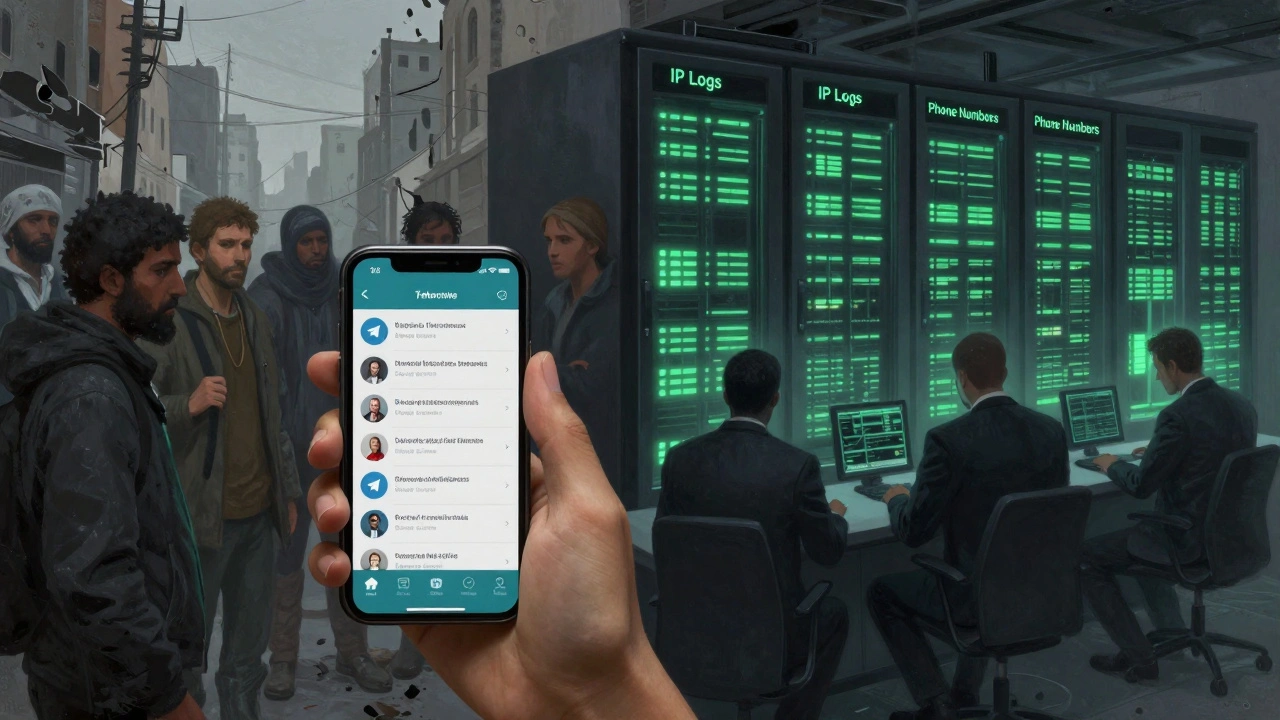
The Dark Side: Disinformation and the "Conspiracy Money Machine"
Telegram’s lack of moderation isn’t neutrality. It’s a business model. Channels that spread conspiracy theories-about vaccines, election fraud, or the "deep state"-can monetize their audiences. Top channels make over $100,000 a month through premium subscriptions, crypto scams, and merchandise sales. Researchers have identified four major clusters of these channels, each with its own branding, content style, and revenue stream. They’re not fringe. They’re profitable. And because Telegram doesn’t remove content unless it’s illegal (like ISIS propaganda), these channels grow unchecked. In the U.S., after Twitter and Facebook cracked down on misinformation after January 6, 2021, thousands of right-wing influencers moved to Telegram. By 2023, over 120,000 political channels existed on the platform. The top 1% generated 85% of the content. That’s not democracy. That’s a media empire built on silence. Even worse, Telegram’s "privacy" makes verification impossible. You see a video of a protest in Gaza, but you don’t know if it’s real, old, or staged. No fact-checking. No labels. No warnings. Just a forwarded message with a green checkmark from a channel that says "Truth Uncovered." For users, it feels authentic. For researchers, it’s a nightmare.Who Uses Telegram-and Why
Telegram’s user base is split into two worlds. In authoritarian countries, it’s a lifeline. Dissidents in Russia use it to organize protests against the war in Ukraine. Journalists in Myanmar use it to report on military crackdowns. In Iran, activists bypass state firewalls using Telegram’s encrypted channels. The platform’s refusal to censor makes it indispensable. But in democracies, it’s a refuge for those who feel silenced. Conservative commentators, anti-vaccine groups, and far-right organizers see Telegram as the last free space online. They’re not wrong. It is. But that freedom comes at a cost. The same tools that help activists also help extremists. The same channels that spread truth also spread lies. There’s no way to separate them because Telegram refuses to try. And then there’s the middle ground: journalists and NGOs. Many use Telegram to share documents, coordinate reporting, or leak information safely. The New York Times, BBC, and Reuters all have official Telegram channels. But even they can’t control what gets reshared. A leaked Pentagon memo might start on a verified channel, then get forwarded 100 times by unverified accounts with altered captions. The original context is lost. The truth is warped.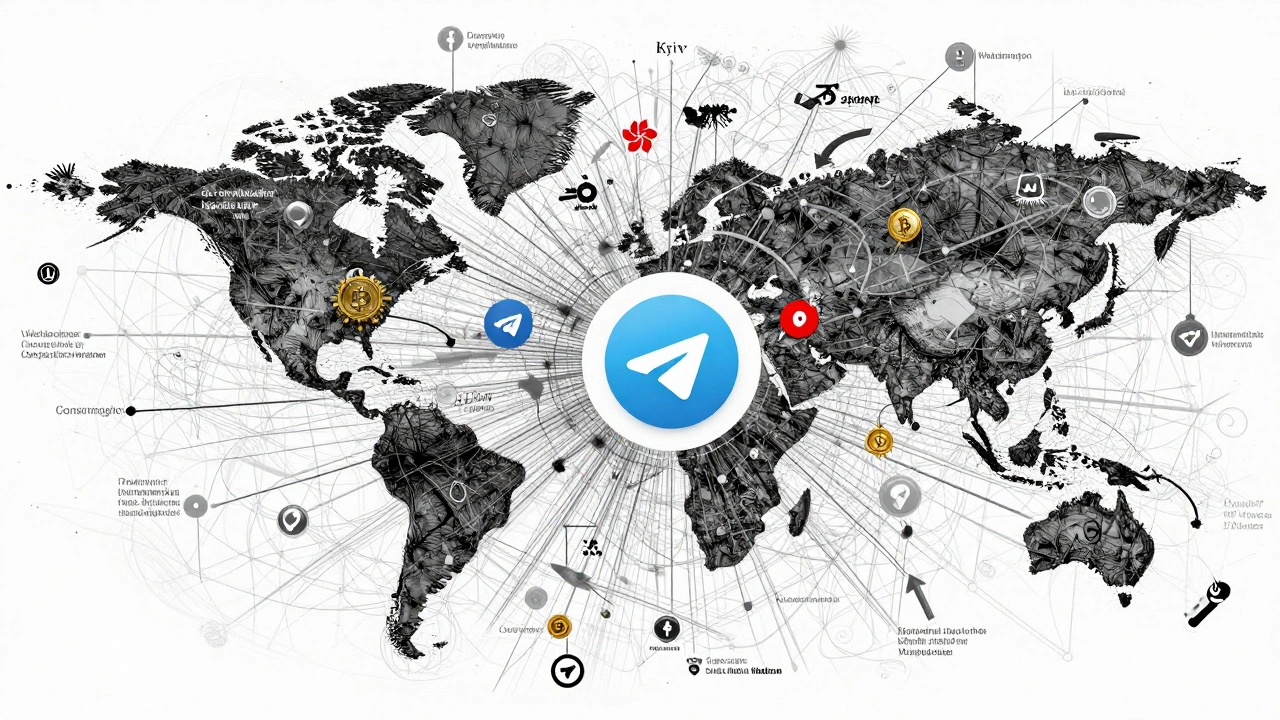
Why Telegram Won’t Change
Telegram says it won’t moderate because it believes in free speech. That sounds noble. But here’s the catch: Telegram isn’t a nonprofit. It’s a business. It makes money through premium subscriptions, ads on channels, and its TON blockchain project. The more users it has, the more it earns. That means it has no incentive to clean up its platform. In fact, controversy drives growth. The European Union forced Telegram to appoint a legal representative in 2024 under the Digital Services Act. But Telegram claims it already "complies with all European laws." That’s legal wordplay. The EU wants content moderation. Telegram gives them silence. It’s a game of cat and mouse-and Telegram always wins because it doesn’t care enough to lose. Meanwhile, cybersecurity experts have already moved on. Professionals who need real anonymity use Signal, Matrix, or decentralized platforms like Briar. Telegram is no longer the tool of choice for those who truly fear surveillance. It’s the tool of choice for those who want to be heard-no matter the cost.The Future of Political News on Telegram
Telegram’s political channels are growing at 37% per year. By 2026, they’ll be the dominant force in how millions get their news. But that doesn’t mean it’s sustainable. Governments are cracking down. The U.S. is considering legislation to force platforms to label unverified political content. The EU is preparing fines. Russia is blocking Telegram again. China never allowed it. The real question isn’t whether Telegram will survive. It will. The question is: will it become the new CNN-or the new Fox News? Or worse, will it become both at the same time? A platform that empowers dissidents in one country while fueling riots in another? That’s not privacy. That’s chaos dressed up as principle. If you rely on Telegram for political news, you’re not getting the truth. You’re getting a curated version of it-filtered by whoever runs the channel you subscribed to. And you have no idea who that is.Is Telegram really private for political activists?
Only if you use "secret chats"-which most people don’t. Regular channels and group messages are stored on Telegram’s servers and can be accessed by the company. If a government issues a court order, Telegram can hand over your phone number and IP address. For activists in repressive regimes, this is a serious risk. Many have been arrested based on Telegram metadata.
Why do conspiracy theories thrive on Telegram?
Telegram doesn’t remove content unless it’s illegal under global law (like terrorist material). That means QAnon, anti-vaccine, and election fraud channels can operate without fear of being banned. These channels also make money through subscriptions and crypto scams, giving them strong incentives to keep posting sensational content. No moderation + profit motive = perfect conditions for disinformation.
Can you trust news you get from Telegram channels?
No-not without verification. Telegram has no fact-checking system. Videos, documents, and quotes are often taken out of context or reused from years ago. Many channels don’t even name their sources. The only way to verify is to cross-reference with independent media, which is time-consuming and not always possible.
Why do governments block Telegram if it’s so private?
Because it’s not private enough. Governments block Telegram not because it’s encrypted, but because it’s unmoderated. It’s used to organize protests, spread false information, and coordinate attacks. Russia, Iran, and China have all blocked it at times-not to protect privacy, but to control information flow. Telegram’s refusal to cooperate with censorship makes it a target for authoritarian regimes.
Is Telegram safer than WhatsApp or Signal for political use?
For one-on-one messaging, Signal is safer. It’s fully open-source, end-to-end encrypted by default, and doesn’t store metadata. WhatsApp is also encrypted by default but owned by Meta, which collects data for ads. Telegram is the least secure for private conversations. But for broadcasting news to large groups, Telegram is unmatched. So safety depends on what you’re using it for.
Why do journalists use Telegram if it’s so unreliable?
Because in conflict zones or authoritarian countries, it’s often the only platform that works. When internet access is cut or social media is shut down, Telegram’s channels remain accessible. Journalists use it to receive tips, share documents, and publish updates when traditional media can’t. But they know the risks-and always verify before reporting.
Latest Posts
How Telegram Changes Who Controls the News
16/Nov/2025