When journalists used Telegram to talk to sources, they believed they were safe. Not because it was perfect, but because it resisted. Telegram’s reputation was built on silence - it wouldn’t hand over user data unless it absolutely had to. That changed in August 2024, when its founder, Pavel Durov, was arrested in Paris. The reason? Telegram hadn’t done enough to stop illegal content. In the weeks that followed, the platform quietly rewrote its rules. And now, newsrooms around the world are scrambling to catch up.
What Changed on Telegram?
Before August 2024, Telegram only shared user data in cases involving terrorism. That was it. Phone numbers? IP addresses? Even if a court asked, Telegram said no. Journalists trusted it because of that stance. Now, the rules are different. According to Telegram’s updated transparency report, the platform handed over data on over 22,000 users in Q1 2025 - up from fewer than 6,000 in the same period in 2024. In the U.S. alone, government requests jumped from 14 in early 2024 to 900 by the end of the year. That’s a 6,300% increase. The change isn’t theoretical. French authorities received data on 1,425 users in the first three months of 2025. In South Korea, Telegram now responds to content takedown requests within 24 hours - something that rarely happened before. The platform now explicitly says it will share phone numbers and IP addresses with law enforcement if presented with a valid court order. That’s not a minor tweak. It’s a full pivot.Why This Matters for Newsrooms
For journalists, Telegram wasn’t just a messaging app. It was a shield. In countries like Russia, Turkey, or Egypt, where press freedom is under threat, Telegram was often the only reliable way to communicate with sources without fear of surveillance. Now, that shield has a crack. The problem isn’t just that data can be shared - it’s that the platform doesn’t distinguish between a whistleblower exposing corruption and a spam bot selling counterfeit watches. If a source uses Telegram, their phone number and IP address are now potentially visible to authorities. In countries with weak rule of law, that’s enough to track someone down. An IP address can reveal a city. A phone number can link to a name, address, even family members. The Committee to Protect Journalists made it clear in April 2025: journalists must now treat Telegram messages as potentially discoverable in court. That means anything shared over Telegram - even in private chats - could be used as evidence. That’s not speculation. It’s policy.How News Organizations Are Adapting
Major outlets didn’t wait for guidance. They acted. The New York Times updated its internal policy in January 2025. It now bans Telegram for reporting on national security or sensitive political stories in non-democratic countries. The Guardian rolled out mandatory encryption training that now includes a specific warning about Telegram’s changed policies. Reuters Institute found that 68% of newsrooms surveyed in early 2025 either restricted or completely stopped using Telegram for source communication. In Russia, where 89% of independent media once relied on Telegram, journalists are now using a workaround: they encrypt messages with Signal or Threema first, then paste the encrypted text into Telegram. It’s not perfect, but it adds a layer. The Associated Press recorded 47 cases in early 2025 where sources refused to use Telegram after learning about the policy shift - a 32% increase from 2024. On Reddit’s r/JournalismTech, one bureau chief in Turkey wrote: “I switched my whole team to Session. Our sources were terrified.” Another user in Berlin said they now require all staff to complete the Freedom of the Press Foundation’s updated Secure Messaging Assessment before using any app for source work.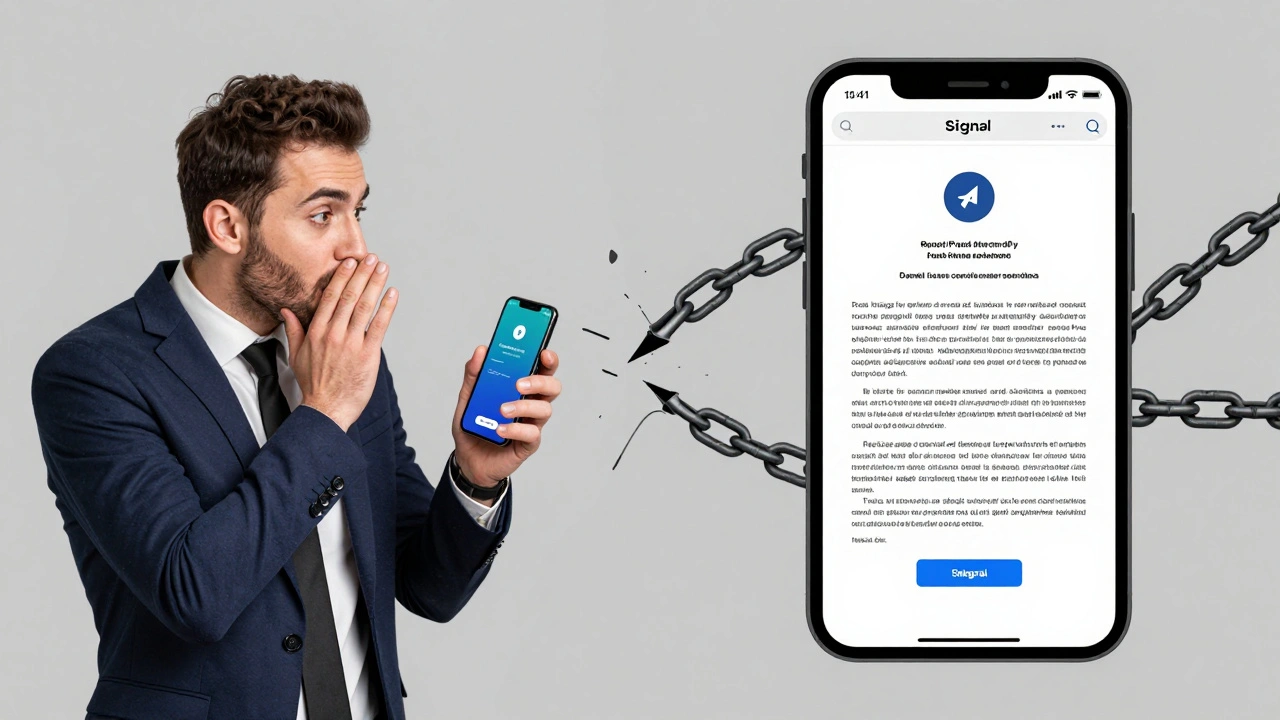
The Compliance Nightmare Across Borders
This isn’t just a technical issue. It’s a legal minefield. In the European Union, the European Data Protection Board issued new guidance in March 2025: Telegram is now classified as a high-risk communication channel under GDPR. News organizations must document risk assessments for every use of Telegram - something they never had to do before. In the U.S., the Society of Professional Journalists added a new ethical rule in February 2025: journalists must now disclose to sources that Telegram shares data with authorities. That means every conversation with a confidential source now begins with a legal disclaimer. Even worse, China’s Cyberspace Administration now requires all foreign media operating in China to sign agreements acknowledging Telegram’s cooperation with authorities as part of their 2025 licensing. That means if you’re a U.S. news outlet reporting from Beijing, you’re legally bound to admit that your source’s data could be handed over to the Chinese government. The BBC now uses 14 different communication protocols based on location and story sensitivity. Telegram? Only allowed for domestic UK reporting. Everywhere else? Too risky.What’s Next?
Industry analysts predict Telegram’s compliance rules will keep shifting. Gartner forecasts that by late 2025, the platform will implement “geofenced compliance” - stricter data sharing in the EU and South Korea, looser rules elsewhere. That means a journalist in Paris could be tracked, while one in Brazil might still operate under older protections. It’s a patchwork of rules, making global compliance nearly impossible. At the same time, Telegram’s new third-party verification system, introduced in January 2025, lets government agencies authenticate accounts. That raises a chilling question: could state actors now create fake verified accounts to pose as journalists or sources? There’s no way to know. The result? Newsrooms are moving to layered communication strategies. Pew Research found that 73% of major outlets now use at least three secure messaging apps - Signal, Session, Threema, and sometimes even encrypted email - depending on the risk level. That’s up from 41% in 2024. Telegram is no longer the default. It’s a last resort.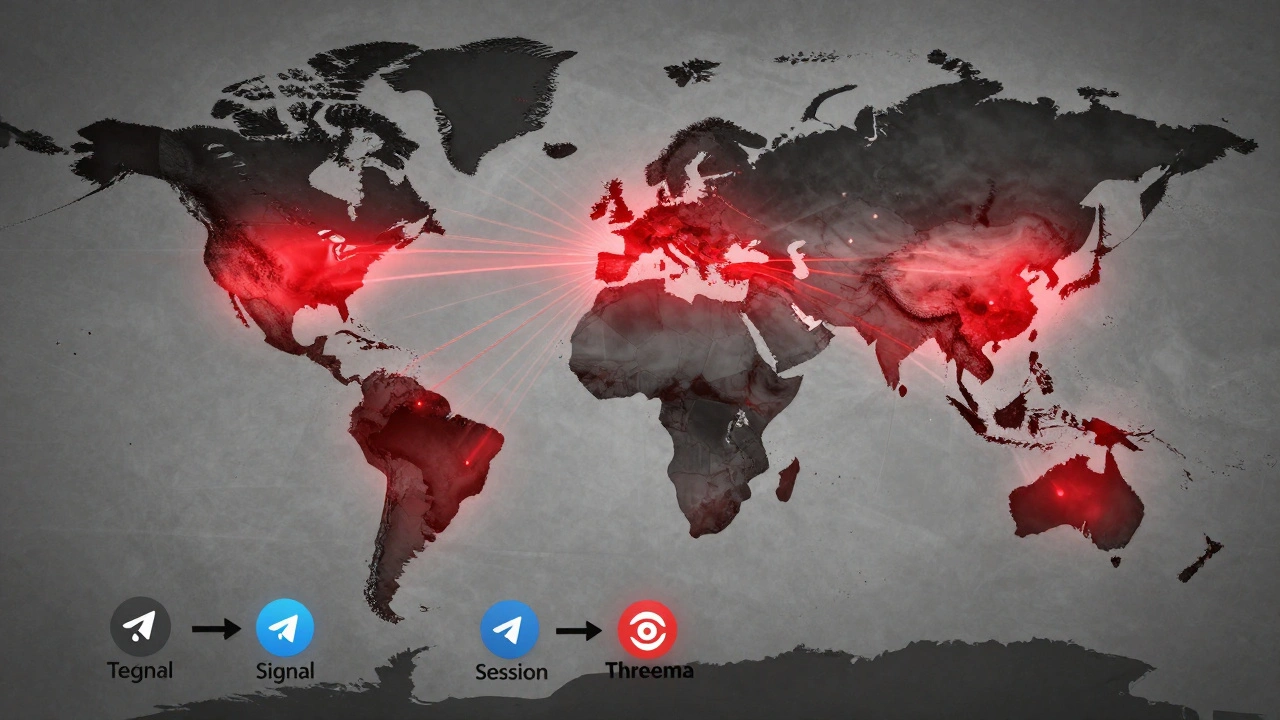
What Should News Organizations Do Now?
If your newsroom still uses Telegram for sensitive reporting, here’s what you need to do:- Review your source protection policy. Is Telegram still listed as a secure channel? If yes, remove it - or add clear warnings.
- Train your staff. Make sure everyone knows Telegram’s current data-sharing policy. Don’t assume they know.
- Switch to end-to-end encrypted alternatives. Signal remains the gold standard. Session is gaining traction for its no-phone-number-needed design.
- Disclose the risk to sources. Ethically and legally, you must tell them what could happen if they use Telegram.
- Document everything. Under GDPR and new SPJ rules, you need proof you assessed the risk and made an informed choice.
Is Telegram Still Useful?
Yes - but only for low-risk situations. If you’re reporting on local sports, weather, or community events where source confidentiality isn’t at stake, Telegram still works fine. It’s fast, reliable, and easy to use. But for anything involving whistleblowers, political repression, or national security? It’s no longer safe. The era of Telegram as a journalist’s secret weapon is over. What’s left is a platform trying to balance survival with responsibility. For news organizations, the lesson is simple: trust no platform. Verify its policies. Update your protocols. And always assume the worst.Can journalists still use Telegram safely after the 2024 policy changes?
No - not for sensitive source communications. Telegram now shares phone numbers and IP addresses with law enforcement upon valid court order. Journalists can no longer assume their chats are private. It should only be used for non-sensitive, low-risk reporting, like local news or public events where source identity isn’t confidential.
What data does Telegram now share with authorities?
Telegram shares users’ phone numbers and IP addresses with law enforcement when presented with a valid court order. This applies to all users, regardless of whether they’re journalists, activists, or regular users. It no longer limits data sharing to terrorism cases only, as it did before August 2024.
Is Telegram compliant with GDPR now?
Yes, under the European Data Protection Board’s March 2025 guidance, Telegram is classified as a high-risk communication channel. News organizations using Telegram must conduct documented data protection impact assessments under Article 35 of GDPR. Failure to do so could result in fines.
What are the best alternatives to Telegram for journalists?
Signal is the most trusted alternative, offering end-to-end encryption by default with no phone number storage. Session is another strong option - it doesn’t require a phone number at all. Threema and Briar are also used by some newsrooms for high-risk reporting. All three are open-source and have clear, transparent privacy policies.
Do journalists have to tell their sources about Telegram’s data policy?
Yes. The Society of Professional Journalists updated its Ethics Code in February 2025 to require journalists to disclose to sources the current data retention and sharing policies of any digital platform used for communication. Failing to do so violates ethical standards and could compromise legal protections.
How has Telegram’s policy affected sources’ willingness to talk?
Source reluctance has increased significantly. The Associated Press documented a 32% rise in sources refusing to use Telegram between January and March 2025 compared to the same period in 2024. In countries like Turkey and Russia, sources now fear that even encrypted messages could lead to their identification through metadata like IP addresses or phone numbers.
Latest Posts