Imagine a world where no algorithm decides what you see next. No black-box code weighs your engagement to serve you ads or political content designed to keep you scrolling. Instead, you choose exactly who speaks to you, and you hear them in the order they speak. This is Telegram, a platform that has quietly become one of the most powerful engines for shaping global attention.
While giants like X (formerly Twitter) and TikTok fight over user retention with complex recommendation feeds, Telegram operates differently. It doesn't push stories to you; it lets you pull them. But this simple design choice has created a unique ecosystem where raw, unfiltered narratives from conflict zones, protests, and political upheavals bypass traditional gatekeepers and land directly on millions of screens. The question isn't just whether Telegram is popular-it has nearly 900 million monthly active users-but how its architecture determines which stories break out into the global consciousness and which remain hidden.
The Architecture of Attention: Why Telegram Is Different
To understand how Telegram shapes news, you have to look at its core features. Unlike WhatsApp, which focuses on private groups, or Signal, which prioritizes privacy above all else, Telegram is built for broadcasting. Its killer feature is the Channel. A channel allows one person or organization to send messages to an unlimited number of subscribers. There is no cap on audience size. Some of the largest news channels on the planet have over 3 million followers.
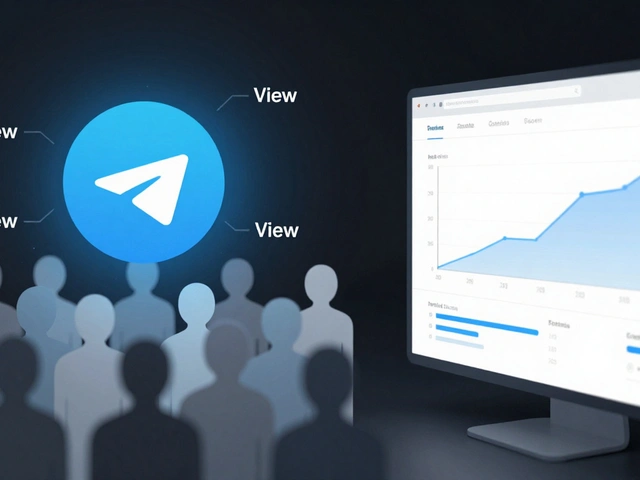
This structure creates a "hub-and-spoke" model of information distribution. In a typical social media feed, virality is random and algorithm-driven. On Telegram, virality is network-driven. A story gains traction when large "hub" channels-trusted by thousands or millions of users-decide to forward it. If a major Russian-language war blog posts a video, and five other large channels forward it, that video instantly reaches tens of millions of eyes. The view counter on Telegram aggregates these forwards, giving users a clear signal of a post's reach.
Consider the mechanics:
- No Algorithmic Feed: Users see posts in chronological order. If you subscribe to ten channels, you get ten updates per day, in the order they were sent. You are not fed content based on past behavior.
- Forwarding Chains: Content can be forwarded seamlessly between channels, preserving the original source link. This creates visible trails of how a story spreads.
- Low Friction Entry: Anyone can create a channel. There is no verification process required to start broadcasting, lowering the barrier for whistleblowers, activists, and propagandists alike.
This means that power on Telegram is concentrated. A small number of influential channel owners act as the new editors-in-chief of the internet. They decide which local incident becomes a global headline. When a story breaks on Telegram, it often travels outward to X, Facebook, and mainstream TV news, rather than the other way around.
Case Study: How Local Stories Become Global Headlines
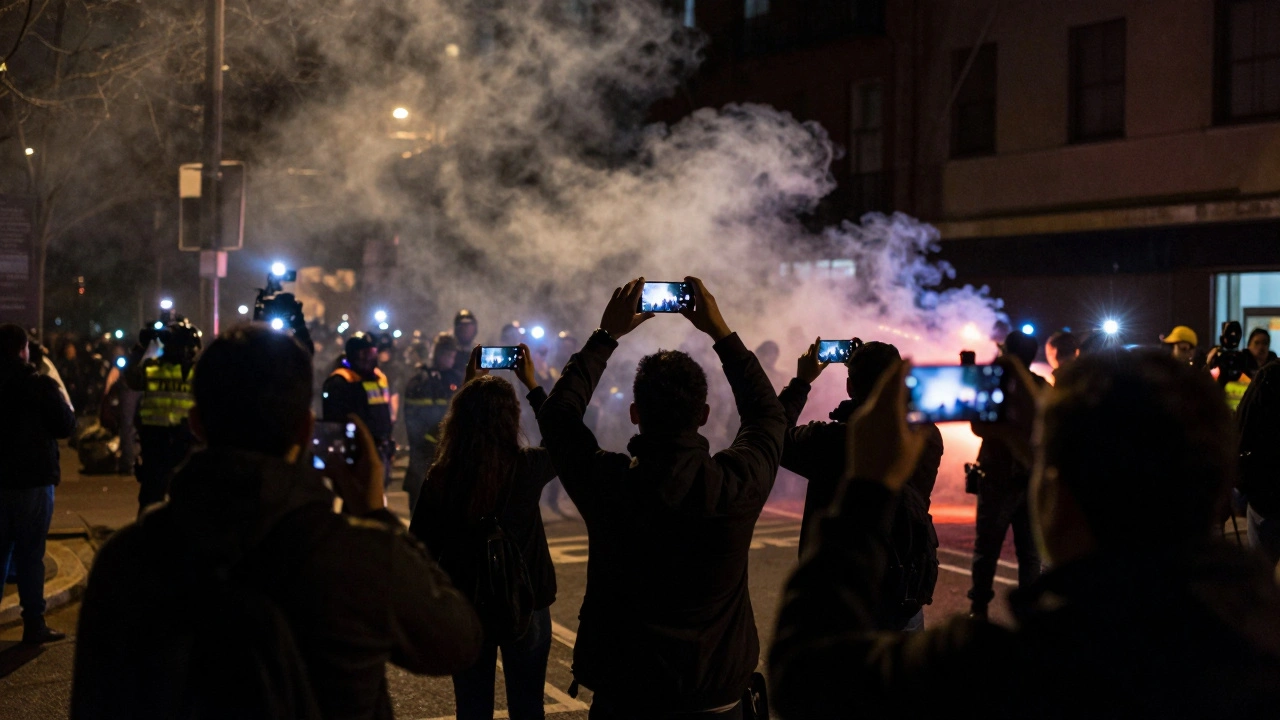
The impact of this architecture is best seen in real-world crises. During the 2020 protests in Belarus, the opposition-linked channel NEXTA Live grew to roughly 2 million subscribers in a country of 9.4 million people. NEXTA didn't just report news; it coordinated protests, published leaked government documents, and broadcast live footage of police violence. Because NEXTA was so large and trusted, international outlets like The New York Times and The Guardian relied on it as a primary source. The story of Belarusian resistance became a global narrative largely because Telegram provided the infrastructure for it to organize and amplify.
A similar dynamic played out during the Russia-Ukraine war. On both sides, Telegram became the front line of information warfare. Ukrainian President Volodymyr Zelenskyy’s official channel reached over 1.4 million subscribers quickly, allowing him to bypass state-controlled media and speak directly to citizens and the world. On the Russian side, pro-war "milbloggers" like Rybar and WarGonzo built audiences of over a million subscribers each. These bloggers often posted battlefield maps, drone footage, and commentary that contradicted official Ministry of Defense statements. Analysts note that events like the chaotic Russian retreat from Kherson in November 2022 were first framed by these Telegram narratives before any official confirmation occurred.
In the Gaza conflict following October 7, 2023, the pattern repeated. Armed groups, journalists, and citizen reporters posted real-time videos of airstrikes and attacks. Journalists worldwide monitored dozens of Arabic, Hebrew, and English-language Telegram channels, translating and republishing footage on X and television. Graphic videos and casualty claims gained millions of views within hours. While some were later debunked by open-source intelligence (OSINT) researchers, the initial global attention was driven entirely by Telegram’s ability to distribute raw material instantly and without moderation.
The Double-Edged Sword: Misinformation and Echo Chambers
With great power comes significant risk. Telegram’s minimal moderation policy means it is also a haven for disinformation. The platform only removes content that violates narrow Terms of Service categories, such as child sexual abuse material or explicit calls for violence. Political misinformation, conspiracy theories, and hate speech are generally left alone unless flagged repeatedly.
A study by the Alan Turing Institute analyzed 200,000 posts across thousands of Telegram channels. They found that links to misleading information sources were shared more frequently than links to professional news outlets within their sample. However, these misleading links were concentrated in tight, isolated communities. Professional news links were more widely distributed. This suggests that while the average Telegram user might not be constantly bombarded with fake news, specific echo chambers can become highly radicalized and influential.
During crises, these echo chambers matter. Even if disinformation is contained within specific clusters, those clusters can be loud and well-connected. Mother Jones reported that during the Ukraine and Gaza conflicts, Telegram became a "recurring dissemination point for the spread of disinformation." Emotionally charged content, especially graphic imagery, spreads rapidly through forwarding chains before fact-checkers can verify it. By the time a correction is issued, the original false narrative may have already shaped public opinion globally.
Comparison: Telegram vs. Traditional Social Media
| Feature | Telegram | X / Twitter | TikTok |
|---|---|---|---|
| Content Discovery | Subscription-based, chronological | Algorithmic feed, trending topics | Algorithmic "For You" page |
| Virality Driver | Large channel forwards | Engagement metrics (likes, retweets) | Watch time and interaction signals |
| Moderation | Minimal, reactive to reports | Active, policy-driven takedowns | AI-driven, strict community guidelines |
| Primary Use Case | Broadcasting, niche communities | Public conversation, breaking news | Entertainment, short-form video |
| Gatekeeping | Channel owners (human curators) | Algorithms + Platform Policy | Algorithms |
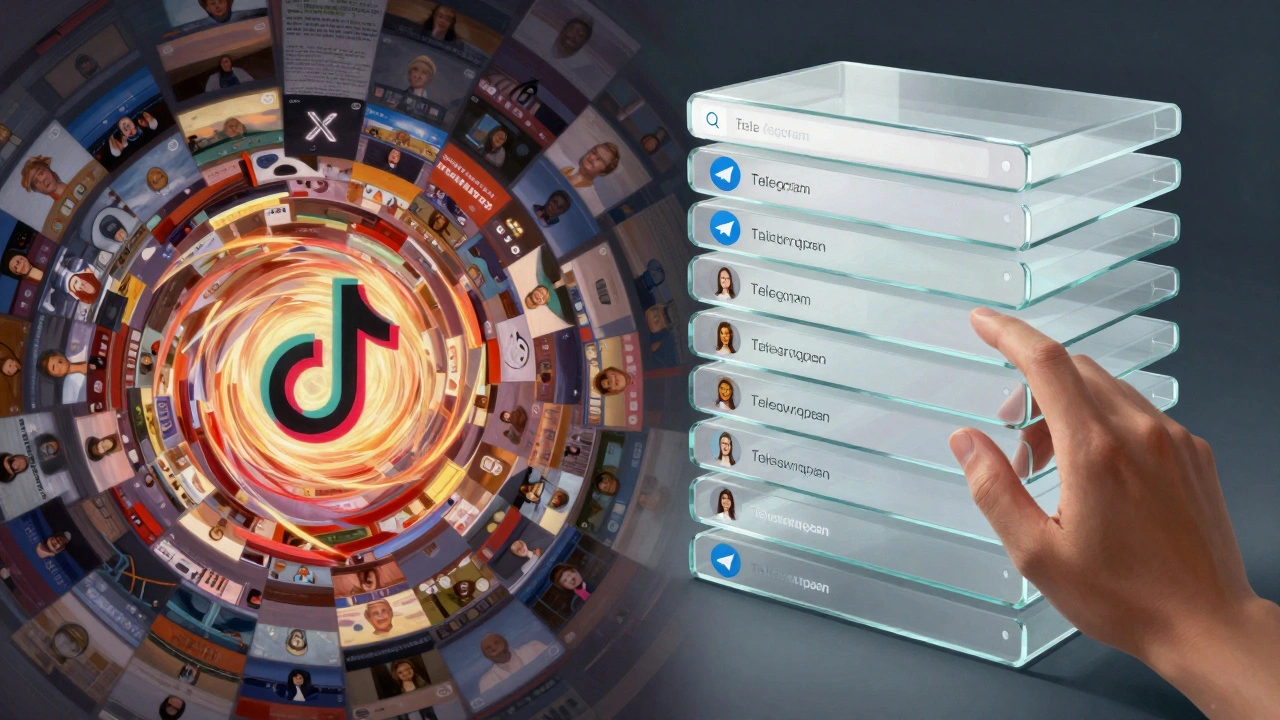
This comparison highlights why Telegram feels different. On TikTok, anyone can go viral if the algorithm likes their content. On X, visibility depends on paying for promotion or having a large existing following that engages heavily. On Telegram, visibility depends on being picked up by a hub channel. This makes Telegram less democratic in terms of discovery but more stable in terms of audience trust. Once you follow a channel, you know what you’re getting. There is no surprise content injected by an algorithm trying to maximize ad revenue.
The Role of OSINT and Journalists
For professionals, Telegram has become indispensable. Open-source intelligence (OSINT) researchers and journalists now treat Telegram as a primary source. Tools like TGStat allow analysts to track channel growth, subscriber demographics, and post performance. Researchers monitor hundreds of channels simultaneously, cross-referencing images and videos with satellite data and geolocation tools.
The workflow often looks like this:
- A video appears on a small Telegram channel in a conflict zone.
- A larger aggregator channel forwards it, boosting its visibility.
- OSINT analysts pick it up, verify the location and timing using metadata and visual cues.
- Mainstream media outlets publish the verified story, citing Telegram as the source.
This pipeline means that Telegram acts as the upstream gatekeeper of raw reality. It provides the earliest access to events, but it requires significant effort to filter truth from noise. Journalists need language skills, cultural context, and verification training to use Telegram effectively. The learning curve is steep, but the payoff is exclusive, real-time access to stories that would otherwise be buried.
Regulatory Pressures and Future Risks
Telegram’s influence hasn’t gone unnoticed by governments. In August 2024, French authorities placed founder Pavel Durov under investigation for alleged complicity in facilitating illegal activities on the platform. While Telegram maintains that it is merely a conduit, regulators increasingly view it as an actor whose policies shape public discourse. The European Union’s Digital Services Act (DSA) imposes stricter obligations on very large online platforms, potentially forcing Telegram to introduce more transparency or moderation in the future.
Additionally, Telegram’s monetization strategy-through Premium subscriptions and sponsored messages in large channels-creates financial incentives for sensationalism. Channel owners may prioritize graphic war footage or outrage-driven political stories to boost engagement and ad revenue. This could further distort the information landscape, rewarding shock value over accuracy.
Despite these risks, Telegram’s structural advantages ensure its continued relevance. Its low data footprint makes it usable in areas with poor connectivity. Its cross-platform compatibility works on old Android phones and modern iPhones alike. And its adoption in key geopolitical hotspots-from Eastern Europe to the Middle East-makes it a critical node in the global information network. As long as there are actors seeking to bypass traditional media controls, Telegram will remain a powerful shaper of global attention.
Does Telegram have an algorithm that decides what news I see?
No, Telegram does not use an algorithmic feed for channels. Posts appear in chronological order based on when they were sent. You only see content from channels you have explicitly subscribed to. However, Telegram does offer a "Similar channels" suggestion feature and uses search algorithms to help users discover new channels, which can indirectly influence what you find.
Is Telegram safe for getting breaking news?
Telegram is fast but not always accurate. Because there is minimal moderation, misinformation and propaganda can spread quickly alongside legitimate news. It is crucial to verify information from multiple sources and rely on established news organizations or verified OSINT accounts rather than trusting anonymous channels blindly.
Why do journalists use Telegram so much?
Journalists use Telegram because it provides direct access to raw, unedited footage and eyewitness accounts from conflict zones and protests. It often serves as the earliest source for breaking news, allowing reporters to verify and contextualize stories before they appear on mainstream platforms. Many local journalists and activists also use Telegram to bypass censorship.
How does Telegram compare to X (Twitter) for news?
X relies on an algorithmic feed that promotes engaging content, which can include misinformation or sensationalism. Telegram is subscription-based and chronological, meaning you control your feed completely. Telegram is better for deep dives into specific topics via dedicated channels, while X is better for real-time public conversation and broader trend awareness.
Can anyone create a news channel on Telegram?
Yes, anyone can create a public channel on Telegram without verification. This low barrier to entry allows for diverse voices, including whistleblowers and independent journalists, but it also enables bad actors to spread disinformation. Users must exercise caution and check the credibility of channel operators.