Most local news outlets still rely on Facebook pages or email newsletters. But if your city’s power goes out, or emergency alerts get buried under memes and ads, where do people turn? In Asheville, Austin, or Akron, more and more residents are checking Telegram - not because it’s trendy, but because it works when everything else fails.
Telegram isn’t just another messaging app. It’s become the go-to platform for hyperlocal news in communities that feel ignored by big media. Unlike Facebook, where your post might never reach 10% of your followers, Telegram delivers every message instantly. No algorithms. No delays. Just direct access to the people who need it most.
Why Telegram Works Better Than Facebook or Nextdoor for Local News
Facebook’s algorithm hides your post if it doesn’t get likes fast. Nextdoor limits you to verified addresses. Telegram? No limits. No filters. You can broadcast to 10,000 people or 1 million - same speed, same clarity.
During the 2023 wildfires in Sonoma County, official emergency alerts took 42 minutes to reach residents. The local Telegram channel, Sonoma County Alerts, sent the same warning in 20 minutes. Why? Because it didn’t wait for approval from a corporate server. It went straight to phones.
Telegram also handles media better. You can send 2GB videos - perfect for showing flooded streets, damaged roofs, or a high school football game. No compression. No pixelation. No “we couldn’t load this.”
And unlike WhatsApp, which caps groups at 1,002 people, Telegram channels have unlimited subscribers. That’s not a typo. You can build a channel for your entire county and never hit a wall.
Setting Up Your Hyperlocal Telegram Channel - Step by Step
Creating a Telegram channel takes less than an hour. But most people mess up the basics. Here’s how to do it right.
- Choose a clear, keyword-rich name. Don’t call it “Asheville Updates.” Call it “AshevilleNews” or “AshevilleEvents.” 83% of successful channels use the city name in the handle. Avoid slang, emojis, or vague terms.
- Set up your @username. Pick something short and memorable. If @AshevilleNews is taken, try @AshevilleToday or @AshevilleAlerts. You only get one shot at this - once you claim it, it’s yours forever.
- Write a strong bio. “Real-time local news for Asheville residents. Breaking alerts, events, traffic, and community updates. No ads. No spam.” Keep it under 200 characters.
- Enable Instant View. Use Telegraph (telegra.ph) to write your articles. It auto-formats them for Telegram’s fast-loading reader. No HTML needed. Posts load in under 0.2 seconds.
- Turn on analytics. Once you hit 1,000 subscribers, Telegram unlocks detailed stats. You’ll see when your audience is online, where they’re from, and which posts get the most views.
Pro tip: Don’t post from your phone. Use a desktop or laptop. It’s easier to format text, attach files, and manage replies.
What to Post - The 57/43 Rule
People don’t follow your channel because they love you. They follow it because it gives them something they can’t get anywhere else.
Successful hyperlocal channels use a simple content mix: 57% value, 43% engagement.
- Value posts (57%): Traffic delays, school closures, power outages, zoning changes, new business openings, crime alerts, lost pets, event cancellations.
- Engagement posts (43%): “What’s your favorite coffee shop in West Asheville?” “Has anyone seen this pothole on Brevard Road?” “Vote: Should the city fix the park lights before winter?”
Hamilton Happenings in Toronto increased shares by 29% just by switching to this ratio. People don’t want to be preached to. They want to feel heard.
Post at the right times. In Chicago, Loop Report found their audience was most active at 7:15 AM (commuters leaving for work) and 5:30 PM (people coming home). Their open rates jumped 34% after adjusting their schedule.

How to Grow Your Audience Without Paid Ads
Most new channels sit at 50 subscribers for months. Then something clicks. Here’s how to make it happen.
- Put QR codes everywhere. Print them on flyers at the library, post them on community bulletin boards, add them to school newsletters. The Seattle Schools channel grew to 9,200 subscribers in eight months using this method.
- Partner with local businesses. Offer to post their grand opening or sale in exchange for letting you leave a flyer in their window. Small businesses love free exposure.
- Use existing groups. If you’re active on Facebook groups or Nextdoor, say: “We just launched a Telegram channel for real-time updates. Join here: t.me/YourCityNews.”
- Ask for shares. After posting a breaking alert, say: “If this helped you, please share it with your neighbors.” People will.
Don’t chase viral reach. Chase loyal subscribers. One person who checks your channel every day is worth 100 who only open it once.
Monetization - How to Actually Make Money
Telegram doesn’t have built-in payments. No tipping. No subscriptions. That’s a problem - until you get creative.
68% of hyperlocal Telegram channels use Patreon or direct PayPal links. But that’s not the only way.
- Telegram Ad Platform. Launched in 2023, it pays $0.08-$0.12 per 1,000 impressions. Low? Yes. But if you have 50,000 subscribers, that’s $4-$6 per post. Do five posts a week? That’s $20-$30 weekly. Not life-changing, but it covers hosting costs.
- Shout-outs. Promote another local channel in your posts. Example: “Big thanks to @AshevilleFoodies for sharing our update on the new farmers market. Check them out for weekly food events.” In return, they’ll promote you. Conversion rates: 5-7%.
- Donations with purpose. Instead of saying “Donate,” say: “Help us keep this channel running. $5 buys us a backup phone for emergency alerts.” People give when they see the impact.
Only 29% of hyperlocal Telegram channels make money without sending people off-platform. The rest? They drive traffic to their website, newsletter, or Patreon. That’s fine - as long as you’re clear about it.
Handling Misinformation and Spam
Telegram has no automated moderation. That means you’re on your own.
Spam bots, fake emergency alerts, and conspiracy theories can flood your channel fast. In Portland, one channel spent 11 hours a week manually deleting spam until they added a bot.
Here’s how to protect your channel:
- Enable comment moderation. Turn off public comments. Only allow replies from admins.
- Use a moderation bot. Free bots like Telegram Moderation Bot or SpamBot can auto-block links, caps-lock messages, and duplicate posts.
- Verify sources before posting. If someone sends a video of a fire, ask: “Did you call 911? Is the fire department there?” Don’t post unconfirmed claims.
- Post corrections fast. If you make a mistake, say so. “Correction: Earlier post said the school closed. It’s open. We apologize for the error.” Transparency builds trust.
Trust is your currency. Lose it once, and you lose your audience forever.
The Future of Hyperlocal News on Telegram
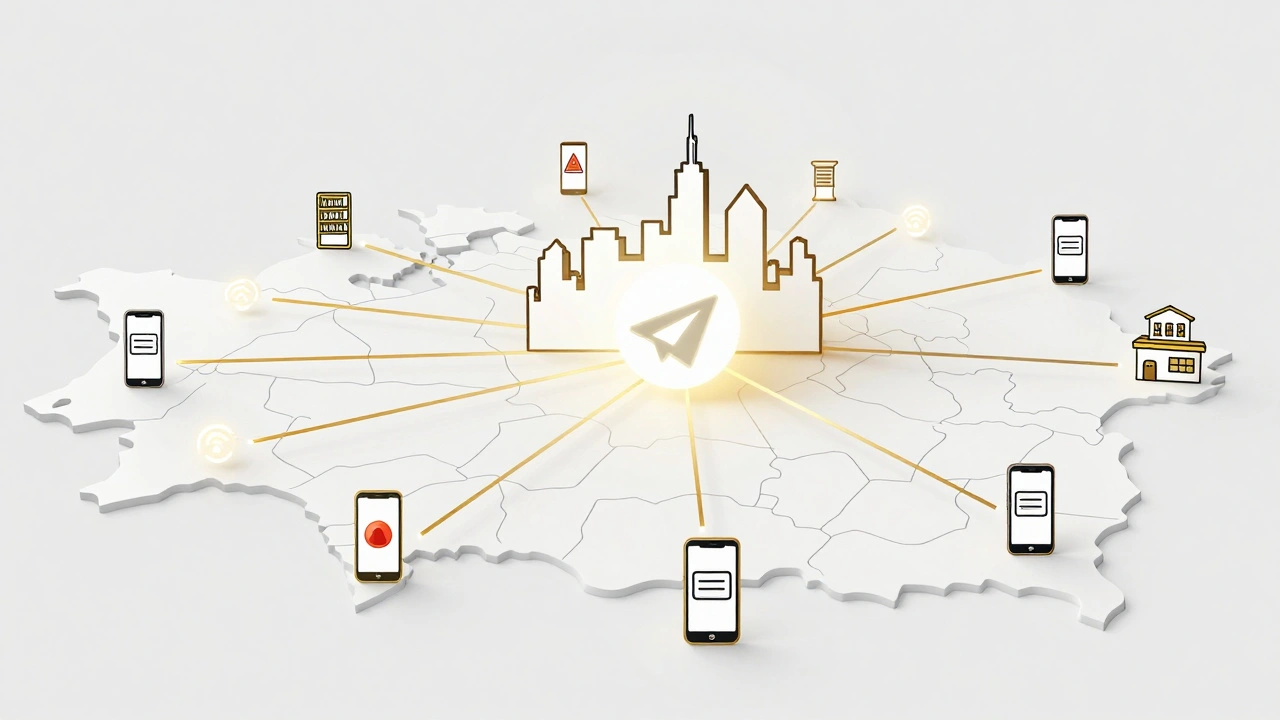
Telegram is changing fast. In November 2024, they rolled out location-based discovery - users can now find your channel if they’re within a few miles of your city. That’s huge.
By Q1 2025, Telegram will start integrating with city government APIs. Imagine your channel auto-posting: “Permit approved for new bike lane on Haywood Road.” No manual work. Just live data.
And now, Telegram has partnered with Press Publish to auto-send your content to Apple News and SmartNews - while keeping Telegram as the primary source. Early adopters are seeing 22% higher subscriber growth.
But here’s the catch: Only 38% of Telegram-based hyperlocal outlets make enough to cover costs. The rest? They’re volunteers, nonprofits, or side hustles.
That’s why the smartest operators aren’t betting everything on Telegram. They use it as their emergency broadcast system - their fastest, most reliable channel - while keeping a website, email list, and Facebook page for backup.
Final Thought: It’s Not About Technology. It’s About Trust.
People don’t follow your Telegram channel because it’s the newest app. They follow it because you’re the one who shows up when it matters.
You’re the one who posts the school closure before the district website updates.
You’re the one who shares the video of the fallen tree blocking Main Street before the city sends a crew.
You’re the one who says, “We don’t know yet,” instead of guessing.
That’s not journalism. That’s neighborhood service.
And in a world where local news is disappearing, that’s the only thing that still matters.
Latest Posts