Most independent Telegram channels fail because they treat their audience like a broadcast list - not a community. You post, people read, and then they disappear. No replies. No votes. No conversation. That’s not growth. That’s noise. But the channels that survive - the ones that grow, earn trust, and even make money - do something different. They build feedback loops.
What a Feedback Loop Actually Looks Like on Telegram
A feedback loop isn’t just asking, "What do you think?" and hoping someone replies. It’s a system: you ask → people respond → you act → they see it → they engage again. It’s a cycle that turns passive subscribers into active participants.Take a health-tech channel run by Natalia Bandach. She started posting daily tips about wearable devices. Nothing special. Then she started sending voice notes - just 30 seconds long - saying, "Hey, I saw you joined. What’s your biggest struggle with tracking sleep?" Within weeks, her retention doubled. Why? Because people felt heard. Not watched. Not sold to. Heard.
Telegram makes this possible because it doesn’t hide your content behind an algorithm. When you post, 100% of your subscribers see it. No guessing. No shadow banning. That’s rare. But visibility alone isn’t enough. You need a way for people to tell you what matters to them - and then show them you listened.
The Four Tools That Build Real Feedback Loops
You don’t need fancy software. Telegram gives you everything you need. Here’s how to use it right.
- Polls: Use them every time you post something uncertain. Not just "Do you like this?" - but "Which of these three solutions would help you most?" Polls show real data. You can see which answers get 70% of votes. Then you write the next post based on that. No guesswork.
- Voice Notes: Text feels cold. Voice feels human. Send a quick voice note after a poll. Say, "I saw 68% of you said X. Here’s what I’m trying next." It’s personal. It’s not automated. People remember that.
- Linked Discussion Groups: This is the secret weapon. Create a private group. Link it to your channel. Every time you post, say, "Discuss this in the group." That group becomes your real-time focus group. People argue, share stories, ask follow-ups. You don’t need to reply to every message. But you should read them. And occasionally drop in with, "I read your comment about X. That’s exactly why I’m changing this next week."
- Silent Posts: Not every message needs a notification. Use silent posts for updates, links, or reminders. People who care will still see them. Those who don’t? They won’t get pestered. This keeps your channel from feeling like spam.
One crypto channel on Reddit reported a 62% jump in poll responses after adding a welcome bot that asked new members: "What’s your main reason for joining?" That simple question segmented their audience. Now they know who wants price alerts, who wants educational content, and who’s just here for memes. They tailor every post accordingly.
Why Telegram Beats Instagram, Twitter, and Email
Instagram shows your post to 5% of your followers. Twitter polls vanish after 24 hours. Email open rates hover around 20%. Telegram? Your message lands in their feed. Full stop.
And unlike Discord, where everything is a chat, Telegram separates broadcast from conversation. Your channel is your stage. Your group is your backroom. You control the message. They control the discussion. That’s powerful.
Ad-Maven found that a Telegram channel with 10,000 loyal subscribers can outperform a Facebook page with 100,000 likes in click-throughs and conversions. Why? Because those 10,000 people aren’t just followers. They’re participants. They’ve answered polls. They’ve shared stories. They’ve been tagged in replies. They feel ownership.
Compare that to email. You can track opens. But you can’t see if someone laughed at your joke. Or got angry at your opinion. Or whispered to a friend, "You should join this channel." Telegram gives you that. You just have to listen.
How to Set It Up (Step by Step)
You can build a working feedback loop in under three hours. Here’s how:
- Create your channel: Name it clearly. Add a description. Use a profile picture that looks professional, not generic.
- Make a linked group: Go to Telegram → New Group → Add your channel as admin. Name the group something like "[Channel Name] Community". Pin a welcome message: "This is where we talk about what you want next. No spam. No bots. Just real talk."
- Add a moderation bot: Use free bots like @GroupHelpBot or @GuardianBot to auto-remove spam. Set it to delete links from new members for the first 24 hours. This stops trolls.
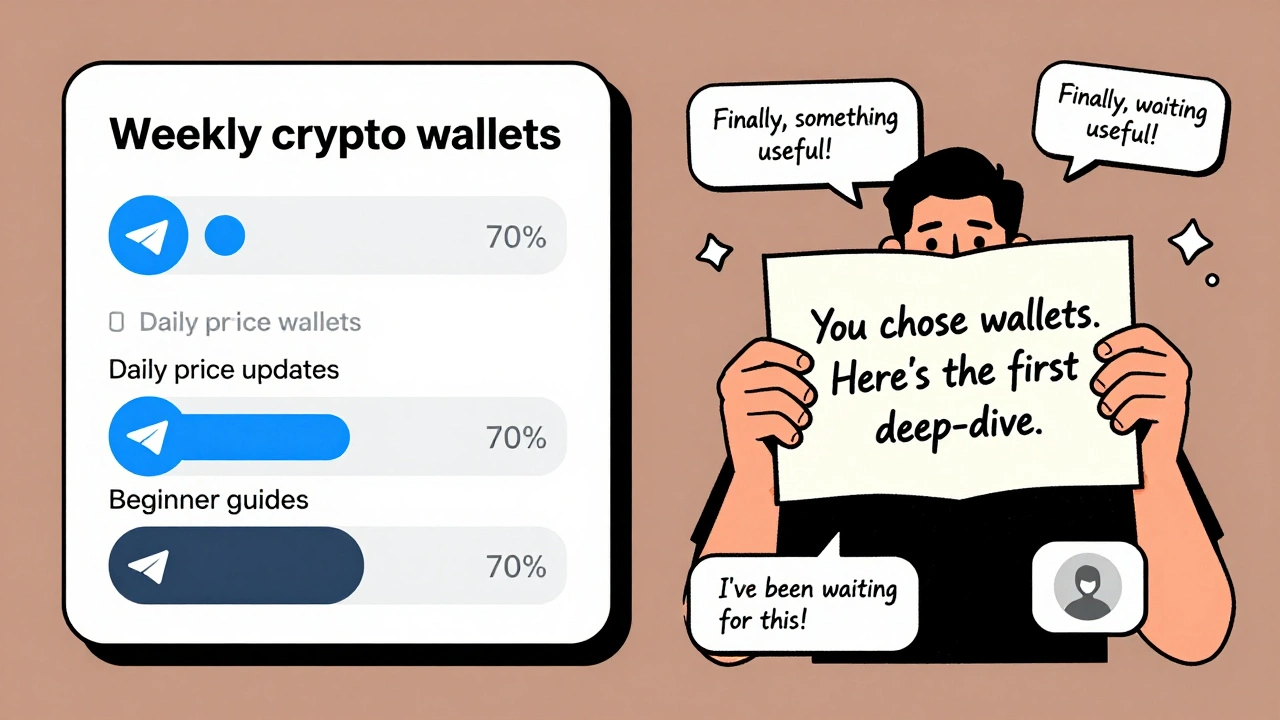
- Start with one poll: Post something you’re unsure about. "Should I do a weekly deep-dive on crypto wallets or daily price updates?" Let people vote. Then post a voice note saying, "You picked wallets. Here’s the first one."
- Tag contributors: When someone says something smart in the group, reply: "@Alex, that’s exactly what I meant. Thanks for saying that." It makes them feel seen. And others will want to be tagged too.
That’s it. No ads. No paid tools. Just consistency.
What Happens When You Don’t Build Feedback Loops
Lemon8-app tracked 200 new Telegram channels over 30 days. Those that didn’t use feedback loops lost 70% of their subscribers within the first month. Why? Because people joined out of curiosity - not connection. They didn’t feel part of anything. So they left.
One journalist in Ukraine started a channel during the 2022 conflict. He posted updates daily. No polls. No questions. No replies. He grew to 20,000 followers in a week. Then, in three weeks, he dropped to 3,000. He didn’t realize his audience wasn’t just hungry for news - they were hungry to be heard. He didn’t give them a way to speak back.
Feedback loops aren’t optional. They’re the difference between a bulletin board and a living room.

Common Mistakes (And How to Avoid Them)
- Asking too many questions: If you poll every day, people tune out. Space it out. One poll per post is enough.
- Ignoring responses: If someone spends 10 minutes writing a detailed comment and you never reply? They’ll leave. Even a "Thanks, I’ll look into this" matters.
- Using silent posts too much: Silent posts are great for updates. But if 80% of your posts are silent, people forget you’re there. Mix them with active posts.
- Over-automating: Bots are useful. But if every reply is "Thanks for your input!" from a bot? It feels fake. Save automation for spam control. Keep human replies for real engagement.
What’s Next? AI, Mini Apps, and the Future
Telegram is getting smarter. In December 2024, they added new poll analytics that show when and where people responded. That means you can tell if your audience is mostly in Brazil or Germany. If they’re active at 8 PM or 2 AM. You can tailor your timing.
And now, mini-apps are rolling out. You can build simple games, loyalty points, or even small storefronts inside your channel - all linked to feedback. Someone buys a guide? You ask: "Was this helpful?" They answer. You improve it. They come back.
Pavel Durov, Telegram’s founder, hinted at AI tools that will analyze sentiment in group chats. Imagine your bot flagging: "12 people said they’re frustrated with X. You should address this." That’s coming. But you don’t need it to start.
Right now, the best tool you have is your attention. Listen. Respond. Repeat.
Final Thought: It’s Not About Growth. It’s About Trust.
Growth happens when people believe you care. Not when you post the most. Not when you have the fanciest bot. When they know you hear them.
Independent journalism isn’t about having the biggest audience. It’s about having the most loyal one. And loyalty isn’t bought. It’s built - one voice note, one poll, one replied comment at a time.
Do I need to pay for tools to build feedback loops on Telegram?
No. Telegram’s built-in tools - polls, voice notes, linked groups, and silent posts - are enough to start. Free bots like @GroupHelpBot can handle spam moderation. You only need paid tools like Crescitaly if you want advanced analytics, segmentation, or automation at scale. But for beginners, free tools work perfectly.
How often should I post to keep the feedback loop active?
Post 1-3 times per day, depending on your niche. News channels might post more. Niche hobby channels do better with fewer, deeper posts. The key isn’t frequency - it’s consistency. Pick a rhythm and stick to it. If you post every Monday and Thursday, people will expect it. That’s what builds trust.
Can I use feedback loops for monetization?
Absolutely. Feedback loops help you sell what people actually want. If your audience votes for a guide on crypto security, sell that. If they ask for weekly interviews, offer a paid subscription. Telegram’s mini-apps now let you sell digital products directly inside the channel. The feedback tells you what to charge for - and who will pay.
What if my group gets spammy?
Set up a moderation bot immediately. Use rules like: "No links for first 24 hours" or "Only post if you’ve been here 3 days." Pin a clear rule list. Remove offenders quickly. Don’t tolerate chaos. A clean group feels safe. Spammy groups make people leave.
How do I know if my feedback loop is working?
Track three things: poll response rates (aim for 20%+), group activity (are people posting daily?), and retention (are people still here after 30 days?). If those numbers go up, your loop is working. If not, change your approach. Test one thing at a time - a new poll format, a voice note, a different question.