When you get a forwarded message on Telegram - maybe a shocking health tip, a political rumor, or a viral claim about the economy - do you stop and ask: Is this true? Or do you just pass it along because it feels urgent? This simple moment reveals a bigger issue: how well do people actually judge what they see online? And more importantly, how do we measure that skill across different kinds of Telegram users?
Media literacy isn’t just about knowing how to use a phone. It’s about asking the right questions before you believe, share, or act. For Telegram users, that’s harder than it looks. Unlike Instagram or Facebook, where posts come from friends or influencers, Telegram is a mix of private chats, public channels, bots, and forwarded messages from strangers. One person might use it to talk with their family. Another uses it to follow 50 news channels, join 20 political groups, and get daily updates from bots. These are different user segments - and they need different ways to be measured.
What Media Literacy Really Means on Telegram
Media literacy breaks down into five key skills: accessing information, analyzing its structure, evaluating its truthfulness, understanding who made it and why, and then communicating it responsibly. On Telegram, these skills get tested daily. A user might receive a long text from a channel claiming that a new drug cures diabetes. Is this a verified medical source? Or a bot pushing affiliate links? Did the sender even check if it’s been debunked?
Studies from Iran, Nigeria, and Hong Kong show that people are better at spotting bad formatting or emotional language than they are at tracing where information came from. On Telegram, that’s dangerous. A message can be forwarded 10 times before you see it. The original source? Gone. The date? Missing. The author? Anonymous. That’s why just asking “Do you trust this?” doesn’t work. You need tools that measure the actual thinking behind the action.
The C-19MLs Scale: A Proven Way to Measure It
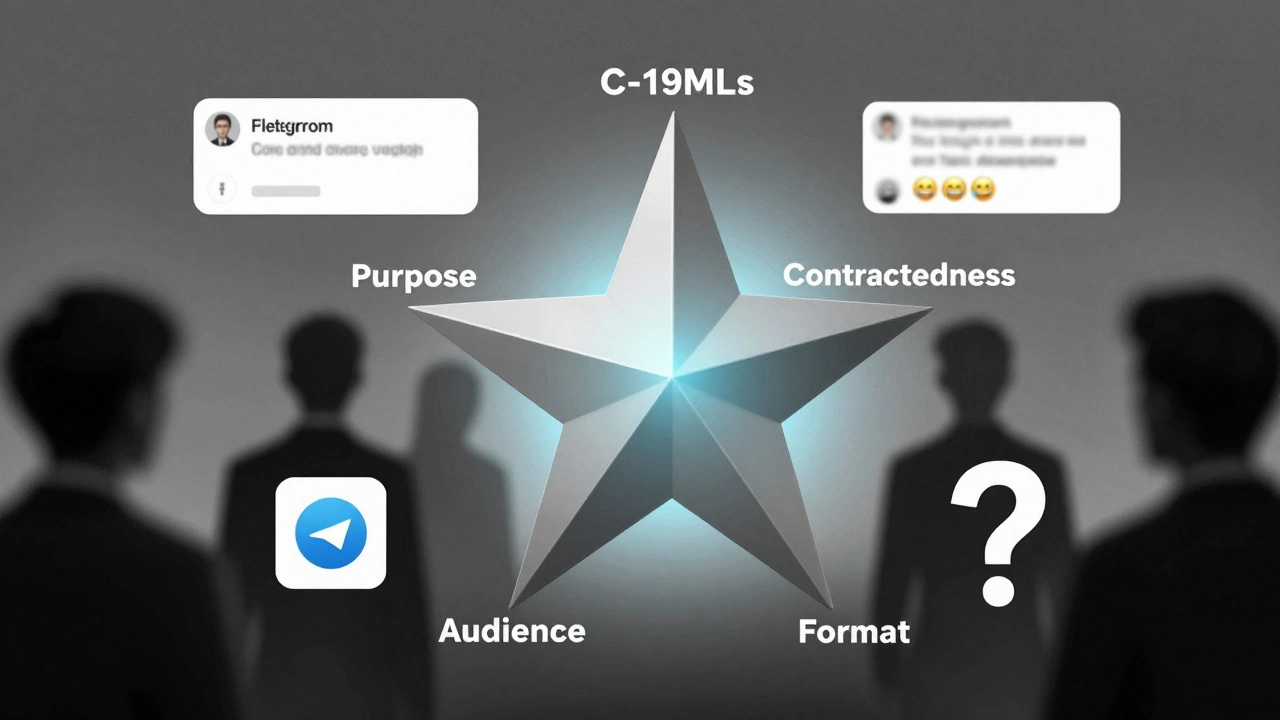
The most reliable tool we have right now is the COVID-19 Media Literacy Scale (C-19MLs). It was tested on over 500 students in Iran and proved solid across multiple tests. It’s made of 33 questions scored on a 1-to-5 scale. Here’s what it checks:
- Purpose: Why was this message created? (e.g., to inform, scare, sell, or entertain?)
- Contractedness: Is the message clear and complete? Or is it vague, misleading, or missing key facts?
- Audience: Who is this meant for? Is it targeted at students, elderly people, or a specific political group?
- Format: Does the way it’s presented - text, images, emojis, links - affect how believable it seems?
- Filter/Omit Representation: What’s left out? Are there important facts, sources, or counterpoints missing?
This scale doesn’t ask users to guess if something is true. It asks them to think about how the message was built. That’s smarter. Because people can be fooled by good design, even if the content is fake. A well-formatted message with fake sources still looks professional. The C-19MLs catches that.
How User Segments Differ on Telegram
Not all Telegram users are the same. Research shows clear patterns based on who they are and how they use the app:
- Students (18-24): Use Telegram for group chats, academic resources, and news. They’re active, but often rely on forwarded messages from peers. Their media literacy scores tend to be moderate - they’re good at spotting bad grammar but bad at checking sources.
- Professionals (25-40): Use Telegram for work updates, industry channels, or official announcements. They’re more cautious. Many check multiple sources before sharing. Their scores are usually higher.
- Older Adults (45+): Often use Telegram to stay connected with family. They’re less likely to follow news channels. When they do, they’re more vulnerable to emotional appeals and fear-based messages.
- Activists & Journalists: Follow dozens of channels. They’re skilled at cross-referencing, but sometimes fall into echo chambers. Their literacy is high, but their bias can blind them to misinformation from allies.
Time spent on Telegram doesn’t always mean better skills. One study found that people who spent 3+ hours a day on social media had lower media literacy scores than those who used it for 30-60 minutes with purpose. Why? Mindless scrolling doesn’t build critical thinking. Intentional use does.
Why Telegram Is Unique - And Why It Matters
Telegram isn’t just another app. It has features that make media literacy harder to measure:
- Channels: One-way broadcasts. No comments. No replies. You can’t ask, “Where did this come from?”
- Forwarding: Messages can be sent 100 times. Original source? Lost.
- Bots: Automated accounts that push news, polls, or ads. They look official but aren’t.
- No algorithmic feed: Unlike Facebook, you don’t see what’s trending. You see what you subscribe to. That means users are in bubbles - and don’t know it.
These features mean a scale built for Instagram won’t work here. A question like “Do you trust influencers?” is useless on Telegram. Instead, you need to ask: “Did you check if this channel has a verified badge?” or “Have you ever tried to trace a forwarded message back to its origin?”
What the Research Says - And What It Doesn’t
Studies from Shahid Beheshti University in Iran found something surprising: media literacy worked the same across Telegram, WhatsApp, and Instagram. That means the core skills - questioning sources, spotting bias, checking evidence - transfer between platforms. That’s good news. We don’t need five different tests.
But here’s the gap: those studies didn’t measure Telegram-specific behaviors. They used general scales. So while we know that a 22-year-old student in Tehran and one in Lagos might score similarly on media literacy, we don’t know if the reason is the same. Does the Nigerian student check sources because they were taught to? Does the Iranian student do it because they’ve been burned before? Context matters.
Also, most research focuses on students. We know almost nothing about older users, rural populations, or non-English speakers on Telegram. And nothing about how bots or automated content affect judgment. That’s a blind spot.

How to Start Measuring in Your Own Community
You don’t need a PhD to start. Here’s how you can test media literacy in a group of Telegram users:
- Use the C-19MLs - it’s free, validated, and available in multiple languages.
- Add 3 Telegram-specific questions:
- “When you get a forwarded message, do you try to find the original source?”
- “Have you ever searched for a channel’s creator or history?”
- “Do you check if a bot is official before trusting its info?” - Group users by behavior: Are they mostly in private chats? Do they follow news channels? Do they forward often?
- Test with real messages: Send out 3 sample messages - one real, one fake, one partially true - and ask users to rate them using the scale.
Don’t just give a quiz. Talk to people. Ask why they believe something. You’ll learn more than any score can tell you.
The Bigger Picture
Measuring media literacy on Telegram isn’t about ranking users. It’s about understanding how digital habits shape truth. If we don’t know who’s vulnerable, we can’t help them. If we don’t know what skills are missing, we can’t teach them.
The tools exist. The data is there. What’s missing is the will to use them. Every time someone forwards a message without checking, they’re not just sharing info - they’re sharing risk. And that risk grows with every unverified channel, bot, or forwarded link.
It’s time we started measuring not just how many people use Telegram - but how well they think while using it.
Latest Posts