Before September 2024, if a government asked Telegram to take down illegal content or hand over user data, the answer was almost always silence. Telegram built its reputation on being the messaging app that didn’t spy on you - no matter who asked. But everything changed after CEO Pavel Durov was arrested in France on August 24, 2024. Facing serious charges related to child abuse content and refusal to cooperate with law enforcement, Telegram didn’t just adjust its policies - it flipped them upside down.
What Changed in Telegram’s Policy?
Telegram used to claim it had never handed over a single byte of user message data. That line was in their FAQ until 2024. Now, their Terms of Service say clearly: if a court order proves you’re breaking their rules - like running a scam, selling drugs, or sharing child abuse material - they’ll give your phone number and IP address to authorities. It’s not about reading your messages. It’s about linking your identity to your activity. This wasn’t a slow transition. It happened overnight. In the first quarter of 2024, Telegram responded to just 4 legal requests in France. By the same period in 2025, that number jumped to 668. In the U.S., they fulfilled 900 government requests in 2025 alone. That’s not a glitch. That’s a new system.How Do Governments Actually Submit Requests?
It’s not a secret process. Authorities must send a formal request to [email protected]. They need to include:- The exact link to the illegal message or channel
- A copy of the legal order (warrant, subpoena, court directive)
- Identification of the requesting agency
What Data Can Telegram Actually Give?
Here’s the key detail: Telegram doesn’t store your message content. Not even for regular chats. Only Secret Chats are end-to-end encrypted, and even those aren’t stored on their servers. So they can’t hand over what they don’t have. What they can give is metadata:- Your phone number (the one linked to your account)
- Your IP address (where you connected from)
- Device type and operating system
- History of username changes
- Connection timestamps
How Is Telegram Detecting Illegal Content Now?
Telegram didn’t just start handing over data - they built new tools to find problems before they’re reported.- @SearchReport bot: Launched in October 2024, this bot lets users report illegal search terms. Over 1.2 million reports have been submitted since then, and 68% led to content being removed.
- AI content filtering: The system now hides illegal search results and removes spammy or abusive bots automatically. It doesn’t read your chats, but it watches patterns - like a bot posting 500 links an hour.
- Disabled media uploads for new accounts: To stop scammers and spam bots, new users can’t send files or media until they’ve been active for a few days.

How Does This Compare to Other Apps?
Telegram’s old stance made it unique. While WhatsApp complied with 80% of U.S. government requests in 2023, and Signal refused nearly all of them, Telegram used to ignore most requests entirely. Now, it’s somewhere in the middle.| Platform | Default Encryption | Compliance Rate (U.S. Requests) | Shares IP/Phone Number? | Stores Metadata? |
|---|---|---|---|---|
| Telegram | Only Secret Chats | ~80% | Yes | Yes |
| Yes (all chats) | 80% | Yes | Yes | |
| Signal | Yes (all chats) | 0% | No | No |
| Discord | No | 75% | Yes | Yes |
What About Countries That Ban Telegram?
Telegram is still officially blocked in Russia, Iran, and China. But that doesn’t mean governments there can’t try to use the system. In Russia, Telegram was banned from 2018 to 2020 - until Durov promised to help fight terrorism. Now, Russia’s compliance rate is only 42%, according to Telegram’s own 2025 transparency report. Germany? 78%. The difference? Legal systems with clear rules and independent courts. Telegram won’t respond to requests from regimes that don’t follow due process. That’s a deliberate line they’ve drawn - even if it’s inconsistent.Is This a Lasting Change?
Many experts think Telegram’s shift is temporary. Ben Nimmo from the Atlantic Council called it a “tactical retreat” after Durov’s arrest. He’s right - the timing is too convenient. But there’s another side. The European Union’s Digital Services Act threatens fines up to 6% of global revenue. That’s billions. And the U.S. Treasury’s FinCEN shut down two major drug marketplaces on Telegram in October 2024 - because Telegram finally gave them the data they needed. Cybersecurity firm Elliptic says the crackdown directly led to the collapse of those illegal networks. That’s not luck. That’s real impact. The truth? Telegram is now playing a dangerous game. They’re trying to be both a privacy tool and a law enforcement partner. And for now, it’s working - at least financially. Their user base grew from 800 million to 950 million between 2023 and 2025, even as privacy advocates left.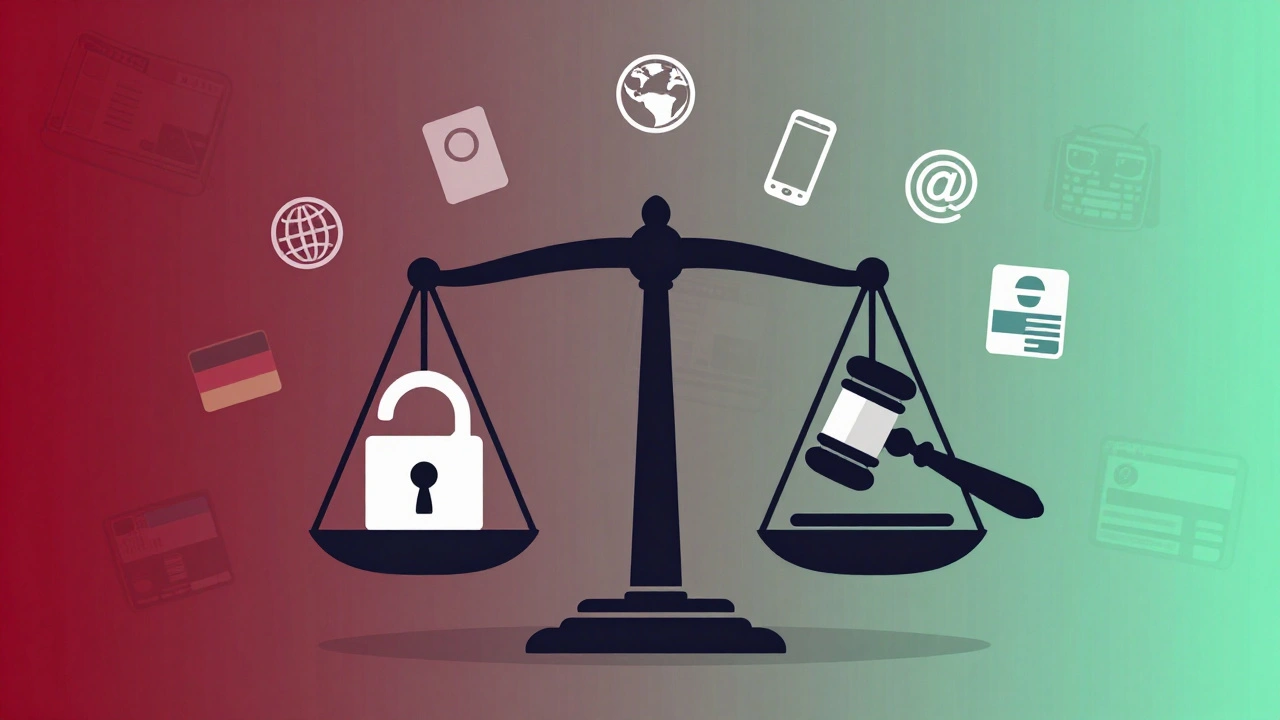
What This Means for Users
If you’re using Telegram for activism, journalism, or personal privacy - you’re in a different world now. Your IP address can be traced. Your phone number is linked to your account. If you’re targeted by a government with legal authority, you’re not anonymous anymore. But if you’re running a business, a news channel, or a community group - you might appreciate the cleaner platform. Scammers and bots are being removed faster. Illegal content is disappearing. The app feels safer. Trustpilot ratings for Telegram dropped from 4.2 to 2.8 stars among privacy-focused users in late 2024. But on G2, enterprise users raised their rating from 3.5 to 4.3. That split tells you everything: Telegram isn’t the same app it was. It’s become two apps in one.What You Should Do Now
If you’re concerned about privacy:- Use Secret Chats for anything sensitive - they’re the only truly private conversations on Telegram.
- Don’t link your real phone number to your account. Use a burner number.
- Disable cloud backups. Telegram stores your non-Secret Chat history on their servers.
- Use a VPN if you’re in a high-risk country.
- Use the @SearchReport bot to flag illegal keywords in your channel.
- Enable member approval for new joiners to block spam bots.
- Report abusive accounts immediately - Telegram responds faster now.
What’s Next?
As of January 2026, Telegram has started labeling government accounts with a “Verified Authority” badge to prevent fake requests. They’re also publishing country-by-country compliance stats - something no other major app does. Cybersecurity analysts at IBM predict Telegram will keep this middle-ground approach: compliant with democracies, resistant to authoritarian regimes. The Electronic Frontier Foundation warns this sets a dangerous precedent - if a platform can flip its privacy stance under legal pressure, what stops others from doing the same? For now, Telegram’s strategy is clear: survive the legal storm, keep the users, and make money. Whether that’s good for digital rights is another question.Can Telegram read my messages if the government asks?
No. Telegram doesn’t store the content of your messages - not even for regular chats. Only Secret Chats are end-to-end encrypted and never stored on their servers. They can’t hand over what they don’t have. What they can give is your phone number, IP address, and device info - not your conversations.
What happens if I’m falsely accused on Telegram?
Telegram doesn’t act on accusations - only on verified legal orders from courts or law enforcement agencies. If your account is flagged, they review the documentation. If the request is invalid or lacks proper legal backing, they reject it. There’s no automatic takedown based on a tip or anonymous report.
Does Telegram notify users when their data is shared?
Usually not. Telegram follows legal rules - and in most countries, they’re not required to notify users if a court order includes a gag clause. This is standard practice across platforms like WhatsApp and Facebook. If you’re under investigation, you likely won’t know until law enforcement contacts you directly.
Is Telegram safer now than before 2024?
For everyday users, yes. Scammers, bots, and illegal marketplaces are being removed faster than ever. The @SearchReport bot and AI filters have cleaned up the platform significantly. But for privacy-focused users, it’s less safe - your metadata is now accessible to authorities with a legal order.
Can I still use Telegram if I live in a country with strict surveillance?
You can, but with risks. Telegram still refuses to comply with requests from authoritarian regimes like Russia and Iran - but only because they can’t legally serve the orders. If you’re in a country where the government controls internet access, your IP address can still be logged by local ISPs. Use a trusted VPN and Secret Chats for any sensitive communication.