Imagine scrolling through your favorite news channel on Telegram and seeing a shocking video or a bold claim that seems too perfect to be true. You aren't alone. Because Telegram is largely unmoderated, it has become a playground for coordinated disinformation campaigns. Whether it's a political narrative designed to sway an election or a deepfake video, the goal is the same: to trigger an emotional response and bypass your critical thinking. The problem is that these feeds often mix genuine professional news with carefully crafted lies, making it hard to tell where the truth ends and the manipulation begins.
The Red Flags of Telegram Propaganda
You don't need a degree in data science to spot a fake. Most manipulated content leaves a trail of breadcrumbs if you know where to look. One of the biggest giveaways is the tone. Real news relies on facts, data, and expert quotes. Propaganda, however, thrives on urgency and emotion. If you see a post riddled with excessive exclamation points, all-caps warnings, or inflammatory language designed to make you angry or scared, your alarm bells should go off. This is a classic emotional manipulation tactic used to stop you from questioning the source.
Then there's the issue of sourcing. Genuine reporting tells you exactly where the information came from and who the experts are. Manipulated media often hides behind vague phrases like "sources say" or "insiders reveal," without providing any verifiable names or credentials. If a post makes a massive claim but doesn't link to a primary source or a reputable organization, it's likely a fabrication.
How Propaganda Networks Actually Operate
It's a common mistake to think that propaganda accounts just shout into the void. In reality, they are strategic. Research from Ruhr University Bochum and EPFL has shown that many propaganda accounts don't even start their own conversations. Instead, they lurk. They wait for a real person to mention a specific keyword-like "Putin" or "Zelensky"-and then jump in with a pre-written narrative.
This reactive strategy is designed to hijack organic discussions and steer them toward a specific political goal. They aren't trying to have a debate; they are injecting a script. If you notice a sudden influx of similar-sounding comments appearing immediately after a controversial topic is mentioned, you're likely seeing a coordinated attack in real-time.
The Signature of the Bot: Content Repetition
The most glaring weakness of these networks is their lack of originality. While a real person expresses a unique opinion in their own words, propaganda networks operate like a copy-paste machine. They disseminate identical or near-identical messages across dozens of different channels simultaneously. This is called content repetition.
If you see the exact same paragraph of text appearing in three different "independent" news feeds, it isn't a coincidence. It's a signature of a coordinated network. This pattern is so predictable that it's actually the primary way researchers build automated detection tools. When the same narrative is mirrored across different accounts with robotic precision, the "organic" illusion falls apart.
| Feature | Organic News/Users | Manipulated Media/Bots |
|---|---|---|
| Language | Factual, neutral, nuanced | Emotional, aggressive, hyperbolic |
| Sourcing | Transparent, verifiable experts | Vague, anonymous, or nonexistent |
| Pattern | Unique wording, individual thought | Repeated phrases, mirrored across channels |
| Behavior | Initiates and joins discussions | Reacts to specific keywords to pivot narrative |
The Tech Behind the Detection
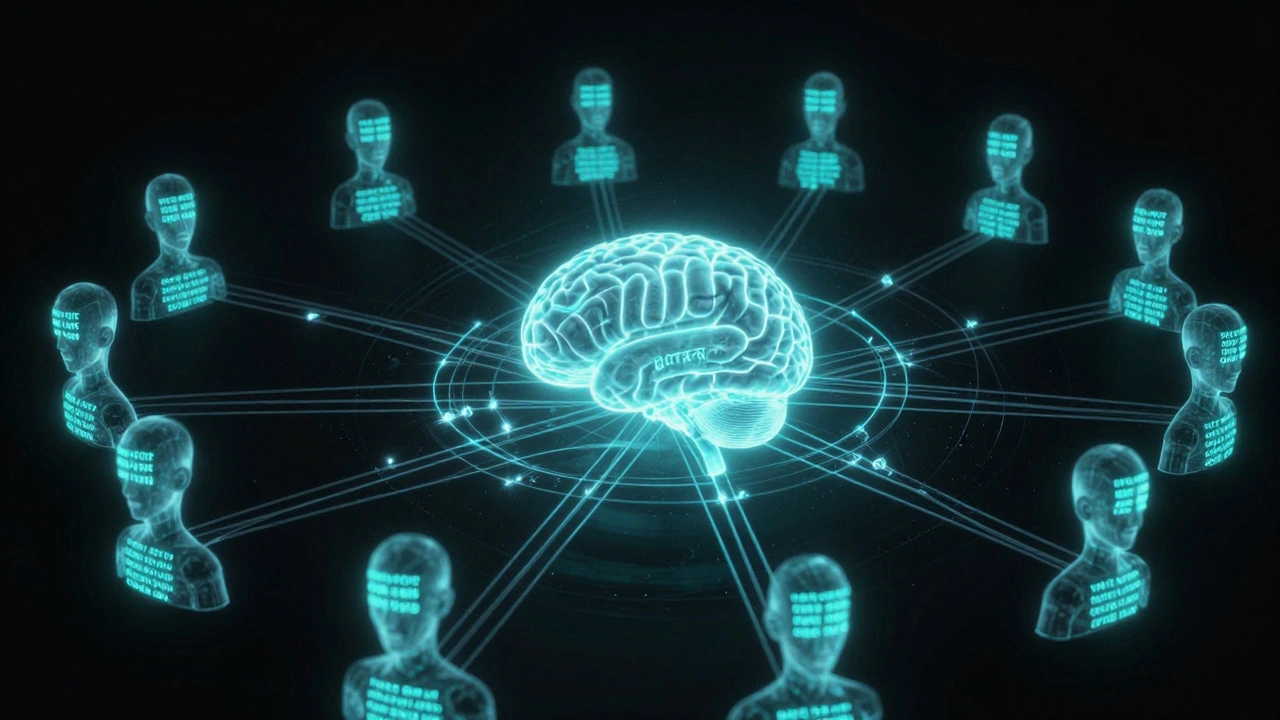
While we have to rely on our eyes, researchers are using heavy-duty tech to clean up these feeds. Some of the most effective tools use the Louvain Clustering Algorithm, which helps identify "communities" of accounts that are too closely linked to be random. By mapping who talks to whom and what they say, AI can spot these bot clusters long before a human would.
They also use BERTopic, a model that uses transformer-based embeddings to group similar themes. This allows detectors to see when a specific narrative is being artificially pushed. In some studies, these automated systems achieved a 97.6 percent hit rate in spotting propaganda-outperforming human moderators by over 11 percent. The AI doesn't get tired and it doesn't have political biases; it just sees the mathematical pattern of repetition.
Darker Corners: Beyond Politics
It's not just about politics. The lack of moderation on Telegram has allowed more dangerous networks to thrive. AI Forensics recently tore through 2.8 million messages and found massive rings selling digital abuse services. These include "nudifying" apps-AI tools that create non-consensual explicit images-and surveillance software.
This highlights a critical point: if a channel seems too "edgy" or offers tools that sound like they should be illegal, they probably are. The same structural patterns used for political propaganda-coordinated groups, mirrored content, and keyword targeting-are used by these criminal networks to recruit users and sell harmful software.

A Practical Checklist for Your Feed
Since Telegram doesn't provide a built-in "fact check" button, you have to be your own editor. Here is a quick way to vet any suspicious post:
- Check the punctuation: Are there five exclamation points at the end of the sentence? (Red flag)
- Search for the text: Copy a unique-looking sentence from the post and paste it into the Telegram search bar. Does it appear identically in five other channels? (Red flag)
- Verify the expert: If a "General" or "Doctor" is quoted, search for their name outside of Telegram. Do they actually exist, or are they a ghost?
- Analyze the timing: Did this post appear seconds after a major keyword was mentioned in a larger group? (Red flag)
Why is Telegram more prone to manipulated media than other apps?
Telegram's minimal moderation policy means there are very few filters to stop the spread of fake content. Unlike other platforms that might use AI to flag disputed claims, Telegram acts more like a megaphone, amplifying whatever is posted without verifying its accuracy.
Can I trust a channel if it has millions of subscribers?
Not necessarily. Subscriber counts can be inflated using bot farms. Many propaganda networks buy fake followers to create an illusion of authority and popularity, making the misinformation seem more credible to new users.
What is the "reactive targeting" strategy?
This is when propaganda accounts wait for real users to mention specific keywords (like a politician's name) and then quickly reply with a pre-scripted message. It's a way to insert fake narratives into organic conversations where people are already engaged.
Is all automated detection 100% accurate?
No system is perfect, but research shows high accuracy rates (up to 97.6%) when focusing on repetition patterns. The AI is better at spotting the "how" (the pattern of posting) rather than the "what" (the specific lie), which makes it very effective against coordinated networks.
How do I report manipulated media on Telegram?
You can use the built-in report function on a specific message or channel. While Telegram is slower to act than other platforms, reporting a channel for "spam" or "violence" is the most direct way to bring it to their attention.
Next Steps for Staying Safe
If you're a casual user, the best defense is a healthy dose of skepticism. Start by diversifying your news sources-don't let a single Telegram channel be your only window into a conflict or political event. If you're a community manager, consider using third-party bot-detection scripts or simply keeping a close eye on mirrored content across your groups.
For those who want to go deeper, look into the tools being developed by academic institutions. While most aren't available as "plugins" yet, the methodologies they use-like looking for semantic patterns and network clusters-are the gold standard for identifying inauthentic behavior. The more you understand the machinery of the lie, the harder it is for that machinery to fool you.