Fake videos and doctored photos spread faster than the truth on social media. When a breaking news story lands in your Telegram feed, you cannot just trust what you see. A video of a protest could be from last year. A photo of a destroyed building might be from a different country entirely. For journalists, investigators, and careful readers, verifying timestamp and geolocation data is no longer optional-it is the first step in separating fact from fiction.
Telegram has become a primary hub for citizen journalism and raw footage during conflicts in Ukraine, Gaza, and Syria. But its architecture, designed for speed and privacy, often strips away the metadata that proves when and where content was created. This guide explains how to reconstruct the timeline and location of Telegram content using native features, third-party tools, and open-source intelligence (OSINT) techniques.
Understanding Telegram’s Native Timestamps
Every message in a Telegram channel or group carries a server-side timestamp. This is the time the Telegram servers accepted the message, stored as a Unix timestamp (seconds since January 1, 1970). Your app converts this into your local time zone. If you are in New York and your source is in Kyiv, you will see different clock times, but the underlying server time remains fixed.
For verification purposes, you need to know the exact moment a post went live. Here is how to extract it:
- Channel Posts: Look at the time displayed under the post title. To get the UTC time, note your device’s time zone offset. If the post says "14:32" and you are in UTC-5, the server time is 19:32 UTC.
- Edited Messages: Since Telegram version 4.1, edited messages show an "edited" label. Long-press the message and select "Info" or "Details" to see the precise edit timestamp. This helps detect if a caption was changed after publication to alter context.
- Scheduled Messages: Channels can schedule posts. The visible time is when the message appears, not when it was written. Check the "Scheduled" tag if present.
Read receipts have also evolved. In 2024, Telegram introduced granular read times for private chats and groups. Premium users can see exactly when each member opened a message. However, this data is only stored for seven days before being deleted for privacy reasons. For older content, you must rely on the initial posting timestamp.
Geolocation Features: Live Location vs. People Nearby
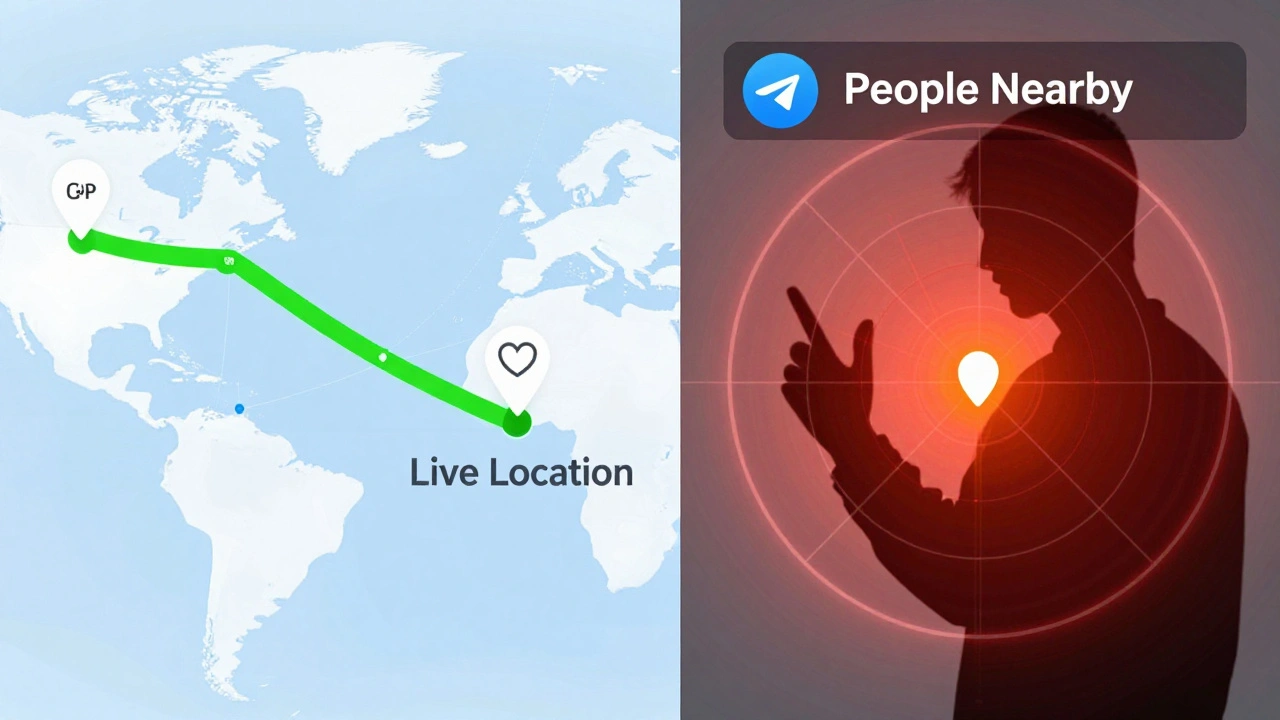
Telegram offers two main ways to share location: static points and Live Location. Understanding the difference is critical for verification.
Live Location is a feature that shares real-time GPS coordinates for a set duration (15 minutes, 1 hour, or 8 hours). It sends continuous updates with latitude and longitude. While the app interface shows a moving dot on a map, the underlying API exposes precise floating-point coordinates. Investigators can use these logs to track movement patterns, such as a reporter entering a conflict zone.
People Nearby is a discovery feature that lists other users and groups within a certain radius. Introduced in 2019, it allows users to find contacts based on proximity. However, academic research has shown significant privacy risks. A 2023 study by researchers at Ruhr University Bochum demonstrated that attackers can triangulate a user’s position to within tens of meters by spoofing GPS positions and querying the service repeatedly. For journalists, enabling this feature can expose sources to physical danger.
Using Third-Party Tools for Deeper Analysis
Native features are helpful, but serious verification requires external tools. Here are the most effective methods used by OSINT practitioners.
| Tool Name | Primary Function | Data Accessed | Skill Level Required |
|---|---|---|---|
| TGStat / Telemetr | Channel Analytics | Post timestamps, view counts, subscriber growth | Beginner |
| Geogramint | Geolocation Intelligence | User locations via People Nearby API queries | Advanced (Python/API knowledge) |
| Telethon / Pyrogram | Message Scraping | Full message objects, edit dates, forwarded origins | Advanced (Coding required) |
| Timestamp Camera Apps | Metadata Preservation | Burned-in date, time, and GPS on images | Beginner |
TGStat and Telemetr are web-based platforms that archive public channels. They provide CSV exports with precise UTC posting times and view metrics. This is useful for proving when a narrative started spreading.
Geogramint is an open-source tool that connects to the Telegram API to search for users near specific coordinates. By inputting a location like O’Connell Street in Dublin, analysts can identify active accounts in that area. This is powerful for mapping networks but raises ethical concerns about surveillance.
For developers, libraries like Telethon allow automated logging of every message in a channel. You can capture the original `date` field and `fwd_from_date` for forwarded content, reconstructing the chain of information flow even if the UI hides it.
Preserving Metadata: The Burned-In Timestamp
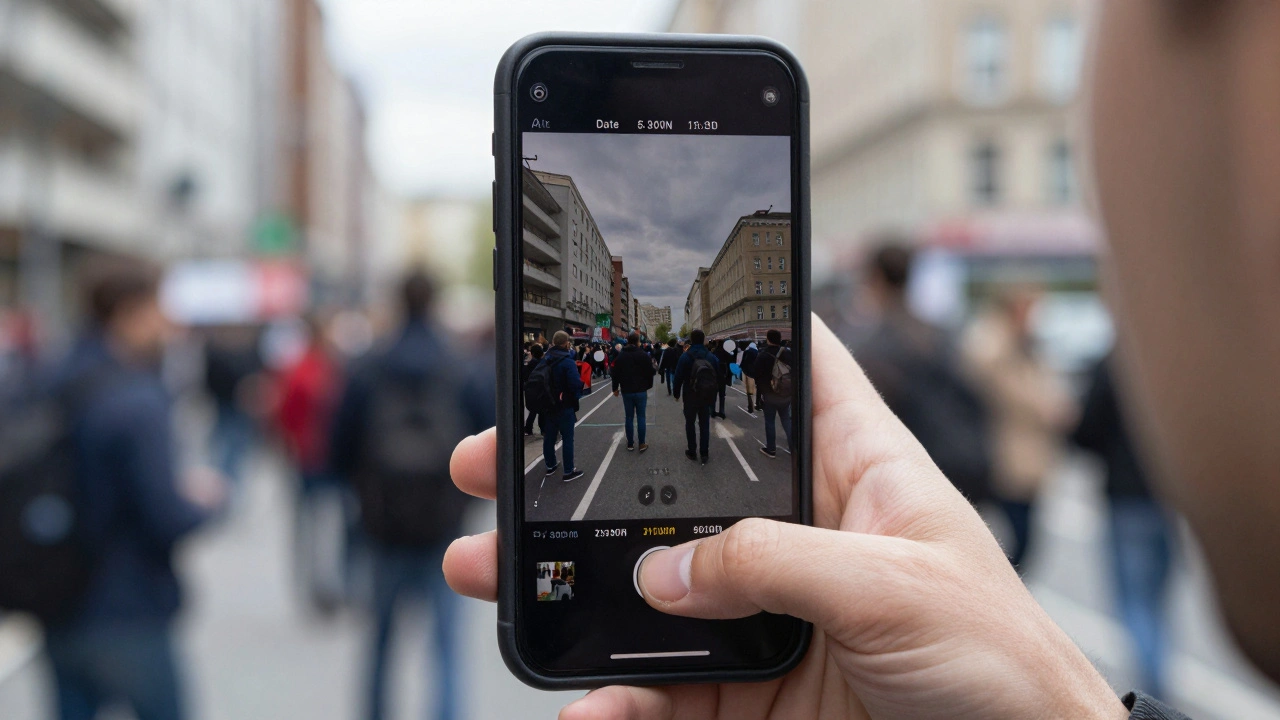
When you send a photo as "media" in Telegram, the platform compresses it and strips EXIF data, including GPS coordinates and camera settings. To preserve evidence, field journalists use apps like Timestamp Camera & GPS Camera. These apps overlay the date, time (down to the second), and GPS coordinates directly onto the image pixels.
This "burned-in" data survives compression. When analyzing such images, compare the burned-in time with the Telegram post time. If the photo was taken at 14:00 but posted at 16:00, there is a two-hour gap. Cross-reference this with weather data. If the burned-in time suggests sunset, check sunrise/sunset calculators for the claimed location. If the sun angles don’t match, the location is likely fake.
Reconstructing Forwarded Content Origins
Viral content is often forwarded multiple times, obscuring its origin. Telegram attaches a "Forwarded from [Source]" header, but it does not always show the original posting time in the chat view. However, the data exists in the background.
Using the Telegram Bot API or TDLib, you can access the `fwd_from_date` field. This reveals when the message was originally posted in the source channel. By comparing the forward time with the original time, you can calculate the delay. Short delays (seconds) suggest immediate sharing, while long delays may indicate curation or hoarding. Tools like Hunchly or CaseFile help document these chains for legal or editorial records.
Ethical and Privacy Considerations
Verification comes with responsibility. Under GDPR and similar regulations, logging GPS coordinates and usernames constitutes processing personal data. You must have a lawful basis, such as legitimate interest in journalism, and implement data minimization. Delete raw location logs when they are no longer needed.
More importantly, consider the safety of your sources. Never enable People Nearby on devices used for sensitive communications. Warn sources against sharing Live Location unless absolutely necessary. As noted in the "Watch Nearby!" academic paper, adversaries can deanonymize users and track their movements. Protecting your source’s identity is more important than verifying their location.
Common Pitfalls to Avoid
- Time Zone Confusion: Always convert local times to UTC for comparison. A mismatch of a few hours can invalidate a timeline.
- Compression Artifacts: Sending videos as "files" preserves frame rates and metadata. Sending as "media" alters them, making forensic analysis harder.
- API Rate Limits: Telegram limits API calls (e.g., 30 per second). Poorly coded scrapers can get banned or miss updates. Throttle your requests.
- Read Receipt Ambiguity: Read times may reflect notification previews, not full engagement. Do not assume a user deeply analyzed a message just because it was "read."
Building a Verification Workflow
A robust workflow integrates these steps:
- Subscribe and Monitor: Use Telegram Desktop to follow key channels. Enable notifications for high-priority sources.
- Automate Logging: Deploy a bot using Telethon to save messages to a database with fields for `post_id`, `server_timestamp_utc`, and `media_type`.
- Extract Frames: Use
ffmpegto pull frames from videos at 1 frame per second. Save them with filenames including the Telegram timestamp. - Geolocate: Match landmarks, shadows, and skylines against Google Earth or OpenStreetMap. Use sun-position calculators to verify time of day.
- Cross-Check: Search for the same content on YouTube, Twitter/X, or Facebook. Original uploads often retain geotags or earlier timestamps.
- Document: Record all findings in a case management system. Note discrepancies and assumptions.
This process takes time-often weeks to build for a newsroom-but it creates a defensible record of truth. In an era of deepfakes and AI-generated content, rigorous timestamp and geolocation checks are your best defense against misinformation.
Does Telegram store original EXIF data from photos?
No. When you send a photo as "media," Telegram compresses it and strips most EXIF metadata, including GPS coordinates and device timestamps. To preserve this data, send the file as a "document" or use a camera app that burns the data into the image itself.
How accurate is Telegram's Live Location?
Live Location provides GPS coordinates with high precision, typically within 5-20 meters depending on signal strength. The underlying data includes latitude and longitude with at least six decimal places, offering resolution down to ~0.11 meters at the equator, though real-world GPS accuracy varies.
Can I see when someone read my message in a Telegram group?
Yes, if you have Telegram Premium. In groups, Premium subscribers can view a list of members who have read a specific message, along with individual read timestamps. This data is retained for seven days before being deleted for privacy.
Is it safe to use People Nearby for verification?
It carries significant privacy risks. Research shows that attackers can triangulate a user's location to within tens of meters by querying the service repeatedly. Journalists should avoid enabling this feature on devices used for sensitive work to protect source anonymity.
What is the best way to archive Telegram channel posts?
Use automated scraping tools like Telethon or Pyrogram to log messages into a database. Alternatively, web services like TGStat or Telemetr provide archives with precise UTC timestamps and view counts. Ensure you respect API rate limits to avoid being blocked.