When it comes to getting the news, where people look matters just as much as what they see. In 2026, Telegram isn’t just another messaging app-it’s a major news hub. Millions use it daily to follow journalists, government updates, and breaking events. But in places like Kosovo, Serbia, or Russia, local platforms dominate. Facebook, YouTube, TikTok-they’re not just alternatives. They’re the primary way people get information. So who’s winning? Telegram? Or the regional players? The answer isn’t simple. It depends on where you are, who you are, and what kind of news you need.
Why Telegram Became a News Powerhouse
Telegram started as a private messaging tool, built for security and speed. But its real power came from something unexpected: channels. Unlike Facebook or Twitter, where posts show up in your feed because someone you know shared them, Telegram channels let anyone broadcast directly to followers. No algorithm. No friend network. Just a direct line from publisher to reader. This made it perfect for news. Media outlets, independent reporters, and even government agencies started using channels to push updates. A single post can reach hundreds of thousands. Telegram supports live video, polls, quizzes, bots, and files up to 2GB. You can schedule messages, track how many people saw each post, and even block forwarding or downloads. That kind of control doesn’t exist on WhatsApp Channels, which only let you send basic text and images, with messages disappearing after 30 days. In Russia, Telegram became essential during the war in Ukraine. By mid-2022, social media and Telegram were cited as information sources more often than TV. In Singapore, it’s one of the top three platforms for news. And in the Balkans, outlets in Serbia and Montenegro rely on it heavily. The platform’s user base is young-54% are under 34. That’s not a coincidence. Younger audiences trust direct, unfiltered sources. They don’t want curated feeds. They want raw updates.How Regional Platforms Still Rule Local Markets
But Telegram doesn’t win everywhere. In Kosovo and Albania, TikTok is king. Short videos, quick updates, influencer-led reporting-it’s how young people learn about protests, elections, or local incidents. Facebook still holds second place in Albania, even as TikTok takes the lead. Why? Because older users, small businesses, and community groups still use it daily. It’s familiar. It’s embedded. In Bosnia, YouTube is the second most active platform after Facebook. People don’t just watch news clips-they comment, share, and debate in the comments. In North Macedonia, Facebook remains the most active platform for news posts. Media outlets post there because that’s where the audience is. In Serbia, YouTube actually beats Telegram in engagement, even though both are widely used. The reason? Video. People want to see, not just read. These aren’t random trends. They reflect deeper habits. In places where TV was once the main news source, digital platforms didn’t replace it-they evolved from it. YouTube became the new TV. TikTok became the new radio. Facebook stayed as the town square. Telegram? It’s more like a bulletin board in the corner-useful, but not always the first stop.
Telegram’s Weakness: Misinformation in Quiet Corners
Telegram’s lack of moderation is one of its biggest strengths-and its biggest danger. Because it doesn’t scan content or remove posts unless they violate extreme laws, it’s become a haven for conspiracy theories, far-right groups, and misleading sources. A study of 200,000 Telegram posts found that links to known misinformation sites were shared more often than links to professional news outlets. But here’s the twist: it’s not widespread. Misinformation doesn’t flood the whole platform. It’s concentrated in small, tight-knit communities. One channel might get 50,000 views. Another, with real journalism, gets 500,000. The data shows that trusted media still wins in reach. The Daily Mail, a major tabloid, gets fewer views than articles linked by far-right activists like Tommy Robinson-but that doesn’t mean Telegram is a cesspool. It means the platform allows competition. And in many cases, professional outlets outperform the noise. The problem isn’t that misinformation spreads. It’s that it spreads without challenge. There’s no counter-comment section. No fact-checker tagging posts. No algorithm pushing balanced views. So if you’re a news organization using Telegram, you’re not just broadcasting. You’re fighting silence.WhatsApp vs Telegram: The Real Choice for News
Many assume Telegram’s main rival is Facebook or TikTok. But its real competitor is WhatsApp Channels. Both are messaging apps with broadcast features. But that’s where the similarity ends. WhatsApp Channels are simple. You send text or images. People get them. That’s it. No analytics. No live video. No polls. No bots. Messages vanish after 30 days. It’s designed for quick, private updates-like a school sending a note home. Perfect for local alerts: power outages, school closures, traffic delays. Telegram is a full media studio. You can host live interviews. Run quizzes to test public opinion. Embed interactive maps. Track exactly how many people opened each message. Add a bot that answers FAQs. Share PDFs, audio files, entire reports. It’s built for organizations that want to build a community, not just send alerts. So if you’re a small town council in rural Ohio? Use WhatsApp. It’s already installed on everyone’s phone. No training needed. If you’re a regional newsroom in Belgrade trying to reach 20-year-olds with deep investigative reports? Telegram is your tool.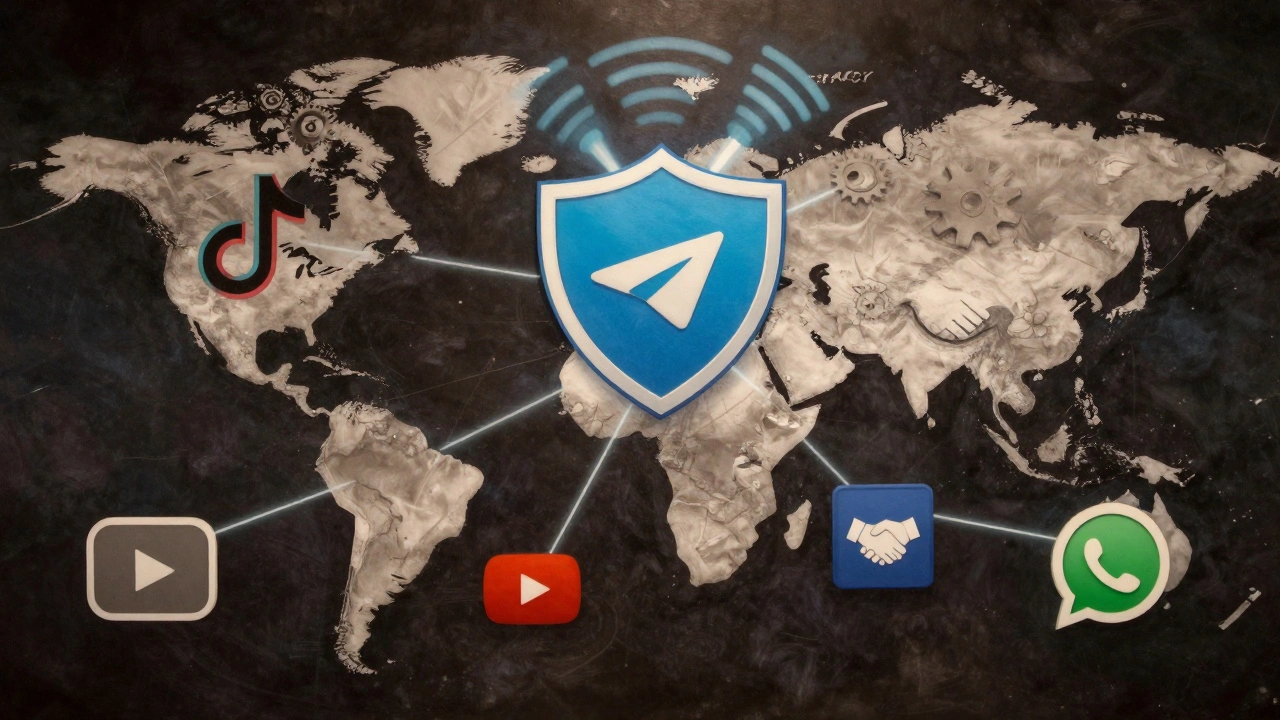
What Should News Organizations Do?
There’s no single winner. The smartest move isn’t picking one platform. It’s using the right one for the right job.- Use Telegram if you need control, depth, and interactivity. Ideal for long-form journalism, live events, and reaching younger audiences.
- Use WhatsApp Channels if you need speed and simplicity. Best for emergency alerts, local updates, and audiences already on WhatsApp.
- Use Facebook if you’re targeting older demographics or need community discussion. Still powerful in Eastern Europe and parts of Latin America.
- Use YouTube if video is your strength. It’s the go-to for explainers, interviews, and long-form reporting.
- Use TikTok if you’re chasing Gen Z. Fast, visual, and viral. Especially dominant in the Balkans and Southeast Asia.
What’s Next?
Telegram’s growth isn’t slowing. Its user base is young, its features are unmatched, and its privacy stance attracts people tired of surveillance. But regional platforms aren’t going away. They’re getting smarter. TikTok is adding news verification tools. YouTube is testing live fact-check overlays. Facebook is rolling out community alerts. The real competition isn’t between Telegram and TikTok. It’s between transparency and noise. Between quick updates and deep context. Between control and chaos. The platform that wins isn’t the one with the most users. It’s the one that helps people understand the world-not just see it.Is Telegram safer than WhatsApp for sharing news?
Telegram and WhatsApp both use end-to-end encryption for private chats. But for public channels, Telegram doesn’t encrypt content-it stores it in the cloud. That means anyone with access to the channel can view posts. WhatsApp Channels don’t encrypt broadcast messages either, but they offer fewer features, less visibility, and no public search. Neither is inherently safer for news. Telegram gives you more control over who sees what. WhatsApp gives you less exposure but fewer tools to manage content.
Can Telegram replace traditional news websites?
No-not entirely. Telegram is great for breaking updates, summaries, and live events. But it lacks the structure for in-depth reporting, archives, or multimedia storytelling. Most serious newsrooms use Telegram as a supplement, not a replacement. They publish full articles on their websites and use Telegram to drive traffic or send alerts. Think of it as a newsletter, not a newspaper.
Why do some countries prefer TikTok for news?
TikTok’s algorithm favors short, engaging video. In places like Kosovo and Albania, younger users get most of their news through 30-second clips from influencers, activists, or local reporters. It’s fast, visual, and feels personal. Unlike text-heavy platforms, TikTok doesn’t require reading skills or time. It fits how Gen Z consumes information: on the go, with sound on, and emotionally connected.
Does Telegram have better analytics than Facebook?
For broadcast channels, yes. Telegram gives you exact numbers: how many people viewed each message, how many clicked links, how many forwarded it. Facebook only shows overall reach for posts-not per message. Telegram also lets you track views over time, compare performance across posts, and see geographic data. Facebook’s tools are designed for engagement (likes, shares), not distribution. For news organizations focused on reach, Telegram’s stats are far more useful.
Should I use Telegram if I’m targeting older audiences?
Probably not as your main channel. People over 50 are far less likely to use Telegram. They’re on WhatsApp, Facebook, or YouTube. If your audience is older, start there. Telegram works best when you’re trying to reach people under 35 who are tech-savvy, privacy-conscious, and used to following multiple channels. If you want to include older users, use Telegram as a secondary option-not your primary tool.