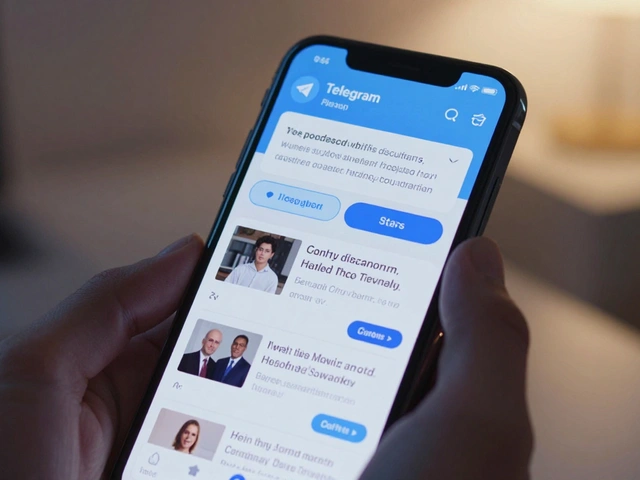
News networks on Telegram aren’t just posting articles manually anymore. Thousands of channels now rely on multi-channel syndication bots to automatically push news from dozens of sources across multiple channels - without a single human typing a single post. If you’re running a news network on Telegram, whether it’s one channel or ten, you’re probably wondering: Can this save me time? Is it reliable? And which bot actually works? The answer isn’t simple, but it’s practical.
How These Bots Actually Work
At its core, a syndication bot is a silent assistant that watches RSS feeds - the behind-the-scenes data streams news sites use to publish updates - and automatically sends new articles to your Telegram channels. It doesn’t rewrite headlines. It doesn’t fact-check stories. It just moves them, fast.
Here’s how it runs in the background: The bot checks 5 to 50 RSS feeds every few minutes. When it spots a new article, it pulls the title, summary, link, and sometimes an image. Then it formats it into a clean message and sends it to your chosen Telegram channels. All of this happens automatically, 24/7. No login. No clicks. Just content flowing.
Most bots use Python and tools like feedparser to read RSS feeds. They store which articles they’ve already sent in a database - usually MongoDB - so they don’t repost the same story. Commercial bots like RSS.app and Junction Bot run on cloud servers (AWS or Google Cloud) with auto-scaling, so they handle spikes in traffic without crashing. Open-source bots like Telegram-News-Feed-Bot run on your own machine or a cheap VPS, but they need constant monitoring.
Why News Networks Use Them
Imagine managing three Telegram channels: one for local news, one for business, and one for tech. Each needs 5-10 updates a day. Manually copying and pasting links from Bloomberg, Reuters, and local outlets takes 2-3 hours daily. That’s 15-20 hours a week - time you could spend reporting, editing, or growing your audience.
With a bot, that drops to 10 minutes a day: just check if anything broke, tweak a filter if needed, and move on. A 2023 internal report from The Financial Times’ Asia desk showed their custom bot increased engagement by 47% across 12 regional channels - not because the content changed, but because it was posted faster and more consistently.
It’s not just about speed. It’s about scale. A single bot can push the same breaking story to 10 channels at once. If you cover multiple cities, languages, or topics, this is the only way to stay competitive.
Two Main Types: Commercial vs. Open-Source
There are two camps: paid services you sign up for, and open-source tools you install yourself.
Commercial bots like RSS.app and Junction Bot are plug-and-play. You sign up, paste your RSS links, connect your Telegram channel, and you’re done. Setup takes under 5 minutes. They handle everything: uptime, updates, backups, and even AI summarization (RSS.app can shrink articles by 62% while keeping the key points). They offer 99.8% uptime, 24/7 support, and mobile apps to manage everything from your phone.
Open-source bots like Telegram-News-Feed-Bot are free, but they’re not for beginners. You need to know how to install Python, set up MongoDB, configure environment variables, and run cron jobs. Setup takes 2-4 hours. If your server crashes, you fix it. If the RSS feed breaks, you debug it. But you own the data. You can tweak every line of code. You can add filters for keywords, block certain domains, or even make it send alerts only during business hours.
Here’s the real difference: Commercial bots are for people who want news to flow. Open-source bots are for people who want to control every detail.
Comparison: Top Bots at a Glance
| Feature | RSS.app | Junction Bot | Telegram-News-Feed-Bot (Open-Source) |
|---|---|---|---|
| Free Tier | 3 feeds, 1 channel | 5 feeds, 1 channel | Free, but self-hosted |
| Max Feeds | 50 | 100 | Unlimited (hardware limited) |
| Max Channels | Unlimited | Unlimited | Unlimited |
| Setup Time | 2-5 minutes | 3-7 minutes | 2-4 hours |
| Uptime | 99.8% | 99.8% | Depends on your server |
| AI Summarization | Yes | No | No |
| Folder-Based Feed Groups | No | Yes | No |
| Mobile App | Yes | Yes | No |
| Monthly Price (Max Plan) | $29.99 | $49 | $0 (but server costs ~$5/month) |

What They Can’t Do (And Why It Matters)
These bots are powerful, but they’re not magic. They don’t verify facts. They don’t detect misinformation. A 2023 MIT Media Lab study found that 38.7% of news items pushed by syndication bots contained unverified claims - because the bot had no way to tell if a headline was real or fake.
They also struggle with multimedia. Only 54% of commercial bots embed images correctly. If a news site uses a non-standard RSS feed, the bot might miss the image, or send a broken link. Paywalled sites? The bot can’t access them. If the RSS feed requires login, it’s useless.
And then there’s duplication. If five different outlets report the same story, your bot might post all five. RSS.app only filters 78.4% of duplicates. Junction Bot’s folder system helps organize feeds, but doesn’t prevent repeats. You’ll still see the same headline pop up three times in different channels.
Most importantly, these bots don’t replace editors. They replace copy-pasters. You still need someone to review what’s being sent - especially if you’re a professional news outlet. A bot can spread misinformation faster than a human ever could.
Who Should Use Them - And Who Should Avoid Them
Use a bot if:
- You manage 3+ Telegram channels
- You get news from 5+ RSS feeds daily
- You’re short on time or staff
- You’re okay with posting raw content (no rewriting)
Avoid a bot if:
- You need to fact-check every post
- You want to add commentary or context
- You’re running a small personal channel with 1-2 posts a week
- You’re not tech-savvy and don’t want to deal with support tickets or GitHub issues
Small publishers often get burned. One local news outlet in Indonesia lost three months of curated content because they didn’t back up their MongoDB database. The server crashed. No recovery. No support. Just silence.
Getting Started: Simple Steps
If you’re ready to try one, here’s how to pick and launch:
- Start with RSS.app’s free tier. It’s the easiest. Add 3 feeds, connect your channel. See if it works.
- Test for 7 days. Watch for duplicates, broken links, or delays.
- Upgrade only if you need more. Don’t jump to $49/month if you’re only using 8 feeds.
- For advanced users: Try Telegram-News-Feed-Bot. Clone the GitHub repo. Set up a $5/month VPS. Configure MongoDB. Schedule the cron job. It’s not hard - if you’ve done it before.
Pro tip: Use the @BotFather on Telegram to get your bot token. Use @getmyid_bot to find your channel’s ID. These are the two keys you’ll need for any setup.

What’s Coming Next
The next 12 months will change this space. RSS.app and Junction Bot are adding AI fact-checking tools - basic ones at first, like flagging known fake domains. By 2026, most commercial bots will have SOC 2 compliance, meaning enterprise newsrooms might finally trust them with sensitive content.
Telegram itself might build this feature. It already killed bot-based polls in 2021 by adding native ones. If Telegram adds multi-channel syndication to its native app, the entire bot market could vanish overnight.
For now, though, these bots are the best tool available. They’re not perfect. But they’re faster, cheaper, and more reliable than doing it manually.
Frequently Asked Questions
Do these bots violate Telegram’s rules?
No. Telegram explicitly allows bots to post to channels. As long as you’re not spamming, using fake accounts, or violating copyright, you’re fine. Telegram’s Bot API terms permit automated posting to public channels. Most commercial bots are even officially endorsed by Telegram’s developer team.
Can I use these bots to post to groups instead of channels?
Technically yes, but it’s not recommended. Groups have different permissions, and bots need to be added as admins. More importantly, posting automated news to groups often triggers spam filters. Channels are designed for one-way broadcasting - that’s what these bots were built for.
What happens if an RSS feed goes down?
Most bots will retry the feed every 10-30 minutes. If it stays down for more than 24 hours, they’ll usually send you a notification. Commercial bots like RSS.app show feed health status in their dashboard. Open-source bots may just stop silently unless you set up alerts.
Can I filter out certain keywords or topics?
Yes, but only with advanced tools. Junction Bot lets you block keywords. RSS.app allows basic title filters. Open-source bots let you write custom rules - like blocking any article with the word “crypto” or “celebrity.” If you need fine control, go open-source.
How much does it cost to run a self-hosted bot?
Very little. A basic VPS (like DigitalOcean’s $5/month plan) can handle up to 30 feeds. You’ll need about 1GB of RAM and 20GB of storage. Add $1-2/month for domain and SSL if you want a web interface. Total cost: under $7/month. That’s cheaper than any paid service - if you’re willing to manage it.
Are these bots secure? Can someone hack my Telegram account through them?
Only if you leak your bot token. Never share it. Never paste it into public GitHub repos. Commercial services use OAuth 2.0 and HTTPS, so your data is encrypted. Open-source bots are only as secure as your server. If you use a weak password or leave SSH open, you’re at risk. But the bot itself doesn’t give access to your Telegram account - just the ability to post to channels you’ve authorized.
Do these bots work with non-English RSS feeds?
Yes. The bots don’t care about language. They just send the text they receive. Whether it’s Hindi, Arabic, or Indonesian, as long as the RSS feed is properly formatted, the bot will post it. Many users in India and Indonesia rely on these bots for local language news.
What’s the biggest mistake people make when using these bots?
Assuming the bot is smart. It’s not. It doesn’t know context. It doesn’t know if a story is sensitive, outdated, or misleading. The biggest mistake is setting it and forgetting it. Always check your channels once a day. If you see a bad post, fix your filters - don’t just delete it.
Next Steps
If you’re new to this, start with RSS.app’s free plan. Test it with three feeds for a week. See how the content looks. See how often duplicates appear. Then decide if you need more control - or more reliability.
If you’re technical and want full ownership, clone Telegram-News-Feed-Bot from GitHub. Set it up on a $5 VPS. Learn how to back up your database. Build your own rules.
Either way, don’t let automation replace your judgment. The bot delivers the news. You decide what’s worth sharing.