When you send out a news update, where does it actually get seen? Not just opened - seen - and acted on? That’s the real question behind retention. And the answer isn’t what you think.
Most newsrooms still rely on email. It’s familiar. It’s safe. But here’s the problem: if you’re sending a breaking story at 7:45 a.m., and your audience doesn’t open their inbox until noon, you’ve already lost them. Meanwhile, someone on Telegram gets that same alert in under 12 seconds. No spam folder. No promotion tab. No waiting. Just a ping - and they’re reading it.
Open Rates Don’t Lie
Email open rates? They hover around 20-25%. That’s the industry average. But here’s the catch: Apple’s Mail Privacy Protection has made those numbers meaningless. If someone hides their IP and blocks tracking, you can’t tell if they opened it. So you’re guessing. And guessing doesn’t help you build an audience. Telegram? Open rates hit 65-90%. Not sometimes. Consistently. Why? Because Telegram doesn’t filter. It doesn’t sort. It doesn’t bury your message under 147 other newsletters. Your news lands right in the chat list - right next to texts from friends and family. People check their chats constantly. They don’t check their email like that.Clicks Matter More Than Opens
Open rates are vanity metrics. Clicks are what actually move the needle. Email click-through rates? 2-5%. That means for every 100 people who open your email, only 2 or 3 actually click on your link. For most news orgs, that’s barely enough to keep the server running. Telegram? 10-20%. Double, sometimes triple. Why? Because the context is different. On Telegram, you’re not scrolling through a cluttered inbox. You’re in a dedicated channel - often one you joined because you care about the topic. Crypto traders. Local weather watchers. Breaking news junkies. These aren’t passive subscribers. They’re active users. And they’re clicking because the message feels urgent, personal, and relevant.Delivery Is 100% - Not 80%
Email loses 1 in 5 messages before they even get seen. Spam filters. Promotions tabs. Domain blacklists. Even if you’re legit, you’re still fighting systems designed to keep newsletters out. A study from 2024 showed that 22% of newsletter emails never reached the primary inbox - they vanished into folders users rarely check. Telegram? 100% delivery. No filters. No gatekeepers. Your message goes straight to the user’s device. If they’re online, they see it. If they’re offline, it waits. No exceptions. That’s huge for time-sensitive news. A fire in downtown Asheville? A stock plunge? A mayor’s resignation? If you’re using email, you’re already behind.Speed Is the Ultimate Advantage
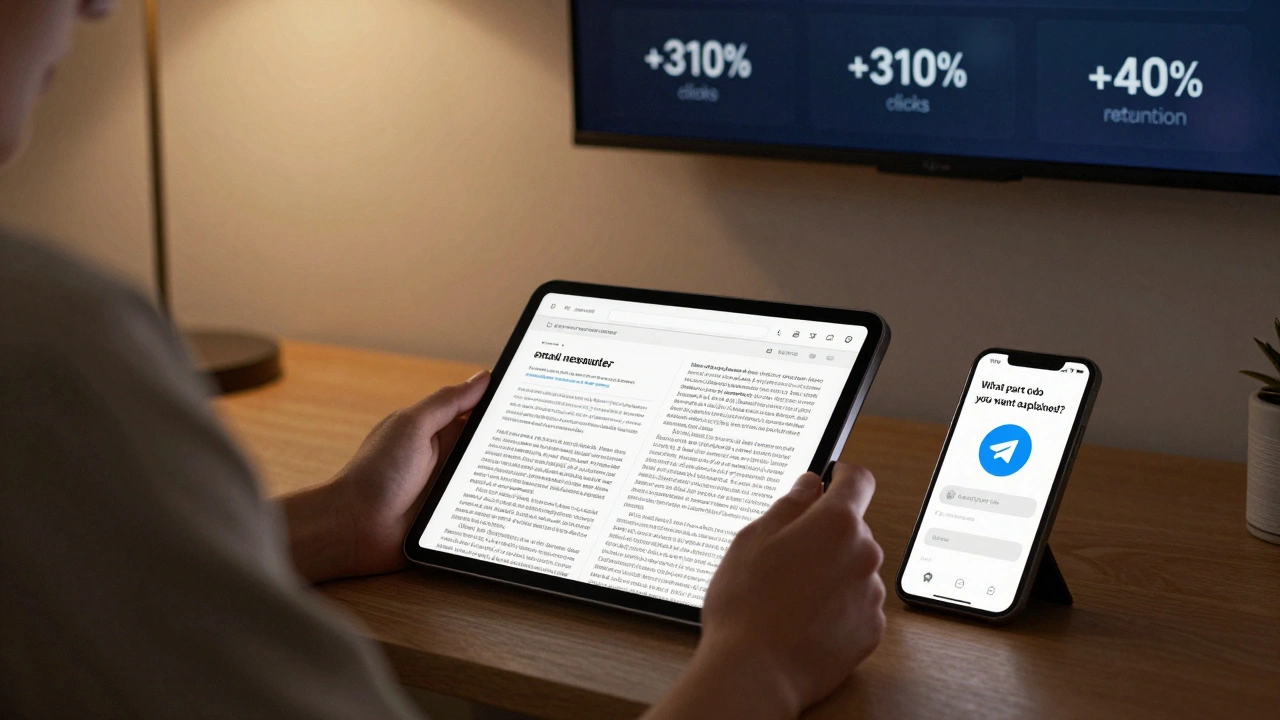
Email moves at the speed of a Monday morning. People check it when they have time - lunch, after work, Sunday night. But news doesn’t wait. Telegram moves at the speed of a notification. It’s instant. Within seconds of hitting send, your audience is reading. That’s not an edge - it’s a revolution. A news outlet in Ukraine started using Telegram for war updates in early 2025. Within three months, their average time-to-read dropped from 4 hours (email) to 97 seconds (Telegram). Engagement jumped 310%. They didn’t change their content. They just changed the channel.
What Telegram Does Better Than Apps
You might think native apps are the gold standard. They’re not. Apps require downloads. They need updates. They eat battery. They get deleted when users get annoyed. And if you’re not pushing push notifications - which most apps don’t do well - you’re invisible. Telegram? No install needed. No permissions. No background processes. Just open the app, and your news is there. Plus, Telegram supports videos, polls, bots, and file sharing - all in one feed. You can send a 10-minute explainer video, a live map, and a poll asking readers what they want to know next - all in one message. No app can do that without a team of developers.Email Still Has Its Place
Don’t get me wrong - email isn’t dead. It’s just not for breaking news. It’s perfect for deep dives. Weekly roundups. Investigative reports. Long-form analysis. People who subscribe to your email list are often looking for context, not just headlines. They want to sit down, read, and think. That’s why the smartest newsrooms use both. Telegram for alerts. Email for depth. One tells them what happened. The other tells them why it matters.Hybrid Strategy Is the New Standard
The top performers aren’t choosing one. They’re layering.- Telegram sends breaking alerts with a link and a short summary.
- Within 30 minutes, a bot polls readers: “What part of this do you want explained?”
- That feedback feeds into a 1,200-word email newsletter that drops at 6 p.m.
- Follow-up SMS texts remind subscribers: “You haven’t read the full story yet.”
Where Telegram Falls Short
Telegram isn’t perfect. It’s not GDPR-compliant out of the box. If you’re targeting Europe, you need legal wrappers. It doesn’t integrate with Mailchimp or HubSpot. You can’t easily track individual behavior like you can with email. And reach? Still not universal. Older audiences, rural communities, corporate workers - they still live in email. But here’s the thing: you don’t need everyone. You need the right people. And right now, those people are on Telegram.The Future Isn’t One Channel - It’s a System
The news landscape isn’t about picking a winner. It’s about building a system where each channel does what it does best.- Telegram = speed, reach, urgency
- Email = depth, context, permanence
- Apps = loyalty, features, control (but only if you’re Apple or Google)
What You Should Do Today
Start small. Pick one type of news you send out - maybe your daily digest or breaking alerts. Set up a Telegram channel. Copy the headline. Drop the link. See what happens. Check your open rate. Check your click rate. Compare it to your email numbers. In 30 days, you’ll know if you’re still clinging to a dying system - or if you’ve found the real future of news distribution. It’s not about which tool is better. It’s about which one gets your message seen - and acted on - before it’s too late.Why are Telegram open rates so much higher than email?
Telegram messages go straight into a user’s chat list with no spam filters, no promotion tabs, and no algorithmic delays. Unlike email, which gets buried under dozens of other messages, Telegram is designed for real-time communication. People check their chats constantly - often every few minutes - so news arrives when attention is highest.
Can I use Telegram instead of email for all my news content?
Not recommended. Telegram works best for short, urgent updates - breaking news, alerts, polls. It’s not ideal for long-form stories, detailed analysis, or legal/compliance-heavy content. Email still dominates for in-depth reading, archiving, and audiences that prefer slower, structured consumption. The best approach combines both: Telegram for speed, email for depth.
Is Telegram better than native news apps for retention?
Yes, for most news organizations. Native apps require downloads, updates, and permissions - and users delete them fast if they’re not useful. Telegram needs no install. It works on any device. It supports rich media. And since users already have the app installed, your message lands instantly. Most news apps struggle to push notifications effectively - Telegram doesn’t have that problem.
Does Telegram work for older audiences?
Less so than email. Older users (55+) are more likely to use email and less familiar with Telegram. But younger audiences (18-40) are moving away from email entirely. If your audience skews younger or is tech-savvy, Telegram is the clear winner. For mixed audiences, use both - promote your Telegram channel in email newsletters to bridge the gap.
Is Telegram GDPR-compliant for news distribution?
Telegram itself doesn’t provide built-in GDPR compliance tools like email platforms do. If you’re targeting users in the EU or UK, you need to implement your own opt-in system, manage data storage, and ensure users can request deletion. Many newsrooms use third-party tools (like Telegram bots with consent forms) to stay compliant. It’s possible - but requires more work than using a regulated email service.
How do I measure success on Telegram?
Track clicks on links you include in messages. Use UTM parameters to see traffic sources in Google Analytics. Monitor replies, polls, and reactions - those show real engagement. Unlike email, you can’t rely on open rates (Telegram doesn’t track them). Focus on action: did they click? Did they reply? Did they share? Those are your real KPIs.
Can I automate news delivery on Telegram?
Yes. Telegram has a public API that lets you connect it to CMS platforms, newsroom software, or even Google Sheets. Many newsrooms use Zapier or custom bots to auto-send breaking news from their editorial system. It’s not as polished as Mailchimp, but it’s reliable and works in real time.