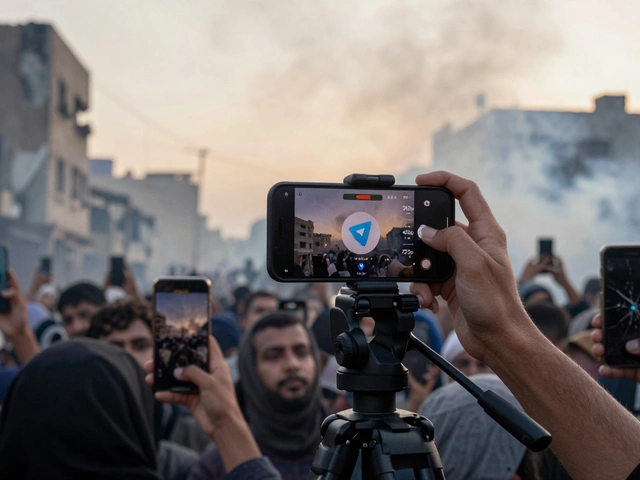
Telegram didn’t become the world’s biggest news platform by accident. It got there because people needed something that other apps wouldn’t give them: real-time, uncensored information - no matter where they lived or what their government tried to block.
As of March 2025, Telegram hit 1 billion monthly active users. That’s not just growth. That’s a global shift in how people get their news. For comparison, WhatsApp has 3 billion users, but most of them use it to chat with family. Telegram? Half of its users open the app specifically to follow news channels. And they’re not just reading headlines - they’re watching live videos from protest zones, sharing real-time updates during internet shutdowns, and tracking election results when mainstream media goes silent.
Why Telegram Works for News When Other Apps Don’t
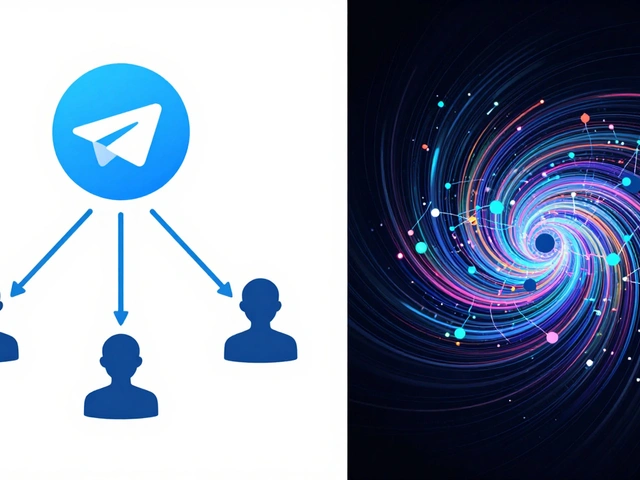
What makes Telegram different isn’t encryption. It’s scale. While WhatsApp limits broadcast lists to 1,024 people, Telegram channels can have unlimited subscribers. A single channel like @BBCNews or @RFE_RL can reach millions at once. And unlike Facebook or Twitter, there’s no algorithm deciding what you see. You get everything in chronological order - the way it was posted. No trending topics. No clickbait. Just raw updates.
That simplicity is why journalists in Iran, Russia, and Brazil moved to Telegram after their platforms got shut down. When Russia blocked independent media in 2022, over 200 news outlets created Telegram channels overnight. Today, 81.7% of Russian internet users rely on Telegram for news. In Iran, 65% of urban residents use it as their primary source. In India, 68% of users now get news on Telegram - more than on WhatsApp.
Telegram’s architecture makes this possible. Messages are stored in the cloud, so you can switch from phone to laptop and pick up right where you left off. Text uses almost no data, so it works even on slow networks. And with public usernames for channels - like @NewsFromUkraine or @BrazilElections2025 - you don’t need to be invited. You just search and subscribe.
The Dark Side: Misinformation Runs Wild
But freedom comes with risks. Without centralized moderation, Telegram became a magnet for false claims. During the 2020 U.S. election and Brazil’s 2022 vote, Stanford researchers found Telegram was the top source for election misinformation. Channels spread fake earthquake alerts in Mexico, fabricated war footage in Ukraine, and doctored videos of political leaders.
One user in Brazil, Elena Rodriguez, posted on Trustpilot: “I joined a local news channel that repeatedly shared unverified earthquake alerts causing unnecessary panic in my community.” That’s not an outlier. A 2025 study by First Draft found users who checked at least three different Telegram channels reduced their exposure to misinformation by 63%. The problem isn’t the platform - it’s the lack of filters.
Telegram doesn’t fact-check. It doesn’t remove content unless it’s illegal under local law. That’s why France is investigating the platform for hosting organized fraud, illegal transactions, and even child abuse material. The EU’s Digital Services Act is now demanding changes - but Telegram says it won’t build a censorship engine. “Unlike platforms that manipulate what you see,” CEO Pavel Durov wrote in March 2025, “Telegram delivers information chronologically - what you subscribe to is what you get.”
How Real People Use Telegram for News
On Reddit, a user named u/NewsWatcher2025 described how he followed 12 independent journalist channels during Turkey’s 2025 elections. “Without Telegram,” he wrote, “I’d have been completely in the dark.” That’s the story across the Global South. In Bangladesh, during February’s political crisis, internet access was cut for three days. Only Telegram remained accessible. People used Bluetooth to share channel links offline. Others printed QR codes of news channels and posted them on walls.
In India, users are turning to regional language channels - Hindi, Tamil, Bengali - for local news that national outlets ignore. In Latin America, independent reporters use Telegram to bypass corporate media gatekeepers. And in places like Venezuela and Sudan, where governments block websites, Telegram channels are the only way to know what’s really happening.
But finding credible sources? That’s the hard part. Most new users don’t know where to start. A March 2025 UserTesting study showed 78% of new users could find and subscribe to a news channel within 15 minutes - but only 12% could tell if the channel was trustworthy.
How to Use Telegram for News Without Getting Misled
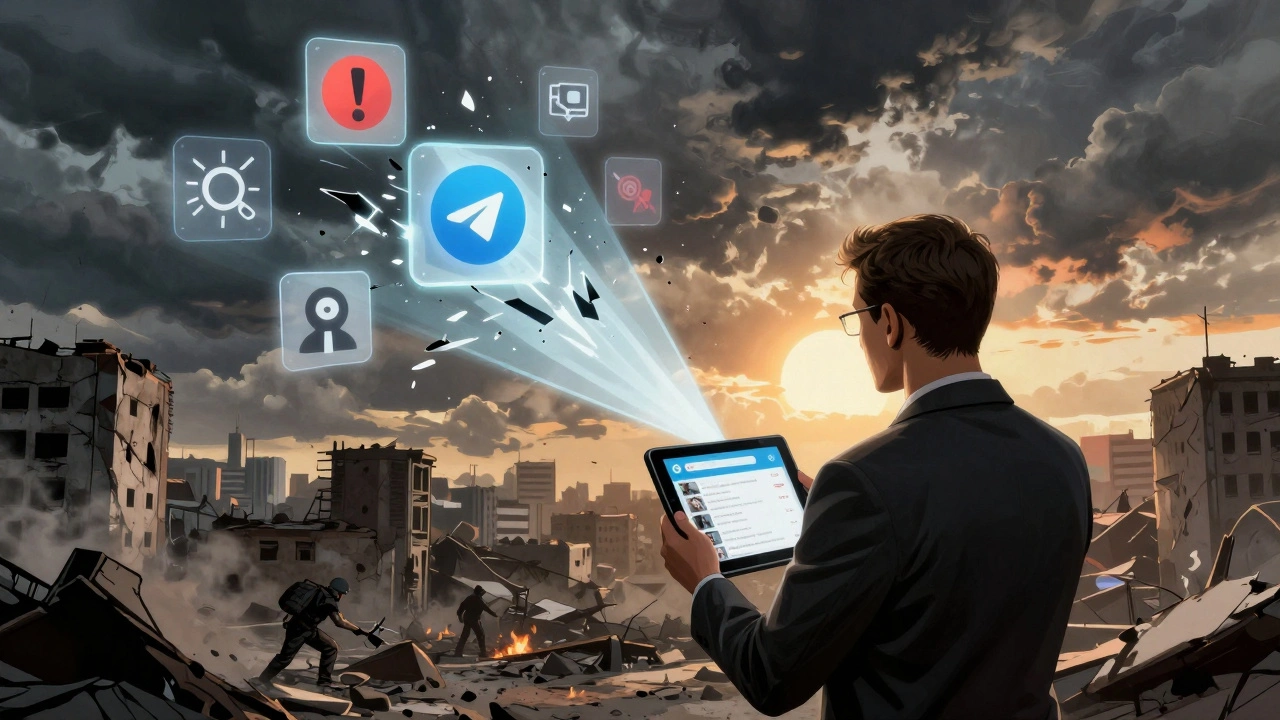
If you want to use Telegram for news without falling for scams or lies, here’s how to do it right:
- Start with verified channels - Look for the blue checkmark next to names like @Reuters, @AP_News, or @DW_News. These are official accounts.
- Use directories - Sites like TGStat and Telegramic list top news channels by subscriber count and activity. Don’t just search “news.” Search “news [your city]” or “news [your language].”
- Cross-check everything - If a channel claims a major event happened, check two or three other channels. If none of them mention it, it’s likely false.
- Enable two-factor authentication - If your account gets hacked, someone could post fake news under your name. Protect yourself.
- Don’t trust anonymous channels - Channels like “@BreakingNewsGlobal” or “@TruthRevealed” are often bots or propaganda mills. Stick to known publishers.
There’s no official Telegram support team for news issues. But there’s a public channel - @TelegramSupport - with over 4 million subscribers. It’s mostly for account recovery, but you’ll find tips from experienced users there too.
Telegram’s Secret Weapon: Money for Journalists
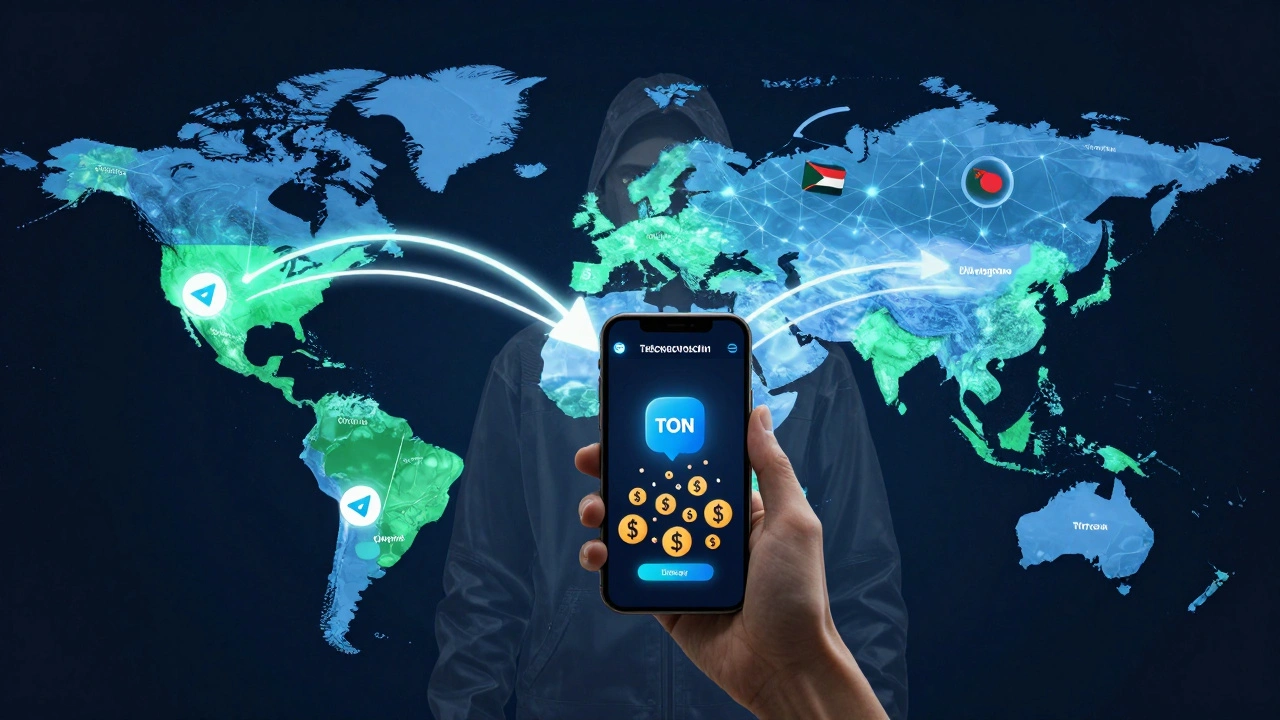
Here’s something most people don’t know: Telegram is quietly turning journalists into entrepreneurs. Through its TON blockchain integration, users can send tips directly to channel owners. Over 20,000 independent reporters now get paid through Telegram’s tipping feature. A Ukrainian journalist covering the front lines earns $300 a month from reader donations. A Filipino fact-checker in Manila gets 500 pesos per week from locals who want accurate local news.
This isn’t charity. It’s a new model. No ads. No algorithms. Just readers supporting the news they trust. In 2024, Telegram made $547 million in profit - but only 1.5% of users pay for Premium. That means the platform is thriving on free usage. And that’s why it’s so hard to shut down.
What’s Next for Telegram News?
Telegram is testing AI-powered fact-checking tools, expected to roll out by late 2025. But it won’t be like Facebook’s fact-checkers. Instead, it’s building a decentralized verification system - think Wikipedia-style, but run by third-party organizations. A news channel might get a green badge if verified by a journalism school, a press association, or a trusted NGO.
By 2026, analysts predict Telegram will hit 1.2 billion users. Growth will come from Africa, Southeast Asia, and Latin America - places where internet censorship is rising and trust in traditional media is falling. In the U.S. and Europe, adoption may plateau. People there still trust CNN, BBC, or local TV. But in places where those outlets are blocked, silenced, or distrusted, Telegram is the only game left.
It’s not perfect. It’s not safe. But it’s real. And for millions of people around the world, it’s the only way they know what’s happening in their own countries.
Is Telegram really the biggest news platform now?
Yes - in terms of news distribution, Telegram is the largest platform globally. While WhatsApp has more total users, Telegram is the only one built for one-to-many broadcasting at scale. Over 650 million public channels exist, and 27% of them focus on news and current events. In countries like Russia, Iran, and India, Telegram is now the primary source of news for millions.
Why can’t WhatsApp do what Telegram does for news?
WhatsApp limits broadcast lists to 1,024 people, has no public channel discovery, and actively removes news accounts that violate its policies. It’s designed for private conversations, not mass communication. Telegram was built for public broadcasting - with unlimited subscribers, searchable channels, and no algorithmic filtering. That’s why journalists and activists choose Telegram, not WhatsApp.
Is Telegram safe for news? Can I trust what I read?
Telegram is safe for accessing information, but not for trusting it. The platform doesn’t fact-check or remove misinformation unless it’s illegal. You must verify everything yourself. Use trusted sources like @BBCNews or @AP_News, cross-check with at least two other channels, and avoid anonymous accounts. The platform gives you freedom - but it also puts the responsibility on you.
How do I find reliable news channels on Telegram?
Start with verified channels that have blue checkmarks - like @Reuters, @DW_News, or @BBCNews. Then use directories like TGStat or Telegramic to find top channels by region or language. Look for channels with high subscriber counts and consistent posting. Avoid channels with vague names like “@BreakingNews” or “@Truth.” Real news outlets have clear branding.
Does Telegram make money from news?
Telegram doesn’t sell ads or sell user data. It makes money through Telegram Premium, which 15 million users pay $4.99/month for - faster downloads, 4GB file uploads, and custom emojis. News creators earn money through direct tips from readers via the TON blockchain. Over 20,000 journalists now receive payments this way. The platform’s business model is built on user support, not surveillance.
Will Telegram be banned in my country?
Telegram has been blocked in countries like China, Iran, and Russia - but users still access it through VPNs. Governments have tried to ban it in India and Brazil too, but enforcement is inconsistent. In most places, it’s still legal. However, France and the EU are pressuring Telegram to add content moderation. If you’re in a country with strict internet controls, assume Telegram might be blocked at any time - and have a backup plan.
Final Thought: Freedom Has a Price
Telegram’s rise isn’t about tech. It’s about power. It’s about people taking back control of the information they consume. When governments shut down the internet, Telegram stays up. When media outlets get silenced, journalists move there. When you can’t trust your TV, you turn to the channel your neighbor shared.
But with that freedom comes responsibility. You can’t just scroll and believe. You have to think. You have to check. You have to choose your sources carefully.
Telegram didn’t just reach 1 billion users. It became the world’s most important news network - not because it’s perfect, but because, for so many, it’s the only one left.