Telegram isn’t just a messaging app anymore. It’s a live news wire where millions of people share breaking updates, investigations, and rumors-2 billion messages a day, according to Kaspersky’s 2024 report. But if you’ve ever tried to find something specific in a Telegram channel, you know how frustrating it is. You scroll for hours. You search for keywords that don’t match the real context. You miss connections between posts that happened weeks apart. It’s like trying to read a library where every book is thrown into a pile and shuffled every morning.
Why Telegram Needs Topic Graphs
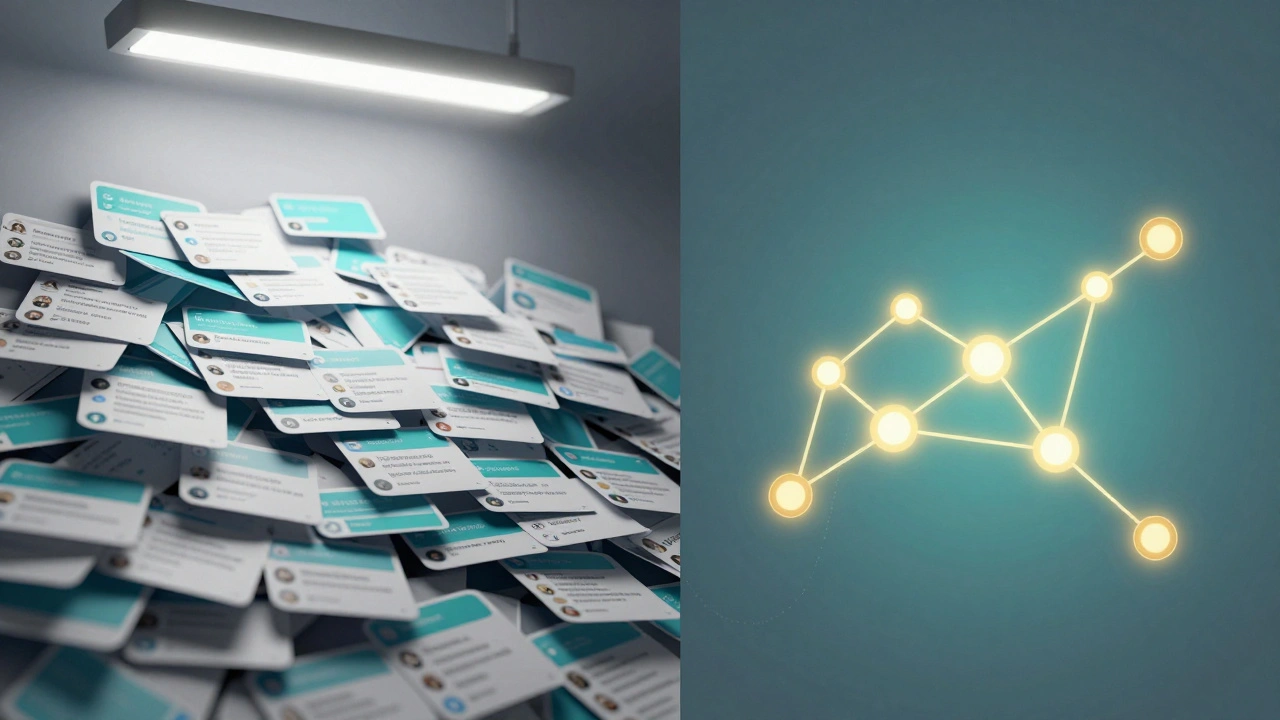
Telegram’s strength is also its weakness: it’s open, fast, and unstructured. Anyone can create a channel. Anyone can post. There’s no algorithm sorting content by relevance, no tagging system, no way to see how ideas connect. Traditional search tools on Telegram only find exact word matches-and even then, they return results in strict chronological order. A 2024 study by the Independent Journalists’ Association found that native Telegram search retrieves just 63.8% of relevant messages for complex queries. That means nearly 4 out of 10 important posts vanish in the noise. Enter topic graphs. These aren’t just tags or categories. They’re living networks that map how ideas, people, and events relate across thousands of messages. Think of it like a spiderweb where each strand connects a post to another post that talks about the same thing-even if those posts were made months apart. The system uses AI to read the text, analyze links, interpret media, and assign topics like #climateprotests or #cryptoscam. Then it links them. Suddenly, you’re not searching for a phrase-you’re exploring a story as it unfolds.How Topic Graphs Work on Telegram
Modern systems like Conoted, which launched its Telegram integration in 2023, use a four-part engine to turn chaos into clarity:- Real-time ingestion: Every post and comment from public channels is pulled in with millisecond delay. Private groups are excluded unless explicitly permitted.
- Semantic analysis: Transformer models like BERT analyze meaning, not just keywords. A post saying “the streets are burning again” gets tagged as #protest even if the word “protest” isn’t used.
- Graph storage: All notes, topics, and connections live in a graph database like Neo4j. This lets the system answer questions like: “Who else talked about this same scam last month?” or “Which channels keep mentioning this person?”
- Interactive visualization: Users see nodes (posts) and links (relationships) as a dynamic map. Click a node, and it expands to show connected posts, authors, and timelines.
What Topic Graphs Can Do That Other Tools Can’t
Compare this to other Telegram tools:- Popsters tracks subscriber growth and message volume-but gives zero insight into what’s being discussed.
- TelepathyDB lets you search text and link channels, but doesn’t auto-connect related ideas.
- Native Telegram search finds words, not meaning.

The Real Limitations
It’s not magic. Topic graphs struggle in key areas:- Multilingual content: Accuracy drops to 76.4% for Arabic and 81.1% for Spanish. English still leads.
- Sarcasm and nuance: A post saying “Oh great, another blackout” might be tagged as #energycrisis when it’s actually sarcasm. AI still can’t fully grasp tone.
- Conflicting topics: Stanford’s Dr. Elena Rodriguez found that 18.7% of political messages got conflicting topic labels from different AI models. One system says #electionfraud. Another says #protest. Both are right-depending on context.
- Setup time: It takes 3-5 days just to ingest historical data. Custom topic taxonomies (like defining what counts as “health misinformation”) can take weeks to fine-tune.
Who’s Using This-and Why
The biggest adopters aren’t casual users. They’re professionals:- Newsrooms: 67 of the top 100 global news organizations now use topic graphs for Telegram monitoring, per a November 2025 Reuters Institute survey.
- Intelligence firms: Tracking disinformation networks, identifying emerging threats.
- Academic researchers: Studying how misinformation evolves, mapping community influence.
What’s Coming Next
The technology is evolving fast. In January 2026, Conoted announced a beta feature called “Contextual Timeline”-a visual history of how topics grow, peak, and fade over time. Early tests show it can predict when a rumor will go viral 48 hours before it explodes. Academics are improving accuracy too. A January 2026 study in ACM Digital Threats combined LDA topic modeling with graph neural networks. Result? 96.1% accuracy on political content-up from 92.7%. That’s close to human-level judgment. The biggest leap? Real-time sentiment mapping. The University of Toronto’s Citizen Lab found that when a topic graph identifies an “influential node”-a user whose posts consistently spark replies-it can predict community impact with 89.4% accuracy. That means you don’t just see what’s being said-you see who’s moving the needle.Is This the Future?
Telegram has 842 million active news consumers, Statista reports. That’s third behind YouTube and Facebook. The global Telegram analytics market is projected to hit $389 million by 2028. Topic graphs will take 22% of that share by 2027. The European Union’s January 2026 Digital Services Act amendments now require platforms with over 45 million users to implement “appropriate content organization mechanisms.” Telegram, with its 900+ million users, will need to respond. Whether it builds its own system or allows third-party tools like topic graphs to integrate, the writing is on the wall. Traditional analytics firms like Brandwatch and Meltwater are rushing to add graph features. G2’s Q4 2025 report says 78% of major platforms announced Telegram graph capabilities last year. The bottom line: Topic graphs aren’t a fancy add-on. They’re becoming essential infrastructure. In 18 to 24 months, every serious newsroom, intelligence unit, and investigative team will use them. The question isn’t whether you’ll need one. It’s whether you’re ready to learn how to use it.What exactly is a topic graph on Telegram?
A topic graph on Telegram is an AI-powered system that turns unstructured messages into a visual network of connected ideas. It reads posts, assigns topics like #health or #politics, and links related content-even if those posts were made weeks apart. Instead of scrolling through a timeline, you explore a map of how information spreads and evolves.
How accurate are topic graphs for non-English content?
Accuracy drops significantly for languages other than English. For English, top systems like Conoted achieve 92.7% tagging accuracy. For Arabic, it’s 76.4%. Spanish is around 81.1%. This is because most AI models are trained primarily on English data. Multilingual support is improving but still lags behind.
Can topic graphs detect sarcasm or irony in Telegram posts?
Not reliably. Current AI models struggle with tone, context, and cultural nuance. A post like “Oh great, another blackout” might be tagged as #energycrisis even if it’s meant sarcastically. This leads to false connections and mislabeled topics, especially in political or humorous contexts.
Do I need coding skills to use topic graphs?
No, for basic use. Platforms like Conoted offer web interfaces that don’t require coding. But if you want to customize topic labels, integrate with other tools like Notion or Slack, or tweak the AI’s relationship suggestions, you’ll need intermediate Python skills and experience with REST APIs.
Are topic graphs legal and ethical on Telegram?
They’re legal if used only on public channels and with proper consent for user data. But ethical concerns remain. Mapping user interactions, especially in mixed public/private groups, can reveal identities and affiliations. Some journalists avoid using them for sensitive investigations to protect sources. Always check Telegram’s API terms and local privacy laws before deployment.
How long does it take to set up a topic graph system?
Initial setup takes 3-5 days to ingest existing messages. Fine-tuning custom topic labels and training the AI on your organization’s terminology can take 2-3 weeks. Total time for full proficiency, including team training, is typically 40-80 hours according to TechTarget’s 2026 case study.
What’s the biggest benefit of using topic graphs for news discovery?
The biggest benefit is uncovering hidden experts and tracking the true evolution of a story. Instead of relying on top influencers or trending posts, topic graphs surface consistent, accurate voices buried in the feed. This is invaluable for investigative journalism, crisis response, and understanding how misinformation spreads.
Will Telegram build its own topic graph system?
Telegram hasn’t announced plans to build one. But with 900+ million users and new EU regulations requiring better content organization, they may be forced to allow third-party tools to integrate-or risk penalties. For now, third-party systems like Conoted lead the space.