Most marketers are tired of the "algorithmic lottery." You spend hours crafting a post on Instagram, only for it to reach 5% of your followers because the platform decided your content didn't fit the current trend. It's a frustrating cycle of guessing and hoping. But what if you could switch to a system where your audience actually sees what you post? Telegram is a cloud-based, cross-platform instant messaging service that combines private chatting with massive public channels. Unlike traditional social networks, it operates on a broadcast model that removes the middleman between the creator and the subscriber.
The Reach Gap: Algorithmic Feeds vs. Chronological Delivery
The biggest shock for anyone moving from a visual social network to a messaging-based one is the visibility. On platforms like Instagram, a "good" reach rate is often between 5% and 15%. You're fighting a battle against an AI that decides who sees your content. On Telegram, the rules are simpler: if a user subscribes and keeps their notifications on, they see the message. Period.
In real terms, subscribers on Telegram typically see 60% to 80% of published content. Compare that to the unpredictable swings of an algorithmic feed where a post might reach 10,000 people today and only 3,000 tomorrow for no apparent reason. There are no shadow bans or sudden reach drops here. This predictability makes channel analytics far more reliable for business planning and campaign forecasting.
Click-Through Rates and Audience Trust
Visibility is one thing, but do people actually click? This is where the gap widens. In the social media world, a 3-5% click-through rate (CTR) is usually considered a success. However, Telegram users engage differently. Because the environment is more intimate and less cluttered with "suggested posts," the average CTR is often 3 to 5 times higher than on Instagram.
For most channels, a 10-15% CTR is the norm. If you're operating in high-intent niches like finance, B2B services, or IT, those numbers can skyrocket to 30%. Why? Because users view Telegram as a source of truth rather than a place for entertainment. Research shows that 62% of users trust information from verified Telegram channels, while only 48% feel the same about Instagram content. When a user clicks a link in a Telegram channel, they're usually looking for a specific piece of information, not just browsing for a dopamine hit.
| Metric | Telegram | Instagram/FB | Impact |
|---|---|---|---|
| Content Visibility | 60% - 80% | 5% - 15% | High predictability |
| Average CTR | 10% - 15% | 3% - 5% | Higher conversion potential |
| User Trust Level | 62% (Verified) | 48% | More authoritative perception |
| Delivery Model | Chronological | Algorithmic | No shadow-banning |

Scale and Technical Superiority
When you look at the technical side, Telegram is built for massive scale in a way that WhatsApp or Signal aren't. While most apps limit group sizes to keep things "personal," Telegram allows groups to grow up to 200,000 members. This makes it a hybrid between a chat app and a full-blown social network.
The cloud-based architecture is another game-changer. Because media is stored in the cloud, users can jump between a laptop, tablet, and phone without clogging their local storage. For a content creator, this means you can send massive files-far larger than what's allowed on competing messengers-without worrying about the user's phone running out of space. This flexibility is why news organizations and large-scale communities prefer it over more restrictive platforms.
The Economics of Attention: Monetization and Growth
Telegram isn't just a free tool; it's a growing economy. By March 2025, the platform hit a massive milestone of 1 billion monthly active users (MAUs). The growth isn't just centered in Europe or Russia; India has seen over 104 million downloads, and the US and Brazil are seeing similar surges. This global footprint creates a diverse environment for monetization.
The financial model is shifting from purely venture-backed to sustainable. In 2024, revenue climbed to between $1 billion and $1.4 billion, driven largely by Telegram Premium, which has over 12 million subscribers. But the real win for creators is the ad revenue sharing program. If you have a channel with at least 1,000 subscribers, you can earn 50% of the ad revenue generated in your channel. This turns a communication tool into a direct income stream, something that is much harder to achieve organically on a platform where you're constantly prompted to pay for "boosted" posts to get seen.
Automation and the Bot Ecosystem
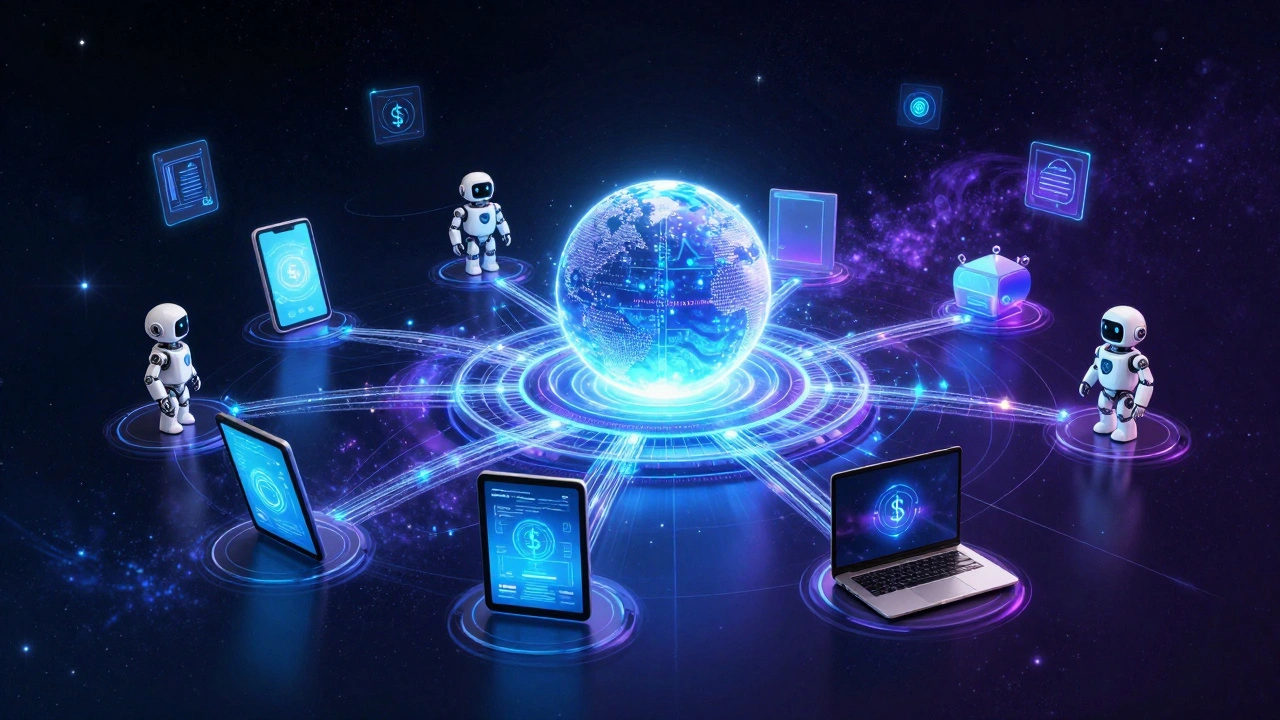
You can't talk about Telegram metrics without mentioning the bots. While other platforms have "chatbots" that often feel like broken phone menus, Telegram Bots are essentially apps that live inside the messenger. These bots handle over 1.2 billion interactions every month, automating everything from customer support to complex payment workflows.
The integration of fintech is particularly striking. Over 100 million users activated built-in crypto wallets in 2024. This transforms the platform from a place where you talk about products to a place where you actually transact. When you combine high trust, high CTR, and integrated payments, you have a conversion funnel that is significantly shorter than the traditional "Ad $\rightarrow$ Landing Page $\rightarrow$ Checkout" flow used on other social networks.
Choosing the Right Platform for Your Goals
So, does this mean you should ditch other platforms? Not necessarily. It depends on what you're trying to achieve. Instagram is still the king of discovery. If you need people to find you via hashtags or a "Explore" page, that's where you belong. Telegram is not a discovery engine; it's a retention and conversion engine.
The smartest strategy is to use the platforms in tandem. Use the algorithmic reach of a visual network to capture attention, then move your most loyal followers into a Telegram channel. Once they are there, you no longer have to pay for ads or pray to the algorithm to ensure they see your updates. You own the relationship and the delivery path.
Why is the CTR higher on Telegram than on Instagram?
Telegram's higher CTR is driven by a combination of trust and intent. Users perceive the platform as more honest and less "commercialized" than Instagram. Additionally, because notifications are direct and not filtered by an algorithm, users are more likely to engage with a link when they are in a "reading" mindset rather than a "scrolling" mindset.
Does Telegram have an algorithm that hides posts?
No. Telegram delivers messages chronologically. If a person is subscribed to your channel and has notifications enabled, your message will appear at the top of their chat list. There is no artificial suppression of reach or "shadow banning" based on engagement metrics.
How does the ad revenue sharing work for channel owners?
Telegram allows channel owners with 1,000 or more subscribers to participate in its official ad program. Under this system, the creator earns 50% of the revenue generated by the ads displayed within their channel, providing a direct way to monetize an audience without relying on external sponsors.
What is the difference between a Group and a Channel on Telegram?
A Group is designed for community discussion where members can chat with each other (up to 200,000 people). A Channel is a one-to-many broadcast tool used for pushing updates to an unlimited number of subscribers, where only the administrators can post.
Is Telegram really more trusted than other social platforms?
According to user data, about 62% of users trust verified Telegram channels, compared to 48% on Instagram. This is largely because Telegram is often used for real-time news and professional updates, whereas other platforms are increasingly seen as hubs for curated entertainment and influencer marketing.