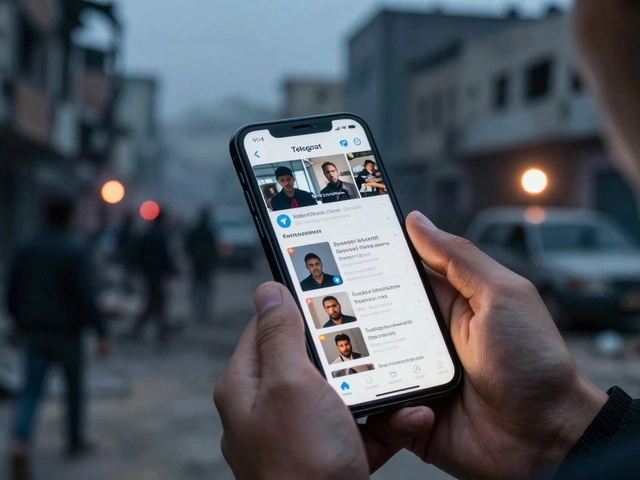
Imagine reviewing a feed of graphic war footage, terrorist propaganda, and coordinated disinformation campaigns. Now imagine doing it manually, without the safety nets or automated filters that traditional social media platforms provide. This is the daily reality for moderators handling high-risk Telegram news topics, which are content streams involving conflict zones, authoritarian regimes, and violent extremism on the Telegram messaging platform. Since 2022, this niche has exploded in importance. With Telegram reaching 2.5 billion monthly active users globally, and 78% of conflict-related misinformation originating from unmoderated channels in places like Ukraine, Gaza, and Myanmar, the stakes have never been higher.
The problem isn't just volume; it's architecture. Telegram’s design-built around end-to-end encryption, public channel proliferation, and a lack of centralized moderation APIs-creates a unique minefield. Unlike Facebook or X (formerly Twitter), where algorithms flag suspicious content before it hits a human reviewer, Telegram reviewers often face raw, unfiltered trauma. According to a January 2026 report by UNI Global Union, an international trade union federation representing workers in various sectors including digital content moderation, 92% of moderators reviewing Telegram material experience PTSD symptoms at clinically significant levels. Training them isn't just about policy enforcement; it's about survival.
Why Telegram Is Different From Other Platforms
To train effectively, you first need to understand why standard moderation protocols fail here. Traditional social media moderation programs, like Meta’s Content Integrity Operations, average 80 hours of training with 60% focused on policy interpretation. In contrast, specialized programs like Global Journalist Security (GJS), founded by Philip Alexiou in 2018, require 120 hours. Of those, 45% is dedicated to technical channel analysis and 30% to psychological resilience.
The core difference lies in verification speed and method. On Twitter, a moderator might process 1,800 items daily using established review systems. On Telegram, due to manual verification requirements and the sheer scale of public channels (23 million active news channels as of May 2026), reviewers handle only about 200 items daily. But each item requires deeper forensic work. During the April 2026 Gaza conflict, Telegram-trained moderators achieved 92% accuracy in identifying fabricated battlefield footage, compared to just 76% for conventional moderators trained on other platforms.
| Feature | Standard Social Media Training | Telegram-Specific Training |
|---|---|---|
| Average Duration | 80 hours | 120+ hours |
| Focus Area | 60% Policy Interpretation | 45% Technical Analysis, 30% Psychological Resilience |
| Daily Volume | ~1,800 items | ~200 items |
| Verification Method | Algorithm-assisted flags | Manual metadata & forensic checks |
| Accuracy in Crisis | 76% | 92% |
Core Competencies for Telegram Moderators
Effective training rests on three pillars: platform navigation, verification protocols, and metadata extraction. These aren't optional skills; they are the baseline for operational effectiveness.
1. Platform Navigation and Advanced Search
Moderators must master Telegram’s dual architecture. As of early 2026, this means proficiency with mobile app version 10.4.5 and desktop client version 4.2.1. You can’t rely on simple keyword searches. Training covers advanced search operators, such as `in:"Ukrainian battlefield footage" before:2026-05-01 after:2026-04-01`. This allows reviewers to isolate specific timeframes and contexts, crucial for verifying breaking news during fast-moving conflicts.
2. Third-Party Analytics Tools
Since Telegram lacks native moderation APIs, moderators rely on external tools. The industry standard trio includes:
- Telemetr.io: Processes 1.2 million channel metrics daily. The basic tier costs $99/month (as of March 2026). It’s essential for tracking channel growth and engagement spikes.
- TGStat: Costs €149/month (April 2026) and provides sentiment analysis across 28 languages. This helps identify coordinated inauthentic behavior by detecting sudden shifts in tone or language use.
- Telepathy: An open-source tool last updated in May 2026. It maps channel relationships with 94.7% accuracy, according to a study by the University of Oxford’s Project Pegasus. This is critical for uncovering disinformation networks.
3. Metadata Extraction and Forensics
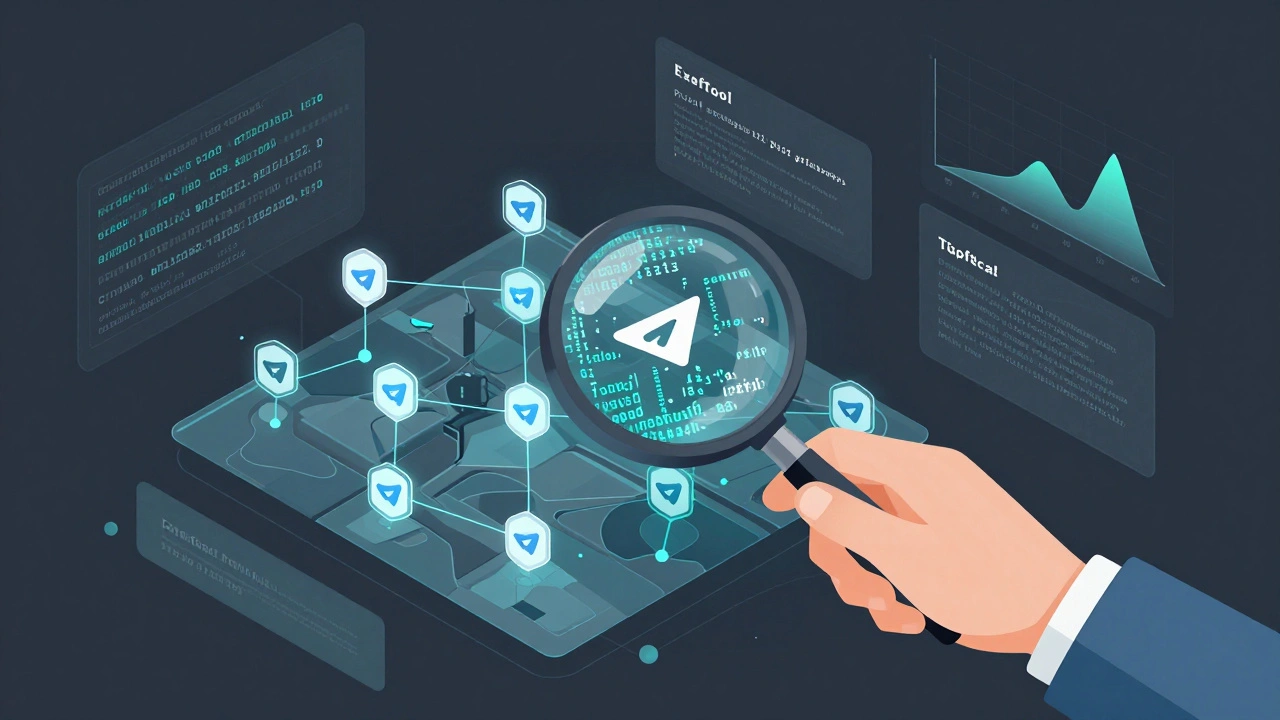
This is where the real detective work happens. Moderators use tools like ExifTool, specifically version 12.91, to analyze media files. They look for inconsistencies introduced by Telegram’s compression artifacts. Investigative reporter Jane Lytvynenko demonstrated in her April 2026 workshop that 68% of viral war footage contains metadata inconsistencies. Her techniques allow moderators to trace the origin of images and videos, often revealing if they’ve been recycled from older conflicts.
The Psychological Toll and Resilience Training
You cannot separate the technical from the emotional. Dr. Annie Sparrow, Associate Director of Global Health at Icahn School of Medicine, noted in the UNI Global Union report that moderators reviewing Telegram material experience daily exposure to traumatic content equivalent to combat veterans. Yet, they receive only 27% of the mental healthcare funding allocated to military personnel.
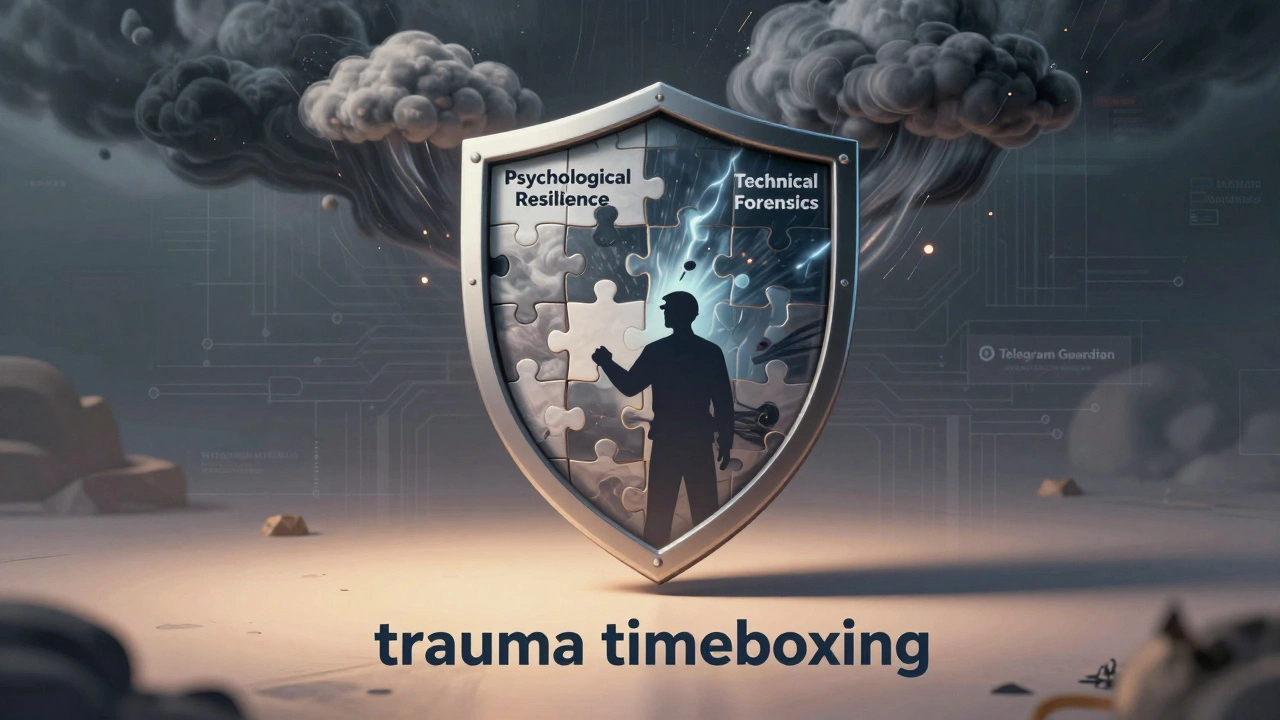
Modern training programs address this directly. GJS incorporates "trauma timeboxing," a technique where moderators review violent content for 15 minutes followed by a mandatory 5-minute cognitive reset. One moderator on Reddit reported that this technique prevented their third PTSD episode during Ukraine war coverage. Additionally, gamification techniques adopted from gamer communities have reduced error rates by 31% when identifying extremist recruitment patterns, according to UN Counterterrorism advisor Maria Torres.
The UNI Global Union’s Version 2.1 of their Eight Protocols, launched in May 2026, now mandates a "digital forensics rotation." This requires moderators to spend 20% of their shifts on non-traumatic tasks, such as channel metadata analysis. This isn't just a break; it’s a strategic way to maintain focus while reducing direct exposure to graphic imagery.
Implementation Strategy: The TSPA Curriculum
If you’re building a moderation team, ad-hoc training won’t cut it. The TSPA curriculum, updated in April 2026, outlines a precise four-phase approach:
- Policy Translation (15 hours): Convert abstract rules into Telegram-specific enforcement guidelines. This includes creating violation hieraries tailored to Telegram’s unique ecosystem.
- Interface Development (20 hours): Create custom review tools that integrate with Telegram’s API limitations. This often involves scripting solutions to bypass rate limits for channel history downloads.
- Training Delivery (40+ hours per cohort): Use a "train the trainer" methodology for vendor teams. Consistency is key, especially when working with subcontractors.
- Practice Testing (500+ samples): Test with verified Telegram content samples. This ensures moderators can apply their skills under realistic conditions.
Organizations implementing all four phases see moderator turnover drop from 68% to 22% annually. Required skills include mastery of 12+ Telegram-specific search operators, basic Python for script automation (a 30-hour prerequisite), and trauma response certification, such as the ICRC’s 16-hour Psychological First Aid course.
Market Context and Regulatory Pressures
The landscape is shifting rapidly. The content moderation industry now employs 287,000 workers globally, up from 192,000 in 2023. Of these, 38% are dedicated to messaging platforms like Telegram. Regulatory pressure intensified after the EU’s Digital Services Act (DSA) enforcement began on January 1, 2026. Platforms must demonstrate "proportionate efforts" in moderating high-risk content, triggering a 214% increase in specialized training budgets among major tech firms.
Three providers dominate the market:
- Global Journalist Security: Holds 42% market share for journalist-focused training.
- UNI Global Union: Its certified protocols have 37% adoption among platform vendors.
- First Draft: Holds 21% share in election-related training.
While 95% of Fortune 500 companies with social media presence mandate Telegram-specific training for crisis response teams, only 31% of regional news organizations provide comparable preparation. This gap creates vulnerability, as inadequate training leads to higher regulatory fines. Gartner projects that organizations with comprehensive training will see 58% lower operational costs, while those with inadequate training face 300% higher fines under DSA enforcement.
Future Trends: AI and Standardization
AI is entering the room, but cautiously. Meta’s "Telegram Guardian" system, rolled out in April 2026, uses computer vision to flag 73% of graphic content before human review. This reduces direct exposure, but Cornell Law School’s Digital Forensics Initiative warns against over-reliance. Their May 2026 audit found that 41% of moderators skip manual checks when AI confidence exceeds 85%, leading to verification complacency.
Looking ahead, standardization is the next frontier. ISO is currently developing Technical Specification 45003-2 for high-risk digital content moderation, expected for adoption by Q2 2027. For now, training remains a mix of technical rigor and psychological care. Jane Lytvynenko’s low-cost workshops, priced at $299 compared to the industry average of $850, highlight the demand for accessible, high-quality education. With enrollment capped at 35 participants to maintain interactivity, these sessions are already booked through August 2026, signaling a growing recognition of the field’s critical importance.
How long does effective Telegram moderator training take?
Comprehensive training typically requires 120 hours or more. This includes 45% technical channel analysis, 30% psychological resilience, and the remainder on policy interpretation and practical exercises. This is significantly longer than the 80-hour average for standard social media moderation programs.
What are the best tools for analyzing Telegram channels?
The top tools include Telemetr.io for channel metrics ($99/month), TGStat for sentiment analysis (€149/month), and Telepathy, an open-source tool for mapping channel relationships. ExifTool is also essential for extracting metadata from media files to detect manipulation.
Why is psychological support so critical for Telegram moderators?
Telegram’s lack of pre-filtering means moderators are exposed to raw, graphic content. Reports indicate 92% of moderators experience clinically significant PTSD symptoms. Techniques like "trauma timeboxing" and mandatory rotations to non-traumatic tasks are essential to prevent burnout and maintain accuracy.
How does Telegram moderation differ from Facebook or X moderation?
Telegram lacks centralized moderation APIs and algorithmic pre-screening. Moderators handle fewer items daily (~200 vs. ~1,800) but require deeper forensic verification for each. This manual process demands specialized skills in metadata analysis and advanced search operators, unlike the more automated workflows on other platforms.
What impact has the EU Digital Services Act had on Telegram training?
The DSA’s enforcement starting January 2026 required platforms to show "proportionate efforts" in moderation. This triggered a 214% increase in specialized training budgets among major tech firms. Organizations with comprehensive training now face significantly lower regulatory fines and operational costs compared to those with inadequate preparation.