When you hear breaking news, where do you go first? For millions, it’s not a TV broadcast or a newspaper website-it’s a 60-second clip on TikTok, a push alert from a Telegram channel, or a 10-minute breakdown on YouTube. These three platforms don’t compete-they complement each other in a new kind of news ecosystem. Each one plays a different role, and smart news organizations now use them together like a well-oiled machine.
Telegram: The Instant Alert System
Telegram isn’t a news site. It’s a broadcast pipe. Created in 2013, it started as a secure messaging app, but over time, it became the go-to tool for journalists, independent reporters, and media outlets in places where press freedom is shaky. Why? Because it doesn’t care about your follower count, your engagement rate, or whether your post fits some algorithm’s mood. You post once, and every subscriber gets it instantly.
Newsrooms in Serbia, Montenegro, and Ukraine rely on Telegram to get breaking updates out before platforms like Facebook or Twitter even have time to react. The Reuters Institute found that media outlets see 30-40% more clicks from Telegram to their main websites than from Facebook. That’s because people trust Telegram channels that are verified-like BBC, Reuters, or The Guardian-for being clean, ad-free, and fast.
But there’s a catch. Telegram doesn’t make money for publishers. No ads, no subscriptions, no tipping. It’s a free highway. That’s why news teams use it to drive traffic to YouTube or their own websites where they can monetize. Think of it as the siren that wakes you up. The real story? That’s elsewhere.
TikTok: The Discovery Engine
If Telegram is the alarm clock, TikTok is the headline that grabs you before you even open your eyes. With 1.59 billion users in 2025, TikTok is where Gen Z and younger millennials get their news. It’s not because they’re lazy-it’s because the algorithm works. A single 15-second clip from a verified journalist can hit millions overnight if it taps into trending audio, uses bold text overlays, or shows raw footage from the scene.
Here’s what works: vertical video (9:16 ratio), captions for silent viewing (78% of users watch without sound), and even using popular songs-even if they’re just background noise. News organizations report 3-5x more engagement on TikTok than on Instagram Reels. In Albania and Kosovo, TikTok is now the primary source of news, beating out Facebook and YouTube combined.
But TikTok’s biggest weakness? Fleeting relevance. A news clip stays viral for 24-48 hours. After that, it’s buried under cat videos and dance challenges. That’s why smart outlets don’t stop at TikTok. They use it to spark curiosity, then point viewers to YouTube for context. Studies show 68% of people who see a news clip on TikTok search for more on YouTube within the same day.
YouTube: The Depth Repository
When you want to know why something happened-not just what happened-you go to YouTube. With 2.53 billion monthly users and 4.7 billion hours of watch time each month, it’s the only platform where news can breathe. A 10-minute explainer on the war in Gaza, a 15-minute interview with a politician, or a 20-minute timeline of an election scandal? That’s YouTube’s sweet spot.
YouTube’s strength? Search. Google owns it. That means if you type “what happened in Kosovo last week?” into Google, the top results are likely YouTube videos. News clips stay discoverable for months-even years. That’s why media outlets invest heavily in YouTube: 71% of U.S. adults aged 30-49 use it for news. It’s where people with spending power go.
Monetization is another big reason. Creators earn between $0.01 and $0.03 per view through ads, Super Chats, and memberships. Compare that to TikTok’s $0.02-$0.04 per 1,000 views, and it’s clear why professional news teams can’t rely on TikTok alone. YouTube also lets you build a channel with loyal subscribers, host live Q&As, and link to newsletters or donation pages. It’s the only platform among the three that lets news organizations build real, lasting audiences.

The Cross-Platform News Journey
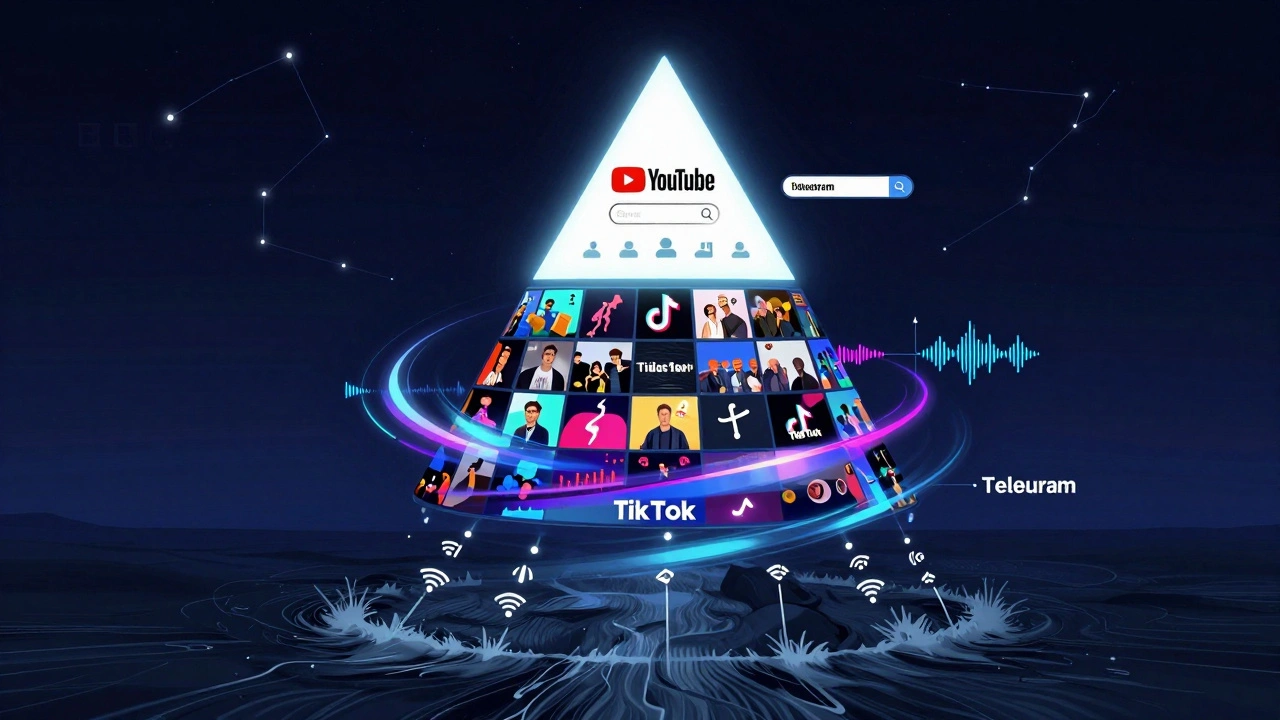
Most people don’t use just one platform. They move between all three in a single news cycle. Here’s what a typical path looks like:
- You get a Telegram alert: “Explosion at Kyiv train station. Details coming.”
- Within minutes, you see a 60-second clip on TikTok showing smoke, people running, and a shaky phone video with text overlay: “Confirmed. 3 dead.”
- You open YouTube and find a 12-minute video from a trusted outlet with maps, official statements, and eyewitness interviews.
This isn’t rare. Data from Pikasa.ai shows 68% of users follow this exact pattern. Telegram wakes you up. TikTok pulls you in. YouTube gives you the full picture.
Even Reddit users describe it this way. One user, u/NewsHound2025, wrote: “I get my breaking news from Telegram channels because they push alerts instantly without algorithmic delays, then watch deeper analysis on YouTube later.” That’s the new normal.
Why This Matters for News Outlets
If you’re a news organization trying to reach people today, you can’t pick one platform and call it a day. You need all three-and you need to treat them differently.
- On Telegram: Post fast. Keep it short. No fluff. Just facts, timestamps, and links.
- On TikTok: Make it emotional. Use trending sounds. Add text. Keep it under 60 seconds. Don’t be afraid to be raw.
- On YouTube: Go deep. Use good lighting. Add graphics. Include sources. Make it something people can save and share weeks later.
Teams that do this well report 40% higher audience retention and 2x more website traffic. The Reuters Institute calls this the “tri-platform model.” It’s not optional anymore-it’s the baseline.
The Risks and the Future
But it’s not all smooth sailing. TikTok’s algorithm changed in April 2025 and deprioritized news content. Some publishers lost 37% of their traffic overnight. YouTube’s Shorts algorithm is still finicky-getting visibility takes testing, tweaking, and time. Telegram’s biggest problem? Misinformation. That’s why they added “Verified News Channels” in late 2025 with blue checkmarks for accredited outlets.
Looking ahead, YouTube will stay king for long-form news through 2027. TikTok’s audience will grow, but mostly under age 35. Telegram will keep growing in Eastern Europe and Asia, especially where governments try to shut down other platforms. The winners won’t be the ones with the best camera. They’ll be the ones who understand the ecosystem.
What You Should Do
Here’s how to start using this system-even if you’re just one person:
- Create a Telegram channel today. Post one breaking news alert per day. Link to your YouTube video.
- Turn that same story into a 45-second TikTok clip. Add text, use a trending sound, and end with “Watch full story on YouTube.”
- Upload the full version to YouTube. Title it clearly. Add timestamps and sources.
You don’t need a big team. You just need to stop thinking of these platforms as separate. They’re parts of one system. And if you ignore any one of them, you’re leaving half your audience behind.