Newsrooms are facing a brutal reality. Ad revenues are shrinking, subscriptions are hitting a ceiling, and audiences are getting shorter attention spans. Meanwhile, millions of people are spending hours tapping screens inside messaging apps to earn crypto tokens. It sounds like two different worlds, but they are colliding right now. The intersection of Web3 gaming and Telegram is creating new revenue paths that traditional publishers can’t ignore.
You don't need to be a tech expert to see the shift. Games like Notcoin and Catizen have proven that casual users will engage deeply with simple, reward-based mechanics if the friction is low enough. For news organizations, this isn't just about chasing hype; it's about finding a way to turn passive readers into active participants who value your content enough to pay or promote it. This guide breaks down how you can build these systems without losing your editorial soul.
The Telegram Ecosystem Explained
To understand why this works, you first need to look at the platform itself. Telegram is a cloud-based instant messaging service founded by Pavel Durov in 2013. As of early 2024, it boasted over 900 million monthly active users (MAUs), according to an interview with the Financial Times. That is a massive audience, far larger than competitors like Discord, which reported around 150 million MAUs in 2021.
But user count alone doesn't make money. The magic happens when you combine that reach with The Open Network (TON) is a blockchain protocol originally developed by Telegram before being taken over by a community foundation in 2021. TON provides the infrastructure for fast, cheap transactions directly within the app. In 2024, Telegram introduced Telegram Stars is an in-app currency designed for purchasing digital goods in mini-apps while complying with Apple and Google store policies.
This combination creates what Binance Research calls a "super app" environment. Users can move from reading a news article to playing a game, earning rewards, and buying premium content without ever leaving the chat interface. According to Game7’s “2024 State of Web3 Gaming” report, Telegram captured 21% of all new web3 game launches in 2024, making it a leading development platform alongside PC and mobile native apps.
How Mini-Apps Work Technically
You might wonder how complex it is to build these experiences. Surprisingly, it’s not as hard as building a standalone mobile app. Most Telegram web3 games run as Mini Apps are HTML5/JavaScript web applications launched inside Telegram’s in-app browser via bot commands or deep links.
Here is the basic flow:
- User Interaction: A user clicks a link (e.g., t.me/botname?startapp=game) or taps a button in a channel post.
- Launch: The app opens in Telegram’s built-in browser. Because it’s lightweight HTML5, it loads quickly-often under a second-even on slower mobile networks.
- Authentication: The app uses the Telegram Bot API to verify the user’s identity instantly. No email sign-ups required.
- Blockchain Connection: If the game involves crypto, it connects to a wallet like @wallet or Tonkeeper using SDKs like ton-connect. This process takes seconds, not minutes.
Gate Learn notes that most TON-based Telegram games keep their bundles under 5-10 MB to ensure smooth performance at 60 frames per second. For a news organization, this means you can prototype a quiz or interactive story hunt with a small team of developers in 4-8 weeks, rather than spending months and hundreds of thousands of dollars on a native iOS or Android app.
Proven Revenue Models for Publishers
So, how do you actually make money? You don't need to invent new economics; you just need to adapt the models that already work in gaming. Here are four specific strategies derived from successful titles like Notcoin and Catizen.
1. Quest-Based Advertising
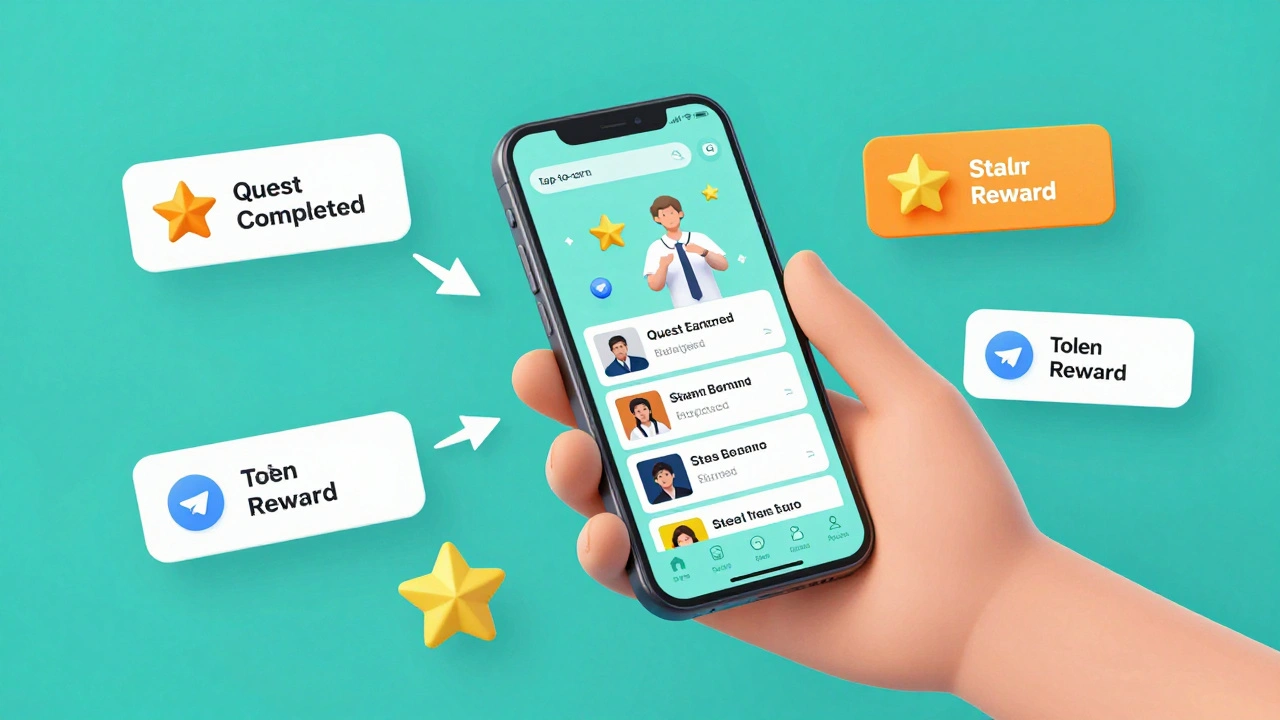
In games like Notcoin, players earn points by completing "tasks." These tasks often involve following a partner’s Telegram channel or joining a Discord server. The partners pay the game developer a fixed fee per action. This is essentially Cost-Per-Action (CPA) advertising, but with much higher engagement than banner ads.
Application for News: Create a daily news trivia game. To get extra lives or hints, users complete sponsored quests, such as watching a 15-second branded explainer video or visiting a sponsor’s landing page. You sell these slots to advertisers who want engaged eyeballs, not just impressions.
2. In-Game Purchases via Telegram Stars
Catizen, a pet simulation game on Telegram, generated over $25 million in revenue from 1 million paying users within its first year, according to Earlybird. They did this by selling cosmetic items and power-ups. While news isn't a pet simulator, the psychology is similar: people pay for convenience and status.
Application for News: Offer "deep dive" unlocks. A user plays a free version of an investigative journalism game, but to unlock the final chapter or exclusive data visualizations, they pay with Telegram Stars. Since Stars can be converted to fiat or used for discounted Telegram Ads, you create a closed-loop economy where game revenue funds further promotion.
3. Tokenized Loyalty and Airdrops
Notcoin gave away 3 billion NOT tokens to its 35 million players. When the token launched on exchanges, its fully diluted valuation briefly exceeded $2 billion. This created immense goodwill and brand loyalty.
Application for News: Launch a community token that rewards readers for consistent engagement-reading articles, sharing links, or answering quizzes correctly. Over time, this builds a dedicated community. Eventually, if you list the token on an exchange, you provide tangible value to your most loyal supporters. Note: This carries significant regulatory risk, especially under the EU’s MiCA regulation, so consult legal experts first.
4. Micro-Tipping and Patronage
TON wallets allow for seamless micro-transactions. Users can send fractions of a cent to creators instantly.
Application for News: Integrate a "tip jar" directly into your interactive stories. If a reader enjoys a particular investigative thread, they can tip the reporter immediately. Combine this with gamified badges (NFTs) for top tippers to encourage competition and recurring support.
| Model | Complexity | Revenue Potential | Risk Level | Best For |
|---|---|---|---|---|
| Quest-Based Ads | Low | Medium | Low | High-traffic channels |
| Stars Purchases | Medium | High | Low | Premium content providers |
| Token Airdrops | High | Very High | High (Regulatory) | Community-focused brands |
| Micro-Tipping | Low | Low-Medium | Low | Investigative journalists |
Real-World Examples: What Works?
Let’s look at the data. Notcoin didn't charge users anything. It relied entirely on viral growth and ad revenue from sponsors who wanted access to its 35 million users. By February 2024, it had 5-6 million daily active users. The key takeaway? Engagement drives value. If you can keep users coming back daily, advertisers will pay.
Catizen took a different approach. It focused on retention and monetization. With 1 million paying users, it proved that Telegram audiences are willing to spend real money. The average revenue per paying user (ARPPU) was roughly $25. Even if only 5% of your total player base pays, that’s a viable business model for a niche news outlet.
For news, imagine an election coverage game. Users predict outcomes, form teams, and earn points for accuracy. Sponsors fund the prizes. Readers stay engaged for months instead of days. This transforms news consumption from a passive chore into an active hobby.
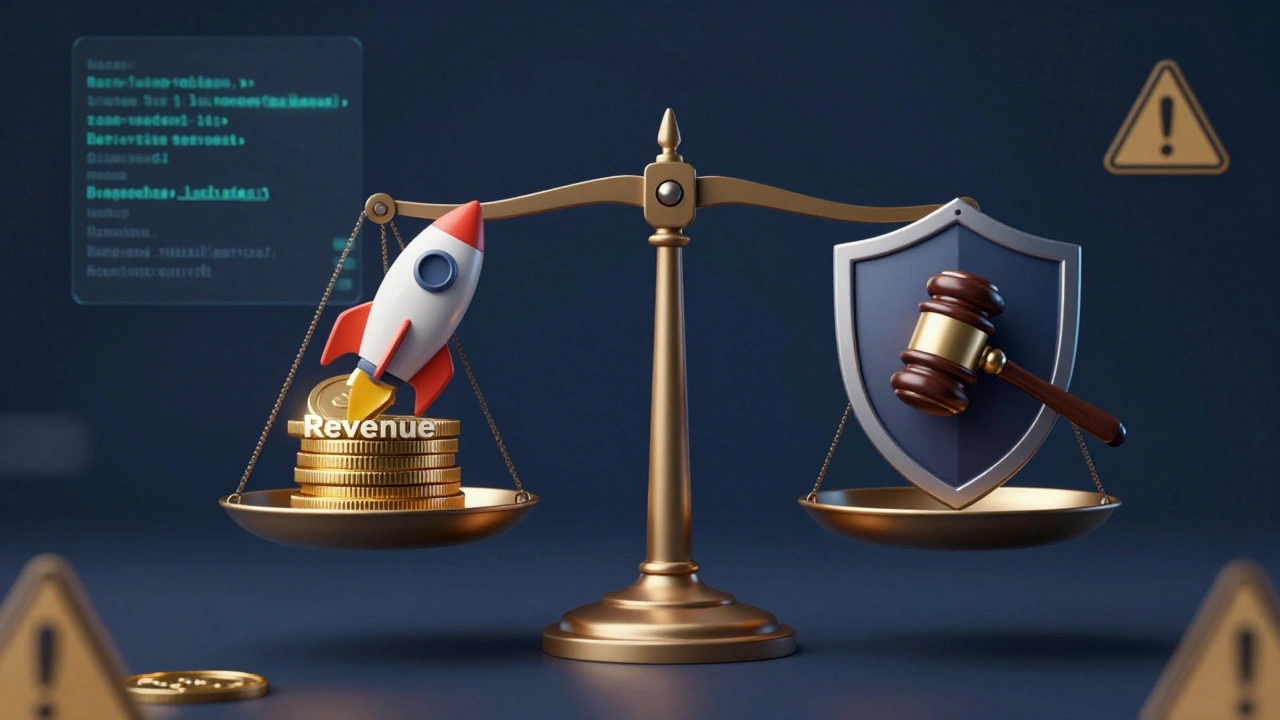
Risks and Regulatory Challenges
It’s not all smooth sailing. The crypto space is rife with scams, and associating your trusted news brand with a shady token could destroy your reputation overnight. Blockworks warned in April 2024 that copycat projects appeared within weeks of Notcoin’s success, many promising unrealistic returns.
Regulators are also watching closely. In the U.S., the SEC fined Telegram $18.5 million in 2020 for its initial TON token sale, deeming it an unregistered security. In the EU, the Markets in Crypto-Assets (MiCA) regulation, which began phasing in during 2024, imposes strict rules on token issuance. If your news game involves staking tokens for uncertain rewards, it might be classified as gambling or a security offering.
Mitigation Strategy:
- Audit Smart Contracts: Never deploy code without a third-party security audit.
- Use Stablecoins or Stars: Avoid volatile tokens for direct payments to reduce financial risk for users.
- Clear Disclaimers: Explicitly state that rewards are not financial advice and may fluctuate in value.
- Legal Review: Consult with lawyers specializing in digital assets before launching any token-related feature.
Getting Started: A Practical Checklist
If you’re ready to experiment, here is how to begin without blowing your budget.
- Define Your Goal: Are you trying to grow your subscriber base (use quests)? Or generate direct revenue (use Stars purchases)? Start with one clear objective.
- Build a MVP (Minimum Viable Product): Hire 1-3 developers familiar with TypeScript and the Telegram Bot API. Build a simple quiz or tap-to-earn mechanic. Do not build a complex RPG yet.
- Integrate Wallets: Use established wallets like @wallet or Tonkeeper. Do not try to build your own custody solution.
- Test with a Small Audience: Roll out the game to a subset of your Telegram channel subscribers. Measure retention and completion rates.
- Iterate: Based on feedback, add features like leaderboards, social sharing, or sponsor quests.
Development costs for a basic mini-app can range from $10,000 to $50,000 if you hire a specialized studio, or significantly less if you use open-source templates from the TON ecosystem. Compare this to the $500,000+ cost of a native mobile app, and the ROI becomes clear.
The Future Outlook
Experts predict that 2025-2026 will be the scaling phase for Telegram’s super app evolution. Binance Square’s analysis suggests that hundreds of millions of users will enter web3 experiences through Telegram. For news organizations, the window of opportunity is open now. The format is still novel, and user acquisition costs are subsidized by ecosystem grants.
The goal isn't to become a gaming company. The goal is to meet your audience where they are, speak their language, and offer them value in a format they enjoy. By blending journalism with interactive, reward-driven experiences, you can build a sustainable revenue stream that doesn't rely solely on ads or subscriptions. The technology is ready. The audience is there. The question is simply whether you have the courage to try.
Is it legal for news organizations to issue crypto tokens on Telegram?
It depends on your jurisdiction. In the EU, you must comply with MiCA regulations, which differentiate between utility tokens and securities. In the US, the SEC has historically viewed many token sales as unregistered securities. Always consult with legal counsel specializing in digital assets before issuing any token. Using non-transferable points or Telegram Stars is generally safer and more compliant.
How much does it cost to develop a Telegram mini-app for news?
Costs vary widely. A simple quiz or tap-to-earn game built by a small freelance team can cost between $5,000 and $20,000. More complex apps with full blockchain integration, smart contracts, and custom graphics can range from $20,000 to $50,000+. Using white-label solutions or open-source templates from the TON ecosystem can significantly reduce these costs.
Do I need my audience to know about crypto to use these features?
No. One of the biggest advantages of Telegram mini-apps is the abstraction layer. Users can log in with their Telegram account and use Telegram Stars or integrated wallets like @wallet without needing to understand private keys or seed phrases. The experience feels like a standard mobile game, not a crypto exchange.
What is the difference between Telegram Stars and TON tokens?
Telegram Stars are a centralized in-app currency purchased through Apple or Google, designed to comply with app store policies. They are ideal for buying digital goods within mini-apps. TON is a decentralized cryptocurrency on the TON blockchain. TON is better suited for peer-to-peer transfers, tipping, and holding value, but it cannot be used directly for in-app purchases on iOS due to Apple’s restrictions.
Can I use Telegram mini-apps to replace my current subscription model?
Not necessarily, but you can complement it. Mini-apps are great for engaging casual readers and converting them into paying users. You can use the game as a funnel: offer free content in the game, then upsell users to a paid newsletter or premium membership for deeper analysis. Think of it as a top-of-funnel engagement tool rather than a direct replacement.