Millions of people around the world still use feature phones-simple, affordable devices with tiny screens, slow processors, and barely enough memory to run basic apps. In places like rural India, parts of Africa, and Southeast Asia, these phones aren’t relics-they’re lifelines. And yet, most messaging apps, including Telegram, are built for high-end smartphones with big screens, fast chips, and endless battery life. So what happens when someone on a KaiOS phone tries to follow a news channel on Telegram? Do they get the same experience? Or does the content just break, load slowly, or vanish entirely?
The answer isn’t simple. Telegram doesn’t advertise a special "feature phone mode." But it does quietly support devices like KaiOS and Mocor S30+ phones. That’s not luck. It’s a deliberate choice. Telegram’s founders know that if the app only works on iPhones and Samsung Galaxies, it leaves out huge swaths of the world. And that’s a problem for a platform that claims to be open, uncensored, and global.
How Telegram Works on Old Devices
Telegram doesn’t shrink its full smartphone app to fit a 2-inch screen. That would be impossible. Instead, it strips everything down. The version running on a feature phone isn’t a dumbed-down version of the app-it’s a completely different codebase. Built on MTProto, Telegram’s custom protocol, this lightweight client only downloads what’s absolutely necessary: text, small images, and maybe one video per day. No animations. No auto-play. No rich media previews. No mini-apps.
Think of it like a text-only newspaper. You get headlines, short summaries, and links to full stories. On a feature phone, Telegram news channels show only the first 100-150 characters of each post. If there’s an image, it loads as a tiny thumbnail. Videos? You can’t watch them unless you tap to download, and even then, only if you’re on Wi-Fi. The app doesn’t even try to show story covers or frame selection. Those features? They’re for phones with touchscreens and 6GB of RAM.
This isn’t just about saving bandwidth. It’s about speed. On a 2G network, loading a full Telegram message with embedded media can take 15 seconds. On a feature phone, that’s too long. So the app waits. It loads text first. Then, if you scroll down and actually tap on the image, it fetches it. That’s called lazy loading-and it’s the only way this works without freezing the device.
What Gets Cut Out
Here’s what you won’t find on a feature phone version of Telegram:
- No live stories with auto-advancing frames
- No interactive polls or quizzes
- No mini-apps, games, or Web3 integrations
- No voice messages (unless manually downloaded as audio files)
- No location sharing or motion tracking
- No dark mode toggle (the screen is too dim to need it)
- No emoji reactions with animations
That sounds limiting, right? But here’s the thing: people on these devices don’t miss what they never had. They care about one thing: getting the news fast, without waiting, without data bills, without crashes. A text update saying "Floods hit Bihar-200+ homes affected" is more useful than a 30-second video with background music they can’t hear.
Telegram’s engineers know this. They don’t try to make feature phones behave like iPhones. They make them behave like radios. A broadcast that delivers clear, concise information, not entertainment.
Why This Matters in Emerging Markets
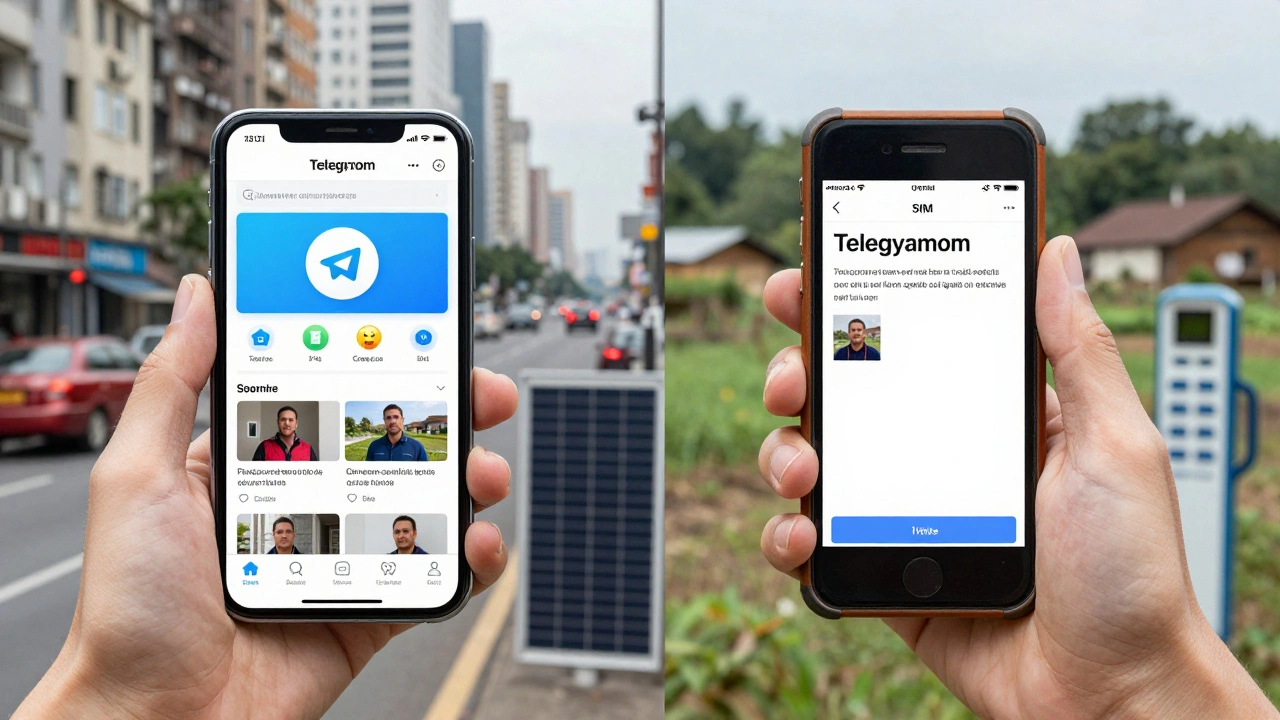
In Nigeria, 40% of mobile users still rely on basic phones. In Indonesia, 35% of rural households use feature phones. These aren’t fringe users-they’re the majority. And in places where internet access is patchy and data is expensive, Telegram becomes the primary source of news because it’s free, encrypted, and doesn’t need constant connectivity.
Compare that to WhatsApp. WhatsApp on feature phones is almost unusable. It keeps trying to load media, sync chats, and update status updates-all of which drain the battery and eat up data. Telegram doesn’t. It lets users control what downloads. You tap "View Image"-only then does it pull the file. You choose when to consume data. That’s power.
Local news channels in Bangladesh, Kenya, and the Philippines have started optimizing their Telegram posts for these users. They write short headlines. They avoid long paragraphs. They use simple punctuation. They send updates in the morning and evening-times when network traffic is low. Some even send the same message twice: once as text, once as a single image with the text overlaid. That way, if the text doesn’t load, the image might.
The Trade-Offs
There’s no free lunch. Telegram’s approach has downsides.
First, it’s not consistent. The KaiOS app works well. The Mocor S30+ version? Still in development. That means users on similar devices get different experiences. One person gets news instantly. Another gets a blank screen. That’s frustrating.
Second, there’s no feedback loop. Telegram doesn’t tell you how many feature phone users are reading your channel. You can’t see analytics. You don’t know if your message reached them. That makes it hard for news organizations to adapt.
Third, updates are slow. While Telegram rolled out live stories, TON integration, and Chromecast support in early 2026, there’s been zero mention of feature phone improvements. That’s telling. The company is focused on the future-on rich media, on monetization, on advanced users. The past? It’s being maintained, not upgraded.
What News Publishers Should Do
If you run a Telegram news channel and want to reach users on older devices, here’s what actually works:
- Keep posts under 200 characters. Anything longer gets cut off.
- Use only one image per message. Make it small-under 100KB.
- Avoid emojis. They add bloat. Use words instead.
- Send updates during off-peak hours: 6-8 AM or 8-10 PM local time.
- Test your posts on an old Android phone or a KaiOS device. If it takes more than 5 seconds to load, rewrite it.
- Don’t rely on links. Many feature phones can’t open web pages. Put the info in the message.
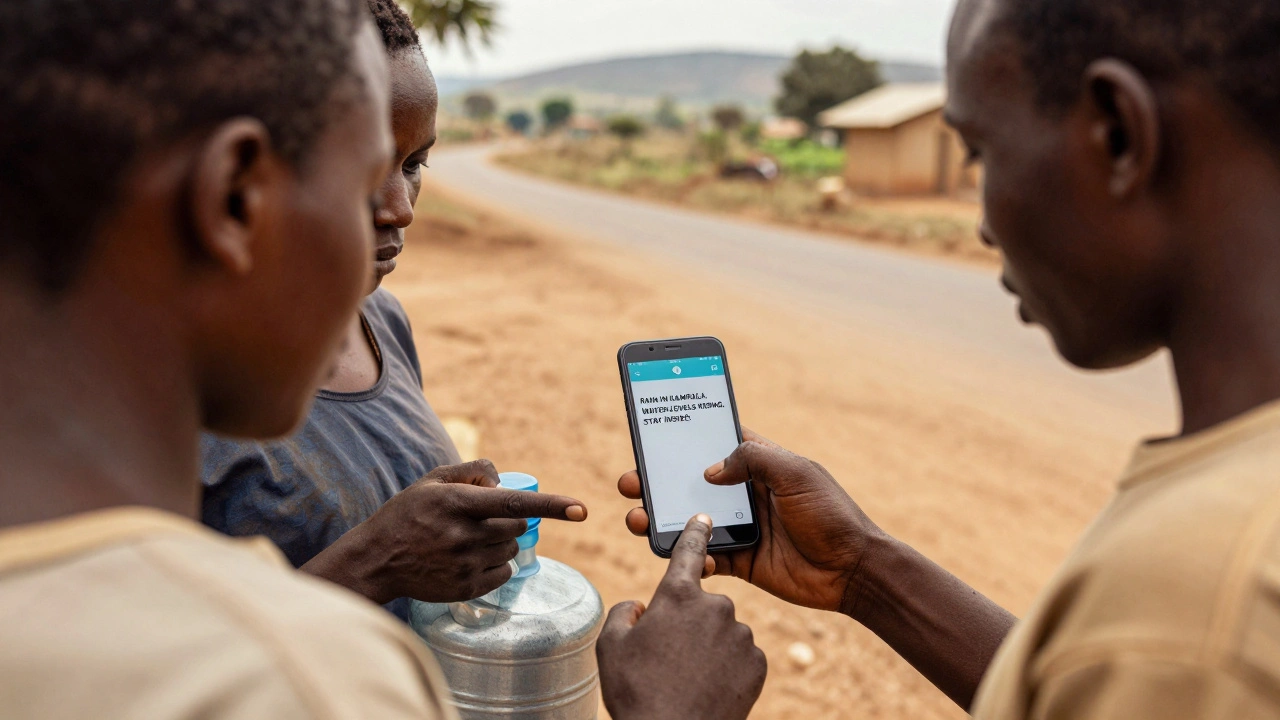
Some publishers are already doing this. In Uganda, a community news group sends daily updates in Swahili, using only uppercase letters and periods. No caps in the middle of sentences. No fancy formatting. Just: "RAIN IN KAMPALA. WATER LEVELS RISING. STAY INSIDE."
It’s not glamorous. But it saves lives.
The Bigger Picture
Telegram’s support for feature phones isn’t a feature-it’s a necessity. In a world where tech companies chase the next billion-dollar market, Telegram is quietly serving the billion who don’t have smartphones. That’s not charity. It’s strategy. The next wave of internet users won’t come from Silicon Valley. They’ll come from villages with solar-powered phones and shared SIM cards.
If you’re building a news service, don’t assume everyone has a modern device. Build for the lowest common denominator. Text first. Image second. Video last. And if your content can’t load in under 3 seconds on a 2G connection, it’s not news-it’s noise.
Can you watch videos on Telegram with a feature phone?
You can’t watch videos automatically. Telegram on feature phones only lets you download video files manually, and only if you’re connected to Wi-Fi. Most users skip videos entirely because they’re too slow and use too much data. Text and images are the only reliable formats.
Is Telegram better than WhatsApp for feature phones?
Yes, for news delivery. WhatsApp tries to sync everything-media, status updates, voice messages-which drains battery and data. Telegram lets you control what downloads. You tap to view, not the app auto-loading. That makes it far more usable on low-end devices.
Do Telegram news channels work on KaiOS?
Yes. KaiOS has an official Telegram client that runs smoothly. It supports text, small images, and basic channel browsing. But it doesn’t support stories, polls, or mini-apps. The experience is simple, reliable, and focused on text-based updates.
Why doesn’t Telegram add more features for older devices?
Because the engineering effort doesn’t match the payoff. Feature phone users are a small fraction of Telegram’s total audience. The company prioritizes features that serve millions-like live stories and Web3 integration. Older devices get basic, stable support, not upgrades.
How can I test if my Telegram news post works on a feature phone?
Use an old Android phone (like a Nokia 3.1 or Samsung J2), install Telegram from telegram.org, and send your message. If it loads in under 5 seconds, it’s good. If it freezes or shows blank spaces, simplify it. Remove images, shorten text, avoid formatting.
Feature phones aren’t going away. In fact, they’re growing in places where smartphones are too expensive. Telegram’s quiet support for these devices is one of the most important-but least talked about-parts of its global mission. The future of news isn’t just on screens. It’s on the small, cracked, solar-charged displays of people who can’t afford a new phone. And that’s where the real impact happens.