When you run a news channel, knowing how your content performs isn’t just nice to have-it’s essential. Are people reading your updates? Are they sharing them? Are they even seeing them at all? That’s where analytics come in. But not all platforms give you the same kind of data. Telegram offers a different kind of insight compared to dashboards on Medium, Substack, or even Twitter/X. Let’s break down what you actually get on each side-and why it matters for real news publishers.
What Telegram Actually Tracks
Telegram doesn’t hide its metrics behind a wall of ads or algorithmic noise. If you run a news channel, you get a clean, straightforward view of what’s happening. The built-in analytics show you exactly how many messages were sent, how many were delivered, and how many were read. That’s it. No guesswork. No engagement scores based on likes or shares. Just raw numbers.
For example, if you post a breaking news update at 8 a.m. and see 8,700 delivered but only 4,100 read, you know something’s off. Maybe your audience is asleep. Maybe the headline didn’t grab attention. Maybe your subscribers are on slower networks and the message took too long to load. You can’t fix what you can’t measure-and Telegram gives you that baseline.
Third-party tools like TGStat and Combot layer on top of this. They track subscriber growth over time, peak reading hours, and even how many people forward your posts to other channels. That’s gold for news outlets trying to understand reach beyond their own list. A local news channel in Asheville saw a 32% spike in forwards after switching to morning posts-something they’d never have noticed without TGStat’s daily reports.
How Other Platforms Compare
Compare that to Substack. Their dashboard shows open rates, click-throughs on links, and even how long readers spend on each article. But here’s the catch: you only see that data if readers open the email. If they delete it without opening, or if it lands in spam, you get zero insight. And if someone reads your newsletter on their phone but never clicks a link, you don’t know if they scrolled all the way to the bottom.
Medium is even more opaque. You get views, reads, and reactions-but you don’t know who they are. Is that 5,000-view article from one viral tweet? Or 500 loyal readers sharing it five times each? Medium doesn’t say. And if your audience is mostly on Telegram, you’re blind to half your impact.
Twitter/X gives you impressions, engagements, and retweets-but those numbers are wildly inflated by bots, algorithmic amplification, and shadow bans. A post with 12,000 impressions might only have reached 800 real people. And if the algorithm changes overnight (as it did in 2023), your entire distribution strategy collapses. That’s not analytics. That’s gambling.
Why Predictability Matters for News
News moves fast. You can’t afford to wake up one day and find your audience cut in half because a platform changed its rules. Telegram doesn’t change its delivery rules. If you have 10,000 subscribers, your message reaches all 10,000-every time. No algorithm decides who sees it. No ad auction bids against your post. No promotion of influencers over your breaking story.
This predictability turns analytics into a planning tool. You can schedule posts knowing exactly when your audience is most active. You can test headlines without fear of being buried. You can measure whether a topic trended because it was important-or because a celebrity tweeted it. That kind of control is rare.
What You Can’t Measure on Telegram
Don’t get it twisted-Telegram isn’t perfect. It doesn’t tell you if someone paused on your headline for 15 seconds. It doesn’t track scroll depth. It doesn’t show you heatmaps of where readers clicked. If you’re used to the granular data from a website dashboard or Google Analytics, Telegram feels barebones.
But that’s the point. News isn’t about optimizing for engagement metrics. It’s about delivering truth, clearly and reliably. If your goal is to know how many people saw your report on local flooding, not how many liked it, then Telegram’s simplicity becomes its strength.
Real-World Use Cases
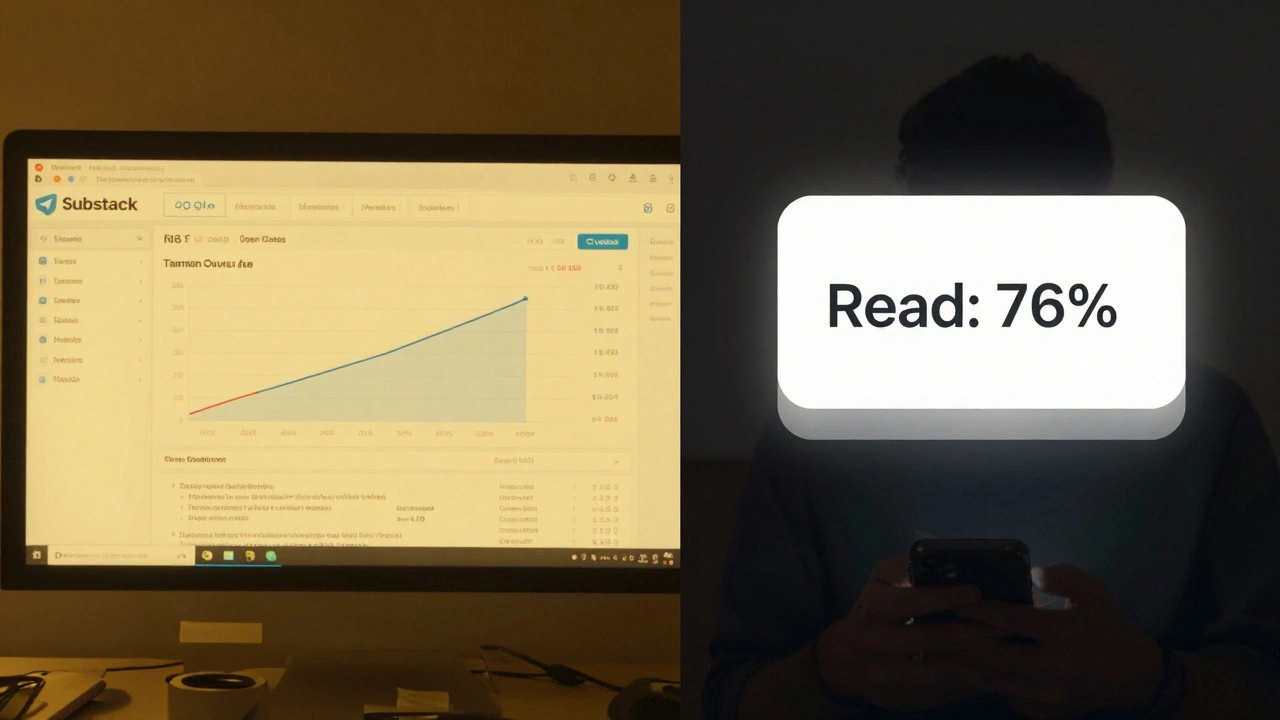
A small-town news site in North Carolina switched from email newsletters to Telegram after their open rates dropped to 18%. Within three months, their read rate hit 76%. Why? Because their readers were tired of sifting through newsletters filled with ads and sponsored content. Telegram gave them a clean, ad-free feed-and the analytics told them exactly how many people were actually reading.
Another example: a community watchdog group in Michigan used TGStat to track which stories got forwarded the most. They noticed that reports on school board meetings were shared 5x more than crime stats. That told them what their audience cared about-and they adjusted their coverage accordingly. No focus groups. No surveys. Just data.

When to Use Which Tool
- Use Telegram if you want to know who’s reading, when, and how often-without interference.
- Use Substack if you’re monetizing through paid subscriptions and need to track reader retention.
- Use Medium if you’re trying to build a personal brand and want visibility beyond your own list.
- Use Twitter/X if you’re chasing viral reach-but accept that you’re playing a game you don’t control.
Most serious news operations use a mix. They publish on Telegram for reliability, link to Substack for paid content, and use Twitter/X for discovery. But the core analytics-the ones that tell you if your journalism is actually being consumed-come from Telegram.
The Bottom Line
Telegram’s analytics might look simple. But for news, simplicity is power. You don’t need to know how many hearts a post got. You need to know how many people read it. You don’t need to chase trends. You need to trust your audience will find you. And you need data that doesn’t lie.
If you’re running a news channel, ask yourself: Do you want to optimize for algorithms-or for readers? Telegram doesn’t try to win you over with flashy charts. It just shows you the truth. And in journalism, that’s worth more than any dashboard.
Does Telegram show who specifically read my news posts?
No, Telegram doesn’t reveal individual reader identities. It only shows aggregate numbers: total messages sent, delivered, and read. This protects privacy while still giving you enough data to track trends. If you need to identify individual subscribers, you’d need to ask them directly or use a third-party tool that integrates with your own database.
Can I see how long readers spend on my Telegram news posts?
No, Telegram doesn’t track time spent reading. Unlike website analytics tools, it can’t detect if someone scrolled through your message or just glanced at it. However, if a message is read by 80% of your subscribers, it’s a strong signal that your content is engaging-even without knowing exactly how long they read.
Are Telegram analytics better than Substack’s for breaking news?
For breaking news, Telegram’s analytics are often more reliable. Substack relies on email opens, which can be delayed or blocked. Telegram delivers instantly and shows real-time read rates. If you need to know whether your audience saw your alert within minutes, Telegram gives you that clarity. Substack is better for long-form analysis, not speed.
Do I need third-party tools like TGStat to get useful analytics?
You don’t need them, but you’ll get more value from them. Telegram’s native stats tell you what happened. TGStat and Combot help you understand why. They show growth trends, peak activity times, and how often your content is forwarded-which is a key indicator of trust in news communities. For serious publishers, these tools are worth the free tier or low-cost upgrade.
Can I track referral traffic from Telegram to my website?
Yes, using UTM parameters. Add tags like ?utm_source=telegram&utm_medium=newsletter to links in your posts. Then check Google Analytics or similar tools to see how much traffic comes from Telegram. This lets you connect Telegram’s reach to your website’s performance-giving you a fuller picture of your audience’s behavior.
Latest Posts