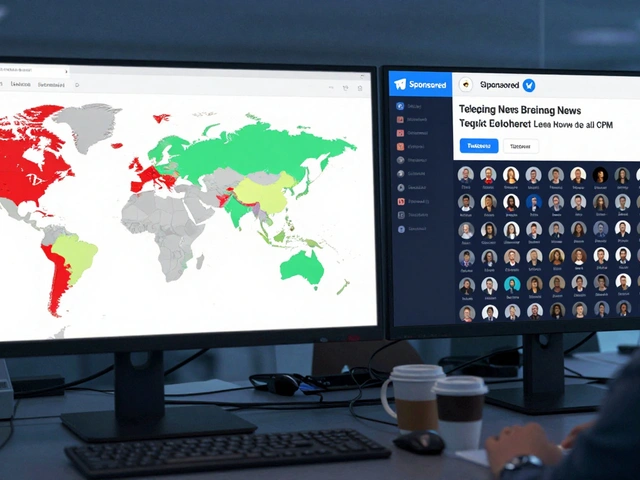
Telegram isn't just another messaging app. With over 1 billion active users, it's become a primary channel for breaking news, citizen journalism, and political discourse - especially in regions where traditional media is restricted. But that scale comes with a legal minefield. When a Telegram channel spreads false claims about an election, incites violence, or leaks private data under the guise of "investigative reporting," who decides what gets removed? And more importantly, how do you make those calls without getting sued?
That’s where legal playbooks come in. A legal playbook isn’t just a list of rules. It’s a decision engine. It tells moderators exactly what to do when they see a post that could trigger a lawsuit, a government investigation, or international backlash. And for Telegram news channels, this isn’t optional anymore. With Russia banning the app in April 2026 and the European Parliament demanding accountability, platforms can no longer hide behind "we don’t moderate" excuses.
Why News Content on Telegram Is Different
Not all content on Telegram is the same. A meme about cats? Low risk. A channel sharing unverified claims about a school shooting? High risk. News content sits in a dangerous gray zone. It’s often presented as factual, even when it’s not. It’s shared by trusted sources - journalists, activists, whistleblowers - who may not even realize they’re spreading misinformation.
Here’s what makes news moderation uniquely hard:
- It’s framed as public interest - making it harder to remove without backlash
- It often contains partial truths, making it legally ambiguous
- It can be tied to real-world events - delays in moderation can lead to violence or panic
- It’s frequently reposted across channels, making takedowns a game of whack-a-mole
Telegram’s own Terms of Service say they remove content that promotes terrorism, child exploitation, or illegal sales. But what about defamation? False emergency alerts? Fabricated political statements? These aren’t covered clearly. That’s where your playbook steps in.
The Core Components of a Legal Playbook
A legal playbook for Telegram news moderation needs four pillars:
- Legal Thresholds - What laws actually apply?
- Decision Triggers - What specific content patterns require action?
- Escalation Paths - Who do you involve when it gets messy?
- Documentation Rules - How do you prove you acted reasonably?
Legal Thresholds aren’t about Telegram’s policies. They’re about real laws. In the EU, the Digital Services Act (DSA) requires platforms to act on illegal content within 24 hours. In the U.S., Section 230 protects platforms from liability - but only if they act in "good faith." In Russia, simply not removing content labeled "extremist" by authorities can lead to criminal charges against platform operators. Your playbook must list which jurisdictions matter most and what each one requires.
Decision Triggers are your red flags. These aren’t vague phrases like "harmful content." They’re specific patterns:
- News channel posts claiming a public figure is dead - with no verified source
- Posts with timestamps matching real-time events but showing footage from unrelated incidents
- Channels that only post during political crises - and never correct errors
- Content that matches known disinformation patterns from state-backed actors
Each trigger gets a color code: red (remove immediately), yellow (flag for review), green (leave up). This removes guesswork.
Escalation Paths ensure you don’t act alone. If a news channel accuses a government official of corruption with no evidence, your moderator shouldn’t decide alone. The playbook should say: "If content involves a sitting official in the EU or U.S., escalate to legal team within 1 hour. If the channel has over 50,000 subscribers, notify compliance officer before action."
Documentation Rules are your shield. Every decision must be logged: what was seen, when, who reviewed it, why the action was taken, and what legal standard was referenced. This isn’t bureaucracy - it’s legal insurance. If Russia sues you for removing a channel, you need to show you followed a clear, documented process based on international standards.

Real Examples from 2025-2026
In November 2025, a Telegram channel in Ukraine claimed that Russian forces had bombed a children’s hospital in Kyiv. The video looked real. Thousands shared it. Within 90 minutes, Telegram’s moderation team pulled it - not because they confirmed it was fake, but because the video’s metadata showed it was filmed in 2022, and the location didn’t match the claimed event. Their playbook had a trigger: "Historical footage repurposed as current event." They removed it, documented the metadata analysis, and posted a public note explaining why. No lawsuit followed.
In January 2026, a Russian Telegram channel shared a leaked document claiming a European Parliament member was on a Russian payroll. The document was authentic - but it was taken out of context. The member had been paid for a 2019 consulting gig, not for political influence. Telegram’s team didn’t remove it. Why? Their playbook had a rule: "Authentic documents with factual claims are not illegal unless they contain false context or intent to deceive." They added a pinned comment with the full context. The channel kept growing - but now it was transparent.
These aren’t perfect solutions. But they’re defensible. And in 2026, defensible is the only thing that keeps you from being shut down.
How to Build Your Playbook - Step by Step
Building this isn’t something you do in a week. Here’s how to start:
- List your jurisdictions - Where are your users? Where are your servers? Where are your regulators? Focus on the top 5.
- Map the laws - What content is illegal in each? Defamation? Incitement? False alarms? Make a table. Don’t guess.
- Interview moderators - What posts do they struggle with? What mistakes have they made? Their real-world experience is gold.
- Build triggers - Turn those struggles into clear, observable patterns. Use metadata, posting behavior, language patterns.
- Define escalation - Who needs to sign off? Legal? PR? Compliance? Set clear timelines.
- Test it - Run mock scenarios. What happens if a channel spreads false info about a natural disaster? What if it’s a celebrity? What if it’s a war zone?
- Review quarterly - Laws change. New platforms emerge. Your playbook must evolve.
Don’t try to cover everything. Start with the top three risks: false emergencies, political disinformation, and doxxing disguised as journalism. Master those. Then expand.
The Cost of Not Having One
Telegram blocked over 34 million groups and channels in 2025. That’s not because they’re heavy-handed. It’s because they’re reactive. Without a playbook, every decision is a crisis. Every removal is a gamble. Every delay is a lawsuit waiting to happen.
Russia’s 2026 crackdown didn’t target big platforms because they were evil. They targeted them because they were unprepared. If you’re moderating news on Telegram and you don’t have a legal playbook, you’re not protecting your users - you’re exposing yourself.
The best playbooks don’t look like legal documents. They look like flowcharts. They’re simple. They’re fast. They’re grounded in real law, not vague ideals. And they’re the only thing standing between your platform and being banned - or worse, sued.
What Happens Next?
By April 2026, Telegram will be banned in Russia. The EU will likely pass new rules forcing platforms to use AI-assisted moderation for news content. The U.S. Congress is debating whether to remove Section 230 protections for platforms that don’t have documented moderation policies.
There’s no going back. The age of "we don’t moderate" is over. The next wave of digital media won’t be ruled by algorithms - it’ll be ruled by legal frameworks. And the teams that survive will be the ones who built their playbooks before the law caught up.
Do I need a legal playbook if I only run a small Telegram news channel?
Yes. Even small channels can be targeted by regulators if they spread illegal content. A legal playbook isn’t just for big companies - it’s for anyone who wants to avoid being shut down or sued. A simple 5-point checklist (e.g., "Verify source before posting," "Remove false emergency claims within 2 hours," "Document all removals") can protect you.
Can I use Telegram’s official moderation guidelines as my playbook?
No. Telegram’s public guidelines are vague and legally incomplete. They focus on terrorism and child exploitation, but say nothing about defamation, false reporting, or political disinformation - which are the biggest legal risks for news channels. Relying on them leaves you exposed.
What if my country doesn’t have clear laws about Telegram moderation?
Then you follow international standards. The EU’s Digital Services Act, U.S. Section 230 good faith standards, and UN guidelines on disinformation are widely recognized. Use those as your baseline. If you’re operating globally, you have to comply with the strictest applicable rules - not the weakest.
How often should I update my legal playbook?
At least every three months. Laws change fast. In 2025, Russia had 3 major legal shifts affecting Telegram. In early 2026, the EU added new reporting requirements. If you’re not reviewing your playbook quarterly, you’re already behind.
Can AI replace human moderators in a legal playbook?
No. AI can flag content - but it can’t understand context. A post saying "The president is dead" could be satire, a rumor, or a real emergency. Only a human, guided by clear legal rules, can make that call. AI is a tool - not a replacement. Your playbook must include human review steps for all high-risk content.