When you post a news update on Telegram, how do you know if it’s actually being seen, shared, or cared about? Unlike Instagram or TikTok, where algorithms decide who sees what, Telegram gives you raw access to your audience. But that doesn’t mean every post performs the same. Some news topics spark conversations. Others vanish into silence. So what’s really working? Let’s break down the numbers behind Telegram news channels in 2026.
What Engagement Really Looks Like on Telegram
Engagement on Telegram isn’t just likes or comments. It’s forward rate, reactions, replies in linked groups, and even how often people open a message after it lands. The average Telegram channel sees about 20% engagement - meaning one in five subscribers interact with each post. But that number is misleading. It’s an average pulled from thousands of channels, including tiny personal blogs that get muted 65% of the time. The real story lies in what kind of news you’re sharing.Take educational content. It leads the pack with a 12% forward rate. That’s not just sharing - it’s people saying, “You need to see this.” And it’s growing fast. Since 2022, educational channels have gained 50% more subscribers. Why? Because users treat them like reference tools. A breakdown of climate policy? A clear explanation of AI regulation? People save those. They forward them. They come back for more.
How Different News Topics Stack Up
Not all news is created equal. Here’s what the data shows across major categories:- Politics: High initial spikes during elections or scandals, but low retention. Engagement drops fast after the headline fades.
- Technology: Steady 8-10% forward rate. Especially strong around product launches (like new AI tools or chip releases). Comments are detailed and technical.
- Business & Finance: Engagement spikes with market moves. A 3% drop in crypto prices can trigger 5x more reactions than a regular update. But outside volatility, it’s quiet.
- International News: Surprisingly low engagement unless tied to war, migration, or major disasters. Even then, it’s mostly passive views - not sharing.
- Sports: Engagement jumps 300% during major events like the World Cup or Olympics. Outside those windows, it’s nearly dead. This isn’t a daily news category - it’s event-driven.
- Crypto: The outlier. Saw 600% growth during the 2021 bull run. Still active today, but engagement is now volatile and emotionally charged. Reactions are polarized - love or hate, rarely neutral.
The strongest performers? Those that combine clarity with utility. A post that explains how a new law affects small businesses gets more forwards than a dozen opinion pieces on political drama.
What Makes a Post Stick - Beyond the Topic
Your topic matters. But your format matters more.Channels that link a discussion group see double the engagement. Why? Because people don’t just want to read - they want to argue, ask questions, and feel part of a community. A news post without a comment thread is like a radio broadcast with no call-in line.
Pinned messages? They boost link clicks by 40%. If you’re sharing a report, a video, or a live update, put it at the top. Users scroll fast. Don’t make them hunt.
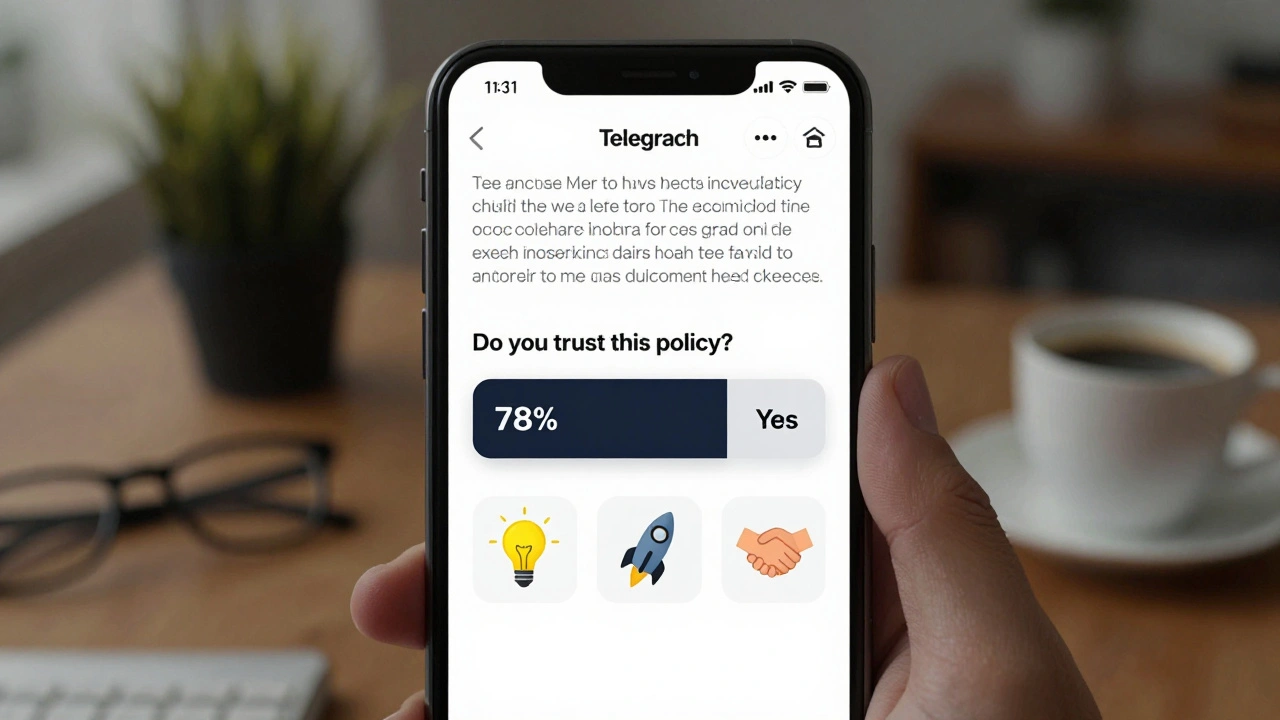
Polls are underrated. Channels using them see 25% more interaction. Asking “Do you think this policy will help?” isn’t just data collection - it’s a hook. It turns readers into participants.
Video messages outperform text by 10% in retention. A 30-second voice note explaining a complex topic sticks better than a 500-word article. And animated stickers? They get 3x more reactions than static ones. Visuals aren’t decoration - they’re engagement tools.
Who’s Really Using Telegram for News
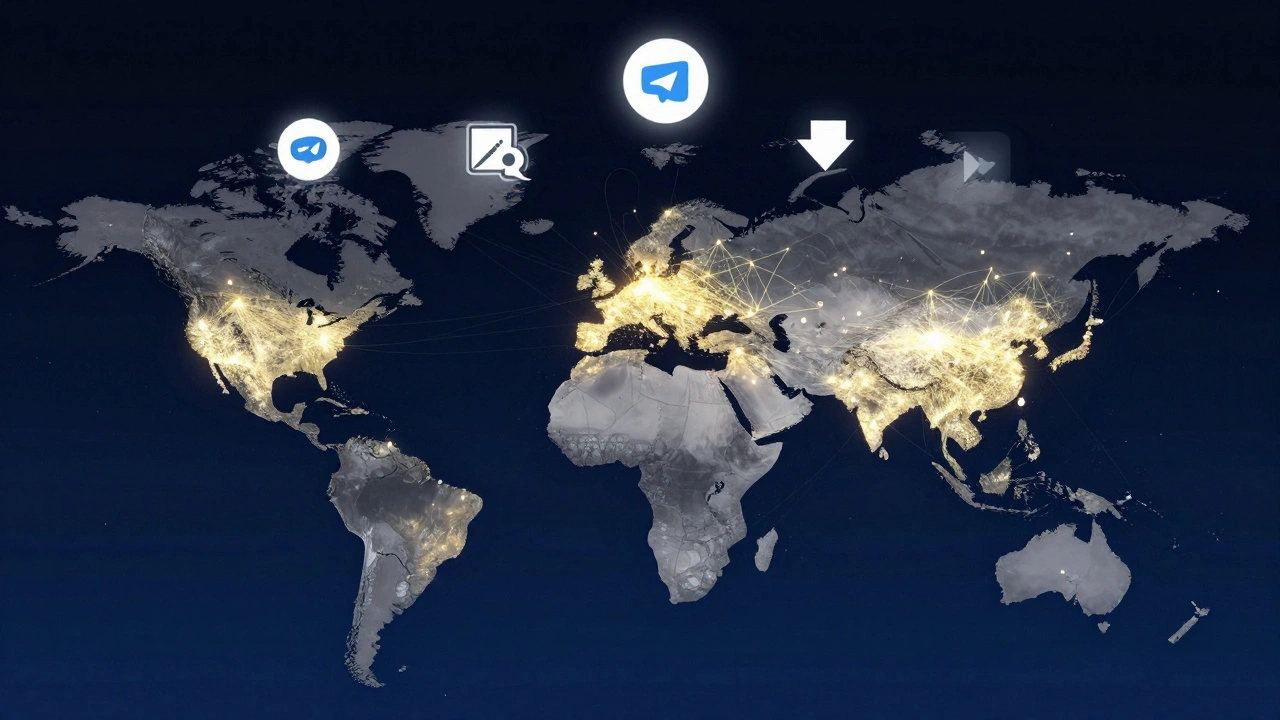
Telegram’s user base isn’t evenly spread. Over 100 million users are in India - and they’re the most active. In Ukraine, 60% of people rely on Telegram as their main news source. In the U.S., only 9% use it regularly. That means if you’re targeting American audiences, you’re competing with Facebook, Twitter, and email newsletters. But if you’re covering global issues, Telegram’s reach is unmatched.The core demographic? Ages 25-34. These are people with stable internet access, high mobile usage, and low tolerance for fluff. They’re not chasing trends - they’re hunting for truth. And they’re willing to forward content that helps them understand the world.
Why Telegram Beats Other Platforms for News
Telegram doesn’t hide your posts. No algorithm decides if your news is “engaging enough.” If you post it, your subscribers see it. That’s huge. On other platforms, you’re fighting for attention. On Telegram, you’re building trust.And monetization helps. Ad revenue on Telegram is 50-90% cheaper than on Meta or Google - but engagement rates are just as high, if not higher. That’s why so many news channels are turning to ads. Channel owners keep 50% of ad revenue. That incentive drives quality. You can’t run a spammy news channel and expect to earn.
Telegram Premium, with 10 million subscribers as of late 2024, also plays a role. Premium users can share 4GB files, create longer polls, and manage bigger groups. These features make it easier for news channels to deliver deeper content - like full reports, datasets, or video archives.
What You Should Do Right Now
If you run a news channel, here’s what to test:- Start using polls in every third post. See which topics spark debate.
- Pin your most valuable link - whether it’s a report, video, or live update - to the top of your channel.
- Create a linked group. Even if it’s small. Engagement spikes when people can talk.
- Try one voice message per week. Record a 45-second summary of your top story. See if retention improves.
- Use animated stickers. They’re free, easy, and they work.
And stop chasing viral moments. Politics might spike during a scandal, but it doesn’t build loyalty. Education, tech, and business news? They build audiences over time. That’s the real win.
What’s Missing - And Why It Matters
Here’s the gap: we don’t have hard numbers comparing “climate news” vs. “health policy” vs. “tech regulation.” Telegram doesn’t release detailed analytics. So we’re working with patterns, not precise benchmarks.But that’s okay. You don’t need perfect data to improve. You just need to test. Track your own forwards. Watch your reactions. See which posts get replies in your group. That’s your real benchmark.
The platform is growing. 15 billion messages a day. 1 billion monthly users. And news channels are still the most powerful drivers of that activity. The question isn’t whether Telegram is worth it for news. It’s whether you’re using it right.
What’s the average engagement rate for Telegram news channels?
The average engagement rate across all Telegram channels is around 20%, meaning roughly one in five subscribers interact with each post. However, this number varies widely by topic. Educational and technology news often exceed 25%, while political or international news may hover near 10-15%. The key is not just the average - it’s whether your content drives forwards, reactions, or group discussions.
Which news topics get the most shares on Telegram?
Educational content leads in shares, with a forward rate of 12%. This includes explanations of policies, scientific updates, and how-to guides on tech or finance. Crypto news also sees high forwarding during market events, but it’s volatile. Technology news, especially around new tools or regulations, consistently performs well because users treat it as a resource, not just a headline.
Do polls really increase engagement on Telegram?
Yes. Channels that use polls see a 25% increase in user interaction. Polls aren’t just for data - they create participation. Asking “Do you trust this update?” or “Which solution makes more sense?” turns passive readers into active contributors. It’s a simple tool that builds community.
Is video better than text on Telegram news channels?
Video messages (voice or short clips) have a 10% higher retention rate than text. People are more likely to listen to a 30-second explanation than read a long paragraph. Especially on mobile, where attention spans are short, audio and visual formats cut through the noise. Text still works - but video helps you stand out.
Should I link a group to my Telegram news channel?
Absolutely. Channels with linked discussion groups see nearly double the engagement. People don’t just want to consume news - they want to discuss it. A group gives them space to ask questions, share opinions, and correct misinformation. It turns your channel from a broadcast into a conversation.
How does Telegram compare to WhatsApp or Signal for news?
Telegram is the only platform among these that supports public channels with unlimited subscribers, polls, pinned messages, and linked groups. WhatsApp and Signal are great for private sharing, but they lack the infrastructure for public news distribution. Telegram’s open structure, combined with its lack of algorithmic filtering, makes it uniquely suited for news organizations and independent publishers.
Are Telegram stories useful for news channels?
Telegram Stories have grown 150% since launch and can help with visibility, but they’re not ideal for in-depth news. Stories disappear after 24 hours, which works for updates or event highlights - like a live score or breaking announcement - but not for analysis or long-form reporting. Use them as supplements, not your main content.
If you’re serious about building a news presence on Telegram, stop guessing. Start measuring. Track what works. Double down on it. And remember - in a world full of noise, clarity and utility are the only things that last.