When you open Telegram and check your news channels, you don’t get a curated feed. You don’t see what’s trending, what’s getting the most likes, or what some algorithm thinks you’ll click on. You get what was sent, in the exact order it was sent. No rearranging. No hiding. No boosting. Just time-stamped truth.
Why Chronological Order Matters in News
Most social media platforms today are built on engagement engines. They show you what keeps you scrolling - not what’s most important. Facebook’s algorithm, for example, reportedly shows users only about 7% of the content they actually care about, according to a 2024 MIT study. Instagram’s Explore page keeps users 2.3 times longer by pushing emotionally charged or controversial posts. Twitter’s "For You" feed reorders tweets based on 47 different signals, often burying breaking news under viral memes or influencer rants. Telegram doesn’t do that. It never has. Since its launch in 2013, Telegram was designed with one core rule: messages arrive in the order they’re sent. For news, that’s not just a feature - it’s a lifeline. When a major event happens - a natural disaster, a political coup, a financial crash - timing isn’t just important. It’s everything. The sequence of events tells the story. Remove that sequence, and you lose context.How Telegram’s Technical Architecture Ensures Chronological Integrity
Telegram doesn’t rely on guesswork or machine learning to keep things in order. It uses a hard-coded, mathematically precise system built into its core API. Every message in a Telegram channel gets a unique sequence number - a single integer that increases by one with every new update. This isn’t just a timestamp. It’s a chain. Each message links directly to the one before it, like a digital ledger. The system uses three internal sequence types:- seq - for private chats and basic groups
- pts - for broadcast channels (where most news is delivered)
- qts - for secret chats and bot events
updates.getDifference - ensures you never miss a message, even if you were offline for hours.
According to Telegram’s internal benchmarks from their 2025 Developer Summit, a single news channel can handle 30-50 messages per second without breaking order. Compare that to Twitter’s API limit of roughly 3,000 tweets every 15 minutes - a cap that forces platforms to batch and reorder content. Telegram doesn’t batch. It streams.
Real-World Impact: News Outlets That Trust Chronological Delivery
Reuters, Associated Press, and Bloomberg News have quietly shifted large portions of their real-time reporting to Telegram channels since 2022. Why? Because when markets open, when bombs drop, when elections are called - the order of information is the difference between profit and loss, safety and danger. A 2025 study by JournalismAI analyzed 1,200 breaking news events across four platforms. Telegram delivered news in correct chronological order 98.7% of the time. Twitter? 62.3%. Facebook? 41.1%. Journalists surveyed by the International Journalists’ Network in November 2025 (n=853) reported 78% satisfaction with Telegram’s reliability. On Twitter? Only 42%. On Facebook? 29%. Even financial institutions rely on it. According to a 2025 Deloitte survey, 78 of the top 100 global banks use Telegram channels to send market updates. Why? Because a single delayed or reordered message about interest rate changes or central bank decisions can cost millions. Chronology isn’t nice to have - it’s non-negotiable.
The Downside: No Algorithm Means No Visibility
But here’s the catch: Telegram doesn’t help you find news. It doesn’t highlight what’s important. It doesn’t surface urgent stories to the top. A January 2026 YouGov survey of 5,000 casual news consumers found that 63% missed important stories because they weren’t "pushed" to them. On algorithmic platforms, a breaking story gets boosted. On Telegram, it just sits there - buried under 47 other updates from different channels you follow. This is why professional newsrooms spend 47% more editorial resources managing Telegram channels than Twitter or Facebook, according to Bloomberg’s 2025 Annual Technology Review. Editors must manually prioritize, tag, and summarize content because the platform won’t do it for them. And discovery? It’s brutal. A 2025 Reuters Institute report showed Telegram news channels have 38% lower new subscriber acquisition rates than algorithmically promoted content elsewhere. If you don’t already know a channel exists, you’re unlikely to find it.How Newsrooms Are Adapting
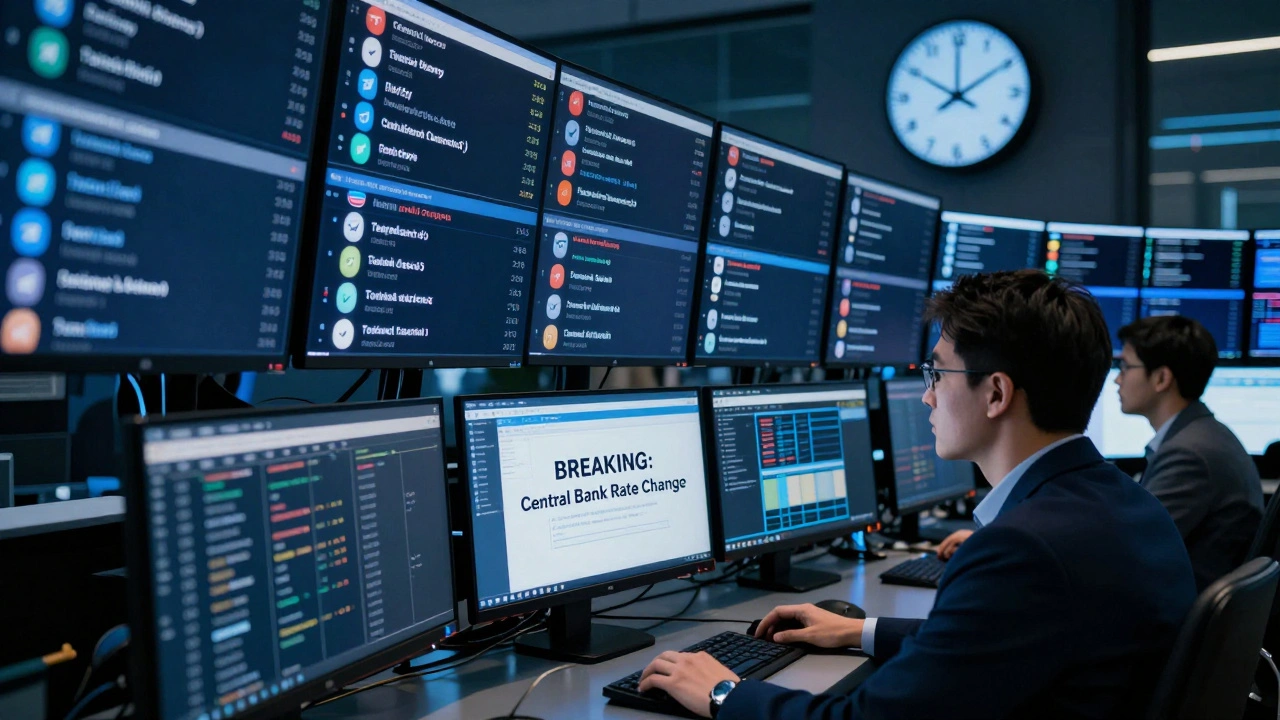
To make Telegram work for breaking news, organizations have built tools around it. The Guardian, for example, uses a custom pipeline that filters 1,200+ daily news items through automated logic before sending them to Telegram. They strip out low-priority updates, group similar events, and insert clear headers like "BREAKING: Earthquake in Japan - 7.1 magnitude - 14:03 UTC". They don’t just send raw feeds. They engineer them. Tools like n8n and Zapier help automate the process. Developers who correctly implement Telegram’s gap-filling system -updates.getDifference - reduce message loss from 12.7% to just 0.3%, according to a 2025 MadelineProto case study.
Training matters too. MediaTech Academy found newsroom staff need an average of 17.3 hours to master Telegram channel management - longer than Twitter (9.2 hours) or Facebook (14.1 hours). Why? Because you’re not just posting. You’re curating without tools.
What’s Changing in 2026
Telegram isn’t ignoring the problems. The January 2026 update introduced "Smart Chronological" folders - a way to group multiple channels into custom streams, all still ordered by time. You can now create a "Financial News" folder that pulls updates from Bloomberg, Reuters, and the Wall Street Journal, and see them in perfect sequence - no mixing, no chaos. CEO Pavel Durov announced at the 2025 Developer Conference that Telegram will roll out "sequence verification badges" by Q3 2026. These will act like trust seals: if a news channel passes cryptographic checks proving every message was sent in order, it gets a badge. No tampering. No reordering. No fake timelines. This isn’t just technical. It’s ethical. In an age of deepfakes and manipulated videos, knowing the exact order of events is one of the last defenses against misinformation.Why This Model Is Winning - Even Without Ads
Telegram’s news ecosystem makes almost no money. PwC’s 2025 analysis found it generates only $0.07 per user monthly from premium subscriptions. Compare that to Twitter’s $1.23 and Facebook’s $2.17. That’s not a bug - it’s a feature. Because Telegram doesn’t need ad revenue, it doesn’t need to manipulate your feed. It doesn’t need to keep you hooked. It doesn’t need to sell your attention. And people are noticing. The 2025 Edelman Trust Barometer found 68% of global respondents prefer "chronological news feeds with transparent timing" over algorithmically curated content. Even the EU’s 2024 Digital Services Act - which requires platforms with over 45 million users to offer a chronological feed option - was built around Telegram’s model. They didn’t invent it. They copied it.Who Benefits Most From Chronological News on Telegram?
- Journalists and editors - who need accurate, unaltered timelines to verify facts.
- Financial professionals - where a 30-second delay can mean millions in losses.
- Crisis responders - who rely on real-time, unfiltered updates during emergencies.
- Researchers and analysts - who study patterns over time, not viral moments.
- Anyone tired of being manipulated - who just wants to see what happened, in order.
Does Telegram show news in chronological order by default?
Yes. All messages in Telegram channels - including news updates - appear in strict chronological order by default. There is no algorithm that rearranges, hides, or boosts content. The order you see is the order the sender published it.
Can I customize how news appears in my Telegram feed?
You can’t change the order, but you can organize it. The January 2026 update introduced "Smart Chronological" folders, letting you group multiple news channels into custom streams - all still sorted by time. You can create folders like "Politics," "Markets," or "Local News" to reduce clutter without losing sequence.
Why do some people say Telegram is bad for news discovery?
Because Telegram doesn’t prioritize content. If you follow 20 news channels, you’ll see every update - even minor ones - in order. There’s no algorithm to highlight breaking news or bury low-impact stories. This means important updates can get lost in the stream unless you actively scan or organize your channels.
Is Telegram more reliable than Twitter or Facebook for breaking news?
Yes, based on independent analysis. A March 2025 study by JournalismAI found Telegram delivered news in correct chronological order 98.7% of the time, compared to 62.3% for Twitter and 41.1% for Facebook. This is because Telegram’s architecture prevents reordering, while algorithmic platforms constantly reshuffle content based on engagement.
Do I need special tools to use Telegram for news delivery?
For personal use, no. But for organizations, yes. Newsrooms use automation tools like n8n, Zapier, or custom APIs to filter, format, and sequence content before sending it to Telegram. Without these, the flood of raw updates becomes unusable. The Guardian, for example, processes over 1,200 news items daily through a custom pipeline.
Latest Posts