Before August 2024, Telegram was the go-to platform for independent journalists, whistleblowers, and grassroots news outlets in repressive countries. It was the app that didn’t hand over messages - not even to police. But everything changed after Pavel Durov’s arrest in Paris. What followed wasn’t just a policy update. It was a seismic shift in how Telegram operates, and news communities on the platform are still trying to catch their breath.
What Changed in Telegram’s Policy?
Telegram used to say it only shared user data in terrorism cases - and even then, only with a court order. Between 2013 and 2024, it ignored over 2,400 legal requests from governments. That wasn’t defiance for the sake of it. It was a core part of their brand: encrypted, private, and resistant to state control. Then came September 2024. Telegram updated its privacy policy. Now, if law enforcement presents a valid judicial order proving someone is suspected of a crime that violates Telegram’s Terms of Service - which now includes fraud, cybercrime, drug trafficking, and selling illegal goods - the platform will hand over IP addresses and phone numbers. Message content? Still encrypted. But metadata? Gone. The numbers tell the story. From January to December 13, 2024, Telegram fulfilled 900 U.S. law enforcement requests affecting 2,253 users. In the same period the year before? Just 14 requests for 108 users. That’s a 6,328% jump. In France, requests jumped 16,600% in just one quarter. Compliance rates went from under 1% to nearly 100% for valid requests. This wasn’t voluntary. It was forced. The European Union’s Digital Services Act (DSA), which took full effect in August 2024, required platforms like Telegram to set up official channels for legal requests. Before that, many governments were sending requests through the wrong door - and Telegram was ignoring them. Once the right door was opened, the flood came.How News Communities Are Reacting
For news channels, this isn’t abstract. It’s survival. In Ukraine, a small independent news channel that exposed corruption in local government saw a 40% drop in subscribers within weeks. Users weren’t unsubscribing because the content changed. They were scared. One subscriber left a comment: “I’m not a criminal. But if they can get my phone number and IP from Telegram, what’s next?” Administrators are scrambling. A survey of 347 Telegram news channels found that 78% now require some form of subscriber verification - something almost no one did before. Some are using bots to confirm identities. Others are asking users to join via invite links only. A few have moved sensitive discussions to Signal or Threema, apps that still refuse to hand over metadata. One admin, who runs a channel covering protests in Belarus, told a journalist: “I used to post live updates from the streets. Now I wait until the next day. I delete messages after 24 hours. I don’t even use my real phone number anymore.” The cost? Time. Before September 2024, admins spent about 2.3 hours a week managing security. Now? 11.7 hours. That’s more than a full workday a month just to keep their channels from being traced.The Double-Edged Sword of Transparency
Telegram’s transparency report is now public. You can see how many requests they get, from which countries, and how many users were affected. That sounds good - until you realize you need a Telegram account in that country to see the full data. Want to know how many requests came from Russia? You need a Russian account. From Iran? You need an Iranian one. It’s transparency with walls. And the data isn’t just numbers. It’s a warning sign. Brazil jumped to third place in law enforcement requests - behind only the U.S. and France. That’s new. In 2023, Brazil barely registered. Now, it’s a major player. What does that mean for independent journalists there? More pressure. More risk. The chilling effect is real. The Electronic Frontier Foundation warned that journalists in places like Turkey, Egypt, and Venezuela now fear using Telegram. If the platform that once promised anonymity is handing over IPs and phone numbers, who’s safe? Meanwhile, legitimate news outlets are losing ground. Reuters Institute found a 15% drop in news organizations using Telegram as their primary channel by the end of 2024. Why? Because their audiences are leaving. And those audiences aren’t just disappearing - they’re moving to platforms that still promise real privacy.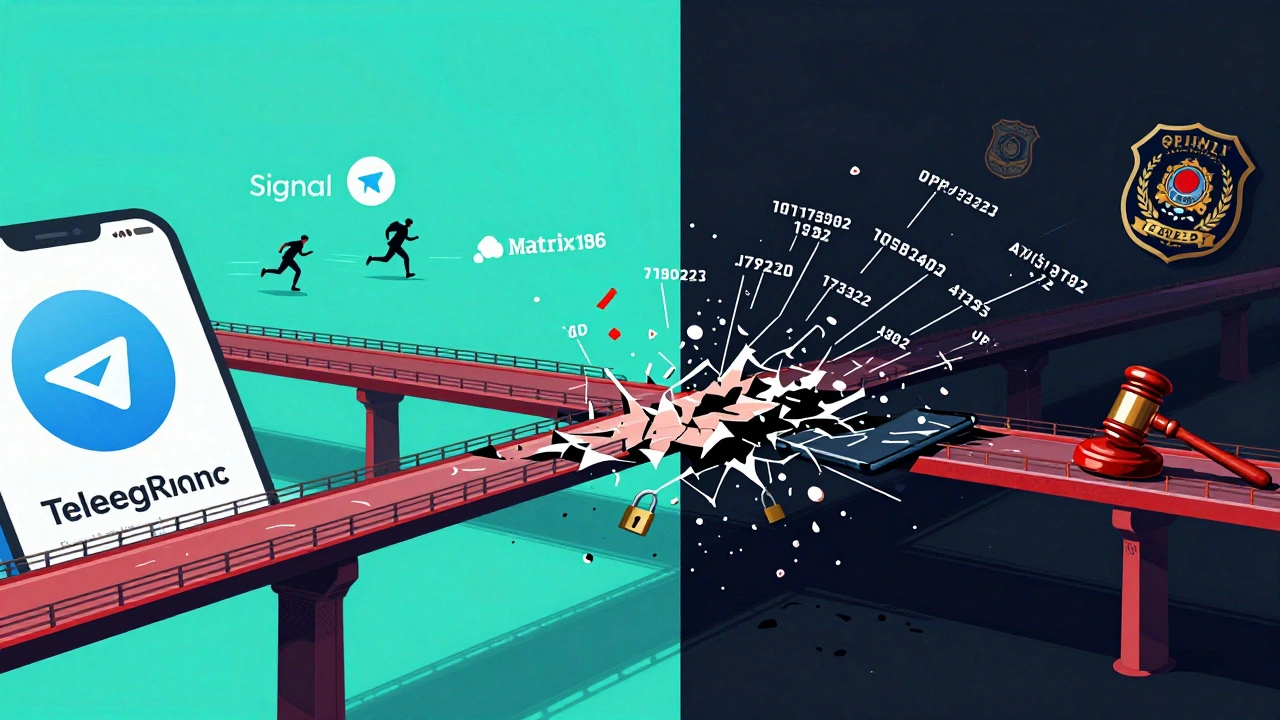
What About Criminal Groups?
It’s not just news channels that feel the change. Criminal networks on Telegram vanished overnight. Drug dealers, fraud rings, and hacking groups that once operated openly in public channels started deleting their groups, warning followers, and moving to smaller, encrypted apps like Briar or Session. One cybersecurity analyst called it “the Great Purge.” That’s the irony. Telegram’s crackdown made it safer for law enforcement - but it didn’t make the platform safer for users. It just pushed the bad actors elsewhere. And now, those groups are harder to track because they’re scattered across platforms with no transparency reports, no oversight, and no accountability.What’s Next for News on Telegram?
Sixty-eight percent of news organizations surveyed say they’re building contingency plans. They’re testing Signal, Matrix, and even decentralized platforms like Mastodon. Some are combining Telegram with other tools: posting headlines on Telegram, but sharing full reports via encrypted email or secure file-sharing services. Telegram’s CEO says 99.999% of users aren’t criminals. But right now, everyone on the platform is being treated like a suspect. And that’s the problem. The platform still has 950 million users. But trust is crumbling. For news communities, the choice isn’t just about technology anymore. It’s about values. Do you want reach - or do you want safety? Can you have both? Right now, the answer is no. And until Telegram finds a way to protect users without surrendering their privacy, news organizations will keep looking for alternatives.
What You Can Do If You Run a News Channel
If you’re managing a Telegram news channel, here’s what’s working now:- Enable auto-delete for messages - set it to 24 hours.
- Require invite-only access. Avoid public links.
- Use verified accounts. Don’t let anonymous users join.
- Don’t use your personal phone number for the channel. Use a burner or VoIP number.
- Backup your content elsewhere. Use Google Drive, Matrix, or even a simple website.
- Inform your audience. Tell them why you’re changing your security settings. Transparency builds trust.
Why This Matters Beyond Telegram
This isn’t just about one app. It’s about the future of digital journalism. If the biggest encrypted messaging platform in the world bows to government pressure, what does that mean for Signal? For WhatsApp? For any app that promises privacy? The precedent is set. Governments now know they can pressure tech companies. And companies, faced with legal threats and fines, will keep giving in. News communities need tools that protect them - not just from criminals, but from the state. Telegram used to be one of those tools. Now, it’s a question mark.Does Telegram still encrypt message content?
Yes. Telegram still encrypts message content in private chats using its Secret Chat feature. However, cloud chats (the default for most users) are encrypted between your device and Telegram’s servers, not end-to-end. Law enforcement cannot access message content, but they can get your phone number and IP address if they have a valid court order.
What data does Telegram share with law enforcement?
Telegram shares IP addresses and phone numbers when presented with a valid judicial order for crimes that violate its Terms of Service - including fraud, drug trafficking, cybercrime, and selling illegal goods. It does not share message content, contact lists, or group memberships.
Why did Telegram change its policy in 2024?
The change followed Pavel Durov’s arrest in Paris in August 2024 and the full enforcement of the EU’s Digital Services Act (DSA) in August 2024. The DSA required platforms to establish formal channels for law enforcement requests. Once those channels were used, the number of valid requests surged, forcing Telegram to comply or face legal penalties.
Are Telegram news channels still safe for journalists?
Not as safe as before. Journalists in authoritarian countries now face greater risk because Telegram can identify users’ locations and phone numbers. Many have switched to Signal, Threema, or encrypted email for sensitive communication. Telegram remains useful for broadcasting public announcements, but not for confidential reporting.
How can I protect my Telegram news channel?
Use invite-only links, enable 24-hour auto-delete for messages, avoid using personal phone numbers, require subscriber verification via bots, and back up content on secure platforms like Matrix or encrypted cloud storage. Inform your audience about the risks and changes so they understand why you’re adjusting your approach.
Is Telegram still the best platform for news distribution?
It depends. For reaching large audiences quickly, yes - it still has 950 million users. But for secure, private communication, especially in high-risk environments, it’s no longer the top choice. Many news organizations now use Telegram alongside other platforms like Signal, Mastodon, or private websites to reduce risk.