The Core Problem: Why AI Fails the News Test
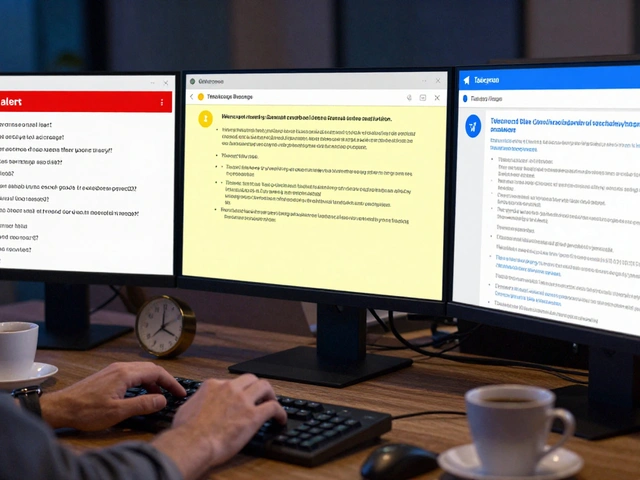
News isn't just about data; it's about context and verification. Most AI models operate on probability, not truth. This leads to three specific failure patterns that can ruin a news channel's reputation. First, there are sourcing errors. AI often cites sources that don't exist or attributes a quote to the wrong person. Second, factual inaccuracies occur when a model presents outdated information as current. Finally, there is context stripping, where a complex geopolitical event is boiled down to a simplistic, and often wrong, summary. If you deploy a bot that automatically scrapes news and posts it to Telegram, you are essentially gambling with your brand. The AI might handle the volume, but it lacks the judgment to say, "Wait, this source looks suspicious." This is where the human element becomes the primary safety valve.Designing the HITL Workflow for Telegram
Building a ai integration that actually works for news requires a structured pipeline. You can't have a human read every single word of every single lead, or you'll lose the speed advantage of AI. Instead, you need a tiered system.The most effective approach is confidence-based routing. Here is how it works in a real-world Telegram setup:
- The AI Draft: The bot monitors sources and drafts a news post.
- The Confidence Score: The AI assigns a confidence value (e.g., 0.0 to 1.0) based on how well the draft aligns with its training data and source consistency.
- The Routing Logic:
- High Confidence (>0.9): The post is queued for immediate publication (or a quick "sanity check").
- Medium Confidence (0.6 - 0.9): The post is sent to a private "Review Channel" for a human editor.
- Low Confidence (<0.6): The post is flagged for manual research or discarded.
- The Human Edit: An editor in the Review Channel makes quick tweaks, corrects a name, or verifies a link and hits "Approve."
- The Publication: The verified post goes live to the public channel.

Implementing Verification Mechanisms
To make this system robust, you need more than just a "yes/no" button. You need specific mechanisms that target the AI's known weaknesses.| Mechanism | AI Role | Human Role | Goal |
|---|---|---|---|
| Data Labeling | Processes raw feeds | Tags verified sources | Better training data |
| Output Validation | Generates summaries | Fact-checks claims | Eliminate hallucinations |
| Edge Case Routing | Flags unusual events | Provides expert nuance | Prevent context stripping |
| Feedback Loops | Learns from corrections | Corrects errors | Continuous improvement |
The Feedback Loop: Teaching the AI to Be Better
One of the biggest mistakes developers make is treating the human check as a one-time filter. If an editor corrects a bot's mistake and the bot never learns from it, you're just doing manual work. A true Feedback Loop ensures that every single human correction is fed back into the model's fine-tuning process. For example, if your bot consistently misattributes quotes from a specific government agency, the editor marks the error. This correction is stored as a new training pair. Over time, the AI recognizes the pattern and stops making that specific mistake. This turns your editorial team into a high-quality data labeling squad, gradually increasing the AI's confidence scores and reducing the number of posts that need manual review.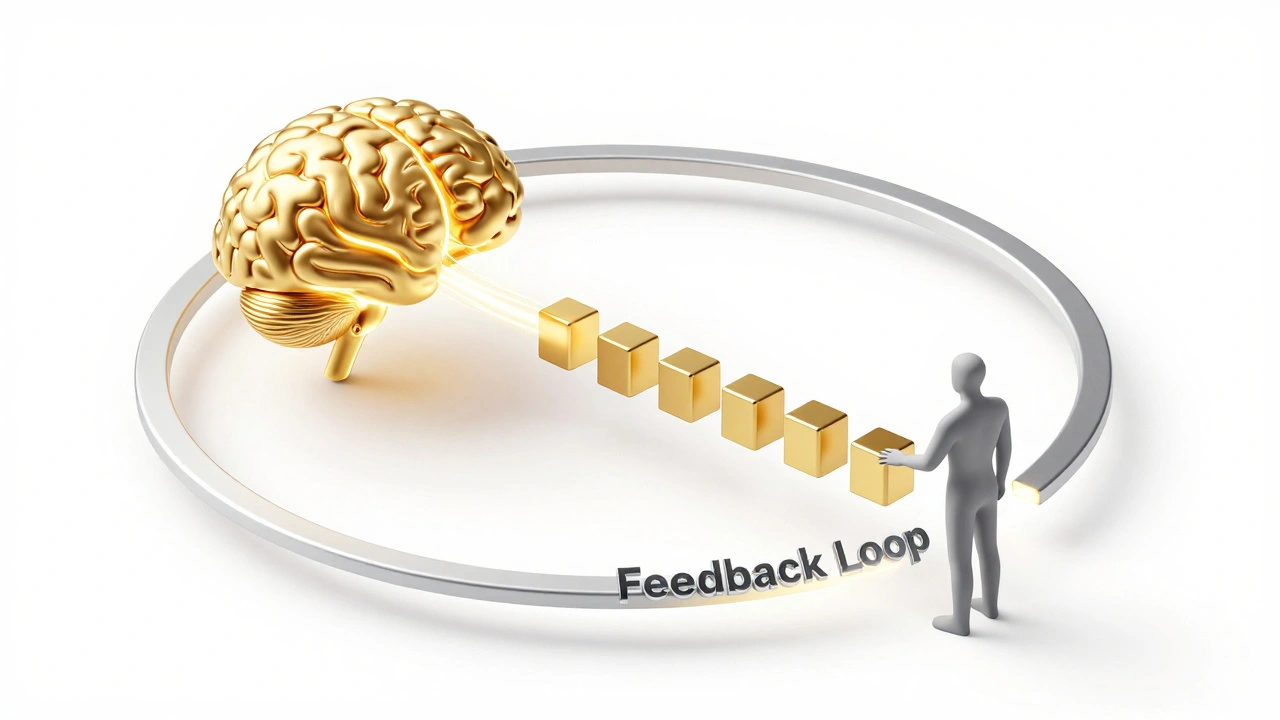
Handling High-Volume News Bursts
During a major event-like an election or a natural disaster-the volume of news can overwhelm a small editorial team. This is where the system needs to be elastic. You can implement a "Crisis Mode" in your Telegram bot where the routing logic shifts. In Crisis Mode, you might prioritize speed for certain categories (like weather alerts) but tighten the restrictions for others (like political statements). You can also introduce community-based HITL. Telegram's polling and comment features allow you to let a trusted group of "power users" flag potential inaccuracies. While not as reliable as a professional editor, community flagging provides a secondary layer of detection that can alert your staff to a problematic post that slipped through the AI's confidence filter.Pitfalls to Avoid in AI News Integration
It is tempting to trust the AI more than you should. The most dangerous state is "automation bias," where human editors start skimming the AI's work because it's usually right. Once an editor stops questioning the output, the system is no longer Human-in-the-Loop; it's just a human rubber-stamping an AI. To prevent this, introduce "synthetic errors." Occasionally, insert a known mistake into a draft to see if the editor catches it. This keeps the human team sharp and provides a metric for how effective your human-in-the-loop process actually is. If the editors are missing 20% of the synthetic errors, you know your verification process is failing regardless of how "confident" the AI claims to be.Can a Human-in-the-Loop system keep up with breaking news?
Yes, because it doesn't require humans to write the news from scratch. The AI handles the heavy lifting of monitoring and drafting, while the human only performs the final verification. By using confidence-based routing, you only stop the posts that are likely to be wrong, allowing high-confidence alerts to move quickly.
How do I determine the "confidence score" for my news bot?
Confidence scores are typically derived from the model's softmax output or by using a second "judge" model to evaluate the first model's output. You can also base confidence on source reliability-if a story appears in three high-authority outlets, the confidence score increases.
Is HITL more expensive than full automation?
In terms of payroll, yes, because you need human editors. However, the cost of a factual error in news can be catastrophic for your brand's trust and potential legal standing. HITL is an insurance policy against AI hallucinations.
What happens if the AI and the human disagree?
The human always wins. The core philosophy of Human-in-the-Loop is that human judgment is the final authority on truth and ethics. When a human overrides an AI, that specific instance should be logged as a high-value training example for the model.
Can I use Telegram's native features for HITL?
Absolutely. You can use private channels as "staging areas" where editors use inline buttons to approve, edit, or reject a post before it's forwarded to the main public channel via a bot.