Have you ever wondered why your Facebook feed is full of outrage, while your Telegram channel stays calm and focused? It’s not luck. It’s design. One system is run by humans. The other is run by code. And the difference changes everything.
Telegram: Humans Decide What You See
On Telegram, there’s no mystery. If you join a channel, the person who runs it - the admin - decides what gets posted. They can pin important updates. They can delete spam. They can block users. They can even link a group where people discuss the channel’s content. There’s no algorithm guessing what you might like. No hidden scoring system. Just a person, or a small team, making choices.
Think of it like a newsletter you subscribe to. The editor picks the stories. They don’t chase clicks. They don’t chase reactions. They want their audience to get useful, clear, consistent information. A news channel on Telegram might only post verified reports. A business channel might share weekly updates without any flashy headlines. A hobby group might share photos and tips without any viral hooks.
This isn’t perfect. Bad admins can still spread misinformation. But the system doesn’t reward it. There’s no built-in incentive to post outrage, lies, or shock content. If a post gets too messy, the admin hits delete. No machine learning model says, "This post got 12 reactions - let’s push it to 5 million people."
Social Media Feeds: Code Decides What You See
On Facebook, YouTube, Instagram - your feed isn’t a list of posts from people you follow. It’s a ranked list, built in real time by an algorithm. And that algorithm doesn’t care about truth. It cares about engagement.
Here’s how it works: Facebook’s system assigns points to every interaction. A like? One point. A reaction? Five. A share? Ten. A long comment? Thirty. YouTube’s algorithm doesn’t even look at likes. It watches how long you watch. If you click on a video titled "You Won’t Believe What Happened Next!" and watch 70% of it? That’s gold. The system learns: "People like this kind of thing. Show it to more people."
The result? Content that triggers strong emotions - anger, fear, surprise - gets pushed harder. A post that says, "Here’s what happened in the meeting," gets buried. A post that says, "They’re lying to you!" gets boosted. Studies show these systems naturally favor borderline harmful content because it’s more engaging. And that’s not a bug - it’s the design.
Companies track success by how long people stay on the app, how many posts they scroll through, how often they come back. That’s the metric. Not accuracy. Not trust. Not quality. Just attention.
Why This Matters for What You Believe
When you’re on a social feed, the system doesn’t show you what’s important. It shows you what’s likely to make you react. Over time, your view of the world gets shaped by what grabs attention - not what’s true.
Imagine two people: one uses Telegram to follow a local news channel. They see verified reports, event announcements, and public service updates. The other scrolls Facebook. Their feed fills with divisive posts, exaggerated headlines, and viral videos that make them angry. After six months, who has a clearer picture of their community? Who’s more likely to believe conspiracy theories? Who’s more polarized?
It’s not about intelligence. It’s about environment. The platform shapes your exposure. And algorithmic feeds are built to exploit human psychology - not to inform it.
The Hidden Cost of Automation
Big platforms claim they use AI to remove hate speech and misinformation. And they do - but it’s a game of whack-a-mole. The system removes 90% of bad content. But the 10% that slips through? It’s the stuff that gets shared the most. And because the algorithm rewards sharing, those posts keep coming back in new forms.
Telegram doesn’t have that problem - because it doesn’t try to scale moderation to billions. Each channel is small. The admin sees every post. If something’s off, they act. There’s no delay. No machine learning model trying to guess intent. Just a human who knows the community.
That’s why Telegram channels can be so trustworthy. A small group of people, with clear rules, managing their own space. It’s not perfect. But it’s transparent. You know who’s in charge.

Who Really Controls What You See?
On social media, the power isn’t with you. It’s with the engineers at Meta, Google, or TikTok. They decide the metrics. They tweak the models. They choose what "engagement" means. And because they’re judged by how much time you spend on the app, they optimize for the most addictive content.
On Telegram, the power is with the channel owner. If you don’t like what they post, you leave. No algorithm is forcing you to see it. No system is pushing you toward outrage. You choose the source. And you control your exposure.
This isn’t about which platform is "better." It’s about which one you trust. Do you want your information filtered by a machine that’s trained to maximize your anger? Or by a person who cares about your understanding?
What This Means for You
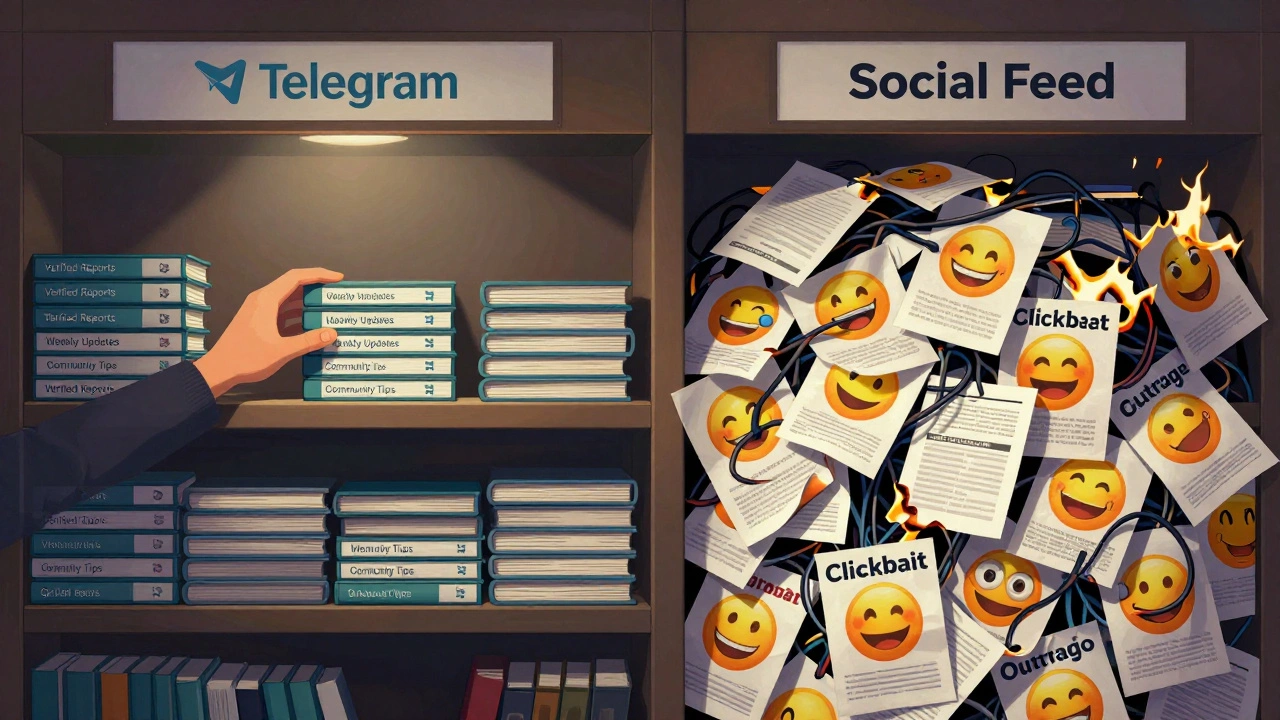
If you want clarity - not chaos - start moving your key information sources to Telegram. Follow local news channels. Join community groups. Subscribe to experts who post without hype. Use Telegram like a library, not a carnival.
If you still use Facebook or YouTube for news? Be aware. Your feed isn’t showing you reality. It’s showing you what the algorithm thinks will keep you scrolling. That’s not a coincidence. It’s by design.
There’s no magic fix. But you can take back control. Stop letting code decide what you see. Start letting humans - real ones - guide you.
Can Telegram stop misinformation like Facebook does?
Telegram doesn’t use automated systems to scan billions of posts. Instead, each channel is moderated by its owner. That means misinformation can slip through - but it also means there’s no system designed to amplify it. If a channel spreads false claims, users can leave. Admins can ban users or delete posts. It’s slower, but more intentional. Facebook tries to remove harmful content at scale, but its algorithm still pushes borderline content because it gets engagement.
Why do social media algorithms favor outrage?
Because outrage drives reactions. A post that makes you angry gets more likes, shares, and comments than a calm, factual update. Social platforms measure success by time spent and interactions - not truth or quality. So their algorithms learn: the more emotional the content, the more it gets seen. This isn’t accidental. It’s how the system was built to work.
Is Telegram safer than Facebook for political news?
It depends on who runs the channel. Telegram doesn’t have a central policy that bans misleading content - but it also doesn’t push it. On Facebook, even truthful political posts get buried if they don’t spark debate. On Telegram, a well-managed political channel can share policy details, meeting summaries, and official statements without being drowned out by viral lies. The difference? Human oversight versus algorithmic amplification.
Can I use both Telegram and social media without being manipulated?
Yes - but you need to be intentional. Use social media for entertainment and casual updates. Use Telegram for news, community updates, and trusted sources. Don’t rely on your Facebook feed for accurate information. Treat it like a noisy room full of people shouting. Use Telegram like a quiet meeting room where people speak one at a time.
Why doesn’t Telegram just use an algorithm like Facebook?
Telegram’s founders believe in user control. They don’t want to build a system that manipulates attention. Their platform is built for private communication, not mass entertainment. By keeping editorial control in the hands of channel owners, they avoid the ethical traps of algorithmic curation. It’s a deliberate choice - one that sacrifices viral reach for trust.