By early 2025, Telegram had become the most unpredictable battleground for news creators. On one side, you’ve got channels pushing paid subscriptions with $50-a-month exclusive analysis. On the other, you’ve got massive feeds stuffed with sponsored posts, earning pennies per thousand views. Which one actually makes more money? And more importantly - which one keeps your audience from walking away?
There’s no single answer. But if you’re running a news channel on Telegram right now, you’re probably stuck between these two models - and the data doesn’t lie. The channels making real money aren’t picking one. They’re using both.
How Telegram’s Money Systems Actually Work
Telegram doesn’t take a cut of your subscription fees. That’s rare. When someone pays you $20 a month through Telegram Stars, you keep every penny. The platform just handles the payment processing - no PayPal fees, no Stripe charges. It’s built right into the app. Users buy Stars with credit cards, Apple Pay, or TON cryptocurrency, then spend them to unlock your premium content.
For ad-supported channels, it’s different. Telegram automatically drops ads between your posts if you have over 1,000 subscribers (now lowered to 500 as of March 2025). You earn 55% of what advertisers pay. Payouts come in TON, Telegram’s own crypto token. The catch? You don’t control where or how often ads show up. And if your audience hates them, they’ll leave.
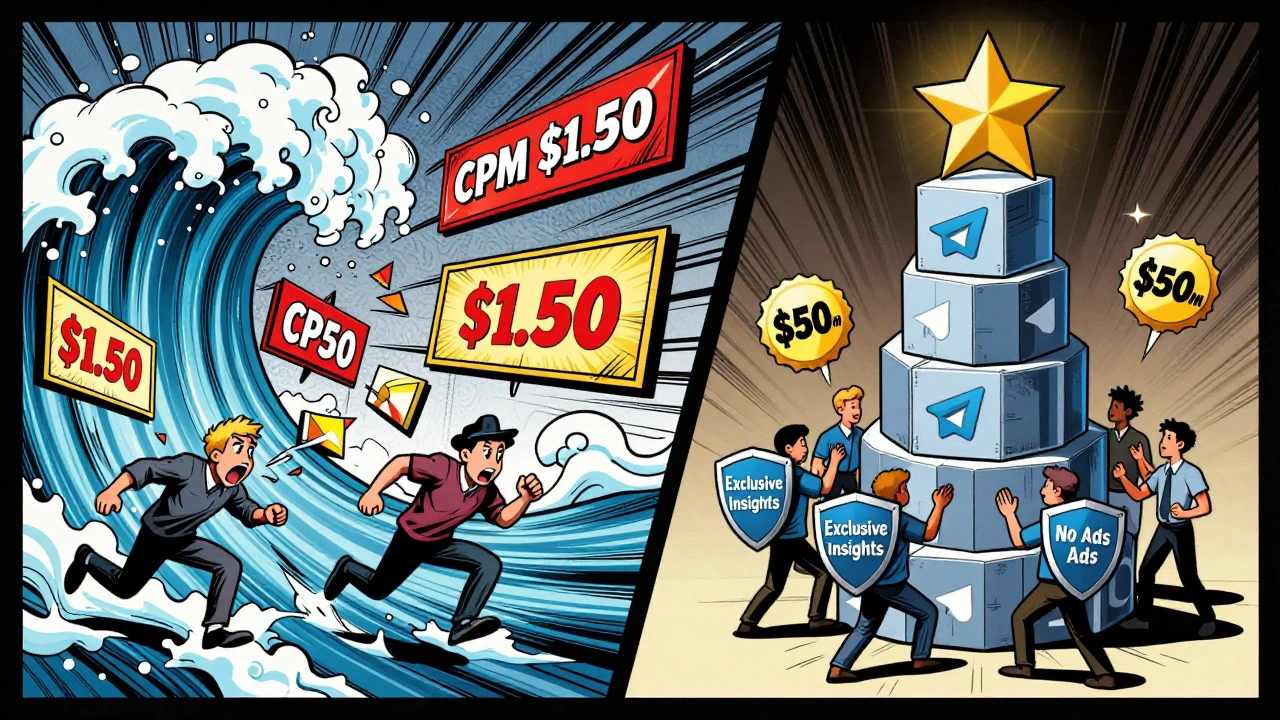
Ad formats vary. A single sponsored post that stays pinned for 24 hours costs advertisers $15-$30 per 10,000 subscribers. A "No Deletion" post - one that never disappears - can go for $100-$200. But here’s the kicker: CPM rates depend entirely on your niche. Finance channels pull $20+ CPM. Meme channels? $1.50. If your content isn’t valuable to advertisers, you’re barely scraping by.
Real Numbers: What Paid News Channels Are Making
Let’s say you have 50,000 subscribers. If you go all-in on ads, you might make $3,000-$5,000 a month. That sounds good - until you compare it to what happens when you add a paid tier.
Channels like CryptoPanic and RealVision Crypto don’t just rely on ads. They offer free content to attract people, then gate deeper insights behind a paywall. RealVision Crypto, for example, charges $49/month. With 12,500 paying subscribers, that’s $615,000 a month - just from subscriptions. Their ads? They bring in another $24,000. That’s not a side hustle. That’s a business.
Even smaller channels see massive jumps. One Reddit user, u/CryptoAlpha, had 850 paying subscribers at $15/month. That’s $12,750. Add $4,200 from ads, and he’s pulling in $16,950 monthly. Before adding subscriptions, he was making $4,200 from ads alone. That’s a 300% increase.
The math is brutal for pure ad channels. A finance channel with 100,000 subscribers might earn $2,000/month from ads. But if just 2% of those subscribers pay $20/month? That’s $40,000. Two percent. That’s not a huge number. It’s achievable.
Why Ad-Supported Feeds Struggle
Ads on Telegram aren’t like Instagram or YouTube. People don’t scroll past them. They read every message. And if you drop three ads in a row, your audience feels like they’re in a spam folder.
According to TechCrunch, channels showing more than three ads per day saw 12% subscriber churn in early 2025. That’s not just annoyance - that’s erosion. One channel owner on Trustpilot said his audience dropped from 45,000 to 28,000 after he added too many ads. He now makes less than half what he did before.
Low-engagement niches - like memes, entertainment, or general news - barely make it. PropellerAds found meme channels average $1.50-$2 CPM. At 100,000 subscribers, that’s maybe $1,500 a month. And that’s assuming you’re posting daily. It’s not scalable. It’s exhausting.
Plus, advertisers are picky. They don’t want their brand next to conspiracy theories or political rants. Telegram’s Partner Program bans hate speech and illegal content, but gray areas still exist. If your channel gets flagged, your ad revenue vanishes overnight.
Why Paid News Works - When It Works
Paid models thrive when your content solves a real problem. Trading signals. Legal updates. Insider market analysis. Exclusive interviews. If someone can make money or avoid a loss because of what you share, they’ll pay.
AdMaven’s data shows conversion rates for paid news channels average 1.5-3%. That means for every 100 subscribers, 1-3 pay. In finance, tech, or legal niches, that’s easy. In pop culture? Forget it. Scrile’s research found entertainment channels hit below 0.5% conversion. People won’t pay for headlines they can get for free elsewhere.
The biggest mistake? Trying to sell a free channel as premium. You can’t just rename your news feed "Premium Finance Daily" and charge $20. People need to feel they’re getting something they can’t get anywhere else. That means depth. Speed. Accuracy. Access.
Successful paid channels use a two-tier system: a free feed with teasers, summaries, and headlines. Then a private channel or bot that delivers full reports, charts, or live alerts. Some even use Telegram’s mini-apps to build gated dashboards - no website needed.
The Hybrid Model: The Only Real Winner
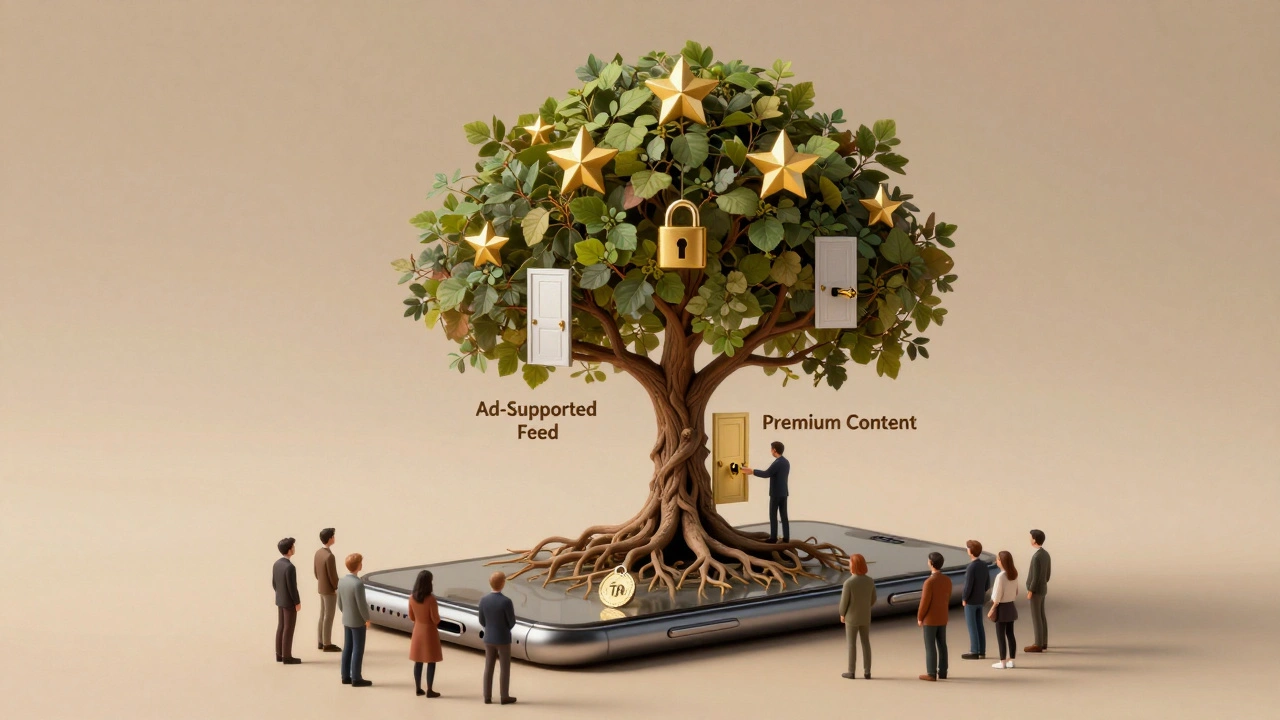
Here’s what the top channels are doing: Use ads to grow. Use subscriptions to profit.
Telegram’s own guide, updated in February 2025, says this clearly: "Channels with 10,000+ engaged subscribers should implement tiered subscriptions alongside selective advertising to maximize revenue without compromising community trust."
MIT Media Lab’s January 2025 study showed hybrid channels had 37% higher lifetime value per user than those using just one model. Why? Because ads bring in new people. Subscriptions keep the loyal ones.
CryptoPanic is the textbook case. 65% of their revenue comes from subscriptions. 35% from ads. They don’t hide the ads - they make them relevant. Finance advertisers. Crypto tools. Trading platforms. Their audience expects them. And they never let ads overwhelm the feed.
They also test everything. One headline. Two versions. Posted an hour apart. See which gets more clicks. That’s how they know what works. Most creators just guess. The winners measure.
What Happens When You Get It Wrong
Not everyone succeeds. The Daily Meme Digest had 85,000 subscribers. They tried to go paid. Charged $10/month. Lost 78% of their audience in six weeks. Why? Their content was funny, not valuable. People weren’t paying for laughs. They were paying for edge.
Another common failure? Bad onboarding. AdMaven found 28% of people who started a subscription abandoned it because the payment process was confusing. Telegram Stars works fine for tech-savvy users. But if your audience is older, or from regions with strict banking rules? You need simpler options. That’s why Telegram added 12 new payment processors in January 2025.
And fraud? It’s real. 32% of subscription channels reported fake payments or chargebacks. You need tools to verify users. Telegram doesn’t provide that. You have to build it yourself - or hire someone who can.
How to Start (Without Losing Your Audience)
If you’re starting from scratch:
- Get to 1,000 subscribers first. That unlocks ads.
- Post daily. Be consistent. Build trust.
- Test one paid offer. Not a full subscription. Just a $5 report. A single trading signal. Something low-risk.
- Use Telegram’s @RevenueBot to set up ads. It takes 15 minutes.
- Don’t rush. Let your audience tell you what they’ll pay for.
If you already have 10,000+ subscribers:
- Split your feed. Free channel = headlines, summaries, alerts. Premium channel = deep dives, raw data, live Q&As.
- Price your premium tier between $10-$30. Too low? You’re undervaluing. Too high? You’ll scare people off.
- Use a mini-app to manage access. No need for a website.
- Run one sponsored post per week. Only from trusted brands in your niche.
- Track your churn. If people leave after an ad? Cut back.
What’s Next in 2025 and Beyond
Telegram isn’t standing still. By Q3 2025, they plan to let users pay for Stars directly with credit cards inside the app. That’ll remove a huge barrier. By Q4, AI will start optimizing ad placement - so you get better revenue without manually tweaking.
Forrester predicts 78% of successful news channels will use hybrid models by the end of 2025. That’s up from 52% last year. The writing’s on the wall: if you’re relying on just one model, you’re already behind.
Telegram’s edge? It’s not the ads. It’s not the Stars. It’s that your audience is already there. They’re not jumping between apps. They’re not logging into websites. They’re reading your news in the same place they chat with friends. That’s powerful. And it’s unique.
The question isn’t whether to monetize. It’s how to do it without turning your channel into a billboard. The answer? Give people a reason to pay. And let ads be the bonus - not the main event.
Can I monetize my Telegram news channel with fewer than 1,000 subscribers?
Yes - but only through paid subscriptions using Telegram Stars. The ad revenue sharing program requires at least 500 subscribers (as of March 2025), but you can start selling access to exclusive content at any size. Use a bot or mini-app to gate your messages. Many successful channels began with just 500 subscribers and grew their paid tier slowly.
How much can I realistically earn from Telegram ads?
It depends on your niche and audience size. Finance and crypto channels earn $15-$25 CPM. General news hits $5-$10. Meme or entertainment channels make $1.50-$2. For a channel with 50,000 subscribers posting daily, expect $2,000-$5,000 monthly from ads - if your content is advertiser-friendly. But remember: too many ads can cost you subscribers.
Is it better to charge $10 or $50 per month for premium content?
Start low. Test $10 first. If your content delivers clear value - like daily trading signals, legal updates, or exclusive interviews - you can raise it to $30-$50. The key isn’t the price. It’s the perceived value. A $50 channel must feel like a professional service. A $10 channel can feel like a helpful newsletter. Most successful channels find their sweet spot between $15-$25.
Do I need a website to run a paid Telegram news channel?
No. Telegram’s mini-apps let you build payment systems, gated content, and dashboards inside the app. Users never leave Telegram. That’s the whole advantage. You can use tools like TON-based bots or third-party services like Scrile or AdMaven to set up access control without a website. Keep it simple. Keep it in-app.
What’s the biggest mistake new creators make with Telegram monetization?
Trying to monetize too early - and too aggressively. Many creators launch paid subscriptions before they’ve built trust. Others overload their feed with ads to make quick cash. Both backfire. The best approach: grow your audience first. Prove your value. Then layer in monetization slowly. Your audience will tell you what they’re willing to pay for - if you listen.
Are Telegram Stars better than crypto payments for subscriptions?
For most creators, yes. Telegram Stars work with credit cards, Apple Pay, and Google Pay - so your audience doesn’t need crypto wallets. TON is great for tech-savvy users, but 72% of subscribers still use fiat payments. Stars are simpler, faster, and more widely accepted. Stick with Stars unless your audience is already deep into crypto.
Final Thought: Don’t Choose One. Build Both.
Telegram’s monetization tools aren’t a trade-off. They’re a toolkit. Ads bring in the crowd. Subscriptions keep the loyal ones. The channels that thrive aren’t the ones with the most followers. They’re the ones who understand their audience’s willingness to pay - and respect their attention enough not to ruin it.