Independent reporters in restrictive countries rely on Telegram because it’s one of the few platforms that still works when everything else is blocked. But using it without knowing the risks is like handing your notes to the police before you even file your story. Most journalists don’t realize that Telegram doesn’t protect their messages by default - and that’s deadly in places like Russia, Iran, or Belarus.
Telegram’s Secret Flaw: Default Chats Are Not Private
When you open Telegram, you’re automatically in a Cloud Chat. That’s what most people use. It feels normal. Messages sync across devices. You can search old conversations. It’s convenient. But here’s the truth: Telegram holds the keys to those messages. That means if a government demands access - or if Telegram’s servers get hacked - your private conversations with sources can be read, copied, or deleted. Security researchers like Matthew Green from Johns Hopkins have called Telegram’s encryption protocol, MTProto, poorly designed. Unlike Signal or WhatsApp, which use the open, peer-reviewed Signal Protocol, Telegram’s encryption for Cloud Chats is closed-source and untested by the global security community. In 2016, two Russian activists had their Telegram accounts accessed after their mobile provider, MTS, tampered with their phone settings. Telegram didn’t get hacked. The vulnerability was in the system itself - and it’s still there today.Secret Chats Are the Only Safe Option - But They’re Hard to Use
Telegram does offer Secret Chats. These are end-to-end encrypted. Only you and the recipient can read them. Telegram can’t access them. They vanish from the server. But here’s the catch: you have to turn them on manually. And they don’t work on group chats. They don’t sync across phones. You can’t back them up. If you lose your phone, you lose the chat. To start a Secret Chat, you must tap the contact’s name, then select “Start Secret Chat.” A lock icon appears. If you don’t see that lock, you’re not secure. Most users never find this option. A 2022 survey by the International Journalists’ Network found that 78% of independent reporters in high-risk regions didn’t know how to enable Secret Chats. That’s not ignorance - it’s design. Telegram makes the unsafe option the default.Group Chats and Channels Are Dangerous for Journalism
Telegram’s biggest draw for journalists is its channels - some with 200,000 subscribers. You can broadcast reports, share videos, and reach thousands. But here’s what no one tells you: group chats and channels are never end-to-end encrypted. Not even close. Every message in a group is stored on Telegram’s servers. Your name, your phone number, your IP address - all visible to Telegram. And if a government compels them to hand over data, they can. In 2020, Belarusian journalists used Telegram groups to coordinate protests. After the crackdown, authorities accessed group membership lists. They didn’t need to decrypt messages - they just needed to know who was in the group. One reporter was arrested because her phone number was linked to a channel she moderated. She didn’t say anything illegal. She just existed in the wrong place.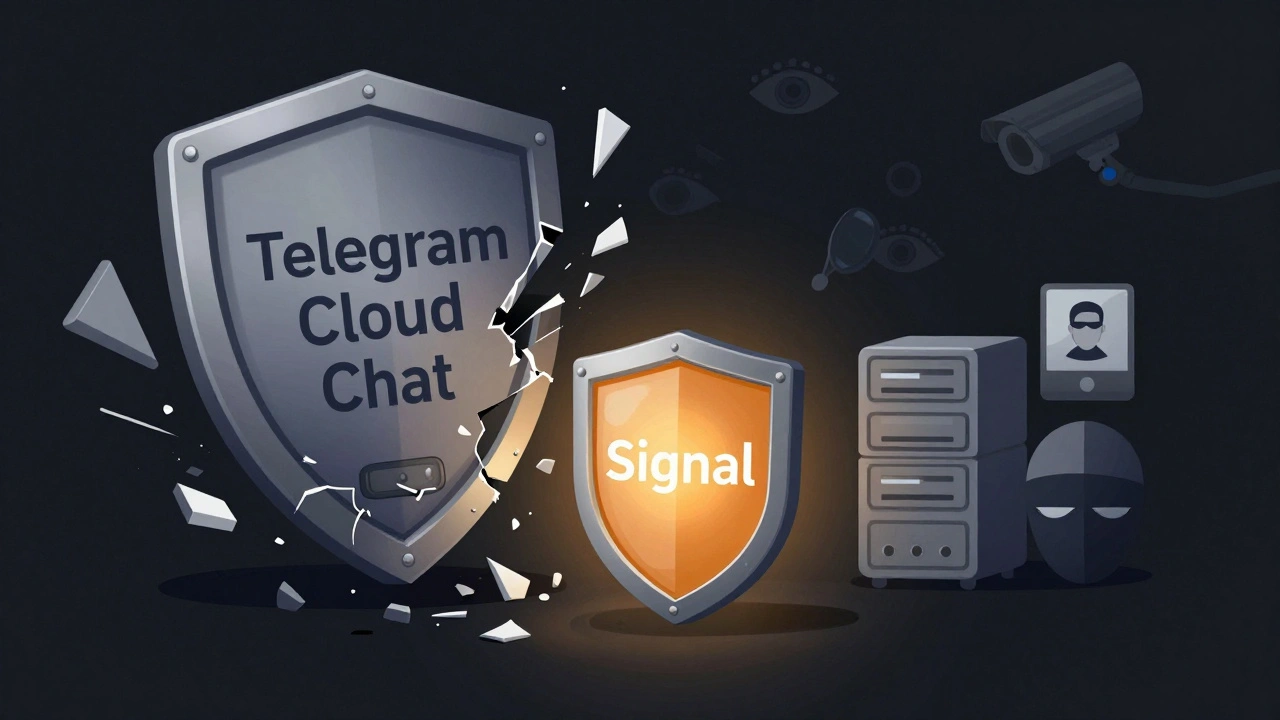
Self-Destruct Timers Don’t Fix Everything
Telegram lets you set messages to delete after 1 second, 1 minute, or 1 week. It sounds like a lifesaver. And it can be - if your phone is seized. But self-destruct only deletes the message from your device and the recipient’s. It doesn’t erase it from Telegram’s servers. Metadata remains: who you talked to, when, how often. That’s enough to build a profile. A journalist in Turkey told the Committee to Protect Journalists that after her phone was taken during a protest, she thought her messages were gone. But Telegram still had logs of her contacts, timestamps, and device IDs. Those logs were used to track her movements for weeks.Why Signal Is the Real Choice for High-Risk Reporting
The Committee to Protect Journalists, the Electronic Frontier Foundation, and the Shorenstein Center at Harvard all agree: if you’re protecting sources, use Signal. It’s not perfect, but it’s the best option available. Signal uses end-to-end encryption by default - for one-on-one chats and group chats. No opt-in. No confusion. No server storage of message content. It doesn’t collect metadata like Telegram does. And it’s open-source - meaning experts worldwide can verify its security. Telegram users say, “But Signal is blocked in Iran!” True. But in 2023, Iranian journalists started using Signal through bridge networks and encrypted proxies. They lost convenience. But they gained safety. Telegram might be faster, but speed doesn’t save lives - security does.What Independent Reporters Must Do Right Now
If you’re using Telegram for journalism, here’s your action list:- Stop using Cloud Chats for source communication. Every message with a source must be in a Secret Chat - and only if you can verify the lock icon.
- Never use Telegram groups for sensitive coordination. Use Signal, Matrix, or encrypted email for team discussions.
- Turn on self-destruct timers - but don’t rely on them. Assume every message you send leaves a trace on Telegram’s servers.
- Use a secondary phone number. Don’t link your personal number to your reporting account. Use a burner or virtual number.
- Disable cloud backup. Telegram backs up your Cloud Chats. Turn this off in Settings > Data and Storage.
- Train yourself for 15 hours. The International Journalists’ Network offers free modules on secure communication. Do it. Your sources depend on it.

The Bigger Picture: Telegram Is a Tool, Not a Shield
Telegram is popular because it’s resilient. It’s survived government blocks in Russia, Iran, and Egypt. It’s fast. It’s easy. It’s free. But popularity doesn’t equal safety. Telegram’s business model depends on growth, not encryption. In 2025, its user base grew 92% year-over-year. Yet the company spent nothing on improving its core security architecture. Compare that to Signal, which gets funding from the non-profit Signal Foundation and is backed by Brian Acton (co-founder of WhatsApp). Signal doesn’t need to grow to survive - it needs to protect. That’s the difference. Independent reporters aren’t wrong to use Telegram. But they’re wrong to think it’s safe. The platform gives you access - not protection. And in journalism, access without protection is a trap.What to Do If Your Account Is Compromised
If you suspect your Telegram account has been accessed:- Log out of all devices immediately from Settings > Devices.
- Change your phone number if possible - and unlink it from your old account.
- Inform your sources. Tell them to stop communicating with you on Telegram.
- Switch to Signal or another secure platform before resuming work.
- Report the breach to organizations like CPJ or Reporters Without Borders. They can help with legal and digital support.
There’s no magic bullet. But there is a clear path: stop pretending Telegram is secure. Start treating it like a public bulletin board - useful for broadcasting, dangerous for whispering.
Is Telegram encrypted? Can journalists trust it?
Telegram offers two types of chats: Cloud Chats (default) and Secret Chats (opt-in). Cloud Chats are not end-to-end encrypted - Telegram can access them. Secret Chats are encrypted, but only if you manually start them. Most users never enable them. For journalists, this means Telegram is not trustworthy for source protection. Use Signal instead.
Are Telegram group chats secure for journalists?
No. Telegram group chats and channels are never end-to-end encrypted. All messages are stored on Telegram’s servers. Your identity, phone number, and activity are visible to Telegram and potentially to governments or hackers. Journalists should never use Telegram groups to coordinate sensitive operations or share confidential information.
What’s the difference between Secret Chat and Cloud Chat on Telegram?
Secret Chats are end-to-end encrypted, don’t sync across devices, can’t be backed up, and allow self-destruct timers. Cloud Chats are stored on Telegram’s servers, sync across all your devices, can be backed up, and are not encrypted end-to-end. Secret Chats are safer but inconvenient. Cloud Chats are convenient but unsafe for journalism.
Why do journalists still use Telegram if it’s not secure?
Because in countries like Russia, Iran, or Belarus, Telegram is often the only platform that still works. Other apps like WhatsApp and Signal are blocked. Telegram’s massive channels and resistance to censorship make it indispensable - even though it’s dangerous. Journalists use it for broadcasting news, not for private conversations.
Should I use Telegram for my reporting at all?
Only if you understand the risks. Use Telegram to broadcast public information - like press releases or live updates. Never use it to communicate with sources, share documents, or coordinate sensitive work. Switch to Signal for private messages. Use encrypted email for files. Telegram is a megaphone, not a safe room.
What should I do if my Telegram account is hacked?
Immediately log out of all devices in Telegram’s Settings > Devices. Change your phone number if possible. Warn your sources to stop using Telegram to contact you. Switch to Signal or another secure platform. Report the breach to CPJ or Reporters Without Borders. Do not resume reporting until you’ve secured your communication channels.
Next Steps for Independent Reporters
If you’re just starting out, download Signal now. Set up a secondary phone number. Practice sending encrypted messages. Join the International Journalists’ Network’s free training. Learn how to use Tor and encrypted email. Don’t wait for a crisis to learn safety - build it into your routine. If you’re already deep into reporting on Telegram, audit your chats today. Delete any Cloud Chats with sources. Move those conversations to Signal. Turn off cloud backup. Disable auto-download for media. These steps won’t make you invisible - but they’ll make you harder to track. Journalism isn’t about being loud. It’s about being safe. Telegram lets you speak. But only Signal lets you speak without fear.Latest Posts