Telegram isn't just another messaging app anymore. By early 2026, it's become the most powerful privacy-first platform for AI-driven news and communication - and it's moving faster than anyone expected. With over 800 million users already active each month, Telegram's January 2026 update didn't just add a feature - it rewrote the rules for how people consume news, interact with bots, and manage information at scale.
AI Summaries Are Already Changing How News Moves
Before January 2026, scrolling through a long Telegram channel post meant reading dozens of lines. Now, every post in a public channel gets an AI Summary automatically generated at the top. It’s not a simple cut-and-paste. The system reads the entire message, identifies key facts, removes fluff, and delivers a clean, two-sentence digest. For users following 20+ news channels, this saves hours every week.
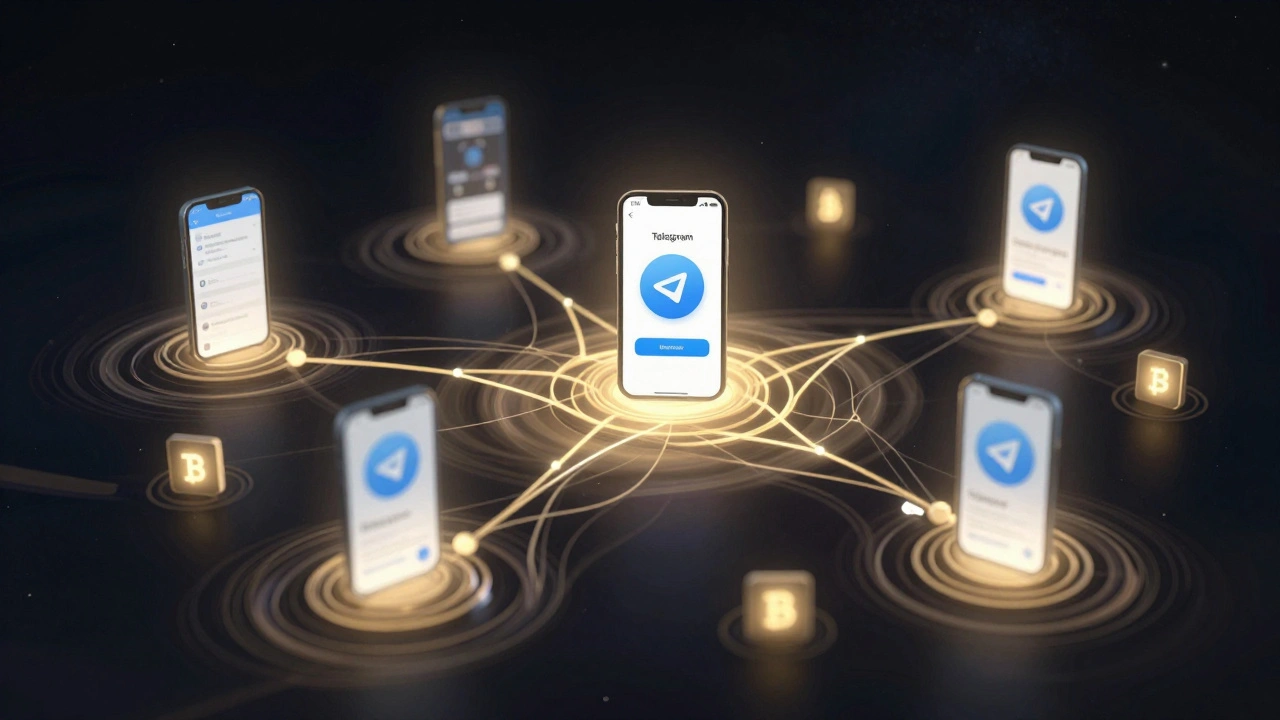
What makes this different from Google or X’s AI summaries? Privacy. Telegram doesn’t send your reading habits to a corporate server. Every summary is processed through Cocoon - Telegram’s decentralized network. Each AI request is encrypted end-to-end before it leaves your device. No single company owns the data. No ads are built on your reading history. The models themselves are open-source, meaning anyone can audit how they work. This isn’t just convenience - it’s a new standard for ethical AI.
Telegram Bots Are Becoming Your 24/7 Customer Service Team
Remember when bots were clunky, one-off tools that answered "What’s the weather?" and nothing else? That’s over. By mid-2026, businesses are using Telegram bots to handle everything from order tracking to multilingual support - and users are loving it.
New AI bots now support threaded conversations. You can start with a question like "Where’s my package?" then follow up with "Can I change the delivery address?" and then ask "What’s the return policy?" - and the bot remembers every step. No restarting. No confusion. It feels like talking to a real person.
And it’s not just customer service. Bots are now processing payments directly using Telegram Stars and the TON blockchain. A user can ask a bot for a subscription, get a quote, pay in crypto, and receive a digital receipt - all inside one chat. Companies report 3x higher conversion rates compared to email or website forms.
By the end of 2026, analysts expect over 60% of medium-sized businesses using Telegram will have replaced traditional call centers with AI bots. Why? Because they cost 70% less and never sleep.
Mini Apps Are the New App Store - and AI Is Making Them Profitable
Telegram’s mini apps used to be mostly games. Now, they’re utility tools that make money - and AI is the reason.
Think of a mini app that helps you track your local public transit. With AI, it learns your commute patterns and predicts delays before you even open the app. Another one helps freelancers invoice clients by just pasting a chat log - the AI extracts dates, amounts, and client names automatically. These aren’t prototypes. They’re live, generating revenue, and growing fast.
By late 2026, Telegram expects 100 million monthly users on mini apps - up from 12 million in late 2025. And here’s the kicker: apps built on the TON blockchain can now offer staking, lending, and peer-to-peer payments without leaving the app. A user can earn crypto for completing tasks, then use it to pay for another mini app - all inside Telegram.

Third-Party Integrations Are Turning Telegram Into a Business OS
It’s not just Telegram building AI - it’s letting others build on top of it. LiveAgent, Zendesk, and other customer service platforms are rolling out native Telegram integrations in 2026. Why? Because users are already there.
Imagine a customer in Brazil asking a question in Portuguese. The AI instantly translates it to English for the support agent. Then, the agent replies in English, and the AI translates it back - all in real time. No switching apps. No delays. The system even tags the ticket automatically: "Payment issue," "Language: Portuguese," "Urgent: 24-hour SLA."
Companies using these integrations report 40% faster response times and 30% fewer repeat tickets. For businesses operating in multiple countries, this isn’t a luxury - it’s survival.
Advertising Is Getting Smarter - And Less Annoying
Telegram doesn’t have a feed. No algorithm pushing random posts. So how do they make money? Through smart, opt-in advertising that actually works.
Native ads appear in relevant channels - like a travel agency posting in a hiking group. Users can tap to learn more, and if they engage, they’re taken directly into a bot flow. The numbers are telling: for every 100 people who click an ad, 40 join the bot. Of those, 12 dive deep - asking questions, signing up, or buying. And 2 to 3 become paying customers.
That’s a 2-3% conversion rate. For comparison, Google Ads averages 1.5%. Facebook? Less than 1%. Telegram’s model works because users choose to engage. No surprise ads. No tracking. Just value.
What’s Coming Next? The 2026 Roadmap
Telegram’s update cycle in 2025 was insane - 75 features across 13 major updates, sometimes released every 8 days. That pace isn’t slowing. Here’s what’s coming:
- Real-time call monitoring for bots - supervisors can listen in and guide agents during live chats.
- Group ownership transfer - if a group owner leaves, ownership auto-transfers to a trusted admin after 7 days.
- Customizable agent dashboards - teams can build their own performance views with metrics like response time, resolution rate, and user satisfaction.
- Colored buttons for bots - making interactions more visual and intuitive.
- AI-powered archiving - automatically organizing chat history by topic, date, or user type for compliance and review.
And yes - Android is getting a full redesign. Beta builds show a cleaner interface with smoother animations, faster load times, and deeper integration with the AI engine. iOS users already got the Liquid Glass treatment - transparency, light effects, layered UI - and it’s not just pretty. It’s designed to reduce battery drain.
Why This Matters - And Who’s Left Behind
Most messaging apps are trying to copy TikTok or Instagram - algorithmic feeds, endless scrolling, ad-driven engagement. Telegram is doing the opposite. It’s giving users control. It’s making AI useful, not invasive. It’s building tools that help people, not harvest data.
By the end of 2026, Telegram expects to hit 1.5 billion monthly active users. That’s not just growth - it’s a shift in how the world communicates. News, customer service, payments, and even small businesses are moving here.
Platforms that ignore this trend won’t just fall behind. They’ll become irrelevant. AI in messaging isn’t a feature anymore. It’s the new infrastructure. And Telegram is building it - with privacy, speed, and real utility at the core.
Are Telegram AI summaries available in all languages?
Yes. Telegram’s AI summaries support over 60 languages as of early 2026. The system automatically detects the language of each post and generates a summary in the same language. Users can also request translations of summaries into other languages using the built-in translator tool. The open-source models behind this are continuously updated by community contributors, ensuring coverage for both major and regional languages.
Can businesses build their own AI bots on Telegram?
Absolutely. Telegram’s Bot API v4, released in Q1 2026, gives developers full access to AI features like threaded conversations, real-time streaming, and payment processing. You can build bots that handle bookings, customer support, or even automated newsletters. The API is free to use, and Telegram provides sample code, templates, and documentation. Many businesses are already using it - from local shops to global brands.
Is Telegram’s AI safer than other platforms?
Yes - by design. Unlike platforms that send your data to centralized servers, Telegram’s AI runs on Cocoon, a decentralized network where each request is encrypted and processed across multiple nodes. No single entity sees your full message. The models are open-source, so experts can verify they don’t store or leak data. Even if Telegram’s servers were hacked, your AI interactions would remain private. This is the only major messaging app with this level of transparency.
Do I need crypto to use Telegram’s AI features?
No. You can use AI summaries, bots, and mini apps without touching crypto at all. Telegram Stars and TON blockchain are optional features for users who want to pay, tip, or trade. Most people use AI features for free - like getting news summaries or chatting with customer bots. Crypto is just one payment option, not a requirement.
How does Telegram compare to WhatsApp’s AI plans?
WhatsApp is still in early testing with basic chatbots and no real AI summaries. Its infrastructure is centralized, meaning all data flows through Meta’s servers - raising privacy concerns. Telegram, by contrast, has already launched AI summaries, mini apps, and blockchain payments with full user control. WhatsApp’s roadmap is vague; Telegram’s is public, detailed, and actively being used by millions. If privacy and speed matter, Telegram is years ahead.
If you're following news, running a business, or just want smarter communication - Telegram’s AI isn’t something to watch. It’s something to use.