Running a Telegram channel isn’t just about posting daily updates. If you’re serious about growing your audience, you need more than gut feelings or random tweaks. You need a system. That’s where the Growth Experiments Logbook comes in - a simple, repeatable way to turn guesswork into results. It’s not magic. It’s not a fancy tool. It’s a notebook for your growth strategy, built for the way Telegram actually works.
Why Your Telegram Channel Needs an Experiment Logbook
Most channel managers track numbers: subscribers, views, shares. But tracking alone doesn’t tell you what’s working. Did your subscriber spike because of a viral post? Or because you posted at 3 AM? Or because you used a new emoji? Without testing, you’ll never know. The Growth Experiments Logbook fixes that. It forces you to ask: What did I change? What did I expect? What actually happened? This isn’t about collecting data for the sake of it. It’s about building a habit of learning. Every post becomes a mini-experiment. And over time, those small wins add up to real growth. Telegram’s unique features make this even more powerful. Unlike Instagram or Twitter, Telegram lets you control exactly what’s sent, when, and to whom. You can test different formats - long text, short clips, polls, links - and measure what sticks. The logbook helps you isolate variables so you don’t confuse one change with another.How to Set Up Your Logbook (No Coding Required)
You don’t need a developer to start. Here’s how to build your first logbook in under an hour:- Create a Google Sheet with these columns: Date, Experiment, Variable Changed, Expected Outcome, Actual Result, Subscriber Change, Open Rate, Notes.
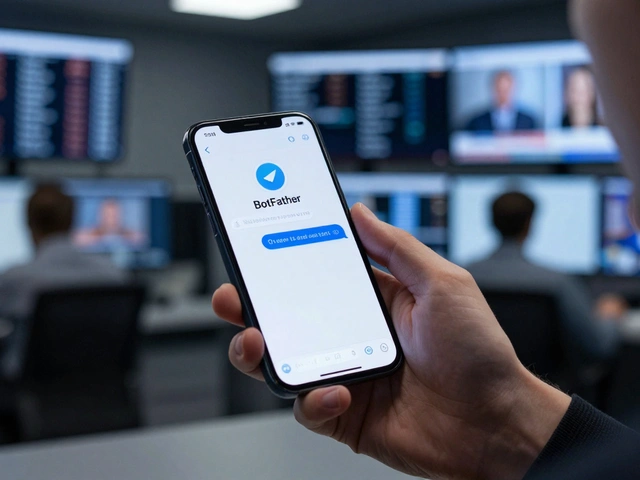
- Use Telegram’s BotFather to create a dedicated bot. Give it a name ending in _bot (like
MyChannelBot). Copy the API token. - Link the bot to your channel. Use a free tool like Make.com or Zapier to auto-record every new subscriber and message interaction into your sheet.
- Start small. Pick one variable to test next week - maybe posting time, or the length of your headlines.
What to Test: 5 High-Impact Experiments
Not all experiments are equal. Focus on these five areas - they’ve shown the biggest returns across real Telegram channels:- Posting Time: Test 5 different times over 3 weeks. One channel found 2:37 AM UTC had 41% higher open rates than 7 PM. That’s not a fluke - it’s data.
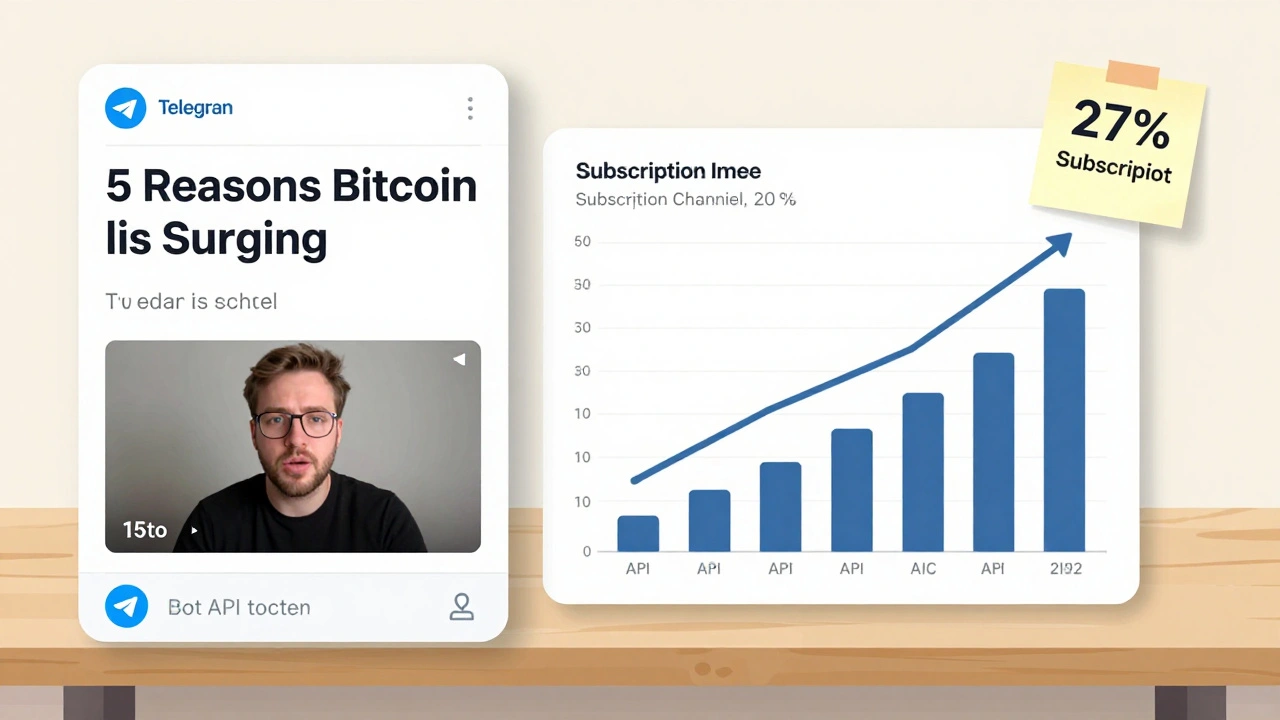
- Content Format: Compare text-only posts vs. text + one image vs. 15-second video teaser. A media startup saw a 27% increase in subscriptions when they used short video clips with a clear call-to-action.
- Headline Style: Try questions vs. statements vs. numbers. One crypto channel tested “Why Bitcoin will hit $100K” vs. “Here’s why Bitcoin is rising” vs. “5 reasons Bitcoin is surging.” The number-based headline won by 33%.
- Call-to-Action (CTA): Does “Join now” work better than “Subscribe for updates”? Or “Tap here to join”? Track which CTA drives the most new subscribers. One channel doubled their conversion rate just by changing from passive to direct language.
- Frequency: Try posting once a day vs. twice a day vs. 3x a week. Over 60 days, one logistics channel found 3x/week had the highest retention - even though they sent fewer posts.
What to Measure: The Real Growth Metrics
Forget vanity metrics. You don’t care about 10,000 subscribers if 80% never open a message. Focus on these three:- Subscriber Acquisition Rate: How many new members join per post? Track this daily. If it drops below 1.5% of your current audience size, something’s off.
- Message Open Rate: Use Telegram’s built-in stats. If less than 30% of your subscribers open your messages, your content isn’t resonating - or your timing is wrong.
- Engagement Depth: How many people save, forward, or reply? These are your true fans. A post with 50 saves and 12 forwards is more valuable than one with 500 views.
Common Mistakes (And How to Avoid Them)
Most people fail at this because they make these three mistakes:- Testing too many things at once. If you change the time, the format, and the CTA all in one post, you’ll never know what worked. One variable per test. Always.
- Not recording expectations. If you don’t write down what you think will happen, you’ll convince yourself it worked even when it didn’t. Write it down. Even if it’s wrong.
- Ignoring Telegram’s limits. You can’t delete a message after 48 hours. If you mess up a test, you’re stuck. Plan for it. Use test channels first.

When AI Helps - And When It Doesn’t
Some managers jump straight to AI. But AI isn’t magic. It’s a tool. The LI Solutions case used OpenAI to auto-generate posts, proofread them, and adjust tone across 125 multilingual content pieces. That saved them 20 hours a week. But they didn’t start with AI. They started with 47 experiments in a Google Sheet. Only after they knew what worked did they automate it. If you’re just starting out, skip AI. Build your logbook first. Once you’ve found patterns - like “posts with bullet points get 40% more saves” - then let AI replicate that style. AI can’t teach you what works. You have to teach it.What Comes Next: Scaling Your Logbook
Once you’ve run 20+ experiments and found 3-5 winning patterns, you can scale:- Use the same logbook for multiple channels. One media company runs 7 Telegram channels targeting different audiences. They use the same testing framework - just adjust the tone per channel.
- Build templates. If “short video + number-based headline” works, turn it into a repeatable format. Save it as a draft.
- Share insights. If your team writes content, give them the logbook. Let them see which posts performed best. Turn data into culture.
Final Thought: Growth Is a Skill, Not a Luck
Telegram has over 800 million users. But only a small fraction of channels grow consistently. Why? Because most treat it like a broadcast tool. The ones that win treat it like a lab. Your logbook isn’t just a tracker. It’s your growth engine. Every post is a hypothesis. Every result is feedback. And over time, that feedback turns into authority - the kind that keeps people coming back, even when the algorithm changes. Start small. Test one thing. Record it. Repeat. That’s all it takes.Do I need a bot to use a Growth Experiments Logbook?
No, but it helps. You can manually log your experiments in a Google Sheet. But using a Telegram bot with BotFather lets you auto-capture subscriber data, message opens, and saves - which saves hours and removes human error. If you’re serious about growth, the bot is worth the 15-minute setup.
Can I use this if I manage multiple Telegram channels?
Yes - and you should. The same logbook structure works across multiple channels. Just add a column for "Channel Name" and test one variable at a time per channel. Many top media companies use this exact method to maintain consistent tone and performance across 5+ channels targeting different audiences.
How long until I see results from my experiments?
You’ll start seeing patterns after 10-15 tests. That usually takes 3-4 weeks if you post daily. Don’t expect overnight wins. Growth comes from small, repeated improvements. The 27% increase in subscriptions? That came after 62 tests over 4 months.
What if Telegram changes its API?
Telegram has changed its API 17 times since 2020. That’s why your logbook should be simple. Avoid complex integrations. Stick to Google Sheets and Make.com - they’re stable and easy to update. If a webhook breaks, you can fix it in 20 minutes. Don’t build on fragile code.
Is this only for big channels?
No. In fact, small channels benefit most. With fewer subscribers, each experiment gives you clearer signals. A channel with 500 followers can test 10 variables in a month. A channel with 50,000 might take 6 months. Start now - even if you have 100 people.
What’s the biggest mistake people make with this system?
Waiting to start. People think they need perfect tools, perfect data, or perfect timing. They don’t. The best logbook is the one you started yesterday. Pick one variable. Test it. Write it down. That’s all you need to begin.
Latest Posts