When the internet goes dark and traditional news outlets are silenced, people turn to Telegram. Not because it’s perfect, but because it’s available. In Belarus, Ukraine, Iran, and beyond, citizen journalists-ordinary people with smartphones and a sense of duty-are filling the void left by censored media. They’re not trained reporters. They don’t have editors or fact-checkers. But they have something more powerful: trust.
Why Telegram Works When Other Platforms Fail
Telegram isn’t just another app. It was built to survive crackdowns. Unlike Facebook or Twitter, it doesn’t algorithmically bury your post. No one decides whether your video of police brutality gets seen. If you post it, your subscribers get it-immediately. That’s why, in Ukraine, 60% of people now get their news from Telegram channels, up from just 20% in 2021. In Belarus, during the 2020 protests, it became the most trusted source among demonstrators. The platform’s technical design makes this possible. Telegram channels support unlimited subscribers. Content is stored in the cloud, so even if the government shuts down the internet, cached posts remain accessible. Bots let users send photos and videos directly to editors from protest sites. And unlike WhatsApp, Telegram channels are public. Anyone can join. Anyone can share. That openness, combined with minimal moderation, creates a space where unfiltered information flows freely. But here’s the catch: freedom without accountability breeds chaos. The same feature that lets a teacher in Minsk share a video of a police raid also lets a bot farm spread false claims about enemy troop movements. In 2023, Internews Ukraine found that even reliable sources get distorted as information passes through dozens of re-shares. One verified report can turn into five rumors by the time it reaches a village 200 miles away.The Three-Phase Strategy to Build Real Influence
Building influence on Telegram isn’t about going viral. It’s about consistency, credibility, and community. Successful citizen journalists don’t wake up with 100,000 followers. They earn them over months, sometimes years. Phase 1: Verification Protocols (2-4 weeks)New reporters start by learning how to verify. That means reverse-image searching every photo, checking metadata for timestamps and geolocation, and cross-referencing with at least two independent sources. In Ukraine, citizen journalist collectives developed a strict rule: no conflict report goes live without three-source confirmation. In Uzbekistan, blogger Umid Gafurov built his audience by only posting what he could prove-then watching local officials scramble to respond once his posts hit 5,000 views. Phase 2: Building Trust (3-6 months)
Trust isn’t built with flashy headlines. It’s built with accuracy. If you post a correction, people notice. If you admit you got something wrong, they respect you more. Venezuelan citizen journalists during the 2023 protests described their networks as “chains of trust”-each post strengthened their reputation. One mistake could collapse that trust. So they slowed down. They double-checked. They waited. Phase 3: Source Networks (6-12 months)
Once you’re trusted, sources come to you. A nurse in Kharkiv starts sending you hospital reports. A bus driver in Tehran texts you about roadblocks. A student in Minsk shares screenshots of police orders. These aren’t anonymous leaks-they’re relationships. The best citizen journalists treat their sources like colleagues. They protect identities. They confirm details. They don’t rush. And they never promise “exclusive” unless they mean it.

The Skills No Journalism School Teaches
You don’t need a degree to run a Telegram channel. But you do need skills most people never learn. Digital Security72% of active citizen journalists use extra encryption layers beyond Telegram’s built-in security. That means Signal for private chats, VPNs to hide their location, and burner phones to avoid metadata tracking. One Belarusian activist was detained within 48 hours after posting footage of police violence. Investigators traced his location through his phone’s GPS log-something Telegram doesn’t store, but his phone did. Verification Techniques
Most use free tools like InVID, Google Reverse Image Search, and metadata analyzers. They look for inconsistencies: shadows that don’t match the sun’s angle, buildings that don’t exist in the area, or timestamps that conflict with weather reports. A video claiming to show a bombing in Kyiv? If the snow on the ground is melting, but it’s January, it’s likely old footage. Narrative Framing
Good citizen journalism isn’t just facts-it’s context. The best channels explain why something matters. They don’t just post a photo of a destroyed building. They say: “This was a school. Last week, 12 children were enrolled here. The last known teacher’s name was Olga.” That human detail sticks. It changes how people feel. And feeling drives action.
The Dark Side: When Trust Becomes a Weapon
Not all influence is good. In Iran, hostile actors use Telegram to spread disinformation that exploits fear and anger. They post fake videos of foreign troops invading. They impersonate journalists. They amplify conspiracy theories that divide communities. Dr. Elena Shcherba, a media analyst, calls this “emotional manipulation”-designing content to trigger outrage, not understanding. Even well-intentioned citizen journalists can become tools of propaganda. A video of a soldier in Ukraine might be real-but if it’s used out of context to suggest a war crime that didn’t happen, it still fuels hatred. The line between truth-teller and misinformation spreader is thin. And once you’re seen as biased, even accurate reports get dismissed. Telegram’s 2024 rollout of “verified channel badges” made this worse. Only official media outlets got them. Citizen journalists cried foul, calling it a “two-tier system.” Suddenly, a channel with 200,000 followers and zero verification looked less credible than a small state-run outlet with a blue checkmark. It created confusion. And confusion helps bad actors.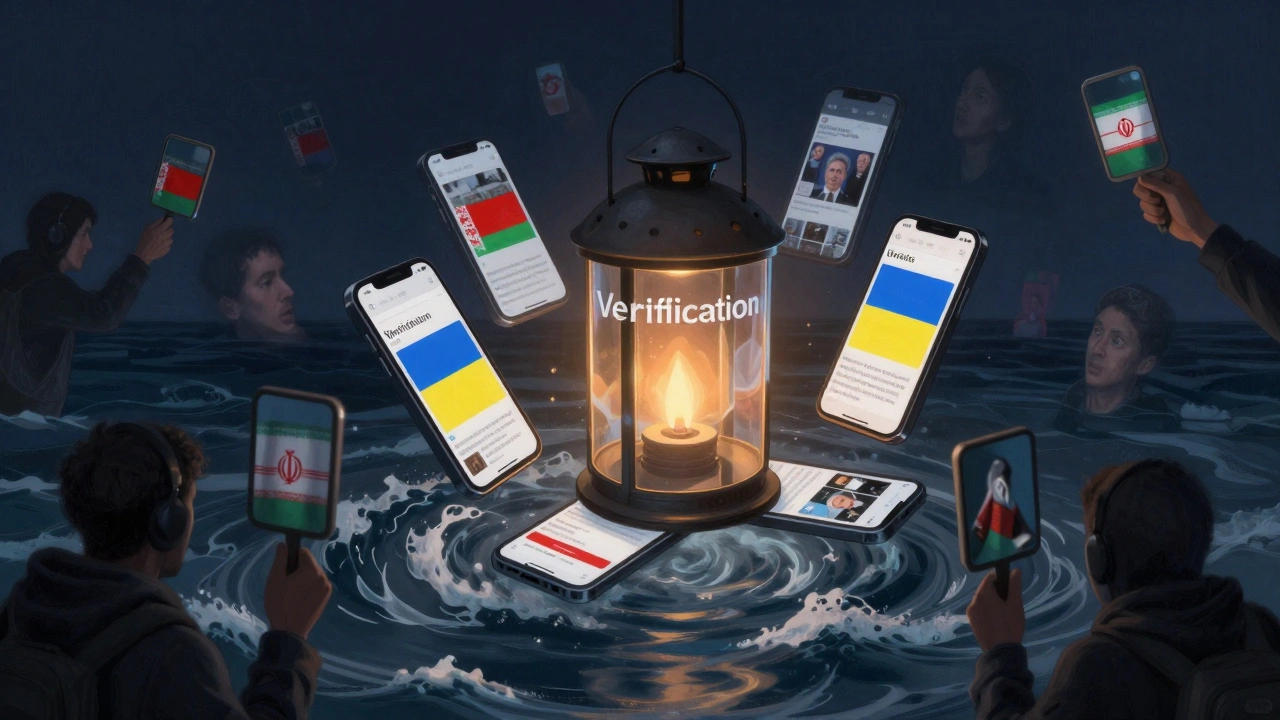
Surviving the Crackdown
Governments aren’t sitting still. Russia blocked Telegram during the 2022 invasion. Iran throttles it during protests. Belarus arrests people for posting on it. In 2023, 68% of detained Iranian activists had Telegram messages used as evidence against them. So how do citizen journalists survive? They adapt. The “Mirror Channel” strategy is now standard. If your main channel gets shut down, you switch to a backup. Ukrainian channels now run 3-5 mirrors at once. They use different names, different admins, different phone numbers. Some even use decentralized tools like Matrix and IPFS to store content outside Telegram’s servers. Telegram’s 2024 policy requiring phone number verification for new accounts reduced anonymous posting by 35%. That hurt. But citizen journalists responded by creating “trusted relay networks”-where verified users forward content to unverified followers through private groups. It’s slower. It’s harder. But it works.What’s Next? The Future Is Fragile
Telegram’s user base has exploded-from 550 million in early 2022 to 800 million in April 2024. In authoritarian countries, 45% now rely on it as their main news source. Media development groups like Internews are training citizen journalists in digital security and verification. The tools are getting better. But so are the countermeasures. State surveillance is more advanced. Deepfakes are cheaper. Algorithms are better at spotting patterns in “authentic” content. And public fatigue is setting in. After years of war and misinformation, many people don’t know what to believe anymore. The most successful citizen journalists today aren’t the loudest. They’re the quietest. The ones who verify before posting. Who admit when they’re wrong. Who protect their sources. Who don’t chase clicks. Who understand that influence isn’t about numbers-it’s about being the person people turn to when the lights go out. If you’re starting out, don’t try to be the biggest channel. Try to be the most reliable one. Because in a world full of noise, truth still has weight.Can anyone start a Telegram news channel?
Yes. Telegram allows anyone to create a public channel for free. No approval is needed. But building influence requires more than just posting. You need consistency, verification, and trust. Many start, but few earn long-term credibility.
Is Telegram safe for citizen journalists?
Telegram offers encryption and anonymity, but it’s not foolproof. Metadata from your phone, IP addresses, and even shared files can be traced. Many journalists use additional tools like VPNs, burner phones, and Signal for communication. State actors have successfully tracked and arrested people using Telegram posts as evidence.
How do citizen journalists verify information on Telegram?
They use free tools like Google Reverse Image Search, InVID, and metadata analyzers. They cross-check with at least two independent sources, look for geographic and temporal inconsistencies, and confirm details with trusted contacts on the ground. In Ukraine, many follow a three-source verification rule for conflict reporting.
Why do people trust Telegram over traditional news?
Because traditional media is often censored, slow, or seen as biased. Telegram delivers real-time updates without editorial filters. When governments shut down websites or arrest reporters, Telegram channels keep going. People trust them not because they’re perfect, but because they’re the only source left.
What’s the biggest mistake new citizen journalists make?
Posting too fast. Rushing to be first instead of being right. One unverified post can destroy years of trust. The best journalists wait, verify, and correct mistakes openly. Speed kills credibility.
Are Telegram news channels legal?
It depends on the country. In Ukraine and the U.S., they’re protected under free speech laws. In Russia, Iran, and Belarus, operating a Telegram news channel can lead to arrest, fines, or imprisonment. Many journalists operate under pseudonyms and use encrypted backups to avoid detection.
How do Telegram channels make money?
Most don’t. The vast majority are volunteer-run. A few receive small donations via crypto or PayPal. Some get funding from international media NGOs like Index on Censorship or Internews. But monetization is rare-and often discouraged, because it can compromise independence.
Can Telegram be shut down completely?
Not easily. Telegram uses a decentralized server network and encrypted protocols. Countries like Russia and Iran have temporarily blocked it, but users bypass restrictions with VPNs and mirror channels. As long as people have smartphones and internet access, Telegram will find a way to survive.