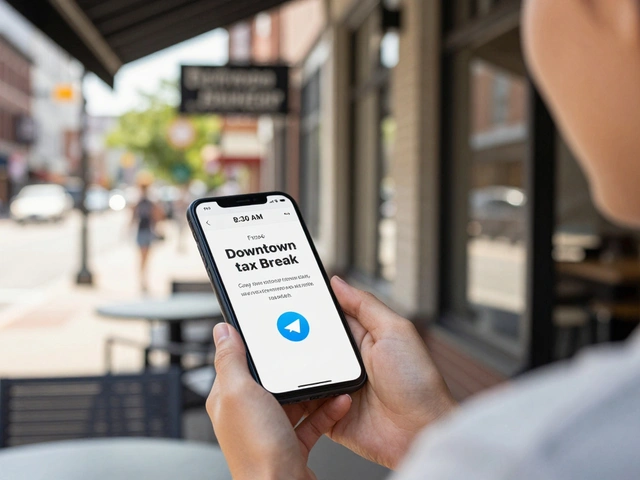
Imagine waking up to a single message that contains only the news you care about-no ads, no clickbait, no endless scrolling. Just facts, summaries, and sources that matter to you. That’s what Telegram news bots deliver today, and they’re not just a niche tool anymore. They’re becoming the default way millions of people get their daily updates. From simple automated feeds to AI-powered personalization engines, Telegram bots have rewritten the rules of news distribution.
How Telegram Bots Changed News Delivery
Before Telegram bots, news came through email newsletters, push notifications, or social media feeds-each one overloaded with noise. People were drowning in content. A 2024 Reuters Institute study found the average user faces over 1,000 pieces of content every day. Most of it is irrelevant. Telegram bots cut through that noise by design.
Unlike Facebook or Twitter, Telegram doesn’t use algorithms to decide what you see. You choose exactly what you want. A bot like @newsbot or Junction Bot pulls stories from trusted sources-BBC, Reuters, Bloomberg-and sends them to you at a time you set. No random videos. No trending memes. Just clean, curated updates.
The shift started around 2017, right after Telegram opened its Bot API. Early adopters built simple RSS-to-Telegram converters. Today, the most advanced bots use AI to summarize articles, translate them into 100+ languages, and even filter out misinformation. Stanford researchers found Telegram news bots drive 37% higher engagement than email newsletters. Why? Because users feel in control. They’re not being sold to. They’re not being manipulated.
The Anatomy of a Modern News Bot
Not all bots are the same. The best ones follow a clear structure:
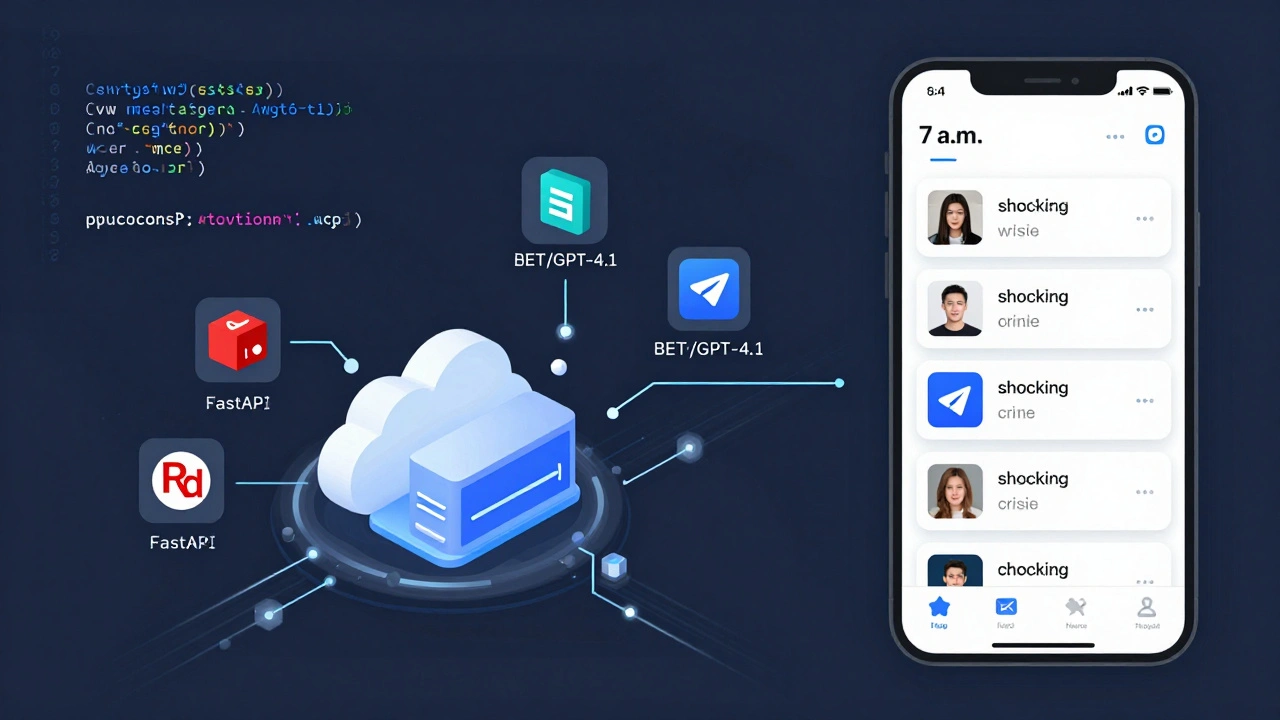
- Telegram API Integration - This is the bridge between the bot and your phone. It handles messages, buttons, and replies.
- FastAPI or Node.js Backend - The brain. It processes requests, runs logic, and connects to external services.
- RSS or API Data Feed - Gets news from sources like CNN, TechCrunch, or local newspapers.
- AI Summarization Engine - Uses models like BERT or GPT-4.1 to condense long articles into 2-3 clear sentences.
- Personalization Module - Tracks what you click, what you ignore, and learns your preferences over time.
- Scheduler - Delivers news at 7 a.m., noon, or 8 p.m.-whenever you want it.
- Database (PostgreSQL or MongoDB) - Stores your settings, reading history, and favorite sources.
For example, Junction Bot uses this stack to handle over 5,000 users at once, with response times under 200 milliseconds. That’s faster than loading a webpage. And it does it all while respecting Telegram’s 30-messages-per-second limit per bot.
Pre-Built Bots: The Easy Way In
If you’re not a developer, you still have options. Pre-built bots like Junction Bot, @newsbot, and @bbcnewsbot are designed for non-tech users. Setup takes 15 minutes. You pick your topics-finance, tech, local news-and hit subscribe.
Junction Bot stands out because of its filtering system. You can block stories with words like "crisis," "shocking," or "you won’t believe." You can also require articles to come from sources you trust. Over 92% of users praise this feature. It’s why Junction Bot has a 4.3/5 rating on Trustpilot from 842 reviews.
But there’s a trade-off. These bots limit customization. You can’t add your own RSS feed unless it’s on their approved list. You can’t tweak the AI summary style. And you can’t connect it to your internal tools-like a CMS or CRM.
For small businesses, journalists, or anyone who just wants a quiet news stream, pre-built bots are perfect. They’re cheap-many are free-and they work out of the box. ControlHippo’s 2025 survey showed 78% of small business users chose pre-built bots because they didn’t have time to code.
Workflow Automation: The Middle Ground
What if you want more control than Junction Bot offers, but you don’t want to write code from scratch? That’s where n8n.io and Zapier come in.
With n8n.io, you can build a custom news workflow using drag-and-drop nodes. For example:
- Fetch headlines from RSS feeds (BBC, The Guardian)
- Use GPT-4.1 to summarize each article
- Translate summaries into Spanish or German
- Send them to your Telegram channel at 7 a.m.
This setup took one user 3 hours to build. The result? A personalized news feed that updates daily, with technical terms kept in English while the rest is translated. That’s a feature requested by 73% of tech professionals, according to n8n.io’s January 2026 update.
Workflow tools are powerful, but they’re not beginner-friendly. You need to understand APIs, JSON, and how to connect services. Still, they’re ideal for medium-sized teams-newsrooms, marketing departments, or researchers-who need automation without hiring a developer.
Custom Builds: The Power Move
For enterprises, media companies, or developers who need total control, building your own bot is the only option.
GitHub repository News-Summarization-Telegram-Bot by aryanj10 has over 2,100 stars. It’s a full-stack bot built in Python with FastAPI, Redis for caching, and PostgreSQL for storage. The code is open-source. But the setup? It’s not for the faint of heart.
One senior developer spent three weeks deploying it. Why? Because the documentation assumes you already know how to set up cloud servers, configure SSL certificates, and manage Docker containers. Most users don’t.
Building a custom bot takes 80-100 hours of development time. You’ll need to handle:
- Rate limits from Telegram’s API
- Content length restrictions (4,096 characters per message)
- AI model costs-running GPT-4.1 on every article can triple your server bill
- Compliance with laws like the EU’s Digital Services Act, which now requires bots to explain why they recommended a story
But the payoff is real. You own the data. You control the AI. You can integrate with internal tools. Reuters Institute found that 47 of the top 100 global news outlets now use custom Telegram bots. Why? Because they need to protect their brand, avoid third-party algorithms, and deliver content exactly how they want.
Who’s Using This, and Why?
Telegram news bots aren’t just for techies. They’re used by:
- Financial analysts - Who get real-time updates from Bloomberg and Financial Times, filtered for market-moving events.
- Local journalists - Who use bots to aggregate city council minutes, fire department alerts, and school board decisions into one daily digest.
- Students and researchers - Who track academic papers, patent filings, or policy changes across multiple sources.
- Nonprofits - Who send emergency alerts or campaign updates to volunteers without relying on email lists.
And the numbers are growing fast. Telegram had 700 million active users in late 2024. By Q4 2025, that jumped to 900 million. News bot usage increased 227% year-over-year. Why? Because people are tired of being fed content they didn’t ask for.
ControlHippo’s survey found 68% of Telegram news bot users reduced their time on Facebook and Twitter. They’re not just avoiding ads-they’re avoiding manipulation.
The Risks and the Future
It’s not all perfect. AI-powered bots can amplify bias. Sarah Chen from the Electronic Frontier Foundation found that when bots prioritize engagement over accuracy, misinformation spreads 22% faster. That’s why Junction Bot added “Why this article?” explanations in February 2026. It’s a small step-but it matters.
There’s also the cost. Running AI summarization on hundreds of articles daily can increase server expenses by 300-400%. For small users, that’s unsustainable. That’s why most stick with pre-built bots or limit AI to just the top stories.
Looking ahead, Gartner predicts 60% of Telegram news bots will use contextual awareness by 2027. That means if you’re commuting, the bot sends shorter summaries. If you’re at your desk, it sends detailed breakdowns. If you’re in Berlin, it highlights local news. That’s the next level.
By 2028, Gartner says 75% of news organizations will use Telegram bots. That’s up from 32% in 2025. The reason? It’s the only platform where users trust the delivery system. Not the algorithm. Not the platform. Telegram bots.
What Should You Choose?
Here’s how to decide:
- Choose Junction Bot or @newsbot if you want to start today with zero coding. Great for individuals and small teams.
- Choose n8n.io if you’re comfortable with APIs and want to automate across services. Perfect for teams that need flexibility without full development.
- Build your own if you’re a media company, tech team, or developer who needs full control over data, AI, and delivery. Only if you have the time and resources.
There’s no right answer. Only the right fit for your needs. But one thing’s clear: if you’re still relying on email newsletters or social media feeds for news, you’re working harder than you need to. Telegram bots aren’t the future-they’re the present.
Are Telegram news bots safe to use?
Yes, if you use trusted bots from reputable sources. Telegram itself is encrypted, and bots like Junction Bot and @newsbot don’t ask for your password or personal data. They only access your public Telegram ID to send messages. Avoid bots that ask for your phone number, email, or login details. Stick to well-known bots with public documentation and user reviews.
Can I make my own news bot for free?
You can build the bot code for free using open-source tools like Python, FastAPI, and Telegram’s public API. But hosting it costs money. You’ll need a cloud server (like AWS or DigitalOcean), which starts at $5/month. AI summarization adds more cost-GPT-4.1 usage can push that to $20-$50/month depending on volume. If you’re just testing, use free tiers. For serious use, budget for hosting and AI costs.
How do I stop getting too many messages from a bot?
Most bots let you pause or adjust delivery frequency. In Junction Bot, go to Settings > Delivery Schedule and change from daily to weekly. You can also mute the bot’s chat in Telegram. If the bot doesn’t have settings, block it and find a better one. There are dozens of alternatives-don’t stick with one that overwhelms you.
Do Telegram bots work on iOS and Android?
Yes. Telegram bots work the same on all platforms. You’ll receive messages in your Telegram app, whether you’re on iPhone, Android, or desktop. Some bots have mobile-specific features, like quick-reply buttons or voice summaries, but the core delivery is identical across devices.
Can I use a Telegram bot to distribute news to my audience?
Absolutely. Many newsrooms use Telegram bots to push updates to subscribers. You can create a bot that sends your articles directly to readers’ phones. Just make sure your bot is public, users can subscribe voluntarily, and you comply with privacy laws like GDPR or the Digital Services Act. Some bots even let you add analytics to track opens and clicks.
What’s the biggest mistake people make with Telegram news bots?
They assume automation means set-and-forget. But bots need maintenance. Sources change URLs. APIs break. AI summaries get worse over time. Check your bot weekly. Test new sources. Update filters. A bot that worked last month might be sending junk today. Treat it like a tool, not a magic button.
Latest Posts