You open a Telegram channel. A message pops up: "Breaking: Major policy change coming tomorrow." It has a professional logo, bold text, and hundreds of forwards. Do you believe it? Do you share it? Or do you pause, check the source, and verify the claim? Your answer likely depends less on your IQ and more on your education level. Research shows that formal schooling is one of the strongest predictors of how well we navigate the messy world of online news.
We often assume that if you can use a smartphone, you can handle social media. But using an app and critically evaluating the information inside it are two very different skills. As news moves from traditional websites to messaging apps like Telegram, the gap between those who can spot misinformation and those who cannot is widening. This isn't just about being "smart"; it's about having been taught specific tools for verification, sourcing, and bias detection-tools that are unevenly distributed across different educational backgrounds.
The Foundation: What Is News Literacy?
To understand why education matters, we first need to define what we are measuring. News literacy is the ability to critically evaluate the credibility, reliability, and purpose of news and information across media. It goes beyond simply reading headlines. It involves distinguishing fact from rumor, news from advertising, and journalism from opinion pieces designed to look like news.
The News Literacy Project, in its 2025 overview, defines this skill as teaching people "how to think about news and information, not what to think." Key attributes include recognizing accuracy, fairness, independence, and accountability in reporting. Similarly, the University of Alabama at Birmingham (UAB) library describes it as a subfield of media literacy focused on critical thinking to judge the reliability of sources. These definitions highlight a crucial point: news literacy is a learned competency, not an innate trait.
This concept sits under the broader umbrella of Media literacy, which was formally consolidated at the 1992 National Leadership Conference on Media Literacy. That conference defined it as "the ability to access, analyze, evaluate and communicate messages in a variety of forms." Over the decades, scholars like Renee Hobbs have argued that this is a "fluid practice" involving both individual critical interpretation and communal participation. The implication is clear: if these skills are taught in schools, then the quality and extent of one's education directly impact their ability to navigate digital news environments.
The Education Gap in Digital Skills
If news literacy is a learned skill, where do we learn it? For most people, the primary classroom is school. However, research consistently shows that digital and web skills-the prerequisites for news literacy-are heavily influenced by socio-economic status and parental education levels. Eszter Hargittai’s seminal 2010 study found that even among students at the same university, significant disparities existed in web skills based on their background. Students from families with higher parental education brought stronger baseline digital skills into college, while those from less educated backgrounds lagged behind in tasks like searching effectively, evaluating website credibility, and verifying information.
This creates a compounding effect. Individuals with lower formal education may lack the foundational confidence or technical know-how to perform basic verification steps. When they encounter a suspicious story on Telegram, they might not know how to reverse-image search a photo, check the URL of a linked article, or cross-reference claims with independent fact-checking sites. Conversely, those with tertiary education often have practiced these research methods extensively, making verification a natural reflex rather than a burdensome task.
| Behavior | Lower Formal Education | Higher Formal Education |
|---|---|---|
| Source Verification | Relies on within-platform signals (channel size, visuals) | Cross-checks with external credible sources |
| Bias Detection | May interpret bias through ideological lens only | Identifies structural bias and lack of documentation |
| Information Sharing | More likely to forward without checking | More likely to pause and verify before sharing |
| Response to Misinformation | May accept professional-looking formats as truth | Skeptical of unverified screenshots and forwarded texts |

Why Telegram Is a Unique Challenge
Traditional news websites have editorial gates. Journalists, editors, and legal teams review content before publication. Telegram operates differently. It is a messaging platform that enables one-to-many broadcasting through channels and groups. There are no inherent editorial standards. Anyone can create a channel, design a logo, and broadcast information to thousands of subscribers.
In this environment, the boundaries between private communication and public information dissemination blur completely. News, opinion, activism, and misinformation intermingle. Posts are often screenshots, forwarded messages, or short text updates without embedded source links. Applying standard news literacy criteria-like looking for multiple credible sources or documentation-requires users to take extra steps outside the app. They must leave Telegram to search for confirmation. This friction disproportionately affects users with lower digital literacy, who may find such tasks unfamiliar or too difficult.
Furthermore, Telegram’s algorithmic feeds and group dynamics can create echo chambers. In groups where members share similar educational backgrounds and political views, misinformation can circulate with little resistance. If the group lacks individuals with strong media literacy skills to act as informal gatekeepers, dubious claims go unchallenged. This dynamic mirrors the stratification seen in schools, where unequal distribution of media literacy instruction leads to "information rich" and "information poor" communities.
The Role of Policy and Curriculum
Why do these gaps exist? Partly because media literacy education has been inconsistent. The 2023 Media Literacy Policy Report by Media Literacy Now argues that ideally, "all school districts would incorporate media literacy instruction into all subjects at all grade levels." Yet, implementation remains uneven. Some districts embed comprehensive curricula, while others lack any formal requirements. Consequently, two adults with the same number of years of schooling may have vastly different exposures to media literacy training depending on their state or district.
This inconsistency means that older cohorts, who completed their education before media literacy became a priority, often lack these skills entirely. Younger cohorts, especially those in well-funded districts, are better equipped. However, even among younger users, tracking systems in education can exacerbate inequalities. Studies of media literacy programs show that students in higher educational tracks often benefit more from instruction, partly due to pre-existing advantages. Those in lower tracks may receive less rigorous training, leaving them vulnerable when they enter the adult digital sphere.
Adult education initiatives also face challenges. A mixed-methods evaluation of an online news literacy program for adults found that participants already had high levels of news literacy, suggesting a ceiling effect. Voluntary online courses tend to attract self-motivated, often higher-educated individuals. Those at greatest risk of misinformation exposure-people with lower education and lower baseline literacy-are underrepresented in these programs. This leaves a critical gap in our collective defense against disinformation.
Bridging the Divide: Practical Strategies
So, what can be done? We cannot force everyone to get a degree, but we can adapt news literacy interventions to meet people where they are. Designers of media literacy programs must segment audiences by education level and tailor their approaches accordingly.
- For users with limited formal education: Use simplified language and concrete examples drawn from real messaging channels. Focus on interactive exercises that simulate "forward-and-verify" behaviors. Instead of abstract essays on bias, show side-by-side comparisons of a verified news report and a misleading Telegram post. Make the steps to verification visible and easy.
- For students in lower educational tracks: Embed short, scenario-based lessons into existing curricula. Align with policy recommendations to integrate media literacy into all subjects. Teach how to check the credibility of forwarded messages about health, politics, or emergencies using simple, repeatable heuristics.
- For higher-education students and adults: Focus on advanced topics like recognizing coordinated inauthentic behavior, understanding how channel administrators manipulate visibility, and leading peer-education efforts. Encourage them to become informal gatekeepers in their own groups, challenging dubious claims and posting links to external reporting.
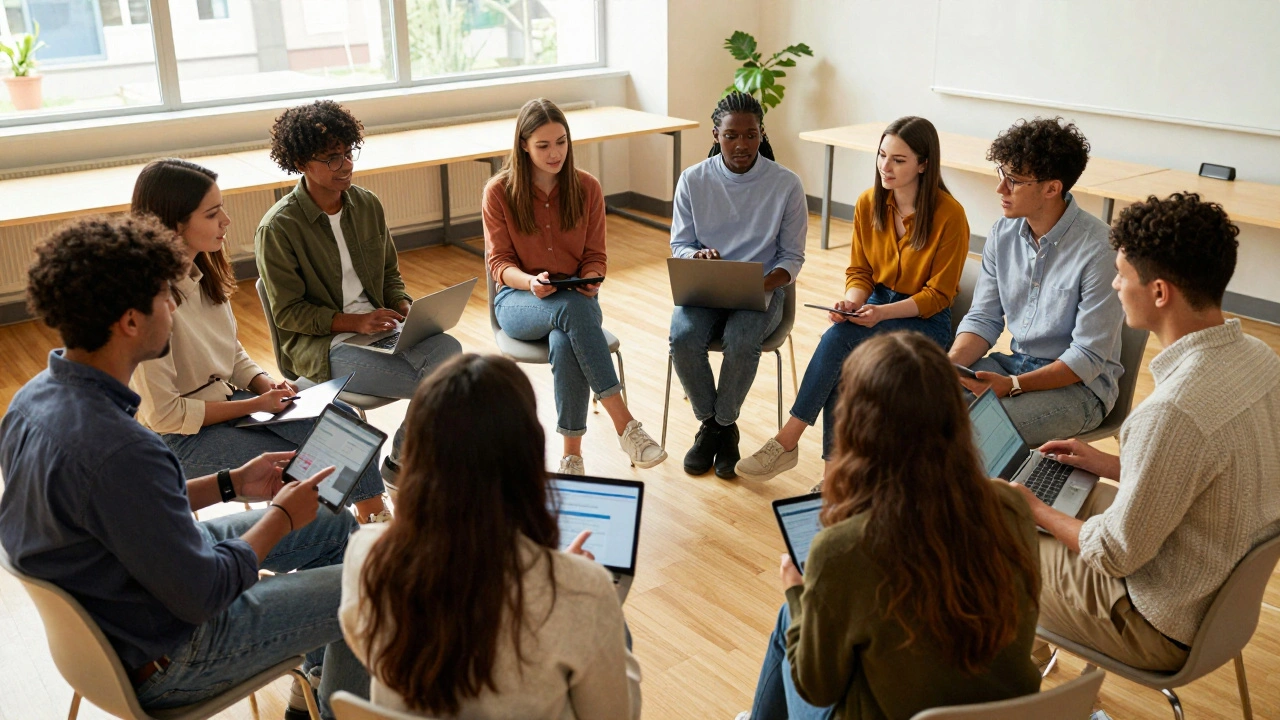
Communal sense-making is key. As Renee Hobbs has argued, media literacy should empower individuals to engage meaningfully in their communities. In Telegram groups, this means fostering cultures where questioning sources is normalized, not punished. When users with higher literacy skills actively participate in groups, they can lift the overall literacy level of the community. This peer-to-peer model is often more effective than top-down lectures.
The Future of News Literacy Research
While direct, peer-reviewed research specifically measuring "Telegram news literacy" by education level is still emerging, the trajectory is clear. Current evidence strongly suggests that education levels are a consistent predictor of differences in news and media literacy in digital environments. As platforms like Telegram continue to dominate news consumption for millions, the need for targeted interventions grows.
Future research will likely focus on whether standardized K-12 media literacy policies reduce these education-based gaps. It will also examine if improvements in news literacy translate into more resilient democratic engagement. For now, the responsibility falls on educators, policymakers, and platform users to recognize that digital literacy is not equal. By acknowledging the role of education in shaping how we see the world online, we can build more inclusive strategies to combat misinformation and strengthen our shared information ecosystem.
Does higher education guarantee better news literacy on Telegram?
Not necessarily. While higher education is correlated with stronger baseline digital and verification skills, it does not automatically make someone immune to misinformation. Highly educated individuals can still fall prey to biases that confirm their existing beliefs. However, they generally possess the tools to verify claims independently, making them less reliant on superficial cues like channel size or visual design.
Why is Telegram more prone to misinformation than traditional news sites?
Telegram lacks editorial gates. Unlike traditional news organizations that have journalists, editors, and legal teams reviewing content, Telegram allows anyone to create a channel and broadcast information. This openness enables rapid spreading of unverified claims, screenshots, and opinions presented as facts, without the accountability mechanisms found in legacy media.
How can I improve my news literacy if I didn't learn it in school?
You can start by adopting simple verification habits. Before sharing a Telegram message, ask: Who sent this? Is there a link to a credible source? Can I find this story on major news outlets? Use tools like reverse image search for photos. Engage with media literacy resources online, such as those from the News Literacy Project, which offer free guides and tips for everyday users.
What is the difference between media literacy and news literacy?
Media literacy is the broader ability to access, analyze, evaluate, and create messages in various forms, including entertainment and advertising. News literacy is a specific subset of media literacy focused on evaluating the credibility and reliability of news and information. It emphasizes distinguishing fact from opinion and understanding journalistic standards like accuracy and fairness.
Can peer pressure in Telegram groups affect news literacy?
Yes. Group dynamics play a significant role. In groups where members trust each other implicitly, misinformation can spread quickly because people rely on social proof rather than factual verification. Conversely, groups with diverse perspectives and active discussion can help members challenge false claims and improve collective news literacy through communal sense-making.